











Gjør som tusenvis av andre bokelskere
Abonner på vårt nyhetsbrev og få rabatter og inspirasjon til din neste leseopplevelse.
Ved å abonnere godtar du vår personvernerklæring.Du kan når som helst melde deg av våre nyhetsbrev.

The Physical World offers a grand vision of the essential unity of physics that will enable the reader to see the world through the eyes of a physicist and understand their thinking.
Over the last number of years powerful new methods in analysis and topology have led to the development of the modern global theory of symplectic topology, including several striking and important results. This new third edition of a classic book in the feild includes updates and new material to bring the material right up-to-date.
How does thinking affect doing? It is widely held that thinking about what you are doing, as you are doing it, hinders performance. But is this true? Barbara Gail Montero explores real-life examples and draws on psychology, neuroscience, and literature to develop a theory of expertise that emphasizes the role of the conscious mind in expert action.
Imagining Spectatorship is a highly innovative study in the emerging area of early spectatorship, focusing on the spectators' experience to offer new perspectives on early drama.
Shakespeare's Money explores what archival records can reveal about Shakespeare's economic and social success, shedding light on how he elevated his family from lowly status to minor gentry and how economic concerns were ever present in his daily life.
The Ordnance Survey and Modern Irish Literature offers a fresh new look at the origins of literary modernism in Ireland. arguing that the roots of Irish modernism lie in the attempt by the Survey to produce a comprehensive archive of a land emerging rapidly into modernity.
Quantum Field Theory has become the universal language of most modern theoretical physics. This introductory textbook shows how this beautiful theory offers the correct mathematical framework to describe and understand the fundamental interactions of elementary particles.
Project X CODE Extra introduces more exciting adventure stories and stimulating non-fiction texts into the Project X CODE series, to provide additional practice outside of the core intervention sessions. This pack contains 1 copy of each of the 4 books at Orange Book Band.
Project X CODE Extra introduces more exciting adventure stories and stimulating non-fiction texts into the Project X CODE series, to provide additional practice outside of the core intervention sessions. This pack contains 1 copy of each of the 4 books at Green Book Band.
Project X CODE Extra introduces more exciting adventure stories and stimulating non-fiction texts into the Project X CODE series, to provide additional practice outside of the core intervention sessions. This pack contains 1 copy of each of the 4 books at Light Blue Book Band.
A volume that examines the relationship between manual writing and print and how script evolved between 1590 and 1840.
In this far-reaching and provocative study, Nathan K. Hensley shows how the modern state's anguished relationship to violence pushed literary writers of the Victorian era to expand the capacities of literary form. He explores the works of some of the era's most astute thinkers, including George Eliot, Charles Dickens, and Robert Louis Stevenson.
An inquiry into the internal market as an ambiguous legal concept, this volume will consider the vertical distributions of competences between the EU and its Member States and the horizontal distribution of powers between the Court and the legislative institutions of the EU.
Can constitutional amendments be unconstitutional? Using theoretical and comparative approaches, Roznai establishes the nature and scope of constitutional amendment powers by focusing on substantive limitations, looking at their prevalence in practice and the conceptual coherence of the very idea of limitations to constitutional amendment powers.
What is the legal status of abortion and the human fetus? In an extended analysis of mainstream arguments involving abortion and the status of 'personhood' that is often applied to the fetus, this book provides novel answers to some of the core 'pro-life' arguments in favour of recognizing fetal personhood and moral rights.
Arguing about Empire explores key imperial debates between Britain and France from the age of high imperialism to the post-war era of decolonization, uncovering the part played by imperial rhetoric - its racial underpinnings, its ethical presumptions, and the world-views it enshrined.
Winnie has made a big mistake. She's washed her party dress in the washing machine. But she's washed her magic wand as well. And now it doesn't work, it's broken, it isn't magic anymore. What is she going to do? How can she make magic spells? How can she perform at the witches' magic show? Perhaps Wilbur can help? Perhaps . . .
Happy Birthday, Winnie! Winnie and Wilbur are having a party! They have given the garden a makeover, the guests have arrived and Winnie has planned all sorts of games. But when Winnie toots her new trumpet . . . everyone disappears! How will Winnie bring them back in time for her wonderful birthday surprise? With a little magic, of course!
Winnie has decided to load all her spells onto her new computer so that she can perform her magic at the click of the mouse. She'll never need to shout Abracadabra again! But when Winnie tries out her new digital spells and turns Wilbur blue, she sets off a hilarious chain of events.
Winnie and Wilbur are going into space! Winnie conjures a rocket and they blast into orbit. It's quite tricky dealing with all the rocket's controls but it's even trickier knowing what to do with hungry space rabbits . . . will Winnie have enough magic up her sleeve to save the day? It's an astronomical Winnie and Wilbur adventure!
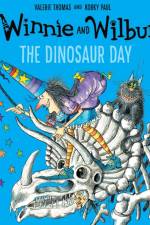
Winnie and Wilbur love their local museum, especially the dinosaur gallery. When an exciting competition is announced to draw or make a model of a dinosaur Winnie and Wilbur can't wait to take part. But what did dinosaurs look like? Winnie waves her wand to take herself and Wilbur back in time. It's a prehistoric Winnie and Wilbur adventure!
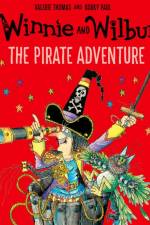
When Winnie and Wilbur arrive at Cousin Cuthbert's party as a pirate and a parrot, they discover a whole crew in fancy-dress, eager for excitement on the high seas! Winnie is ready with her magic to whisk her shipmates aboard, but will they be back with the treasure before the party's over . . .
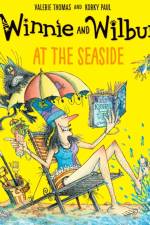
Winnie and Wilbur are off to the seaside. Winnie makes a beeline for the sea to cool down. Wilbur makes a beeline for anywhere other than the sea: he hates getting wet. Winnie is having so much fun that she doesn't notice her broomstick being washed out to sea. The mix of magic and mayhem that follows involves a surfer and a whale . . .
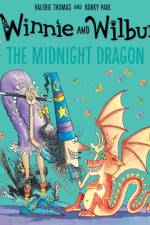
It's just after midnight and Winnie is sound asleep. Suddenly, Wilbur hears something squeezing through his cat flap. It's a baby dragon with smoke coming out of its nose. Puff! How will Winnie stop her house from burning down and find the baby dragon's mother? With a little magic, of course!
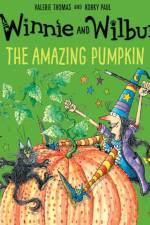
When Winnie and Wilbur decide to grow vegetables in their garden, they get more than they bargained for - giant beanstalks, colossal cabbages, and an enormous pumpkin perched on the roof! But what can Winnie do with her huge pumpkin when only the shell is left? Prepare to be amazed!
When Winnie's afternoon sleep is cut short by the crash of a vase, it's just the start of some very odd happenings in her house. Could it be haunted? Winnie wants to make sure it isn't with the help of a spell. But her spell doesn't quite go to plan . . . Get ready for silly spookiness in this supernatural Winnie and Winnie adventure!
In Philosophy Within Its Proper Bounds, Edouard Machery argues that resolving many traditional and contemporary philosophical issues is beyond our epistemic reach and that philosophy should re-orient itself toward more humble, but ultimately more important intellectual endeavors, such as the analysis of concepts.
Only Imagine offers a new theory of fictional content. Kathleen Stock argues for a controversial view known as 'extreme intentionalism'; the idea that the content of a particular work of fiction is equivalent to exactly what the author of the work intended the reader to imagine.
Kris McDaniel argues that there are different ways in which things exist. For instance, past things don't exist in the same way as present things. Numbers don't exist in the same way as physical objects; nor do holes, which are real, but less real than what they are in. McDaniel's theory of being illuminates a wide range of metaphysical topics.
This book is a guide for junior researchers, and a manifesto for senior researchers and policy makers about how to update policies to respond to the immense challenges of our times. The guiding principles are to combine applied and basic research in ways that use the methods of science, engineering, and design.
Abonner på vårt nyhetsbrev og få rabatter og inspirasjon til din neste leseopplevelse.
Ved å abonnere godtar du vår personvernerklæring.