












Gjør som tusenvis av andre bokelskere
Abonner på vårt nyhetsbrev og få rabatter og inspirasjon til din neste leseopplevelse.
Ved å abonnere godtar du vår personvernerklæring.Du kan når som helst melde deg av våre nyhetsbrev.

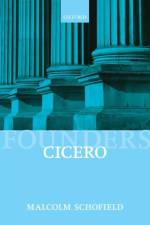
This book offers an innovative account of Cicero's treatment of key political ideas: liberty and equality, government, law, cosmopolitanism and imperialism, republican virtues, and ethical decision-making in politics. Cicero (106-43 BC), a major figure in Roman politics, was the first to articulate a philosophical rationale for republicanism.
This book examines the nature, creation, and comprehension of constructions in which words that go together in meaning occur arbitrarily far away from each other. It provides a detailed survey of the factors responsible for their creation and comprehension, alongside new experimental evidence and suggestions for future research.
Population Biology of Vector-Borne Diseases is the first comprehensive survey of this rapidly developing field. The chapter topics provide an up-to-date presentation of classical concepts, reviews of emerging trends, synthesis of existing knowledge, and a prospective agenda for future research.
This book shows how chemical principles can be used to understand the pressures on our world, spanning from greenhouse emissions through freshwater supplies to energy generation and storage.
Winnie and Wilbur are visiting the wild animals from their library book in real life. It's exciting to journey by magic all around the world, but there is trouble for our travellers when the animals get hungry! A whistle-stop tour full of hilarious slapstick fun.
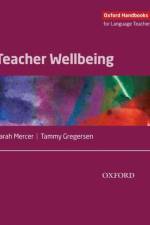
Written primarily for language teachers and inspired by positive psychology, this book seeks to support and maintain teacher wellbeing through a variety of approaches.
The perfect introduction to one of the best-loved characters in children's books. Meet Pippi Longstocking, the strongest and most independent girl in the world.
Astronomer and TV presenter Chris Lintott tells the story of the Zooniverse, the platform which enables hundreds of thousands of ordinary people to contribute to scientific research. He describes the discoveries they are making, and shows how, in the world of Big Data and smart machines, humans play a unique part in adding to scientific knowledge.
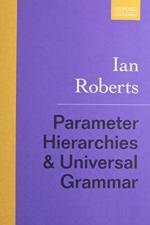
In this book, Ian Roberts argues that the essential insight of the principles-and-parameters approach to variation can be maintained - albeit in a somewhat different guise - in the context of the minimalist programme. The book represents a significant new contribution to the formal study of cross-linguistic morphosyntactic variation.
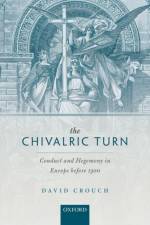
Historians have tended to understand medieval conduct through the eyes of Enlightenment historians, seeing superior conduct as 'knightly' behaviour, categorising it as chivalry. This book shows what superior lay conduct was in Europe before chivalry, and maps how and why chivalry emerged and redefined superior conduct in the late twelfth century.
The first volume of the definitive political history of Northern Ireland.
The third volume of the definitive political history of Northern Ireland.
The second volume of the definitive political history of Northern Ireland.
This treatise offers in-depth coverage of comparative law, carefully structured and clearly explained by a leading expert. It is an invaluable resource for students seeking a critical introduction to the field, as well as scholars and practitioners, for whom it offers new insights, structures, and approaches.
Graham Priest presents an exploration of the development of Buddhist metaphysics, which is viewed through the lens of the catuskoti. In its earliest and simplest form this is a logical/metaphysical principle which says that every claim is true, false, both, or neither; but Priest shows how the principle itself evolves as the metaphysics develops.
Offering an unparalleled level of assessment support, IB Prepared: English B has been developed directly with the IB to provide the most up-to-date, authentic and authoritative guidance on DP assessment.
What is well-being? This is one of humanity's oldest and deepest questions; Valerie Tiberius offers a fresh answer. She argues that our lives go well to the extent that we succeed in what matters to us emotionally, reflectively, and over the long term. So when we want to help others achieve well-being, we should pay attention to their values.
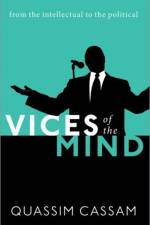
Quassim Cassam introduces the idea of epistemic vices, character traits that get in the way of knowledge, such as closed-mindedness, intellectual arrogance, wishful thinking, and prejudice. Using examples from politics to illustrate the vices at work, he considers whether we are responsible for such failings, and what we can do about them.
A unique new account of New Labour in power-drawing on a mass of previously unpublished contributions from most of the main players in the Blair government, including Tony Blair himself.
This is the only authoritative textbook on metabolic measurement of animals, ranging in mass from fruit flies to whales. It integrates a rigorous theoretical background with detailed practical guidelines for making actual measurements in the field and laboratory.
Imperial Boredom offers a radical reconsideration of the British Empire during its heyday in the nineteenth century. Challenging the long-established view that that the Empire was about adventure and excitement, Auerbach draws on personal accounts to argue that boredom was central to the experience of Empire.
An introduction to Immanuel Kant's constitutional theory, and to the European system of rights protection, this book explains how European Court of Human Rights has become the most active and important rights-protecting court in the world through its manifestation as a Kantian cosmopolitan legal order.
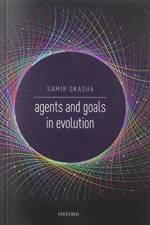
Samir Okasha offers a critical study of agential thinking in biology, where evolved organisms are seen as agents pursuing a goal. He examines the justification for transposing concepts from rational humans to the biological world, and considers whether agential thinking is mere anthropomorphism or plays a more intellectual role in the science.
This book is devoted to articulating the connections between the nature and value of faith and humility. The goal is to understand these two virtues in a way that does not discriminate between religious and secular. Jon Kvanvig claims that each provides a necessary, compensating balance to the potential downside of the other.
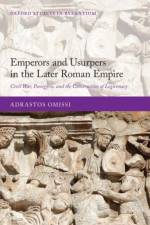
Civil war and usurpation were endemic to the later Roman Empire, with no fewer than 37 men claiming imperial power between 284 and 395 AD. This volume constructs the first comprehensive history of civil war in this period through the ways in which successive dynasties manipulated history to legitimate themselves and to discredit their predecessors.
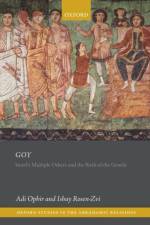
This work traces the development of the term and category of the goy from the Bible to rabbinic literature.
This book provides an accessible introduction to the theoretical frameworks of the dual penal state. Taking an issue-led approach, the study locates criminal law in its analytic, comparative, historical, and doctrinal contexts, and aims to stimulate critical reflection beyond the constraints of a particular jurisdiction.
Art and Authority explores the sources, nature, and limits of artistic freedom. K. E. Gover draws upon real-world cases and controversies in contemporary visual art to offer a better understanding of artistic authorship and authority. Each chapter focuses on a case of dispute over the rights of an artist with respect to his or her artwork.
During World War Two, people arrived in Britain from all over the world as troops, war-workers, nurses, refugees, exiles, and prisoners-of-war. Mixing It tells the extraordinary tales of their contributions to the British war effort, and uncovers the forgotten history of the role WWII played in the making of multiethnic Britain.
Ryan Wasserman explores a range of fascinating puzzles raised by the possibility of time travel, with entertaining examples from physics, science fiction, and popular culture, and he draws out their implications for our understanding of time, tense, freedom, fatalism, causation, counterfactuals, laws of nature, persistence, change, and mereology.
Abonner på vårt nyhetsbrev og få rabatter og inspirasjon til din neste leseopplevelse.
Ved å abonnere godtar du vår personvernerklæring.