








Gjør som tusenvis av andre bokelskere
Abonner på vårt nyhetsbrev og få rabatter og inspirasjon til din neste leseopplevelse.
Ved å abonnere godtar du vår personvernerklæring.Du kan når som helst melde deg av våre nyhetsbrev.

Spectrality in Modernist Fiction argues that key modernist writers, chiefly Conrad, Forster, Butts, and Bowen, use spectral rhetoric to tackle problems of sex and sexuality, revolution, imperialism, capitalism, and desire all through complicated ethical engagements.
Based on a survey of nearly seven hundred works with female authors from this period, this book contends that authorship was constructed, not always by the author, for market appeal, that biography often supported an authorial persona rooted in the genre of the work, and that authorship was a role rather than an identity.
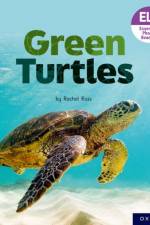
Engaging fiction and non-fiction fully aligned to each week of Essential Letters and Sounds, allowing children to consolidate their phonic knowledge through reading in context.Green Turtles allows children to apply their phonics learning from Year 1, Autumn 1, Week 2 of Essential Letters and Sounds.
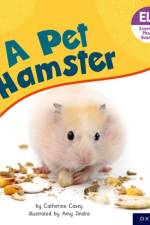
Engaging fiction and non-fiction fully aligned to each week of Essential Letters and Sounds, allowing children to consolidate their phonic knowledge through reading in context.A Pet Hamster allows children to apply their phonics learning from Reception, Summer 2, Week 5 of Essential Letters and Sounds.
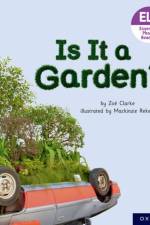
Engaging fiction and non-fiction fully aligned to each week of Essential Letters and Sounds, allowing children to consolidate their phonic knowledge through reading in context.Is It A Garden? allows children to apply their phonics learning from Reception, Spring 2, Week 6 of Essential Letters and Sounds.
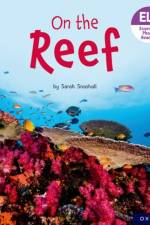
Engaging fiction and non-fiction fully aligned to each week of Essential Letters and Sounds, allowing children to consolidate their phonic knowledge through reading in context.On the Reef allows children to apply their phonics learning from Reception, Spring 2, Week 4 of Essential Letters and Sounds.
This book provides a comprehensive view of displacement and explores what international and domestic law can contribute to prevent, address, and resolve internal displacement. It emphasizes the primary responsibility of states to address the needs of internally displaced persons and views them as citizens with rights and agency.
This volume presents a winning selection of the very best essays from the long and distinguished career of Stanley Wells, one of the most well-known and respected Shakespeare scholars in the world. Its chapters are divided into themed sections, on Shakespearian influences, particular works, theatre, and text.
Juan Comesaña presents a new framework for understanding the rationality of action and belief, which he calls Experientalism. Arguing that rational action requires rational belief but tolerates false belief, Comesaña provides a novel account of empirical evidence as consisting of the content of undefeated experiences.
This title uses quantitative, qualitative, and institutional analysis for each country is used to examine capital flight. This reveals a network of actors and enablers involved in capital flight and the accumulation of private wealth offshore. Addressing the problem of capital flight and related issues will require national and global efforts.
Oxford Studies in Philosophy of Mind presents cutting-edge work in the philosophy of mind, combining invited articles and articles selected from submissions.
Space matters. It situates our history, structures our daily lives, and often determines what we can and cannot do. Borders are central to this reality. This book explores how borders were understood, made, and encountered at the end of the Middle Ages, and what they can tell us about the spatial fabric of society at the threshold of modernity.
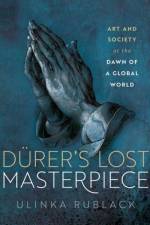
Dürer's Lost Masterpiece tracks the history of a turning point in the career of the celebrated German artist Albrecht Dürer (1471-1528), when he stopped painting altarpieces after arguing with a merchant patron over payment. As an eloquent homage to Dürer¿s life, it brings us closer to the creation and meaning of his paintings than ever before.
A biography of the boldest and most unsettling of the early modern philosophers, Spinoza, examining the man's life, relationships, career, and writings, while forcing us to rethink how we previously understood his reception in the fields of philosophy, religion, ethics, and political theory in his own time and in the years following his death.
A comprehensive examination of the new Brussels IIb Regulation (2019/1111) which covers jurisdiction, decisions in matrimonial matters, matters of parental responsibility, and international child abduction. This book analyses every provision of the new Regulation, relevant case law, and the differences between this Regulation and its predecessor.
Essential Blending Books are 100% matched to the phonic progression of Essential Letters and Sounds. They allow children to practise blending sounds together to make words. Book 14 covers CCVC words. It allows children to apply their phonics learning from Reception, Summer 1, Week 2 of Essential Letters and Sounds.
Essential Blending Books are 100% matched to the phonic progression of Essential Letters and Sounds. They allow children to practise blending sounds together to make words. Book 13 covers CVCC words. It allows children to apply their phonics learning from Reception, Summer 1, Week 1 of Essential Letters and Sounds.
Essential Blending Books are 100% matched to the phonic progression of Essential Letters and Sounds. They allow children to practise blending sounds together to make words. Book 12 covers GPCs ure, er and ow. It allows children to apply their phonics learning from Reception, Spring 1, Week 4 of Essential Letters and Sounds.
Essential Blending Books are 100% matched to the phonic progression of Essential Letters and Sounds. They allow children to practise blending sounds together to make words. Book 10 covers GPCs oo, ar, ur, oo and or. It allows children to apply their phonics learning from Reception, Spring 1, Week 2 of Essential Letters and Sounds.
Essential Blending Books are 100% matched to the phonic progression of Essential Letters and Sounds. They allow children to practise blending sounds together to make words. Book 11 covers GPCs ow, oi, ear and air It allows children to apply their phonics learning from Reception, Spring 1, Week 3 of Essential Letters and Sounds.
Essential Blending Books are 100% matched to the phonic progression of Essential Letters and Sounds. They allow children to practise blending sounds together to make words. Book 8 covers GPCs sh, th, ng and nk. It allows children to apply their phonics learning from Reception, Autumn 2, Week 3 of Essential Letters and Sounds.
Essential Blending Books are 100% matched to the phonic progression of Essential Letters and Sounds. They allow children to practise blending sounds together to make words. Book 9 covers GPCs ai, ee, igh, oa. It allows children to apply their phonics learning from Reception, Autumn 2, Week 4 of Essential Letters and Sounds.
A work which evaluates anticommunism among the French population, 1945-1953, examining its causes, character, and consequences through a series of case studies on areas of French society, including the scouting movement; family organisations; agricultural associations; middle-class groups; and trade unions and other working-class organisations.
A bold and imaginative volume on the constituent elements of the Book, from the pre-print era through to the digital. The twenty-two chapters written by an international team delve into all elements of the book from title pages to endpapers, from dust jackets to indices, and everything else in between.
People often refer to the 'United Nations' but without specifying which specific parts are responsible for success or failure. This book explores supportive the non-state actors that are essential players in developing global policies and norms, alongside the traditional categories of member states (first UN) and staff (second UN).
This edited collection provides a comprehensive analysis of how the European Convention on Human Rights protects the rights of migrants in different stages of migration, including asylum seekers, irregular migrants, and those who have migrated through domestic lawful routes.
Abonner på vårt nyhetsbrev og få rabatter og inspirasjon til din neste leseopplevelse.
Ved å abonnere godtar du vår personvernerklæring.