















Gjør som tusenvis av andre bokelskere
Abonner på vårt nyhetsbrev og få rabatter og inspirasjon til din neste leseopplevelse.
Ved å abonnere godtar du vår personvernerklæring.Du kan når som helst melde deg av våre nyhetsbrev.

Algorithmic Institutionalism is the first book to conceive algorithms as institutions in contemporary societies, focusing on different dimensions of how they structure decision-making and enact power relations. In many situations in contemporary societies, algorithms structure social interactions, resulting in patterns of action and human behavior in collective contexts. Almeida, Filgueiras, and Mendonca discuss how algorithms are gradually occupying an institutional space in societies, deciding on different aspects of social life and shaping collective and individual human behaviors. As institutions, algorithms work as decision systems that define what is allowed, hindered, facilitated, or made impossible as well as positions within society's organizational structures. Algorithmic institutionalism uses the perspective of institutional theories to explain the functioning of these decision systems and how they establish patterns and norms that affect human behavior and lead to deep changes in contemporary society. The book points to the challenges of political orders that are gradually institutionalized with algorithms, comprising new dynamics of interaction between humans and machines. These disruptive dynamics of interaction between humans and machines create new challenges related to the democratization of algorithms and the impasses that emerge with technological advancement through digital technologies. Providing an analytical framework for an adequate comprehension of the social and political implications of algorithmic systems, Algorithmic institutionalism applies this framework to make sense of recommendation systems, the platformization of governments, and the deployment of algorithms in security. It then addresses the challenge of developing approaches to democratize the new political order influenced by the global expansion of algorithmic decision-making, pointing to key democratic values that are relevant once we consider the construction of legitimate decisions in contemporary societies.
The Oxford Handbook of the Ends of Empire offers the most comprehensive treatment of the causes, course, and consequences of the collapse of empires in the twentieth century. The volume's contributors convey the global reach of decolonization, analysing the ways in which European, Asian, and African empires disintegrated over the past century.
When Mirabelle gets so cross with her brother, Wilbur, that she says she wishes he would just disappear, she doesn't actually think it will happen. How will she get him to come back? Hopefully a new friend can lend a ghostly hand. . .
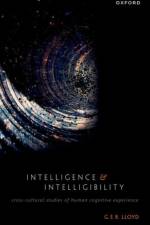
G. E. R. Lloyd considers how we can resolve the tension that exists between an appreciation of the cognitive capacities that all humans share, and a recognition of the great variety in their manifestations in different individuals and groups-while avoiding the imposition of prior Western assumptions and concepts.
What kind of knowledge can we get just by thinking? Two of the world's leading philosophers develop radically different positions, in alternating chapters, on the status and nature of a priori knowledge. The reader is able to follow up-close how a philosophical debate evolves.
This book examines how African rulers have responded to the introduction of democratic electoral competition, and how this has resulted in rural development.
Examines the meaning and possibilities of the present and its relationship to history and historicity in the writings of several familiar figures in antebellum US literary history.
Civil War in Central Europe argues that Polish independence after the First World War was forged in the fires of the post-war conflicts which should be collectively referred to as the Central European Civil War (1918-1921). The ensuing violence forced those living in European border regions to decide on their national identity - German or Polish.
You know what someone else is thinking and feeling by observing them. But how do you know what you are thinking and feeling? This is the problem of self-knowledge: Alex Byrne tries to solve it. The idea is that you know this not by taking a special kind of look at your own mind, but by an inference from a premise about your environment.
In the face of a set of environmental crises, a growing number of environmental and community groups are focusing on more sustainable practices in everyday life. This book focuses on sustainable materialism, and examines the political and social motivations of activists and movement groups involved in this growing and expanding practice.
This study examines the way that scientists in the 16th and 17th centuries, who had not studied 'science' formally, used the tools of their literary education to formulate ideas about science and, at the same time, how the remarkable seventeenth-century scientific developments inspired non-scientific writers to make new fictions of discovery.
Instrumentalization of the wartime past for political gain is the subject of this study of eleven World War II commemorations.
Comprising twenty-six chapters authored by fifty-seven esteemed academics, this book facilitates readers in comprehending the key findings, questions, and future research areas of individual differences research in organizational contexts.
Judith Pollmann uses the diaries and memoirs of sixteenth-century Catholics to explore how they understood and experienced the religious civil war that ripped the sixteenth-century Netherlands apart.
Written and endorsed by the Police National Legal Database (PNLD), this Handbook gives you everything you need to make quick, informed decisions whilst out on patrol. Detailing over 400 offences, each section offers a definition of the offence, points to prove, and a clear system of icons covering police powers and mode of trial.
Waste Paper in Early Modern England argues that rhetorical commonplaces referring to waste paper are indicative of everyday, material experience - of an author's, reader's, housewife's, or city-dweller's immersion in an environment brimming with repurposed scraps and sheets.
This innovative book shows that the health, education, and employment of billions of people have been improving on every continent in the past three decades. The globalization of welfare has had the biggest impact in developing countries, where more than five-sixths of the world's population lives. In Africa, Asia, Latin America, and the Middle East there has been great progress in eradicating infant mortality and illiteracy, people are living longer, and more young people are able to obtain a secondary education. These achievements are the product of a welfare mix combining resources of the household, the market, and the state. Given low starting points, only a minority of developing countries have already caught up with the high standards of welfare in Europe, the United States and Canada, and the Asia Pacific region. Slow but steady rates of progress show that people in a majority of developing countries can expect to catch up with the high, fixed standards of welfare in the>These conclusions are based on Richard Rose's systematic analysis of the Global Welfare Database, which combines official and unofficial data covering 95 per cent of the world's population. The success of highly developed countries raises questions about how much is enough welfare. At what age will young people learn more by leaving classrooms and becoming employees? Is length of life or quality of life more important for older people? Should unpaid work caring for children and older family members have the same value as working and paying taxes in the official economy?
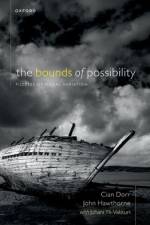
In general, a given object could have been different in certain respects. For example, the Great Pyramid could have been somewhat shorter or taller; the Mona Lisa could have had a somewhat different pattern of colours; an ordinary table could have been made of a somewhat different quantity of wood. But there seem to be limits. It would be odd to suppose that the Great Pyramid could have been thimble-sized; that the Mona Lisa could have had the pattern of colours that actually characterizes The Scream; or that the table could have been made of the very quantity of wood that in fact made some other table. However, there are puzzling arguments that purport to show that so long as an object is capable of being somewhat different in some respect, it is capable of being radically different in that respect. These arguments rely on two tempting thoughts: first, that an object's capacity for moderate variation is a non-contingent matter, and second, that what is possibly possible issimply possible. The Bounds of Possibility systematically investigates competing strategies for resolving these puzzles, and defends one of them. Along the way it engages with foundational questions about the metaphysics of modality.
Studies in Religion and the Everyday is a collection of essays that address the contours of religious beliefs and practices in the context of everyday life in India.
This is the authentic day-to-day record never before translated, of the first eight weeks of freedom as Germany's greatest poet heads for the Italy he has been yearning to see since childhood. Goethe's Italian diary brings us close to a great European writer at a turning-point in his life.
This book offers a comprehensive account of Origen's pneumatology. In its examination of the Holy Spirit's identity (who the Spirit is) and activity (what the Spirit does), the study reads Origen in his context and surveys his entire corpus. It also provides a fresh perspective of Origen's Trinitarian thought.
A City of Equals combines a multi-disciplinary literature review and, distinctively, more than 180 interviews in 10 cities in 6 countries: Wolff and de Shalit provide an account of a city of equals based on the idea that it should give each of its city-zens a secure sense of place or belonging.
Institutional Roots of India's Security Policy presents high-quality analytical examinations of several foreign policy and national security institutions spread across four domains: the armed services, intelligence, border and internal security, and policy and coordination to offer insights on their organizational and institutional foundations.
What does religion mean to modern Ireland and what is its recent social and political history? The Oxford Handbook of Religion in Modern Ireland provides in-depth analysis of the relationships between religion, society, politics, and everyday life on the island of Ireland from 1800 to the twenty-first century. Taking a chronological and all-island approach, it explores the complex and changing role of religion both before and after partition. The handbook's thirty-two chapters address long-standing historical and political debates about religion, identity, and politics, including religion's contributions to division and violence. They also offer perspectives on how religion interacts with education, the media, law, gender and sexuality, science, literature, and memory. Whilst providing insight into how everyday religious practices have intersected with the institutional structures of Catholicism and Protestantism, the book also examines the island's increasing religious diversity, including the rise of those with 'no religion'. Written by leading scholars in the field and emerging researchers with new perspectives, this is an authoritative and up-to-date volume that offers a wide-ranging and comprehensive survey of the enduring significance of religion on the island.
The Way the Money Goes traces out what happened to the UK's fiscal constitution - the framework for planning and controlling public spending - under three different governments (Conservative, Labour, Conservative/Liberal Democrat) from the early 1990s to the mid-2010s.
The Reformation of the Heart: Gender and Radical Theology in the English Revolution offers fresh insight into the relationship between radical theology and gender radicalism in the English Revolution. It addresses together two themes which have long fascinated historians of the period: the intellectual formation of religious radicalism, and the prominence of women as prophets and preachers in radical sects. Sarah Apetrei explores the remarkable ideas and reforming visions of a levelling and highly mystical network in the period of civil conflict, the regicide, and its aftermath--a network which linked military chaplains with inspired women and congregations across England. Drawing on both printed works and previously unexamined manuscript evidence, Apetrei discovers that revolutionary radicals were both more theologically daring, and more unified in their support for women's participation, than we have hitherto thought. On one side, the army chaplains and radical preachers developed a highly original theology of gender, conceiving of a female principle in the Godhead. They were also explicit advocates of women's preaching to an extent previously unacknowledged. Concomitantly, women's involvement in preaching and publishing during this period of crisis fostered innovative thinking. In a climate in which Reformed teachings about the limits of election were being reasserted, women were pioneers in teaching the doctrine of universal salvation or 'general redemption'. Female theologians and visionaries also played a prominent part in the dissemination of ideas, drawn from European radical reformations and condemned by the magisterial churches, about the 'heavenly flesh' of Christ and its appearance in the bodies of the saints in the last days. They used highly feminized, maternal imagery to discuss Christ. As such, this book also contributes to feminist epistemology. It shows how, as a group with distinctive experiences, priorities, and cultural identities, the involvement of women in religious reform and the conception of ideas can be truly transformative.
The documents issued by medieval bishops cast an important light on their affairs and on the history of the English Church during the Middle Ages. English Episcopal Acta 47 brings together the surviving documents issued by the Bishops of Bath and Wells, both of whom served in King Edward I's government.
Abonner på vårt nyhetsbrev og få rabatter og inspirasjon til din neste leseopplevelse.
Ved å abonnere godtar du vår personvernerklæring.