








Gjør som tusenvis av andre bokelskere
Abonner på vårt nyhetsbrev og få rabatter og inspirasjon til din neste leseopplevelse.
Ved å abonnere godtar du vår personvernerklæring.Du kan når som helst melde deg av våre nyhetsbrev.

The Oxford Handbook of Global South Youth Studies offers a contribution from Southern scholars to remake Youth Studies from its current state that universalises Northern perspectives into a truly Global Youth Studies. It foregrounds Southern youth's life-worlds, and realigns theory with contemporary youth practices in to a more just and egalitarian epistepraxis.
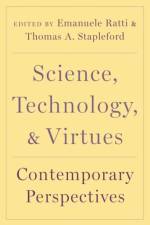
Science, Technology, and Virtues gathers a diversity of perspectives to show how concepts of virtue can help us better understand, construct, and use the products of modern science and technology.
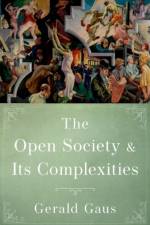
The "Open Society" is a society of free individuals, cooperating while pursing diverse ways of living. The Open Society and Its Complexities marshals formal models and empirical evidence to show that our open society is grounded on the moral foundations of human cooperation originating in our distant evolutionary past, but has built upon these foundation a complex society that requires us to rethink both the nature of moral justification and the meaning ofdemocratic self-governance.
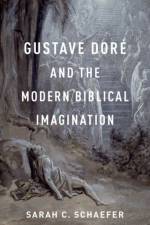
Gustave Doré and the Modern Biblical Imagination explores the role of biblical imagery in modernity, an era that has often been defined through a process of secularization. It does so through the lens of Gustave Doré (1832-83), whose work is among the most reproduced and adapted scriptural imagery in the history of Judeo-Christianity. The book argues that Doré's biblical imagery negotiated the challenges of visualizing the Bible for modernaudiences in both sacred and secular contexts. A set of texts whose veracity and authority were under unprecedented scrutiny in this period, the Bible was at the center of a range of historical, theological, and cultural debates. Gustave Doré is at the nexus of these narratives, as his work established the most pervasivevisual language for biblical imagery in the past two and a half centuries, and constitutes the means by which the Bible has persistently been translated visually.
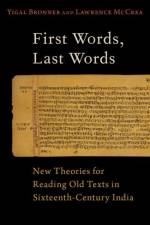
First Words, Last Words explores the nature of theoretical innovation in scholastic traditions by focusing on a specific controversy regarding scriptural interpretation in sixteenth-century India. The controversy concerns the role of sequence-what comes first and what comes later-in determining our interpretation of a scriptural passage. Bronner and McCrea trace both the issue of sequence and the question of innovation through an in-depth study of thisdebate and through a comparative survey of similar problems in Judaism, Christianity, and Islam, revealing that the disputants in this controversy often pretended to uphold traditional views, when they were in fact radically innovative.
This thought-provoking and ambitious book is a sustained critique of the conventional understanding of what it means to "explain" something in the social sciences. This paperback edition includes a new preface, in which Martin connects The Explanation of Social Action to deep neural networks that are important to the study of artificial intelligence and to the development of computational social science.
In Metaphors of Eucharistic Presence: Language, Cognition, and the Body and Blood of Christ, Stephen R. Shaver brings together the fields of cognitive linguistics and liturgical theology to propose a new approach to the ecumenically controversial issue of eucharistic presence. Drawing from the work of cognitive linguists such as George Lakoff, Gilles Fauconnier, and Mark Turner, and theologians such as Robert Masson and John Sanders, Shaver argues that thereis no clear division between literal and figurative language: rather, human cognition is grounded in sensorimotor experience, and phenomena such as metaphor and conceptual blending are basic building blocks of thought. Complex realities are ordinarily understood by means of more than one metaphor. Inheritedmodels of eucharistic presence, then, are not necessarily mutually exclusive but can serve as complementary members of a shared ecumenical repertoire.
This Handbook provides a comprehensive and up-to-date examination of lifelong learning. Across 38 chapters, including twelve that are brand new to this edition, the approach is interdisciplinary, spanning human resources development, adult learning (educational perspective), psychology, career and vocational learning, management and executive development, cultural anthropology, the humanities, and gerontology.
Saints of Resistance: Devotions in the Philippines under Early Spanish Rule is the first scholarly study to focus on the dynamic life of saints and their devotees in the Spanish Philippines from the sixteenth through the early part of the eighteenth century. Christina Lee recovers the voices of colonized Philippine subjects as well as those of Spaniards who, through the veneration of miraculous saints, projected and relieved their grievances, anxieties, andhistories of communal suffering.
Tracing how anxieties, insecurities, and moral desire about English instilled through South Korea's neoliberal transformation led to the country's heated pursuit of English in the 1990s and 2000s, this book presents subjectivity as a theoretical and analytical perspective for studying the intersection of language and political economy.
In Framboids, David Rickard analyzes and discusses the importance of these natural, small subspherical aggregates of pyrite.
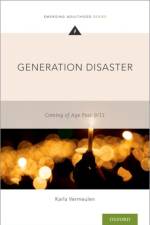
Disaster mental health expert Karla Vermeulen draws on a combination of statistics, academic sources, and her own original research, including results from a nationally representative survey, to examine the unique challenges experienced by emerging adults post-9/11.
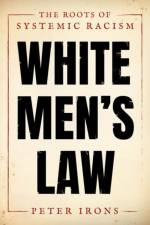
The current debate over the causes and possible cures for the persistent white advantage over African Americans in education and income needs a resource that provides both historical and current evidence. In White Men's Law, Peter Irons fills this need with the stories of African Americans who challenged their status in acts of resistance, from slavery and Jim Crow segregation to today's Black Lives Matter and other racial justice movements. Irons marshals awide array of evidence to make a persuasive argument that systemic racism still permeates every major institution in American society. White Men's Law is certain to provoke discussion on both sides of this debate, in readable and often graphic form.
Drawing upon Muslim Europe's own voices, institutions, and experiences, this compelling work reframes the debates on European secularism, the historic role of Shari'a law in diverse European states, Muslims and Nazis, Muslims and Communists, and the contributions of Muslims to Europe today.
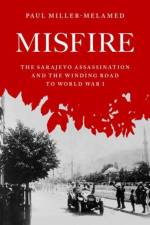
By narrating the Sarajevo assassination in a broad historical context, Misfire contends that the most consequential political murder in modern history would have remained inconsequential if not for the decisions made by the leaders of Europe's Great Powers.
Divisions draws together the history of race and the military; of high command and ordinary GIs; and of African Americans, white Americans, Asian Americans, Latinos, Native Americans, arguing that racist divisions were a defining feature of America's World War II military.
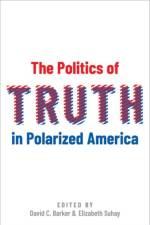
This volume provides the first comprehensive empirical examination of the "politics of truth" - its context, causes, and potential correctives. Combining insights from the fields of political science, political theory, communication, and psychology, the experts in this volume draw compelling - if sometimes competing - conclusions regarding this rising democratic threat.
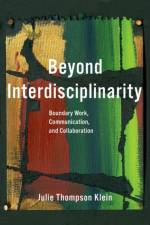
Beyond Interdisciplinarity is the first book to present a conceptual framework for thinking about inter- and trans-disciplinary as well as cross-sector boundary work. The approach in this book accounts for the dynamics of communicating, collaborating, and learning across disciplines.
This book implements a conceptual framework for examining the post-modern, sociocultural Israeli scene that facilitates and triggers a search for meaning among its contemporary citizens. It combines theory, data, and illustrative case studies to unravel a variety of significant and fundamental manifestations of this quest as it is seen under existential duress.
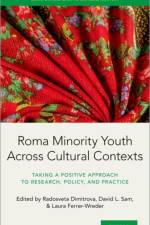
This book explores Positive Youth Development (PYD) in Roma ethnic minority youth. Standing apart from current volumes, this book focuses on the Roma ethnic minority - one of the most marginalized and oppressed minority groups in Europe - and on strengths and resources for optimal well-being in the community. The international and multidisciplinary contributors to this book address the complexities of Roma life in a variety of cultural settings, exploring how keydevelopmental processes and person-context interactions can contribute to optimal and successful adaptation.
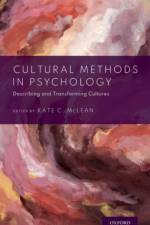
This volume describes a broad array of culturally sensitive research methods in psychology, addressing diverse issues such as implicit bias, identity development, trauma, and racism. Each chapter provides instructive value for those who want to effectively employ these methods, as well as deep reflection on the meaning of various methods for understanding complex psychological phenomena.
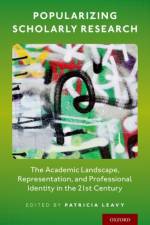
Popularizing Scholarly Research: The Academic Landscape, Representation, and Professional Identity in the 21st Century provides an introduction to the world of research in the 21st century. This book discusses how research may be represented and issues related to professional identity in this shifting arena. Patricia Leavy's book explains how research has turned from a disciplinary to transdisciplinary, the new structures our research may take, as well aswhat our professional lives may look like. Contributors discuss transdisciplinary research, public intellectuals, audience and voice, creative nonfiction, writing collaboratively, visual images, writing for broad audiences, academic blogs, publicity, funding, and public policy.
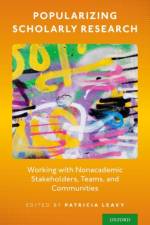
In Popularizing Scholarly Research: Working with Nonacademic Stakeholders, Teams, and Communities, Leavy covers social movements, ethical issues working with vulnerable populations, outsider-insider issues, citizens' juries, community-based research, participatory action research, community art-making, theatre, cross-cultural research, decolonizing methods, team research, and disaster research.
Overturning centuries of scholarship that imagined life in the Roman world as happening only in society, Aaron J. Kachuck delivers a revelatory new perspective: ancient Rome not only possessed a vibrant sense of solitude, but its solitary sphere also lies behind its greatest masterpieces, from Cicero's philosophy to the life's works of Virgil, Horace, and Propertius.
This book investigates the thought of two of the most influential philosophers from antiquity, Plato and his predecessor Anaxagoras, with respect to their metaphysical account of objects and their properties. The book's subject matter is of wide interest to philosophers and historians of philosophy alike. The methodology applied in the study of the subject matter in this book also facilitates reaching out to both domains of readership. The innovative (and possiblycontroversial) claims made in the book will spark debate and bring the book at the forefront of current discussions in philosophy.
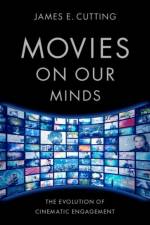
This book traces the development of popular cinema from its inception to the present day to understand why humankind has expanded its viewing of popular movies over the last century. Using hundreds of shots from a wide range of films, this book considers how the visual elements impact our perception, understanding, and emotional responses to specific scenes, all of which have evolved over the course of cinematic history.
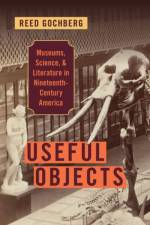
Useful Objects examines the cultural history of nineteenth-century American museums through the eyes of writers, visitors, and collectors. Throughout this period, museums gradually transformed from encyclopedic cabinets to more specialized public institutions. These changes prompted wider debates about how museums determine what objects to select, preserve, and display-and who gets to decide. Drawing on a wide range of archival materials and accounts infiction, guidebooks, and periodicals, Useful Objects shows how the challenges facing nineteenth-century museums continue to resonate in debates about their role in American culture today.
Applications of the Unified Protocols for Transdiagnostic Treatment of Emotional Disorders in Children and Adolescents is a practical guide for clinicians and researchers on applying the core principles of the UP-C and UP-A to treat children and adolescents with a broad range of emotion disturbance across settings in which youth typically receive care, including community mental health settings, pediatric primary care, and telehealth.
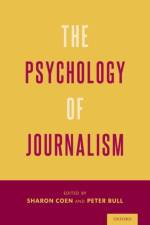
The Psychology of Journalism explores the psychological processes involved in the production, delivery, and consumption of news. With contributions from an international team of scholars with backgrounds in both media and psychology, the chapters provide theoretical and empirical evidence drawn from research in key areas in psychology to better understand why and how journalists and audience alike select, attend, understand, and co-construct meaning fromreported events.
Redesigning Research on Post-Traumatic Growth offers new directions for post-traumatic growth research. The book illustrates the benefits of research designs that incorporate multiple methods of assessment and highlights the value of integrating various disciplines, such as philosophy and multiple areas of psychology (e.g., clinical, developmental, health, and personality) for more holistic understanding of the human capacity to overcomeadversity.
Abonner på vårt nyhetsbrev og få rabatter og inspirasjon til din neste leseopplevelse.
Ved å abonnere godtar du vår personvernerklæring.