



















Gjør som tusenvis av andre bokelskere
Abonner på vårt nyhetsbrev og få rabatter og inspirasjon til din neste leseopplevelse.
Ved å abonnere godtar du vår personvernerklæring.Du kan når som helst melde deg av våre nyhetsbrev.

This book presents for the first time in English a complete translation of the Expository Commentary to the Daode jing written by the Daoist Cheng Xuanying in the 7th century CE. It includes a thorough introduction by the editor and translator that explores the origins of the commentary and its political and social context.
This book presents for the first time in English a complete translation of the Expository Commentary to the Daode jing written by the Daoist Cheng Xuanying in the 7th century CE. It includes a thorough introduction by the editor and translator that explores the origins of the commentary and its political and social context.
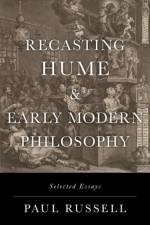
The philosopher Paul Russell is well known for his scholarship on Hume and free will. This volume collects Russell's most important essays on Hume, with some articles addressing early modern philosophy more generally. The volume is organized thematically into five sections: metaphysics, free will, ethics, religion, and general interpretations of Hume's philosophy. In a substantive introduction, Russell outlines how his insights overlap and connect to various topicsin contemporary philosophy. Recasting Hume and Early Modern Philosophy presents the reader with Russell's substantial and interconnected observations and insights on the matters and figures of the greatest importance in early modern philosophy.
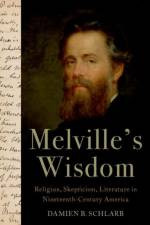
In Melville's Wisdom: Religion, Skepticism, Literature in Nineteenth-Century America, Damien B. Schlarb explores the manner in which Herman Melville responds to the spiritual crisis of modernity by using the language of the biblical Old Testament wisdom books to moderate contemporary discourses on religion, skepticism, and literature. Schlarb argues that attending to Melville's engagement with the wisdom books (Job, Proverbs, and Ecclesiastes) can help usunderstand a paradox at the heart of American modernity: the simultaneous displacement and affirmation of biblical language and religious culture.
Focusing on North America, Europe, and Israel in the twentieth and twenty-first centuries, this Handbook highlights the sometimes surprising, often hidden and overlooked Jewish resonances within a range of styles from modern and postmodern dance to folk dance and flamenco.
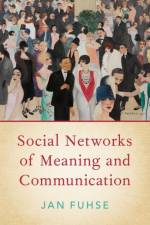
In Social Network of Meaning and Communication, Jan Fuhse offers a theoretical account of social networks to explore both what they are and how they matter in the social world. Drawing upon and extending the cutting-edge work of Harrison White and Charles Tilly, Fuhse takes an important step forward in establishing a new theory of social networks, reconceptualizing networks as constituted in patterns of meaning with a dynamic set of expectations that form,reproduce, and change over the course of communicative events.
#MeToo meets Black Lives Matter. Empowering Black Boys to Challenge Rape Culture combines the energy and activism of these two recent social movements to provide an educational resource for parents, caretakers, and mentors of Black boys who are concerned about sexual violence and the risks of toxic hypermasculinity that contribute to rape culture.
This book explores how capital and consumer markets could provide an additional or alternative form of enforcement to promote responsible business conduct. By examining existing and emerging strategies to better align business policies and practices with respect for human rights, it explains the power activists, investors, and consumers possess to impact corporate human rights communications and conduct.
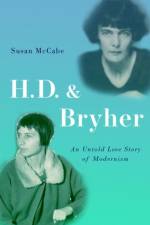
H.D. & Bryher: An Untold Love Story of Modernism takes on the daring task of examining the connection between two queer women, one a poet and the other a historical novelist, living from the late 19th century through the 20th century. When they met in 1918, H.D. was a modernist poet, married to a shell-shocked adulterous poet, and pregnant by another man. She fell in love with Bryher, who was entrapped by her wealthy secretive family. Their bond grewover Greek poetry, geography, ancient history and literature, the telegraph, and telepathy. They felt their love-and their true identities existed invisibly- a giddy, and disturbing element to their relationship; they lived off and on in distant geographies, though in near continual contact. This book exposes whyliterary history has occluded this love story of the world wars and poetic modernism.
Many philosophers and scientists over the course of history have held that the world is alive. It has a soul, which governs it and binds it together. This suggestion, once so wide-spread, may strike many of us today as strange and antiquated—in fact, there are few other concepts that, on their face, so capture the sheer distance between us and our philosophical inheritance. But the idea of a world soul has held so strong a grip upon philosophers'' imaginations forover 2,000 years, that it continues to underpin and even structure how we conceive of time and space. The concept of the world soul is difficult to understand in large part because over the course of history it has been invoked to very different ends and within the frameworks of very different ontologies and philosophical systems, with varying concepts of the world soul emerging as a result. This volume brings together eleven chapters by leading philosophers in their respective fields that collectively explore the various ways in which this concept has been understood and employed, coveringthe following philosophical areas: Platonism, Stoicism, Medieval, Indian or Vedântic, Kabbalah, Renaissance, Early Modern, German Romanticism, German Idealism, American Transcendentalism, and contemporary quantum mechanics and panpsychism theories. In addition, short reflections illuminate the impactthe concept of the world soul has had on a small selection of areas outside of philosophy, such as harmony, the biological concept of spontaneous generation, Henry Purcell, psychoanalysis, and Gaia theories.
Many philosophers and scientists over the course of history have held that the world is alive. It has a soul, which governs it and binds it together. This suggestion, once so wide-spread, may strike many of us today as strange and antiquated—in fact, there are few other concepts that, on their face, so capture the sheer distance between us and our philosophical inheritance. But the idea of a world soul has held so strong a grip upon philosophers'' imaginations forover 2,000 years, that it continues to underpin and even structure how we conceive of time and space. The concept of the world soul is difficult to understand in large part because over the course of history it has been invoked to very different ends and within the frameworks of very different ontologies and philosophical systems, with varying concepts of the world soul emerging as a result. This volume brings together eleven chapters by leading philosophers in their respective fields that collectively explore the various ways in which this concept has been understood and employed, coveringthe following philosophical areas: Platonism, Stoicism, Medieval, Indian or Vedântic, Kabbalah, Renaissance, Early Modern, German Romanticism, German Idealism, American Transcendentalism, and contemporary quantum mechanics and panpsychism theories. In addition, short reflections illuminate the impactthe concept of the world soul has had on a small selection of areas outside of philosophy, such as harmony, the biological concept of spontaneous generation, Henry Purcell, psychoanalysis, and Gaia theories.
In addition to being a major area of research within International Relations, peacebuilding and statebuilding is a major policy area within the UN and other international and regional organizations. It is also a concern of international financial institutions, including the World Bank, and a significant factor in the foreign and security policies of many established and emerging democracies. Peacebuilding and statebuilding are among the main approaches forpreventing, managing, and mitigating global insecurities; dealing with the humanitarian consequences of civil wars; and expanding democracy and neoliberal economic regimes. Peace formation is a relatively new concept, addressing how local actors work in parallel to international and national projects, andhelps shape the legitimacy of peace processes and state reform. The Oxford Handbook of Peacebuilding, Statebuilding, and Peace Formation serves as an essential guide to this vast intellectual and policy landscape. It offers a systematic overview of conceptual foundations, political implications, and tensions at the global, regional, and local levels, as well as key policies, practices, examples, and discourses underlining all segments of peacebuilding and statebuilding praxis. Approaching peacebuilding from disciplinary perspectives across thesocial sciences, the Handbook is organized around four major thematic sections. Section one explores how peacebuilding, statebuilding, and peace formation is conceived by different disciplines and IR approaches, thus offering an overview of the conceptual bedrock of major theories and approaches. Section twosituates these approaches among other major global issues, including globalization, civil society, terrorism, and technology to illustrate their global, regional, and local resonance. Section three looks at key themes in the field, including peace agreements, democratization, security reform, human rights, environment, and culture. Finally, section four looks at key features of everyday and civil society peace formation processes, both in theory and in practice.
Following the story of the story of the displacement of a Maytag refrigerator plant from Galesburg, Illinois, to Reynosa, Mexico in 2004, Boom, Bust, Exodus puts a human face on globalization, exploring the social side of the fast-moving changes sweeping across the U.S. and Mexico.
Traces the history of the Lockerbie incident through the text documents associated with the case from the tragic evening of December 21 1988 through the international court conflict. This book argues that prosecuting terrorists in national courts is preferred over international courts and tribunals.
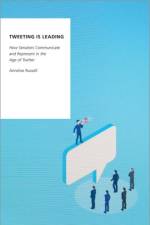
Social media is changing the business of representation in the Senate. If you want to know what your senator is up to, you don't need a newspaper, just your phone. Drawing on a unique dataset of almost 200,000 senator tweets, Tweeting is Leading offers a critical analysis of senators' communication on Twitter, the individual and constituent forces that shape it, and the agendas that result.
Ornamentalism offers one of the first sustained and original theories of Asiatic femininity. Examining ornamentality, in lieu of Orientalism, as a way to understand the representation, circulation, and ontology of Asiatic femininity, this study extends our vocabulary about the woman of color beyond the usual platitudes about objectification.
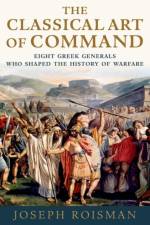
This book examines the many facets of Greek leadership during the Classical Age through the unique perspective of eight generals regarded as outstanding shapers of Greek military history. The work also draws attention to the important role that the general's personality played in his command.
Suitable for upper division courses in Diplomatic History, Diplomacy and Statecraft, or history of foreign relations. This title is divided into three parts: the first section is a survey of international history and diplomacy; the second part is about specific problems; and the third explores ethics and other restraints on force and statecraft.
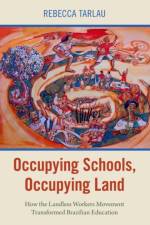
In Occupying Schools, Occupying Land, Rebecca Tarlau looks at the Brazilian Landless Workers' Movement over the past thirty-five years to illustrate how social movements can use state services, such as schools, to support their social change goals. Through a detailed ethnographic and long-term examination of the MST's educational struggle, Tarlau shows how educational institutions can in turn help movements build capacity and social influence. This bookprovides an analysis of how activists convinced government officials to implement these educational practices and how these initiatives strengthened the movement.
In Learning from Our Mistakes: Epistemology for the Real World, William J. Talbott provides a new framework for understanding the history of Western epistemology and uses it to propose a new way of understanding rational belief that can be applied to pressing social and political issues. This framework is used to articulate a new theory of prejudice and a new diagnosis of the sources of inequity in the U.S. criminal justice system, as well as insight intothe proliferation of tribal and fascist epistemologies based on alt-facts and alt-truth.
Image in the Making examines the ways in which digital technology changes our understanding of and engagement with the visual arts. At the current stage of development in digital technology, we cannot always tell, just by looking, that an image was made with digital - versus analog - tools. But a case can be made for fully appreciating an image only in terms of its underlying digital structure and technology.
Between Beats: The Jazz Tradition and Black Vernacular Dance offers a new look at the complex intersections between jazz music and popular dance over the last hundred-plus years. Author Christi Jay Wells shows how popular entertainment and cultures of social dancing were crucial to jazz music's formation and development even as jazz music came to earn a reputation as a "legitimate" art form better suited for still, seated listening.
Mindful of traditional philosophical roots of curriculum-foundations, Curriculum Philosophy and Theory for Music Education Praxis offers a practical overview of curriculum basics and their implications for modern music education.
Love Dances: Loss and Mourning in Intercultural Collaboration explores global relationality within the realm of intercultural collaboration in contemporary dance. Focusing on "East"-"West" pairings and how dance artists from different cultural and movement backgrounds find ways to collaborate, Love Dances contends that the practice and performance of dance serves as a revelatory site for working across culture.
Since the end of the Cold War, states and civil society actors have worked together through global governance initiatives to address challenges collectively. While global governance, by definition, is initiated at the international level, the effects of global governance occur at the domestic level and implementation depends upon the actions of domestic actors. Bringing Global Governance Home examines how NGO engagement with a variety of global governanceinitiatives shapes domestic governance around climate change, corporate social responsibility, HIV/AIDS, and sustainable forestry.
Abonner på vårt nyhetsbrev og få rabatter og inspirasjon til din neste leseopplevelse.
Ved å abonnere godtar du vår personvernerklæring.