















Gjør som tusenvis av andre bokelskere
Abonner på vårt nyhetsbrev og få rabatter og inspirasjon til din neste leseopplevelse.
Ved å abonnere godtar du vår personvernerklæring.Du kan når som helst melde deg av våre nyhetsbrev.

This monograph presents the first detailed exposition of the formal theory of Branching Space-Times (BST). The theory presented here by Nuel Belnap, Thomas Muller, and Tomasz Placek describes how real possibilities can be anchored in a spatio-temporal world that is rudimentarily relativistic. Things that are possible in Cleveland are not possible in San Francisco; other things were possible in 1988 but are not possible in 2021. BST represents such possibilities usinga mathematically rigorous framework that combines modality and rudimentary relativistic space-times. The book is divided into two parts: the first contains the exposition of the theory, including detailed proofs; the second contains three applications of BST in metaphysics and philosophy of science,focusing on the use of BST to represent pertinent forms of indeterminism in each area.This is an open access title available under the terms of a CC BY-NC-ND 4.0 International license. It is free to read at Oxford Scholarship Online and offered as a free PDF download from OUP and selected open access locations.
An illustrated reference covering all topics of exploration worldwide, Including advances in navigation, the discovery of the New World, polar expeditions, and the space age. The Oxford Companion to World Exploration is available in print and as an e-reference text from Oxford's Digital Reference Shelf.
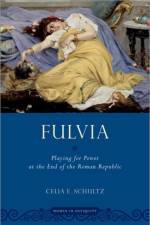
Fulvia is the first full-length biography focused solely on Fulvia, daughter of Sempronia and Bambalio, who is best known as the wife of Marcus Antonius (Mark Antony). It peels away the heavily biased accounts of her to reveal a strong-willed, independent woman who was, by many traditional measures, a successful Roman matron.
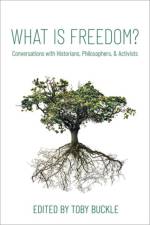
This book presents a unique collection of interviews on the meaning of freedom in the modern world. Drawing on the expertise of the world's leading historians, philosophers, and most influential activist it takes up the question of our highest ideal from a diverse and exciting range of perspectives.
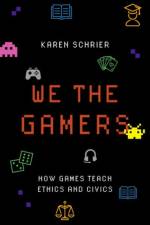
Combining research-based perspectives and current examples including Minecraft and Animal Crossing: New Horizons, We the Gamers shows how games can be used in ethics, civics, and social studies education to inspire learning, critical thinking, and civic change.
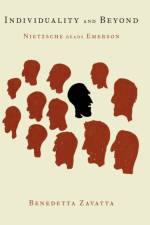
In Individuality and Beyond, Benedetta Zavatta offers a new philosophical interpretation of the impact that Emerson's work had on a range of Nietzsche's ideas. Zavatta provides new insights into this relationship by drawing on the marginal markings and annotations that Nietzsche made in his copies of Emerson's works, which have been discovered in Nietzsche's personal library.
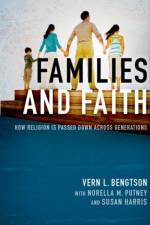
In Families and Faith, Vern Bengtson examines how religion is-or is not-passed down from one generation to the next. Armed with unprecedented data collected over more than four decades from more than 2400 individuals, Bengtson offers remarkable insight into American religion over the course of several decades.
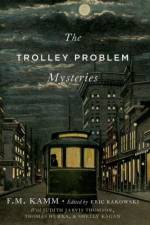
The Trolley Problem Mysteries considers whether who turns the trolley and/or how it is turned (or otherwise stopped) affect the moral permissibility of acting and suggests general proposals for when we may and may not harm some people to help others.
This book is essential reading for anyone wishing to understand the current debates and tensions within American Catholicism, which are the result of the American Catholic confrontation with historical change that occurred between 1964 and 1974 and gave rise to the current division between liberals and conservatives in America's largest church.
Now brought up to date in a new edition, Brazil traces the history of Brazil over the last 500 years. Considered one of the most lively and informative of it's kind, this text employs a political and economic narrative while still including relevant information on society and culture.
The theory of knowledge has traditionally been pursued in ways which fail to draw on the resources of the sciences. This book takes a different approach. It offers a theory of knowledge which is informed by scientific work, and it shows how this approach can illuminate a variety of traditional philosophical questions about the nature and possibility of knowledge. Designed for the non-specialist, this book offers an introduction to the theory of knowledge whichdraws the reader in to philosophical issues about perception, inference, bias, and argumentation by way of a wide range of interesting examples highlighting the strengths and shortcomings of the many ways in which we acquire our beliefs.
This diary is one of the most precious-and readable-pieces of testimony about life in Vichy France under Nazi occupation. Leon Werth was a Jewish writer who left Paris in June 1940 and hid out in a small village. We see how the Occupation affected life in the countryside and, after his return to Paris, the insurrection of August 1944.
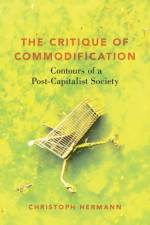
In The Critique of Commodification, Christoph Hermann argues that commodification entails production for profit rather than provision for need. The focus on profits, Hermann shows, means that social needs are met in a way that excludes those who cannot pay and ensures high profits. In going through the damaging effects of commodification, Hermann also discusses alternatives based on the satisfaction of needs rather than maximization of profits.
This encyclopedia traces the development and future of research on political decision making through an exploration of its central theoretical approaches, methodologies, and substantive topics of perennial interest. The focus is on political decision making as a question of individual psychology: individual preferences, information search, evaluation, and choice. Through peer-reviewed contributions by leading researchers, the encyclopedia provides a generalframework for studying political decision making that applies to both everyday citizens and political elites.
In Choose Your Medicine, Lewis A. Grossman examines the concept of freedom of therapeutic choice in the United States. He presents a compelling look at how persistent but evolving notions of a right to therapeutic choice have affected American policy and law from the Revolution through the Trump Era. The book is filled with vivid descriptions of activists and lawyers resisting a variety of government limits on therapeutic choice, including medical licensingstatutes, FDA bans on unapproved drugs and alternative remedies, abortion restrictions, and prohibitions against medical marijuana and physician-assisted suicide. He further considers the widespread opposition to state-compelled health measures like vaccines and face masks.
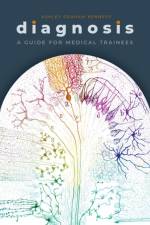
Diagnosis is a practically-oriented guide to the complex reasoning, observations, and judgment that health professionals draw on to make a clinical diagnosis.
This book is a major intervention into just war theory by the most influential contemporary interpreter and exponent of Kant's legal and political philosophy. Building on Kantian foundations, it offers a reconceptualization of the duties of the state and the norms governing war. Ripstein argues that a special morality governs war because of its distinctive immorality: The wrongfulness of entering or remaining in a condition in which force decides everythingprovides the standards for evaluating the grounds of initiating war, the ways in which wars may be fought, and the results of past wars.
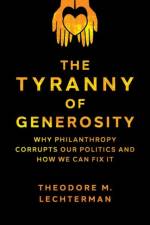
The Tyranny of Generosity investigates what democracy demands from philanthropic giving and the policies that structure it. Drawing on political philosophy but addressed to a wide audience, it sheds new light on how philanthropy can both frustrate and facilitate democratic ideals. The author evaluates the respective roles of philanthropy and government, public subsidies for private giving, the use of donations for political speech, instruments of perpetualgiving, the rise in giving by commercial corporations, and "effective altruism" as a guide for individual giving. Written accessibly, it is a book for anyone who's ever had mixed feelings about clicking the "donate" button or thanking a benefactor.
Written by a team of distinguished scholars and senior practitioners from around the world, Talking International Law examines legal argumentation by states and other actors in the settings where it mostly transpires - outside of courts. Offering unprecedented insight into the theory of legal argumentation, the book offers a unique exposure to this multi-faceted practice, deepening our understanding of how international law actually operates in internationalaffairs.
Including original cross-national data and in-depth case analyses of corporate actions and outcomes in Colombia, Northern Ireland, and Tunisia, The Building and Breaking of Peace shows that corporations help to prevent violence but not resolve it. In examining the corporate motives for peacebuilding and the implications of these activities for preventing violence and conflict resolution, Molly M. Melin builds a more holistic picture of the peace and conflictprocess. The findings also help explain why armed civil conflicts persist despite the multitude of diverse actors working to end them.
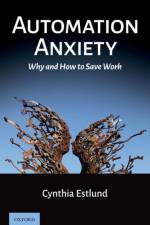
Confronting the hotly-debated prospect of mounting job losses due to automation, and the widely-divergent hopes and fears that prospect evokes, this book proposes a strategy for both mitigating the losses and spreading the gains from shrinking demand for human labor. What the book proposes for a foreseeable future of less work will help address growing economic inequality and persistent racial stratification as we face the prospect of net job losses.
Abonner på vårt nyhetsbrev og få rabatter og inspirasjon til din neste leseopplevelse.
Ved å abonnere godtar du vår personvernerklæring.