



















Gjør som tusenvis av andre bokelskere
Abonner på vårt nyhetsbrev og få rabatter og inspirasjon til din neste leseopplevelse.
Ved å abonnere godtar du vår personvernerklæring.Du kan når som helst melde deg av våre nyhetsbrev.

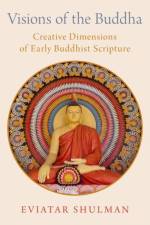
Visions of the Buddha offers a groundbreaking new approach to the nature of the early discourses of the Buddha, the most foundational scriptures of Buddhist religion. While the early discourses are commonly considered to be attempts to preserve the Buddha's teachings, Shulman demonstrates that these texts are full of creativity, driven by inspired storytelling. Much of this storytelling is effected through techniques specific to oral literature, in whichoral formulas can be combined in an infinite variety of ways, in order to produce yet more beautified visions of Buddhist truth.
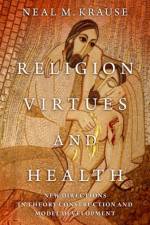
In Religion, Virtues, and Health: New Directions in Theory Construction and Model Development, Krause suggests that religion may operate, in part, by bolstering physical health as well as psychological well-being. The book is designed to explain how these health-related benefits arise. The main conceptual thrust of his model is that people learn to adopt key virtues from fellow church members, including forgiveness, compassion, and beneficence. Thesevirtues, in turn, promote a deeper sense of meaning in life. Then, meaning in life exerts a beneficial effect on health and well-being.
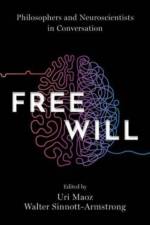
This book contains thirty bidirectional exchanges between neuroscientists and philosophers that focus on the most critical questions in the neurophilosophy of free will. It mimics a lively, interdisciplinary conference, where experts answer questions and follow-up questions from the other field, helping each discipline to understand how the other thinks and works. Each chapter is concise and accessible to non-experts-free from disciplinary jargon and highly technicaldetails-but also employs thorough and up-to-date research from experts in the field.
Unredeemed Land examines the ways the Civil War and the emancipation of the slaves reconfigured the South's natural landscape, revealing the environmental constraints that shaped the rural South's transition to capitalism during the late nineteenth century.
In The Poseidon Project, David Bosco tells the story of how rulers, merchants, navies, environmentalists, and activists have struggled to craft rules for the oceans. From the Dutch challenge to the Portuguese in the 17th century to the current turmoil in the South China Sea, it tracks the tension between efforts to control maritime space and the idea that the oceans should be unowned and open to all.
Screening the Police explores the history of film's entwinement with law enforcement, showing the role that state power has played in the creation and expansion of a popular medium.
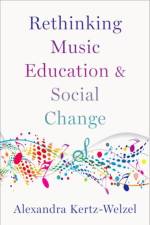
Rethinking Music Education and Social Change asseses music education's relation to societal transformation and offers an imaginative, yet critical, vision for music education as utopian theory and practice.
The reader will find in these essays key insights into the profound differences that have marked the growth of Western modernity-race, gender, sexuality among them-and what they reveal about selfhood, identity, and possibilities for human freedom and oppression.
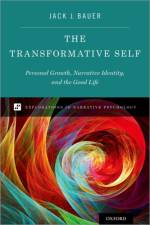
The Transformative Self explains how people create a self-identity in their life stories to cultivate personal growth and the good life. Combining scientific research in psychology with work in philosophy, literature, history, and more, this book shows how personal and cultural narratives shape the development of happiness, love, and wisdom.
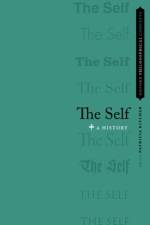
The Self: A History explores the ways in which the concept of an ''I'' or a ''self'' has been developed and deployed at different times in the history of Western Philosophy. It also offers a striking contrast case, the ''interconnected'' self, who appears in some expressions of African Philosophy. The I or self seems engulfed in paradoxes. We are selves and we seem to be conscious of ourselves, yet it is very difficult to say what a self is. Although we refer to ourselves, when we try to find or locate ourselves, the I seems elusive. We can find human bodies, but we do not refer to ourselves by referring to our bodies: we do not know that we are raising our hands or thinking hard by looking at our arms or catching a glimpse of our furrowed brows in a mirror. The essays in this volumeengage many philosophical resourcesΓÇömetaphysics, epistemology, phenomenology, philosophy of psychology and philosophy of languageΓÇöto try to shed needed light on these puzzles.
The Self: A History explores the ways in which the concept of an ''I'' or a ''self'' has been developed and deployed at different times in the history of Western Philosophy. It also offers a striking contrast case, the ''interconnected'' self, who appears in some expressions of African Philosophy. The I or self seems engulfed in paradoxes. We are selves and we seem to be conscious of ourselves, yet it is very difficult to say what a self is. Although we refer to ourselves, when we try to find or locate ourselves, the I seems elusive. We can find human bodies, but we do not refer to ourselves by referring to our bodies: we do not know that we are raising our hands or thinking hard by looking at our arms or catching a glimpse of our furrowed brows in a mirror. The essays in this volumeengage many philosophical resourcesΓÇömetaphysics, epistemology, phenomenology, philosophy of psychology and philosophy of languageΓÇöto try to shed needed light on these puzzles.
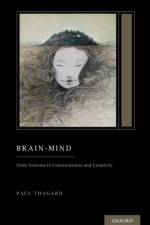
How do brains make minds? Paul Thagard's Brain-Mind presents a unified, brain-based theory of cognition and emotion with applications to the most complex kinds of thinking, right up to consciousness and creativity. Neural mechanisms are used to explain mental operations for analogy, action, intention, language, and the self.
How should we think about immigration and what policies should democratic societies pursue? Sarah Song offers a political theory of immigration that takes seriously both the claims of receiving countries and the claims of prospective migrants. What is required, she argues, is not a policy of open or closed borders but open doors.
In this book, Steven L. Goldman breaks down the barriers between these two groups to explain what scientists know, how they know it, why it's reliable, and why the general public doesn't always know how to make sense of this. Taking readers from Plato's "perpetual battle" to modern disagreements about vaccines, Goldman's Science Wars provides a thought-provoking analysis of the reliability of science.
From Servant to Savant: Musical Privilege, Property, and the French Revolution exposes the fundamental role that the French Revolution played in the emergence of modern professional musicianship. Geoffroy-Schwinden demonstrates how the French Revolution set the stage for the emergence of so-called musical "Romanticism" among the likes of Beethoven and the legacies that continue to haunt musical institutions and industries.
The Oxford Handbook of Comparative Health Law addresses some of the most critical issues facing scholars, legislators, and judges today. When matters of life and death literally hang in the balance, it is especially important for policymakers to get things right. Comparative analysis has become an essential component of the decision making process, and The Oxford Handbook of Comparative Health Law is the only resource available that provides such ananalysis in health law.
The Oxford Handbook of Ethnographies of Crime and Criminal Justice provides critical and current reviews of key research topics, issues, and debates that crime ethnographers have been grappling with for over a century. This volume brings together an outstanding group of scholars to discuss various research traditions, the ethical and pragmatic challenges associated with conducting crime-related fieldwork, relevant policy recommendations for practitioners inthe field, and areas of future research for crime ethnographers.
Networks for Social Impact is a broad review of how nonprofits, businesses, and governments work together to tackle social problems. The book argues that network design and management is not a one-size-fits-all formula. Instead, the type of social issue, the mechanism for social impact, environment, and resources available each determine appropriate choices.
How do armed revolts against existing governments end? What compels rebels to lay down their arms and put revolution aside? And what happens then? Drawing on her years-long research amidst Maoist rebels in India, Rumela Sen outlines the successful methods that persuade rebels to move past revolutionary goals and integrate back into society.
This edited volume focuses on both conceptual and practical challenges in measuring well-being. Leveraging insights across diverse disciplines, contributors consider the philosophical and theological traditions on happiness, well-being and the good life, as well as recent empirical research on well-being and its measurement.
Abonner på vårt nyhetsbrev og få rabatter og inspirasjon til din neste leseopplevelse.
Ved å abonnere godtar du vår personvernerklæring.