



























Gjør som tusenvis av andre bokelskere
Abonner på vårt nyhetsbrev og få rabatter og inspirasjon til din neste leseopplevelse.
Ved å abonnere godtar du vår personvernerklæring.Du kan når som helst melde deg av våre nyhetsbrev.

Using relatively limited text content and preferentially showing the physiological, clinical and therapeutic principles with illustrations and real case studies from Mayo Clinic, this book will be unique among text books dealing with gastrointestinal motility disorders which constitute 40% of the patients seen in clinical practice by gastroenterologists
For almost three hundred years there were those in England who believed that an Italian translation of the Book of Common Prayer could trigger radical change in the political and religious landscape of Italy. The aim was to present the text to the Italian religious and political elite, in keeping with the belief that the English liturgy embodied the essence of the Church of England. The beauty, harmony, and simplicity of the English liturgical text, rendered intoItalian, was expected to demonstrate that the English Church came closest to the apostolic model. Beginning in the Venetian Republic and ending with the Italian Risorgimento, the leitmotif running through the various incarnations of this project was the promotion of top-down reform according to themodel of the Church of England itself. These ventures mostly had little real impact on Italian history: as Roy Foster once wrote, "the most illuminating history is often written to show how people acted in the expectation of a future that never happened." This book presents one of those histories. Making Italy Anglican tells the story of a fruitless encounter that helps us better to understand both the self-perception of the Church of England''s international role and the cross-cultural and religious relations betweenBritain and Italy. Stefano Villani shows how Italy, as the heart of Roman Catholicism, wasΓÇöover a long period of timeΓÇöthe very center of the global ambitions of the Church of England.
In The Universe Is On Our Side, Bruce Ledewitz argues that there has been a breakdown in American public life that no election can fix - Americans struggle to even converse about politics and the usual explanations for our condition have failed to make things better. Ledewitz posits that America is living with the consequences of the Death of God, which Friedrich Nietzsche presumed would be momentous and irreversible. For a long time, God acted as the story of the meaning of our lives. America''s future requires that we begin a new story by each of us asking a question posed by theologian Bernard Lonergan: Is the universe on our side? When we commit to live honestly and fully by our answer to that question, even if our immediate answer is no, America can begin to heal. Beyond this, pondering the question of the universe will allow us to see that there is more to the universe than blind forces and dead matter. Guided by the naturalism of Alfred North Whitehead''s process philosophy, and the historical faith of Dr. Martin Luther King, Jr., Ledewitz argues we can work towards a trust that the universe bends toward justice and our welfare, which can complete our healing and restore faith in American public life. The Universe Is On Our Side makes the case that we can live without God, but not without thinking about holiness in the universe.
La Nijinska is the first biography of twentieth-century ballet's premier female choreographer, shedding new light on the modern history of ballet, and recuperating the memory of lost works and forgotten artists, all while revealing the sexism that still confronts women choreographers in the ballet world.
Before Method and Models examines the shocked reaction to their first appearance of economists in nineteenth-century Britain, where the presumption of Thomas Robert Malthus and David Ricardo to reform society on the basis of theory was unwelcome. Walter shows how the major challenge facing the first economists was, accordingly, to legitimize the activity of theorizing and then reforming economic life, along with the institutions that embedded it in thepolitical nation.
Millions are leaving churches, half of all churches do not add any new members, and thousands of churches shutter their doors each year. These numbers suggest that American religion is not a growth industry. Yet, more than 1000 new churches are started in any given year. In Church Planters, sociologist Richard Pitt uses a series of in-depth interviews with church planters to understand what moves people who might otherwise be satisfied working for churchesto the riskier role of starting one.
What does it mean to say that an object or system computes? What is it about laptops, smartphones, and nervous systems that they are considered to compute, and why does it seldom occur to us to describe stomachs, hurricanes, rocks, or chairs that way? Though computing systems are everywhere today, it is very difficult to answer these questions. The book aims to shed light on the subject by arguing for the semantic view of computation, which states that computingsystems are always accompanied by representations. This view is presented as an alternative to non-semantic views such as the mechanistic account of computation.
Information Resolution and Subnational Capital Markets argues that capital markets are a viable financing alternative for subnational borrowers. It explains how subnational governments can manage their fiscal and debt choices to leverage capital markets to finance efficient, effective, and equitable infrastructure provision.
A provocative and propulsive look at American history, and the myth that the Civil War's "new birth of freedom" ended oligarchy. It just moved westward.
The Form of the Firm attempts to unveil the nature of the corporation as it exists in modern liberal societies. The author contends that economic theories understate the importance and danger of corporate power, and should be supplemented with a political analysis that foregrounds the sorts of political and moral values at stake in corporate activity.
This handbook examines how electrical technologies and their corresponding economies of scale have rendered music and sound increasingly mobile - portable, fungible, and ubiquitous. Highly interdisciplinary, the two volumes of the Oxford Handbook of Mobile Music Studies consider the devices, markets, and theories of mobile music, and its aesthetics and forms of performance.
How do minds make societies, and how do societies change? Paul Thagard systematically connects neural and psychological explanations of mind with major social sciences (social psychology, sociology, politics, economics, anthropology, and history) and professions (medicine, law, education, engineering, and business). Social change emerges from interacting social and mental mechanisms.
Higher education in the United States is facing a critical juncture. Tuition costs are rising, while measures of success are declining. Students struggle to meet the most basic academic requirements, barely passing their courses, while others battle physical and mental health difficulties that profoundly impact their ability to do well in college. This book responds to these challenges, offering a holistic collection of practices to guide those working with emergingadults in higher education. Consisting of chapters from experts in a variety of disciplines, the volume provides faculty, administrators, and staff with the knowledge and skills needed to help today's students succeed.
In one way or another, we are all affected by the actions of the American judicial system. This VSI explains how and why this is - cracking the vail that surrounds American courts and the law by translating the legal technicalities, structural complexities, and jargon of the law into plain English with a real-world context. Aimed at anyone who is caught up on the legal process or someone just curious about how it all works and why, this VSI is the starting placeto understanding the workings and importance of the third branch of American government
Critical Care Psychology and Rehabilitation unites both critical care and rehabilitation teams across a continuum of critical care settings and with survivors of critical illness. Written by the leading researchers in the field, the book builds upon the rapidly expanding literature and illustrates the benefits of this integration between disciplines.
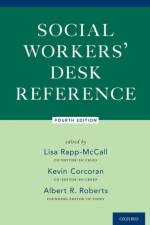
The Social Worker's Desk Reference fourth edition remains the definitive resource for social work students and professionals. Expanded sections on current hot topics such as white nationalism, gaming disorder, substance abuse, LGBTQ+ populations, suicide, sexual violence in the military, and vulnerable populations make the fourth edition a fully updated and essential reference.
How can nothing cause something? The absence of something might seem to indicate a null or a void, an emptiness as ineffectual as a shadow. In fact, 'nothing' is one of the most powerful and effective ideas the human mind has ever conceived. This short and entertaining book is a lively tour of the history and philosophy of nothing, explaining how various thinkers throughout history have conceived and grappled with the mysterious power of absence - and how theseideas about shadows, gaps, and holes have in turned played a positive role in the development of some of humankind's most important ideas. Filled with anecdotes, puzzles, curiosities, and philosophical speculation, the book is ordered chronologically, starting with the ancients and moving forward to themiddle ages and the early modern period, then up to the existentialists and present day philosophy. The result is a diverting tour through the history of human thought, seen from a novel and unusual perspective.
Dorothy Wright Nelson was a prominent federal judge on the level just below the U.S. Supreme Court for over 40 years. Although women had few opportunities in law when she graduated, she became one of the first female law professors and deans. The book offers an in-depth look at her life and her rise as a national expert in what is now the major field of alternative dispute resolution or conflict resolution. Featuring extensive interviews with judges, professors, andlegal leaders, they offer first-hand accounts and multiple perspectives on how she was an extraordinary trailblazer in a traditional, male-dominated profession.
Accessible and compelling, Relationships 5.0 reveals the ongoing epochal change in human relationships towards technology meant to fulfill emotional, intellectual, and physical needs that have until now been met by other humans.
In downtown Manhattan, in the shadow of the half-built Twin Towers, hardhats beat scores of hippies bloody in May 1970, four days after Kent State. This is the story of when the old Democratic Party attacked the new and of how Richard Nixon seized the breach, realizing that "these, quite candidly, are our people now." We relive the schism that tore liberalism apart by returning to when it was all laid bare one brutal day, when the Democrats' future was bludgeoned byits past, as if it was a violent last gasp to say, we once mattered to them too.
Spreading Hate offers a history of the modern white power movement, describing key moments in its evolution since the end of World War Two. Daniel Byman focuses particular attention on how the threat has changed in recent decades, examining how social media is changing the threat, the weaknesses of the groups, and how counterterrorism has shaped the movement as a whole. Each chapter uses an example, such as the Christchurch mosque shooter Brenton Tarrant orthe British white hate band Skrewdriver, as a way of introducing broader analytic themes.
Indefinite is an ethnographic study of life in a contemporary county jail system. Having been arrested and jailed, Michael Walker turned his experience into an examination of jails from the inside out, revealing the physical and emotional experience of doing time, the set of strategies prisoners use to endure it, and the deputies who use race to control prisoners and the kinds of experiences prisoners had.
Compulsion in Religion investigates religion and politics in Saddam Hussein's Iraq as well as the roots of the religious insurgencies that erupted in Iraq following the American-led invasion in 2003. In looking at Saddam Hussein's policies in the 1990s, many have interpreted his support for state religion as evidence of a dramatic shift away from Arab nationalism toward political Islam. While Islam did play a greater role in the regime's symbols and Saddam'sstatements in the 1990s than it had in earlier decades, the archival records and the regime's internal documents challenge this theory.
The Battle over Patents traces the long and contentious history of patents, examining how they have worked in practice. The essays in this volume, written by leading social scientists, historians, and legal academics, explore the shortcomings of imperfect patent systems and explain why, despite all the debate, historically US-style patent systems still dominate all other methods of encouraging inventive activity.
Abonner på vårt nyhetsbrev og få rabatter og inspirasjon til din neste leseopplevelse.
Ved å abonnere godtar du vår personvernerklæring.