













Gjør som tusenvis av andre bokelskere
Abonner på vårt nyhetsbrev og få rabatter og inspirasjon til din neste leseopplevelse.
Ved å abonnere godtar du vår personvernerklæring.Du kan når som helst melde deg av våre nyhetsbrev.

The Oxford Handbook on Atrocity Crimes surveys and further develops the evolving field of atrocity crime studies through interdisciplinary research on war crimes, crimes against humanity, and genocide in one comprehensive volume encompassing contributions of leading scholars.
The Oxford Handbook of Berkeley is a compendious examination of a large number of topics in the philosophy of George Berkeley (1685-1753), Anglican Bishop of Cloyne, the famous idealist and most illustrious Irish philosopher. This volume includes contributions from thirty-four expert commentators on Berkeley's philosophy, some of whom provide a state-of-the-art account of his philosophical achievements, and some of whom place his philosophy in historicalcontext by comparing it with the views of other philosophers (including predecessors, contemporaries, and successors).
The Oxford History of Ancient Near East, Volume 3 covers broadly the period from 1600 to 1100 BC or in archaeological terms, the Late Bronze Age. Twelve chapters present the history of the Near East from the Hyksos state of Lower Egypt to the to the Elamites in southwestern Iran, examining the Hittites in Central Anatolia, the kingdom of Mittani in Northern Mesopotamia, the Kassites in southern Iraq, and the Mycenaeans in the Aegean.
The Oxford History of Ancient Near East, Volume 2 covers broadly the first half of the second millennium BC or in archaeological terms, the Middle Bronze Age. Eleven chapters present the history of the Near East, from the First Intermediate Period and Middle Kingdom of Egypt to Hammurabi's Babylon.
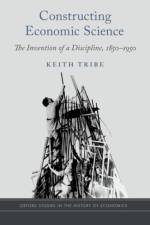
Constructing Economic Science shows how the new "science" of economics was primarily an institutional creation of the modern university. Keith Tribe charts the path through commercial education to the discipline of economics and the creation of an economics curriculum that could be replicated around the world.
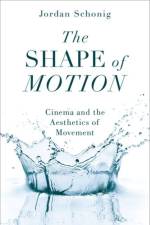
The Shape of Motion: Cinema and the Aesthetics of Movement develops a method for analyzing movement on screen by identifying patterns or shapes of motion-called "motion forms"-across a wide range of examples from the history of cinema. By examining a single motion form, each chapter rethinks persistent assumptions in film studies about cinema as a medium.
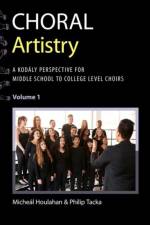
Choral Artistry provides a practical and organic approach to teaching middle school to college level choral singing and sight-reading according to the Kodaly Concept of Music Education, grounded in current research from the fields of choral pedagogy, music theory, music perception and cognition.
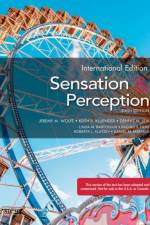
Sensation & Perception, Sixth Edition, introduces students to their own senses, emphasizing human sensory and perceptual experience and the basic neuroscientific underpinnings of that experience. The authors, specialists in their respective domains, strive to spread their enthusiasm for fundamental questions about the human senses and the impact that answers to those questions can have on medical and societal issues.
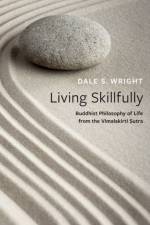
Based on an innovative understanding of an important Buddhist scripture, this book provides a jargon-free introduction to a Buddhist philosophy of life suited for twenty-first-century global citizens, showing how the practice of insight meditation can deepen our perspective on life.
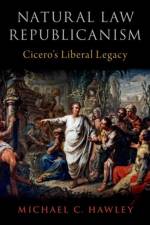
Tracing the development of this intellectual tradition from Cicero's original articulation through the American Founding, Natural Law Republicanism explores how our modern political ideas remain dependent on the legacy of one of Rome's great philosopher-statesmen.
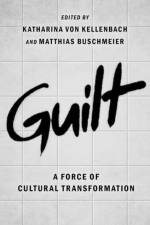
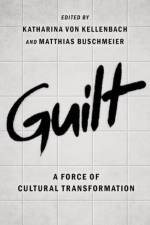
Since the end of the 20th century, social movements around the world have called for accountability and reparation for past harms, particularly harms committed by states against various minority groups. This volume argues that guilt is a productive force that helps to balance unequal power dynamics between individuals and groups. With chapters bridging the social sciences, law, and humanities, chapter authors examine the role and function of guilt in society andpresent case studies from seven national contexts.
What explains the United States' persistent use of torture over the past hundred-plus years? Not only is torture incompatible with liberal values, it is also risky and frequently ineffective as an interrogation method. Drawing on archival testimony from the Philippine-American War (1899-1902), the Vietnam War, and the post-2001 war on terror, William L. d'Ambruoso argues that the norm against torture includes features that help explain why liberal democracies likethe United States continue to violate it.
Since the end of the 20th century, social movements around the world have called for accountability and reparation for past harms, particularly harms committed by states against various minority groups. This volume argues that guilt is a productive force that helps to balance unequal power dynamics between individuals and groups. With chapters bridging the social sciences, law, and humanities, chapter authors examine the role and function of guilt in society andpresent case studies from seven national contexts.
Open banking is a silent revolution transforming the banking industry. It is the manifestation of the revolution of consumer technology in banking and will dramatically change not only how we bank, but also the world of finance and how we interact with it. This book defines the concept of 'open banking' and explores key legal, policy, and economic questions raised by open banking.
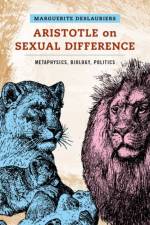
Aristotle on Sexual Difference is a book about Aristotle's understanding of the differences between male and females, and men and women. It considers what he says about biological differences between the sexes, and about psychological differences that he thinks justify different political roles for men and women. It discusses the authors who preceded Aristotle, highlighting that they treat sexual difference as a misfortune, and women as an evil inflicted onmen. This book demonstrates that Aristotle rejects that view, and that he argues for the benefit of sexual difference to animal species, and the value of women to their political communities. It also traces a connection between Aristotle's accounts of the physiological defects of women and of theirpolitical limitations.
This volume investigates what it means to be human. Is there something that makes us distinct from computers, other great apes, Martians, and gods? And what are the ethical and political consequences of how we answer this question? How have our views on this changed from the times of the ancient Greek and Chinese philosophers? What do contemporary evolutionary biologists and advocates of uploading human consciousness onto computers think about it? This volumecollects new essays from leading scholars in philosophy, history, and other disciplines to explore these and numerous other questions related to human nature and its significance throughout history.
This volume investigates what it means to be human. Is there something that makes us distinct from computers, other great apes, Martians, and gods? And what are the ethical and political consequences of how we answer this question? How have our views on this changed from the times of the ancient Greek and Chinese philosophers? What do contemporary evolutionary biologists and advocates of uploading human consciousness onto computers think about it? This volumecollects new essays from leading scholars in philosophy, history, and other disciplines to explore these and numerous other questions related to human nature and its significance throughout history.
Levels of corruption vary greatly around the world, with certain regions suffering from it more than others. Why is it pervasive in some countries, how does it weaken critical regulations, and why is it so hard to root out? In The Eye and the Whip, Paul Lagunes applies field experiments to analyze corruption in three countries: Mexico, Peru, and the United States of America.
This book makes the case for why the United States should embrace "gay reparations," or policies intended to make amends for a history of discrimination, stigmatization, and violence against the LGBT community. It contends that gay reparations are a moral imperative for bringing dignity to those whose human rights have been violated because of their sexual orientation and/or gender identity, for closing painful histories of state-sponsored victimization of LGBTpeople, and for reminding future generations of past struggles for LGBT equality. To make its case, the book examines how other Western democracies notorious for their oppression of homosexuals have implemented gay reparations-specifically Spain, Britain, and Germany. Their collective experience showsthat although there is no universal approach to gay reparations, it is never too late for countries to seek to right past wrongs.
From an author who has spent four decades in the quest for lost ships, this lavishly illustrated history of naval warfare presents the latest archaeology of sunken warships. It provides a unique perspective on the evolution of naval conflicts, strategies, and technologies, while vividly conjuring up the dangerous life of war at sea.
When Fiction Feels Real offers a new approach to the phenomenology of reading by engaging with psychological research on reading and cognition. Focusing on the work of Jane Austen, Charles Dickens, George Eliot, Leo Tolstoy, and Thomas Hardy, Elaine Auyoung demonstrates what nineteenth-century writers know about the pleasure of literary experience.
Choral Sight Reading provides a practical and organic approach to teaching middle school to college level choral singing and sight-reading according to the Kodaly Concept of Music Education, through a series of step-by-step practical lesson plans and instructions that can be used in choral rehearsals.
In Laurie Anderson's Big Science, S. Alexander Reed dives into the wonderfully strange making and meanings of this singular album and of its creator's long artistic career, offering scrupulous new research, reception history, careful description, and dizzying creativity.
This book helps to establish a theoretical and practical foundation for how to teach students to use technology as the major means for developing their musicianship. Including discussions of lesson planning, lesson delivery, and assessment, readers will learn how to gain comfort in the music technology lab.
Abonner på vårt nyhetsbrev og få rabatter og inspirasjon til din neste leseopplevelse.
Ved å abonnere godtar du vår personvernerklæring.