
















Gjør som tusenvis av andre bokelskere
Abonner på vårt nyhetsbrev og få rabatter og inspirasjon til din neste leseopplevelse.
Ved å abonnere godtar du vår personvernerklæring.Du kan når som helst melde deg av våre nyhetsbrev.

Offering an inside look into the world around us, microbiologist Franklin M. Harold makes life intelligible for readers interested in biology. The book traces living things and how they operate, focusing on questions about the interaction between physics, chemistry, and biology.
As the practice of thoracic anesthesia becomes increasingly recognized as a major subspecialty of anesthesia, there is a growing need among current practitioners to evolve their neuraxial, regional, and general anesthesia techniques and expand their understanding of the latest evidence. Thoracic Anesthesia Procedures is a timely update in the field, providing a concise, evidence-based, and richly illustrated book ideal for students, trainees, and practicingclinicians. Comprehensive in scope, this book addresses essential topics such as thoracic physiology and pathophysiology, airway devices and other equipment, anesthetic techniques, surgical considerations, ventilation techniques, and postoperative care.
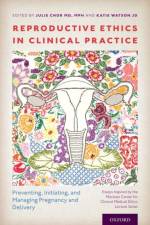
Reproductive health care professionals in fields such as Obstetrics and Gynecology, Family Medicine, and Pediatrics face difficult ethical issues because they work at the crossroads of patient decision-making, scientific advancement, political controversy, legal regulation, and profound moral considerations. The dilemmas these professionals face expose big-picture bioethics questions of interest to everyone. Yet for clinicians striving to deliver excellent patientcare, the ethical questions that make daily practice challenging can be just as nuanced.This volume presents a carefully curated compilation of essays written by leading experts in the fields of medicine, ethics, and law, who address key issues at the forefront of reproductive ethics. It is organized into three main sections: I. Contraception and Abortion Ethics - Preventing Pregnancy and Birth, II. Assisted Reproduction Ethics - Initiating Pregnancy, and III. Obstetric Ethics - Managing Pregnancy and Delivery. Each section begins with a short introduction by the editors providingan overview of the area and contextualizing the essays that follow. This volume''s primary aim is to be useful to practicing clinicians, students, and trainees by providing short and practical essays covering urgent topicsΓÇöfrom race, religion and abortion, to legal liability, violations ofconfidentiality and maternal choices that risk future children''s health. This collection provides clinicians at all levels of training with frameworks they need to approach the intimate and high-stakes encounters central to their profession.
Push: Software Design and the Cultural Politics of Music Production shows how music software has shaped the production techniques and performance practices of artists working across media, while also providing a model for understanding software as a microcosm for the increasing convergence of globalization, neoliberal capitalism, and techno-utopianism that has come to define our digital lives
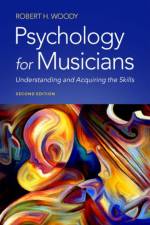
Psychology for Musicians, Second Edition draws on insights provided by recent research in music psychology, combining academic rigor with accessibility to offer readers research-supported ideas that they can readily apply in their musical activities.
Business Ethics: What Everyone Needs to Know (R) is a succinct, practical survey that explains what ethical lines are, how not to cross them, and what to do when they are crossed. Written in a question-and-answer format, this resource provides engaging and readable introductions to the basic principles of business ethics and an invaluable guide for dealing with ethical dilemmas.
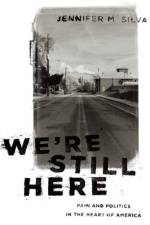
We're Still Here provides powerful, on the ground evidence of the remaking of working-class identity and politics. Drawing on years of fieldwork and over 100 interviews with black, white, and Latino working-class residents of a declining coal town in Pennsylvania, Jennifer M. Silva tells a deep, multi-generational story of pain and politics.
This book examines how modern US writers used the changing geographies, regimens, and technologies of modern food to reimagine racial classification and to question its relationship to the mutable body. By challenging a cultural ideal of purity, this literature proposes that racial whiteness is perhaps the most artificial color of them all.
This is the first study of the royal women who ruled in the Mediterranean in the latter first century BC, in a symbiotic relationship with the Roman government. Several are discussed, with the most prominent being Cleopatra Selene (the daughter of the famous Cleopatra VII of Egypt) and Salome, the sister of Herod the Great.
This book is a concise version of Bart D. Ehrman's best-selling The New Testament: A Historical Introduction to the Early Christian Writings, Fifth Edition. Condensing and simplifying much of the longer textbook's material, this volume looks at the New Testament from a consistently historical and comparative perspective.
The Thread of Energy breaks down the most influential driver of human actions and decision making: energy. In this book, geographer Martin J. Pasqualetti exposes the technical and fundamental influences of energy, preparing scholars for the coming energy transitions that lie ahead.
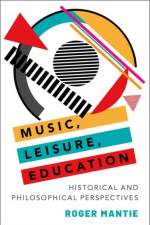
This book explores historical and philosophical connections between music, leisure, and education. Specifically, it considers how music learning, teaching, and participation can be reconceptualized in terms of leisure.
When Joseph Murray performed the first successful living kidney donor transplant in 1954, he thought this would be a temporary stopgap. Today, we are no closer to the goal of adequate organ supply without living donors-if anything, the supply-demand ratio is worse. While most research on the ethics of organ transplantation focuses on how to allocate organs as a scarce medical resource, the ethical treatment of organ donors themselves has been relatively neglected.In The Living Organ Donor as Patient: Theory and Practice, Lainie Friedman Ross and J. Richard Thistlethwaite, Jr. argue for treating living solid organ donors as patients in their own right and show that living donor organ transplantation can be ethical.
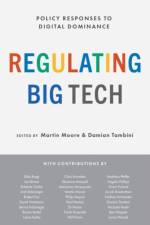
Regulating Big Tech explores cutting-edge policy innovations that tackle the dominance of Google, Apple, Facebook, Amazon, and Microsoft and the interlocking challenges of contemporary tech regulation.
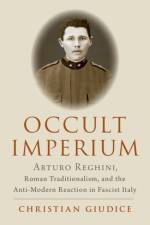
Christian Giudice's Occult Imperium explores Italian national forms of occultism, chiefly analyzing Arturo Reghini (1878-1946), his copious writings, and Roman Traditionalism. Using Reghini's articles, books, and letters, as a guide, Giudice explores the interaction between Occultism, Traditionalism, and different facets of modernity in early-twentieth-century Italy. The book takes into consideration many factors particular to the Italian peninsula: the tieswith avant-garde movements such as the Florentine Scapigliatura and Futurism, the occult vogues typical to Italy, the rise to power of Benito Mussolini and Fascism, and, lastly, the power of the Holy See over different expressions of spirituality.
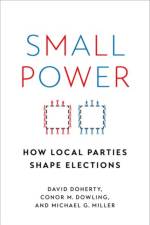
In Small Power, David Doherty, Conor M. Dowling, and Michael G. Miller examine an important, but understudied, aspect of American political parties: the local organizations that are responsible for increasing the party's community visibility, recruiting first-time candidates, and providing the crucial labor that campaigns use to mobilize voters. They argue that despite overseeing small geographies, the leaders of these local parties wield significant powerin American politics to shape statewide and federal campaigns. The book also merges a number of data sourcesâ??including national surveys and interviews with party leadersâ??to describe how local party units impact American politics.
John Leland, the colorful Baptist itinerant, was one of the most important and fascinating religious figures in early America. He is best remembered for delivering a 1,200-pound "Mammoth Cheese" to Thomas Jefferson's White House, and for negotiating the inclusion of a Bill of Rights in the Constitution with James Madison. But Leland was also a tireless revivalist and a dogged advocate of religious freedom for all, an anti-slavery spokesman and unofficial DemocraticParty whip, a defender of popular Calvinism and promoter of extreme religious individualism among Baptists. Eric C. Smith explores these and other major themes in this first-ever biography of John Leland, whose story provides a unique window into the remarkable transformations that swept Americansociety from 1760 to 1840.
Sondheim in Our Time and His offers a wide-ranging historical investigation of the landmark musical works and extraordinary career of Stephen Sondheim, a career which has spanned much of the history of American musical theater.
Sondheim in Our Time and His offers a wide-ranging historical investigation of the landmark musical works and extraordinary career of Stephen Sondheim, a career which has spanned much of the history of American musical theater.
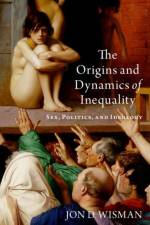
In The Origins and Dynamics of Inequality, Jon Wisman provides a re-interpretation of economic history and society. He argues that the struggle over income, wealth, and privilege-inequality-has been the principal, defining issue in human history and provides a novel framework for understanding inequality today.
With the appointment of Justices Gorsuch and Kavanaugh to the Supreme Court, jurists in the mold of Justice Scalia, textualism and originalism are more prominent then ever before. These justices insist that in interpreting the Constitution, they focus on text while other justices neglect the Constitution. In The (Un)Written Constitution, George Thomas reveals that textualists and originalists rely on unwritten understandings that shape their reading of theConstiution's text. Our most pressing debates over how to interpret the Constitution are debates about unwritten ideas, not the text. And these debates have been with us from the creation of the Constitution to the present.
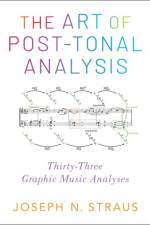
The Art of Post-Tonal Analysis consists of analyses of thirty-three musical passages or entire short works in a variety of post-tonal styles from throughout the long twentieth century, representing a diversity of musical style, chronology, geography, gender, and race/ethnicity.
!Canta Conmigo! is a practical guide for music educators looking to teach music from Central America. It invites students and teachers alike to sing, play, move, create, and experience joy with living musical traditions from Guatemala and Nicaragua with a collection of 90 songs, singing games, and chants.
Americans in China tells the dramatic stories of individual women and men who encountered the People's Republic of China as adversaries and emissaries, mediators and advocates, interpreters and reporters, soldiers, scientists, and scholars. More often than not, their initial fascination was followed by disillusion and disenchantment, a syndrome reflecting a deep-set ambivalence about whether to accept Communist China on its own terms or to pursue a long-standingquest to remake the Middle Kingdom in America's own image. At a time of great debate over the future of US-China relations, the characters in this book speak to us about the challenges of finding common ground between our two countries.
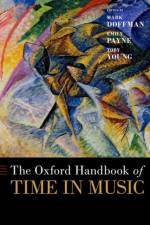
The Oxford Handbook of Time in Music brings together philosophical, psychological, and socio-cultural understandings of time in music, highlighting the act of 'making' as both cultural construction while also referring to the perceptual, cognitive underpinnings that allow us to 'make' sense of time in music.
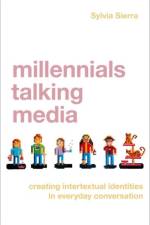
This book examines how U.S. millennial friends quote both old and new media in their everyday talk. Sylvia Sierra analyzes recorded everyday conversations-including over 140 references to books, songs, lines from films, TV shows, YouTube videos, videogames, and internet memes-to show how millennials signal media references in speech, how they mutually engage with them, and why they use them to handle awkward moments in talk. Millennials in Media demonstrateshow these millennials use media references to bring everyone together and ultimately construct a shared millennial identity.
Abonner på vårt nyhetsbrev og få rabatter og inspirasjon til din neste leseopplevelse.
Ved å abonnere godtar du vår personvernerklæring.