





















Gjør som tusenvis av andre bokelskere
Abonner på vårt nyhetsbrev og få rabatter og inspirasjon til din neste leseopplevelse.
Ved å abonnere godtar du vår personvernerklæring.Du kan når som helst melde deg av våre nyhetsbrev.

Warzones are sometimes described as lawless, but this is rarely the case. Armed insurgents often replace the state as the provider of law and justice in areas under their authority. Based on extensive field work, Rebel Courts offers a compelling insight into the judicial governance of armed groups, a phenomenon never studied comprehensively until now.
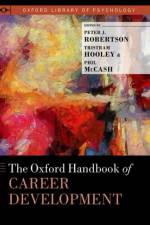
The Oxford Handbook of Career Development provides a comprehensive overview of the career development field. It features contributions from 42 leading scholars, addressing the context, theory, and practice of career development in the contemporary world.
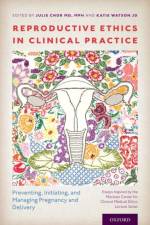
Reproductive health care professionals in fields such as Obstetrics and Gynecology, Family Medicine, and Pediatrics face difficult ethical issues because they work at the crossroads of patient decision-making, scientific advancement, political controversy, legal regulation, and profound moral considerations. The dilemmas these professionals face expose big-picture bioethics questions of interest to everyone. Yet for clinicians striving to deliver excellent patientcare, the ethical questions that make daily practice challenging can be just as nuanced.This volume presents a carefully curated compilation of essays written by leading experts in the fields of medicine, ethics, and law, who address key issues at the forefront of reproductive ethics. It is organized into three main sections: I. Contraception and Abortion Ethics - Preventing Pregnancy and Birth, II. Assisted Reproduction Ethics - Initiating Pregnancy, and III. Obstetric Ethics - Managing Pregnancy and Delivery. Each section begins with a short introduction by the editors providingan overview of the area and contextualizing the essays that follow. This volume''s primary aim is to be useful to practicing clinicians, students, and trainees by providing short and practical essays covering urgent topicsΓÇöfrom race, religion and abortion, to legal liability, violations ofconfidentiality and maternal choices that risk future children''s health. This collection provides clinicians at all levels of training with frameworks they need to approach the intimate and high-stakes encounters central to their profession.
In the 21st century, people in the developed world are living longer. They hope they will have a healthy longer life and then die relatively quickly and peacefully. But frequently that does not happen. While people are living healthy a little longer, they tend to live sick for a lot longer. And at the end of being sick before dying, they and their families are frequently faced with daunting decisions about whether to continue life prolonging medicaltreatments or whether to find meaningful and forthright ways to die more easily and quickly. In this context, some people are searching for more and better options to hasten death. They may be experiencing unacceptable suffering in the present or may fear it in the near future. But they do not know the full range of options legally available to them. Voluntary stopping eating and drinking (VSED), though relatively unknown and poorly understood, is a widely available option for hastening death. VSED is legally permitted in places where medical assistance in dying (MAID) is not. Andunlike U.S. jurisdictions where MAID is legally permitted, VSED is not limited to terminal illness or to those with current decision-making capacity. VSED is a compassionate option that respects patient choice. Despite its strongly misleading image of starvation, death by VSED is typically peaceful and meaningful when accompanied by adequate clinician and/or caregiver support. Moreover, the practice is not limited to avoiding unbearable suffering, but may also be used by those who are determined to avoid living with unacceptable deterioration such as severe dementia. But VSED is "not for everyone." This volume provides a realistic, appropriately critical, yet supportive assessment of the practice. Eight illustrative, previously unpublished real cases are included, receiving pragmatic analysis in each chapter. The volume''s integrated, multi-professional, multi-disciplinary character makes it useful for a wide range of readers: patients considering present or future end-of-life options and their families, clinicians of all kinds, ethicists, lawyers, and institutional administrators.Appendices include recommended elements of an advance directive for stopping eating and drinking in one''s future if and when decision making capacity is lost, and what to record as cause of death on the death certificates of those who hasten death by VSED.
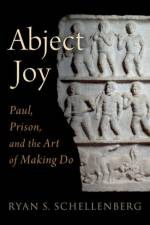
No extant text gives so vivid a glimpse into the experience of an ancient prisoner as Paul''s letter to the Philippians. As a letter from prison, however, it is not what one would expect. For although it is true that Paul, like some other ancient prisoners, speaks in Philippians of his yearning for death, what he expresses most conspicuously is contentment and even joy. Setting aside pious banalities that contrast true joy with happiness, and leaving behind too heroicdepictions that take their cue from Acts, Abject Joy offers a reading of Paul''s letter as both a means and an artifact of his provisional attempt to make do. By outlining the uses of punitive custody in the administration of Rome''s eastern provinces and describing the prison''s complex place in thesocial and moral imagination of the Greek and Roman world, Ryan Schellenberg provides a richly drawn account of Paul''s nonelite social context, where bodies and their affects were shaped by acute contingency and habitual susceptibility to violent subjugation. Informed by recent work in the history of emotions, and with comparison to modern prison writing and ethnography provoking new questions and insights, Schellenberg describes Paul''s letter as an affective technology, wielded at once on Paulhimself and on his addressees, that works to strengthen his grasp on the very joy he names. Abject Joy: Paul, Prison, and the Art of Making Do by Ryan S. Schellenberg is a social history of prison in the Greek and Roman world that takes Paul''s letter to the Philippians as its focal instanceΓÇöor, to put it the other way around, a study of Paul''s letter to the Philippians that takes the reality of prison as its starting point. Examining ancient perceptions of confinement, and placing this ancient evidence in dialogue with modern prison writing and ethnography, it describesPaul''s urgent and unexpectedly joyful letter as a witness to the perplexing art of survival under constraint.
The 2017 edition of The Global Community: Yearbook of International Law and Jurisprudence constitutes the only thorough annual survey of major developments in international courts. General Editor Giuliana Ziccardi Capaldo selects excerpts from important court opinions, supported by contributors who provide expert guidance on those cases. The topical organization and subject index make the thorough, comprehensive content easy to navigate.
This book uses Big Allied and Dangerous (BAAD) as the dataset for a modern and comprehensive exploration of why insurgent groups attack civilians, even though their existence depends on public support. The book examines this phenomenon in specific contexts, including schools, news media, and nonmilitary/nongovernment spaces designed for the general public.
The Episcopal Church has long been regarded as the religion of choice among America's ruling elite. Yet after World War II a new generation of leaders emerged, eager to shake off the church's reputation as a bastion of privilege and transform it into an agent of social reform. Taking an active part in the civil rights and anti-war movements of the 1960s, these leaders struggled to draw the church's membership into their vision of change. Despite their shortcomings,these activist leaders played a pivotal role in the evolution of Episcopalianism from "establishment" church into a more diverse and inclusive denomination.
Justice rather than the jihad or "holy war" of the Western imagination defines the Islam of the Qur'an and explains the global appeal of Islam's quest for the righteous community. For centuries, Abu Dharr al Ghifari, the seventh-century companion of the Prophet Muhammad, has provided a human face for Islamic justice as the core value of the faith. In this study of justice in Islam, Raymond Baker focuses on the influence of Abu Dharr, and the workof major intellectuals who have contributed to the Islamic Awakening.
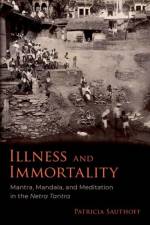
This work examines a medieval Sanskrit text, the Netra Tantra, which is devoted to health and healing through a yogic practice dedicated to the chanting of mantras, the building of mandalas, and meditation. It discusses the nature and efficacy of these practices and explores non-medical routes to the alleviation of pain, illness, and even death. A focal point of the study is the iconography of the deity Amrtesa (non-death), also known as Mrtyujit orMrtyuñjaya (Conqueror of Death), a deity who continues to be popular today among those seeking to ease physical suffering.
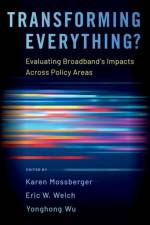
Transforming Everything? describes broadband as a social technology and offers policymakers the necessary evidence to assess whether broadband programs are truly empowering the communities they serve.
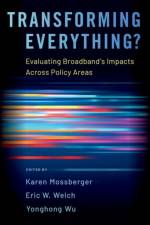
Transforming Everything? describes broadband as a social technology and offers policymakers the necessary evidence to assess whether broadband programs are truly empowering the communities they serve.
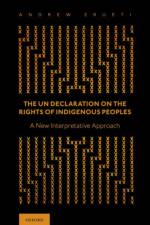
The book provides a comprehensive, definitive account of the history of the international indigenous rights movement, culminating in the UN's adoption of a Declaration on the Rights of indigenous peoples. This account reveals for the first time the diversity of agendas and argument advanced by advocates split broadly between northern and southern movements. Based on this political history, the book presents a new way of interpreting and implementing the Declaration -a method that is true to the aspirations of the movements in the Declaration negotiations and coherent and compelling in the context of implementation. This method also assists in clarifying, with more certainty than other methods, the meaning of indigenous peoples for the purposes of internationallaw.
In the Orchestra Management Handbook, longtime orchestra manager, violinist, and professor Travis Newton offers the key tools and skills necessary to successfully enter the world of orchestra management.
Slow Media examines innovative theories and practices that connect mediated life with social and environmental sustainability, including mindful use of media, green media consumption, and other new and compelling perspectives on media's socio-cultural impact. Jennifer Rauch reveals the surprising connections between human well-being, the natural world, and everyday media choices.
This is the first of two volumes on belief and counterfactuals. It provides an introduction to ranking theory, which is a powerful formal theory with a broad range of applications in different areas of analytic philosophy. Drawing on formal logic, ranking theory can account for degrees of belief, which can change with the introduction of new information. In this volume, Franz Huber applies ranking theory and belief revision to metaphysics and epistemology. Thoughbased on his technical writings, the book is intended to be as accessible as possible, in order to fully present the utility of ranking theory to a wide range of philosophical issues.
Abonner på vårt nyhetsbrev og få rabatter og inspirasjon til din neste leseopplevelse.
Ved å abonnere godtar du vår personvernerklæring.