












Gjør som tusenvis av andre bokelskere
Abonner på vårt nyhetsbrev og få rabatter og inspirasjon til din neste leseopplevelse.
Ved å abonnere godtar du vår personvernerklæring.Du kan når som helst melde deg av våre nyhetsbrev.

A fascinating examination of delusional thinking and how it might benefit health, relationships, and wellbeing.Although reason and rationality are our friends in almost all contexts, in some cases people are better off putting reason aside. In a number of very important situations, we benefit by not seeing the world as it is, and by not behaving like logic-driven machines. Sometimes we know we aren''t making sense, and yet we are compelled to act against reason; in other cases, our delusions are so much a part of normal human experience that we are unaware of them. As intelligent as we are, much of whathas helped humans succeed as a species is not our prodigious brain power but something much more basic. The Uses of Delusion is about aspects of human nature that are not altogether rational but, nonetheless, help us achieve our social and personal goals. Psychologist Stuart Vyse presents a lively, accessible exploration of the psychological concepts behind "useful delusions", fleshing out how delusional thinking may play a role in love and relationships, illness and loss, and personality and behavior. Along the way Vyse draws on the work of William James, Daniel Kahneman, and JoanDidion - who wrote about her compelling belief that her husband, though deceased, would soon return to her. Throughout, Vyse strives to answer the question: why would some of our most illogical beliefs be as helpful as they are? The concluding chapter offers an explanation grounded in natural selection - theability to fool ourselves, Vyse argues, has actually helped us to survive. In the final pages of The Uses of Delusion, Vyse offers suggestions for determining when reason should rule and when intuition and emotion should be allowed to take over.
Based on a complete oral history of the "lion of the Senate," this book presents the compelling story of Edward Kennedy's unexpected rise to become one of the most consequential legislators in American history and a passionate defender of progressive values.
Does the Bible have anything to contribute to contemporary concerns about the environment? This collection of essays on the Bible and ecology explores biblical texts and their interpretation in the light of ecological issues. The handbook covers a number of political and ethical issues, as well as offering detailed exploration of individual Bible books. It discusses a number of controversial views, including whether the Judeo-Christian tradition has contributed tothe environmental crisis, and how the Bible is used by climate change deniers.
This book, a free-standing companion to Bernstein's masterly 2003 biography of Thomas Jefferson, responds to the public curiosity about Adams, his life, and his work for those intrigued by popular-culture portrayals of Adams in the Broadway musical 1776 and the HBO television miniseries John Adams. Focusing on Adams's mind and his fascination with the law, Bernstein presents Adams as a constitutional thinker and learned politician in a time whenideas pervaded our politics and shaped the origins of the United States.
Missing the Target challenges the view that stock-market-driven short-termism is severely damaging the American economy. Mark J. Roe shows that the evidence does not support that view, examines why this issue is popular, why the issue continues to grip lawmakers, and why they are mistaken in according it much weight.
This edition of Mastery of Your Anxiety and Panic: Brief Six-Session Version for Primary Care and Related Settings, Workbook, outlines a time-limited treatment for those dealing with panic disorder and agoraphobia. Developed for use with patients who seek treatment from a family doctor, this guide is based on the principles of cognitive-behavioral therapy (CBT).
Power to the People proposes that some forms of populism are inconsistent with constitutionalism, while others aren't. By providing a series of case studies, some organized by nation, others by topic, the book identifies these populist inconsistencies with constitutionalism-and, importantly, when and how they are not. Opening a dialogue for the possibility of a deeper, populist democracy, the book examines recent challenges to the idea that democracy is agood form of government by exploring possibilities for new institutions that can determine and implement a majority's views without always threatening constitutionalism.
For more than thirty years, On Being a Therapist has inspired generations of mental health professionals to explore the most private and sacred aspects of their work helping others. This thoroughly revised Sixth Edition, written during the COVID-19 pandemic, continues that tradition with an increased emphasis on self-care, teletherapy, and alternative service delivery.
Historically, character education has been an important aim of many universities. Yet, while the last few decades have witnessed increased interest in character education among children and adolescents, much less attention has been given to the formation of university students in the midst of a crucial period of intellectual and ethical development. Cultivating Virtue in the University offers insights into why educating character might be an important aimfor universities and how institutions might integrate it in an increasingly global and pluralistic age. The book will interest scholars, faculty, staff, and administrators considering whether they might want to integrate character into their institutions as well as public audiences eager to explore the purposeof the university at a time when the future of higher education is under intense debate.
Now in its fifth edition, Mastery of Your Anxiety and Panic, Therapist Guide provides practitioners with the tools necessary to deliver effective treatment for panic disorder and agoraphobia. Reflecting the most up-to-date research on etiology and treatment, as well as cutting-edge scientific information on inhibitory learning, this guide provides step-by-step instructions for teaching clients the skills to overcome their fear of panic and panic attacks, aswell as techniques for addressing atypical and problematic responses.
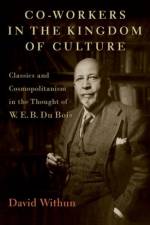
Classical influences and allusions are found throughout the works of W. E. B. Du Bois, the prominent African American intellectual and pioneering sociologist, historian, and educator. This is the first book-length discussion of the influence of classical authors such as Plato and Cicero on this important twentieth-century thinker.
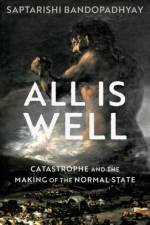
Disasters are commonly understood as exceptional occurences that destroy human life, property, and resources. But what is the relationship between such occurences and modern states responsible for guarding society against them? In All Is Well, Saptarishi Bandopadhyay argues that disasters are artifacts of "normal" rule.They result from the same, mundane strategies of knowledge-making, and violence by which authorities, experts, and people struggle to developstate-like power, to define and defend the social order. Drawing on three case studies, Bandopadhyay examines eighteenth-century exercises in catastrophe conservation and state formation, and shows how the underlying beliefs and resulting insights shape contemporary narratives, norms, and practices of globaldisaster management.
Psychological Therapies for Adults with Autism aims to fill the gap between research and treatment for adults with ASD. Serving as a compendium of diverse, research-supported treatment approaches, chapters are written by internationally recognized experts and include case studies to illustrate this research in practice.
When it comes to laws and policies that deal with food-such as special taxes on sugary drinks and the banning of certain unhealthy food ingredients-critics argue that these policies can be paternalistic and can limit individual autonomy over food choices. In Healthy Eating Policy and Political Philosophy: A Public Reason Approach, Anne Barnhill and Matteo Bonotti show that both paternalistic justifications for healthy eating efforts and anti-paternalisticarguments against them can be grounded in perfectionist views that overly prioritize some values, such as autonomy and health, over other values. The authors therefore propose a more inclusive, public reason approach to healthy eating policy that will be appealing to those who take pluralism and culturaldiversity seriously, by providing a framework through which different kinds of values, including but not limited to autonomy and health, can be factored into the public justification of healthy eating efforts.
This book recounts how art education has been conceptualized, taught, and advocated for in the United States in the face of its persistent marginalization in the education system. Tracing various rationales offered from the 19th century onward, Winner argues for the importance of quality visual art education in our schools.
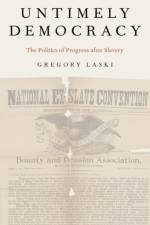
Untimely Democracy offers an exploration of how one of the bleakest periods in American racial history provided fertile terrain for a radical reconstruction of America's most fundamental assumptions about democracy.
Fear of the Family offers a comprensive postwar history of guest worker migration to the Federal Republic of Germany, particularly from Greece, Turkey, and Italy. It analyzes the West German government's policies formulated to get migrants to work in the country during the prime of their productive years but to try to block them from bringing their families or becoming an expense for the state.
Until the late twentieth century, relatively few Americans knew that the United States government forcibly detained nearly 120,000 Japanese Americans during World War II. At war''s end, the nation, including many of those who were confined to the ten Relocation CentersΓÇöwhich President Roosevelt initially referred to as "concentration camps"ΓÇöwished to wipe this national tragedy from memory.That Damned Fence, titled after a poem written by a Japanese American held at the Minidoka camp in Idaho, draws on the creative work of the internees themselves to cast new light on this historical injustice. While in captivity, detainees produced moving poetry and fiction, compelling investigative journalism, and lasting work of arts to make sense of their hardships and to leave a record of their emotional and psychological suffering.Heather Hathaway explores the experiences of inmates in five campsΓÇöTopaz in Utah; Granada/Amache in Colorado; Rohwer and Jerome in Arkansas; and Tule Lake in northern CaliforniaΓÇöeach with their own literary magazines, such as TREK, All Aboard, Pulse, The Pen, Magnet, and The Tulean Dispatch. Conditions in the camps varied dramatically, as did their environments, ranging from sweltering swamplands and sun-blasted desert to frigid mountainterrain. So too did the inhabitants of each camp, with some dominated by farmers from California''s Central Valley and others filled with professionals from the San Francisco Bay area. This disparity extended to the attitudes of camp administrators; some deemed the plan a mistake from the outset while others believed their captives to be a significantthreat to national security.That Damned Fence reveals the anger and humor, and the deep despair and steadfast resilience with which Japanese Americans faced their wartime incarceration. By emphasizing the inner lives of the unjustly accused and the myriad ways in which they portrayed their captivity, Heather Hathaway gives voice to Americans imprisoned by their own country for their country of origin or appearance.
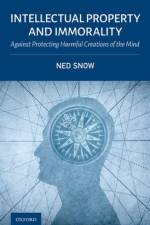
Should a machine that emits harmful levels of pollution receive patent protection? Should pornography receive copyright protection? This book argues that certain intellectual creations should not receive patent or copyright protection on the grounds that those works are harmful to society. The book posits that the theories of intellectual property and the Intellectual Property Clause of the U.S. Constitution suggest this conclusion. It also considers severalcounterarguments: in particular, that denying protection might increase the output of objectionable works, that other laws should address moral problems, and that intellectual property functions better under a laissez-faire approach. Despite these counterarguments, the book contends that law should neverencourage or reward harmful behavior. This simple principle implies that courts should exercise their equitable powers to deny enforcement of intellectual property for works involving unlawful conduct. It implies that courts should deny protection for works that clearly fall outside the Intellectual Property Clause''s scope of protectable works. And it implies that Congress should consider denying protection for works that pose clear harms to society. The book also addresses the intersectionbetween denying intellectual property protection and maintaining free speech protection. In that regard, the book recognizes that the Free Speech Clause severely limits Congress''s discretionary authority to deny copyright protection for expression that it deems immoral. The book concludes that courts,Congress, and government agencies should exercise limited discretion in deciding whether certain intellectual works are morally eligible for intellectual property protection.
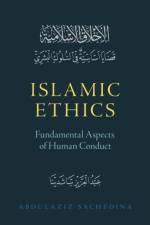
There have been two main traditions of writing on ethics in the Islamic tradition, one philosophical and related to the works of Aristotle and other Greek philosophers, represented by thinkers such as Avicenna, and one theological, represented by such figures as the famous theologian al-Qadi Abd al-Jabbar. Some later scholars attempted to combine those two traditions. For the most part, however, the views of the jurists have been ignored. Abdulaziz Sachedina herecalls attention to this third tradition of ethics, which has its home in legal literature. The problem is that Islamic jurists did not produce a genre of ethical manuals, and their form of ethics, which Sachedina terms juridical ethics, must be derived or extracted from works that ostensibly treat legalrulings and obligations, or scriptural hermeneutics and legal theory. Presenting an outline of the version of Islamic ethics that is embedded in the textual legacy of the Islamic legal tradition, he argues that this juridical ethics is an important, even dominant form of ethics in modern Islam. He notes that this form of ethics has been challenged by modernity and examines the variety of ways in which legal ethical thinkers have reacted. How do Muslim religious leaders come to grips with moderndemands of directing their communities to live as modern citizens of nation-states? What kind of moral and spiritual resources are being garnered by their scholars to respond to the new issues in sciences, more immediately in medicine, and constantly changing social relationships? To answer thesepressing questions, it is necessary to go beyond the philosophical ethics of virtue and human character and acknowledge the importance of ethics to the formulation in Muslim interpretive jurisprudence of religious and moral decisions that are based on reason and revelation.
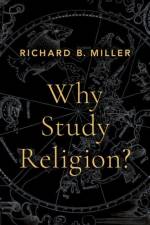
Why Study Religion? offers an alternative framework, Critical Humanism, for thinking about the purposes of the discipline. Richard B. Miller theorizes about the ends rather than the means of humanistic scholarship. He argues that the future of religious studies will depend on how well it can articulate its goals as a basis for motivating scholarship in the field.
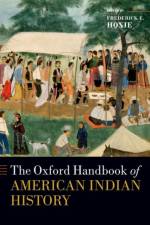
"Everything you know about Indians is wrong." As the provocative title of Paul Chaat Smith''s 2009 book proclaims, everyone knows about Native Americans, but most of what they know is the fruit of stereotypes and vague images. The real people, real communities, and real events of indigenous America continue to elude most people. The Oxford Handbook of American Indian History confronts this erroneous view by presenting an accurate and comprehensive history ofthe indigenous peoples who livedΓÇöand liveΓÇöin the territory that became the United States.Thirty-two leading experts, both Native and non-Native, describe the historical developments of the past 500 years in American Indian history, focusing on significant moments of upheaval and change, histories of indigenous occupation, and overviews of Indian community life. The first section of the book charts Indian history from before 1492 to European invasions and settlement, analyzing US expansion and its consequences for Indian survival up to the twenty-first century. A second group ofessays consists of regional and tribal histories. The final section illuminates distinctive themes of Indian life, including gender, sexuality and family, spirituality, art, intellectual history, education, public welfare, legal issues, and urban experiences. A much-needed and eye-opening account ofAmerican Indians, this Handbook unveils the real history often hidden behind wrong assumptions, offering stimulating ideas and resources for new generations to pursue research on this topic.
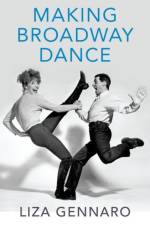
Making Broadway Dance demonstrates that musical theatre dance is a diverse dance form employing multiple dance styles, aesthetics, and methodologies. Author Liza Gennaro, a choreographer and educator, employs a range of analytical approaches and considers influences from ballet, modern, Jazz, social, and global dance.
An exploration of how and why the Constitution''s plan for independent courts has failed to protect individuals'' constitutional rights, while advancing regressive and reactionary barriers to progressive regulation. Just recently, the Supreme Court rejected an argument by plaintiffs that police officers should no longer be protected by the doctrine of "qualified immunity" when they shoot or brutalize an innocent civilian. "Qualified immunity" is but one of several judicial inventions that shields state violence and thwarts the vindication of our rights. But aren''t courts supposed to be protectors of individual rights? As Aziz Huq shows in The Collapse of Constitutional Remedies, history revealsa much more tangled relationship between the Constitution''s system of independent courts and the protection of constitutional rights. While doctrines such as "qualified immunity" may seem abstract, their real-world harms are anything but. A highway patrol officer stops a person''s car in violation of the Fourth Amendment, violently yanked the person out and threw him to the ground, causing brain damage. A municipal agency fires a person for testifying in a legal proceeding involving her boss''s family-and then laughed in her face when she demanded her job back. In all these cases, state defendants walked away with the mostminor of penalties (if any at all). Ultimately, we may have rights when challenging the state, but no remedies. In fact, federal courts have long been fickle and unreliable guardians of individual rights. To be sure, through the mid-twentieth century, the courts positioned themselves as the ultimateprotector of citizens suffering the state''s infringement of their rights. But they have more recently abandoned, and even aggressively repudiated, a role as the protector of individual rights in the face of abuses by the state. Ironically, this collapse highlights the position that the Framers took when setting up federal courts in the first place.A powerful historical account of the how the expansion of the immunity principle generated yawning gap between rights and remedies in contemporary America, The Collapse of Constitutional Remedies will reshape our understanding of why it has become so difficult to effectively challenge crimes committed by the state.
Sacroiliac Joint Pain is a comprehensive reference providing step-by-step guidance on the recent innovative interventional and surgical procedures for treating painful conditions of the sacroiliac joint, including peripheral nerve stimulation, surgical fusion, and regenerative techniques.
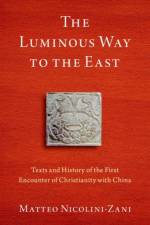
The Luminous Way to the East explores the little-known story of an encounter of Christianity with Central and Eastern Asia that took place more than a thousand years ago. It provides a documented look at what was not only the first stage in the history of Christianity's dialogue with Asian cultural and religious traditions, but also one of the most extraordinary and fruitful moments in that history. The core of the book is a richly annotated Englishtranslation of the Chinese Christian documents produced in Tang China (618-907). It offers the reader an introduction to the extraordinary missionary diffusion of the Church of the East from the Middle to the Far East along the Silk Road.
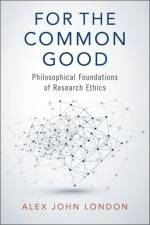
Alex John London defends a conception of the common good that grounds a moral imperative with two requirements. The first is to promote research that enables key social institutions to effectively, efficiently and equitably safeguard the basic interests of individuals. The second is to ensure that research is organized as a voluntary scheme of social cooperation that respects its various contributors' moral claim to be treated as free and equal. Connectingresearch to the goals of a just social order grounds a framework for assessing and managing research risk that reconciles these requirements and justifies key oversight practices in non-paternalistic terms. The result is a new understanding of research ethics that resolves coordination problems thatthreaten these goals and provides credible assurance that the requirements of this imperative are being met.
Are contemporary soldiers exploited by the state and society which they defend? More specifically, have America's professional service members disproportionately carried the moral weight of America's war-fighting decisions since the inception of the all-volunteer force post-Vietnam and since 9/11? In this volume, Michael J. Robillard and Bradley J. Strawser, who have both served in the military themselves, examine the notion of whether and how American soldiers havebeen exploited in this unique way, and in so doing offer an original normative theory of 'moral exploitation'-the notion that persons or groups can be wrongfully exploited by being made to shoulder an excessive amount of moral weight.
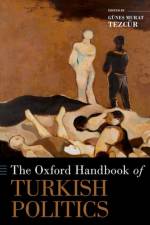
The Oxford Handbook of Turkish Politics includes in-depth analyses of a wide range of issues in conversation with the broader scholarly literature on authoritarianism and democratization, political economy, electoral politics, politics of identity, social movements, foreign policy, and the politics of art. With contributions by leading experts, the Handbook is an authoritative source offering state-of-the-art reviews of the scholarship on Turkishpolitics. The volume is an analytical, comprehensive, and comparative overview of contemporary politics in a country that literally and figuratively epitomizes "being at the crossroads."
Abonner på vårt nyhetsbrev og få rabatter og inspirasjon til din neste leseopplevelse.
Ved å abonnere godtar du vår personvernerklæring.