














Gjør som tusenvis av andre bokelskere
Abonner på vårt nyhetsbrev og få rabatter og inspirasjon til din neste leseopplevelse.
Ved å abonnere godtar du vår personvernerklæring.Du kan når som helst melde deg av våre nyhetsbrev.

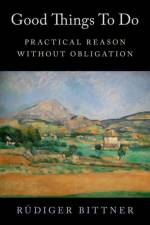
Rüdiger Bittner argues that the aim of thinking about what to do, of practical reason, is to find, not what we ought to do, but what it is good to do under the circumstances. Neither under prudence nor under morality are there things we ought to do. There is no warrant for the idea of our being required, by natural law or by our rationality, to do either what helps us attain our ends or what is right for moral reasons. While common moral understanding iscommitted to there being things we ought to do and to our being guilty and deserving blame if we fail to do them, we can lay aside these notions without loss, indeed with benefit.
This is an open access title available under the terms of a Creative Commons Attribution-Non Commercial-No Derivatives 4.0 International license (CC BY-NC-ND 4.0). It is free to read at Oxford Academic and offered as a free PDF download from OUP and select open access locations.European Social Policy and the COVID-19 Pandemic: Challenges to National Welfare and EU Policy provides an encompassing and longer-term analysis of the social policy responses of European countries, as well as the European Union (EU), to the challenges of the pandemic. The book asks in which direction the European welfare states, on the one hand, and EU social policy, on the other, are developing as a result of the pandemic with respect to polity, politics, and policy instruments. Theissues raised not only concern the future of welfare states in Europe but also EU-level social-policy making and European integration in general.
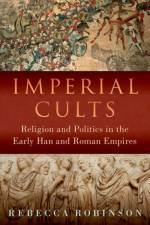
Imperial Cults looks at the role of religious institutions in shaping imperial authority in Ancient China and Rome. By examining the changes made by rulers of each state, Emperor Wu of Han and Octavian Augustus, in Rome, it demonstrates that both rulers reshaped their respective religious institutions in order to consolidate both religious and political authority.
The most important questions in life are questions about what we should do and what we should believe. The first of these questions has received considerable attention by normative ethicists, who search for a complete systematic account of right action. This book is about the second question: what should we believe? Right Belief and True Belief starts by defining a new field of inquiry author Daniel J. Singer calls 'normative epistemology', that mirrorsnormative ethics by searching for a systematic account of right belief-belief that is closest to the truth.
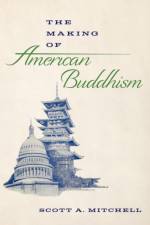
This volume looks at the intersection of race and religion in the United States before, during, and after World War II, when Nisei (second-generation) Japanese American Jodo Shinshu (or Shin) Buddhists reacted to the trauma of racial and religious discrimination.
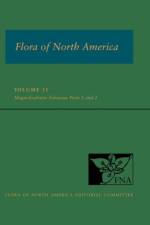
The Fabaceae, or bean family, is the third largest plant family in the world. Its economic importance as a source of food, medicine, and materials is second only to grasses, it is ecologically vital in nearly all ecosystems, and it contains many major invasive species. The collaborative product of an international team of experts, Flora of North America North of Mexico Volume 11: Magnoliophyta: Fabaceae is the first comprehensive treatment of this family inNorth America to reflect the extensive changes to its classification resulting from contemporary research and current understanding of its diversity and distribution.
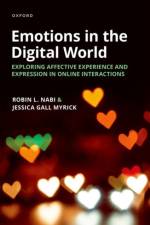
This volume will examine the ways in which rapidly changing technologies and patterns of media use influence, and are influenced by, our emotional experiences. Through a social science lens, the contributing authors explore how technology shapes our emotional experiences, offering readers a nuanced, interdisciplinary perspective on this increasingly relevant social phenomenon.
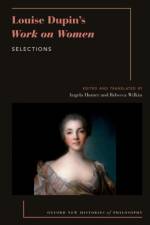
Work on Women is the French Enlightenment's most in-depth feminist analysis of inequality-and its most neglected one. In it, Louise Dupin, also known as Madame Dupin (1706-1799), reveals the sexist bias ("masculine vanity") that informs the knowledge and institutions that shape women's lives and argues that the subjection of women is a modern phenomenon, based on an illegitimate, abusive marriage contract. This is the first-ever edition of selectedtranslations of Dupin's massive project, developed from manuscript drafts. Robust introductions to the text contextualize Dupin's working methods-including the role of her secretary, Jean-Jacques Rousseau-and emphasize the importance of feminist thought to the development of moral and politicalphilosophy.
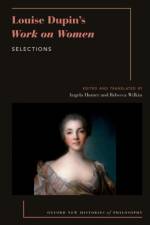
Work on Women is the French Enlightenment's most in-depth feminist analysis of inequality-and its most neglected one. In it, Louise Dupin, also known as Madame Dupin (1706-1799), reveals the sexist bias ("masculine vanity") that informs the knowledge and institutions that shape women's lives and argues that the subjection of women is a modern phenomenon, based on an illegitimate, abusive marriage contract. This is the first-ever edition of selectedtranslations of Dupin's massive project, developed from manuscript drafts. Robust introductions to the text contextualize Dupin's working methods-including the role of her secretary, Jean-Jacques Rousseau-and emphasize the importance of feminist thought to the development of moral and politicalphilosophy.
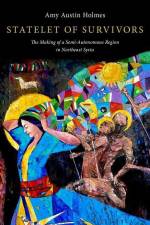
In Statelet of Survivors, Amy Austin Holmes charts the history of the Kurdish statelet-Rojava-which sits immediately adjacent to the southeastern Turkish border. Drawing from four years of research trips to northern and eastern Syria, Holmes highlights that the movement is founded on the idea of equality between people of different religious and ethnic backgrounds and does more to empower women and minorities than any other region of Syria. An in-depthexamination of Rojava, this book tells the story of the statelet who both triumphed over ISIS and created a model of decentralized governance in Syria that could eventually be expanded if Assad were to ever fall.
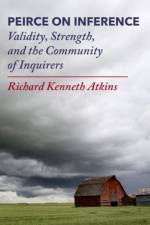
Inference is at the core of all inquiry, whether philosophical or scientific. If we hope to ascertain what is true, we must follow sound procedures of inquiry. The American philosopher Charles Sanders Peirce (1839-1914), who was also a leading scientist of his age, spent his life reflecting on what these procedures are, whether they are valid, and how we can make our inferences stronger. Peirce on Inference presents a comprehensive account of Peirce'slifelong reflections on these topics, including how Peirce responds to various objections to the validity of inferences.
John Sullivan Dwight (1813-93) was, for much of the nineteenth century, America's leading music critic and an important figure among New England Transcendentalists. This biography charts his relationships with other writers and thinkers, as well as his evolution into a powerful and persuasive writer, while situating his story in its nineteenth century and Transcendental contexts. Dwight's enormous body of essays, reviews, and translations are illuminated in thisbiography and reveal the indelible influence that his newspaper, Dwight's Journal of Music, had on music criticism-the impacts of which still resonate today.
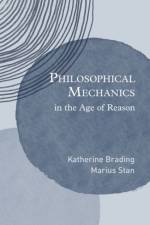
Katherine Brading and Marius Stan provide a new framing of natural philosophy and its transformations in the Enlightenment and propose an account of how physics and philosophy evolved into distinct fields of inquiry.
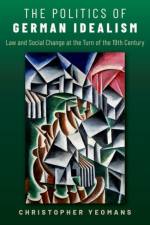
The Politics of German Idealism reconstructs the political philosophies of Kant, Fichte and Hegel against the background of their social-historical context. It aims to connect their abstract doctrines to particular social changes taking place at the time, and to profile each of their views against the others.
In Body and Soul: Essays on Aristotle's Hylomorphism, well-known scholar Jennifer Whiting gathers two sets of her previously published essays on Aristotle's hylomorphism, one focused on his conception of an animal's body as standing to its soul as matter (hulê) to form (morphê); the other focused on his conception of practical reason as standing to human desire as form to matter.
This book comprises the first exhaustive history of the treatment and status of widows under classical Hindu law, a complex and highly influential tradition of jurisprudence spanning over two millennia of Indian history (300 BCE-1800 CE). As such, this book both contributes to our understanding of how male attitudes toward women evolved in pre-modern India and provides crucial context for important colonial debates on Hindu widow remarriage and the Hindu custom ofwidow self-immolation or sati.
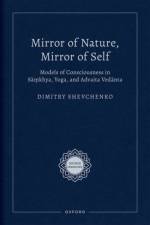
Mirror of Nature, Mirror of Self considers theories of consciousness in Indian philosophical traditions through the metaphor of reflection in a mirror. Just as a face appears where it is not in a mirror's reflection, so do consciousness and its properties, such as the sense of self, subjectivity, and experience. In a dialogue with psychoanalytical theory and contemporary philosophy of mind, the book develops a new model of consciousness and contributes tocontemporary debates.
In Rethinking Islam and Human Rights, leading Islam and human rights scholar Ozcan Keles examines how social movement practice unknowingly and unintentionally produces Islamic knowledge on human rights (i.e. change) in both scriptural reinterpretation and societal disposition, through a focus on the interaction between the two.
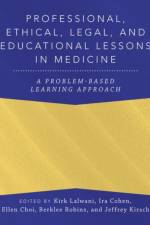
With a diverse set of over 70 cases, quizzes, and a problem-based learning approach, this volume expertly provides an interactive and in-depth learning experience for any medical professional.
Voice, Slavery, and Race in Seventeenth-Century Florence argues for the power of sound - particularly musical and vocal sounds - to systems of racial and ethnic difference. Foregrounding newly discovered archival sources, Emily Wilbourne documents the significant presence of foreign and racially-marked individuals in Medici Florence, many of whom were living under conditions of slavery or unfree labor. This book considers how the musical and verbal soundsof these individuals were recruited to represent or communicate access to subjectivity, agency, and voice.
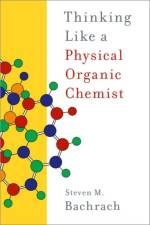
Physical organic chemistry is a modern scientific subdiscipline whose reach is pervasive throughout chemistry, underpinning every academic and industrial synthetic process. In Thinking Like a Physical Organic Chemist, Professor Steven M. Bachrach uses analogies and colorful examples to provide experts and nonexperts alike with an alternative way of thinking about organic chemistry. He highlights a number of reaction mechanisms, walking through the importantexperiments that they rest upon, with an emphasis on the rules and logic systems that organic chemists have built to understand and predict reaction outcomes.
Abonner på vårt nyhetsbrev og få rabatter og inspirasjon til din neste leseopplevelse.
Ved å abonnere godtar du vår personvernerklæring.