













Gjør som tusenvis av andre bokelskere
Abonner på vårt nyhetsbrev og få rabatter og inspirasjon til din neste leseopplevelse.
Ved å abonnere godtar du vår personvernerklæring.Du kan når som helst melde deg av våre nyhetsbrev.

Harris' Developmental Neuropsychiatry provides updated information to the first edition which defined the field of developmental neuropsychiatry, and is the most recent comprehensive textbook in the field.
Hybrid Threats and Grey Zone Conflict explores the legal dimension of strategic competition below the threshold of war, assessing the key legal and ethical questions posed for liberal democracies. Bringing together diverse scholarly and practitioner perspectives, the volume introduces readers to the conceptual and practical difficulties arising in this area, the rich debates the topic has generated, and the challenges that countering hybrid threats and grey zone conflict poses for liberal democracies.
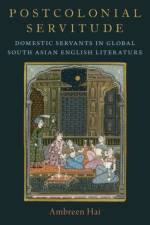
Domestic servitude is a widespread phenomenon in countries like India, Pakistan, Sri Lanka, where even lower-middle class homes rely on domestic workers (mostly women and children). While social scientists have begun to study this unregulated and exploitative "informal sector," literary critics have not paid attention to servants in South Asian literatures or examined their political or literary significance. Postcolonial Servitude argues that a new generation of writers has begun to rethink this culture of servitude and to devise new forms of writing designed to prompt change in normalized ways of seeing and being. It is the first to offer a sustained exploration of servitude and servants in South Asian English literature, from the early 20th century to the present.
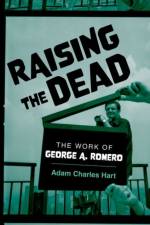
Raising the Dead dives into the expansive, extraordinary body of work found in Romero's archive, going beyond his iconic zombie movies into a deep and varied trove of work that never made it to the big screen. Based on years of archival research, the book moves between unfilmed scripts and familiar classics, showing the remarkable scope and range of Romero's interests and the full extent of his genius. Raising the Dead is a testament to an extraordinarily productive and inventive artist who never let the restrictions of the film industry limit his imagination.
In A Measure Short of War, Jill Kastner and William C. Wohlforth provide a compelling history of subversion--domestic interference to undermine or manipulate a rival--by exploring two thousand years of mischief and manipulation in world politics. They illustrate subversion's allure, its operational possibilities, and the means for fighting back against it. This primer on the history of subversive statecraft in great power rivalry will leave readers smarter about foreign meddling and better able to navigate between the twin temptations of insouciance and overreaction.
The Sacred and the Impure in Judaism examines the radicalization of certain Orthodox Jewish groups through the lens of kashrut, or Jewish dietary laws.
The Sacred and the Impure in Judaism examines the radicalization of certain Orthodox Jewish groups through the lens of kashrut, or Jewish dietary laws.
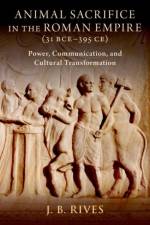
For over a thousand years, the practice of animal sacrifice held a central place in ancient Graeco-Roman culture as a means of both demonstrating piety to the gods and structuring social relationships. As Christianity took root in Rome in the third century CE, the cultural role of this practice changed dramatically. In Animal Sacrifice in the Roman Empire (31 BCE-395 CE), J. B. Rives explores the shifting socio-economic, political, and cultural significance of animal sacrifice in crucial period of change.
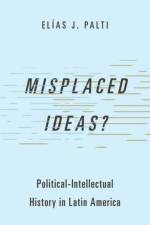
In Misplaced Ideas?, Elías J. Palti examines how Latin American identity has been conceived across different epochs and diverse conceptual contexts. Palti approaches these ideas from a historical-intellectual perspective, unraveling the theoretical foundations on which the very interrogation on Latin American identity has been forumulated and re-formulated. While he does not endorse or refute any particular perspective, Palti discloses the historical and contingent nature of their foundations. Ultimately, Misplaced Ideas? highlights the problematic dynamics of the circulation of ideas in peripheral regions of Western culture, which raises, in turn, broader theoretical questions regarding the ways of approaching complex historical-intellectual processes.
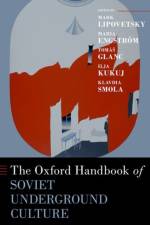
The Oxford Handbook of Soviet Underground Culture is the first comprehensive English-language volume covering a history of Soviet artistic and literary underground. In forty-four chapters, an international group of leading scholars introduce readers to a web of subcultures within the underground, highlight the culture achievements of the Soviet underground from the 1930s through the 1980s, emphasize the multimediality of this cultural phenomenon, and situate the study of underground literary texts and artworks into their broader theoretical, ideological, and political contexts.
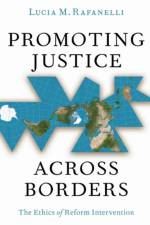
Global political actors of all kinds exert influence in societies beyond their own in myriad ways, including via public criticism, consumer boycotts, divestment campaigns, sanctions, and forceful intervention. Often, they do so in the name of justice-promotion. These attempts to promote justice in foreign societies raise several moral questions. For example, are there ways to promote one's own ideas about justice in another society while still treating its members tolerantly? Are there ways to do so without disrespecting their legitimate political institutions or undermining their collective self-determination? This book addresses these and other questions to develop ethical principles we can use to determine whether a proposed attempt to promote justice in a foreign society is morally permissible.
Can running make me a more moral person? Can striving to be a better person make me a better runner? In The Examined Run, philosopher and ultramarathon runner Sabrina B. Little asks whether running can be a laboratory for developing our character. She looks at the key ideas in virtue ethics--virtue, vice, exemplarism, moral emotions, and competition--and brings them into conversation with her experience in training and racing. Little pushes against the frequent conversations about ethics and sport that focus on the negative--doping and other forms of cheating or on simplistic expressions like "no pain, no gain." She argues that these ideas don't address the rich picture of how athletics inform a good life, and sport's relationship to acts of justice or courage. A good athlete is not just one who avoids cheating--rather, they perform feats of perseverance and courage, and succeed by working to develop their natural capacities. Little employs her own experiences in training, coaching, and racing in world class ultramarathons to reveal how athletics and virtue are deeply interconnected.
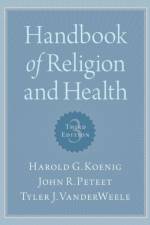
Beginning with a Foreword by Dr. Howard K. Koh, former US Assistant Secretary for Health for the Department of Health and Human Services, this volume examines almost every aspect of health, reviewing past and more recent research on the relationship between religion and health outcomes.
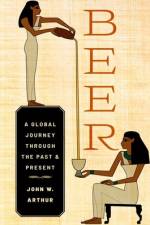
This unique book is an exciting global journey into the origins, technologies, and recipes of ancient beer as well as into beer's continued importance today in diet, ritual, and economics.
In Misplaced Ideas?, Elías J. Palti examines how Latin American identity has been conceived across different epochs and diverse conceptual contexts. Palti approaches these ideas from a historical-intellectual perspective, unraveling the theoretical foundations on which the very interrogation on Latin American identity has been forumulated and re-formulated. While he does not endorse or refute any particular perspective, Palti discloses the historical and contingent nature of their foundations. Ultimately, Misplaced Ideas? highlights the problematic dynamics of the circulation of ideas in peripheral regions of Western culture, which raises, in turn, broader theoretical questions regarding the ways of approaching complex historical-intellectual processes.
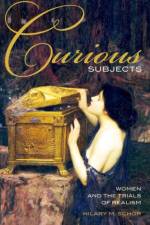
Curious Subjects makes the striking and original argument that what we find at the intersection between women subjects (who choose and enter into contracts) and women objects (owned and defined by fathers, husbands, and the law) is curiosity.
American democracy is in crisis, but nobody seems to know what to do about it. Breaking the Two-Party Doom Loop offers a big and bold plan. The true crisis of American democracy is that two parties are too few. Deftly weaving together history, theory and political science research, Drutman shows the only to break the binary, zero-sum toxic partisanship is to break it apart. America needs more partisanship, rather than less, but in the form of more parties.In this wide-ranging, learned, but highly accessible book, Drutman charts an exciting path forward that might just save the country.
A concise and comprehensive account of pandemics throughout human history, including plague, tubercolosis, smallpox, malaria, cholera, HIV, and COVID-19.
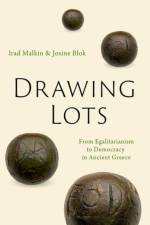
This book offers the first comprehensive study of drawing lots as a central, ubiquitous institution of ancient Greek society. Led by an egalitarian mindset, Greeks drew lots as a matter of course to distribute inheritance, booty, sacrificial meat, and lands, to mix groups, select individuals, and set turns. Lot-oracles were used for divination; otherwise, the gods guarded the justice of the procedure but rarely determined the outcome. When drawing lots was gradually applied to polis governance, classical Athens made sortition the basis of the first democracy in human history. A Greek innovation, drawing lots for governance inspires new democratic politics today.
Marcel Proust (1871-1922) was arguably France's best-known literary writer. He wrote stories, essays, translations, and a 3,000-page novel, In Search of Lost Time (1913-27).This book is a brief guide to Proust's magnum opus in which Joshua Landy invites the reader to view the novel as a single quest--a quest for purpose, enchantment, identity, connection, and belonging--through the novel's fascinating treatments of memory, society, art, same-sex desire, knowledge, self-understanding, self-fashioning, and the unconscious mind.
This book argues that political libertarianism can be grounded in widely shared, everyday moral beliefs-particularly in strictures against shifting our burdens onto others. It also seeks to connect these philosophical arguments with related work in economics, history, and politics for a wide-ranging discussion of political economy.
A provocative perspective on the fragile fundamentals, and forces for resilience, in the Chinese economy, and a forecast for the future on alternate scenarios of collapse and ascendance.
In Desire in Chromatic Harmony, Kenneth Smith reveals how composers used chromatic and dissonant chord progressions to mirror the psychological tension and complexity found in the work of psychoanalytic writers.
Awkwardness offers an overview of the psychology and philosophy of awkwardness, addressing questions like, Why do social interactions become awkward, and why does it matter? What can awkwardness teach us about the gaps in our understanding of the world and of each other? Drawing on the psychology of emotion and social norms, Alexandra Plakias posits a theory of awkwardness and explains how it differs from other self-conscious emotions like embarassment. Plakias explores the reasons why we find awkwardness so unpleasant, and shows how our desire to avoid it leads to negative moral and social consequences. Along the way, this book touches on topics like awkward pauses, cringe comedy, and the question of whether some people are more awkward than others.
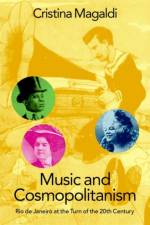
In Music and Cosmopolitanism, Cristina Magaldi examines music making in a past globalized world. This volume focuses on one city, Rio de Janeiro, and how it became part of a larger world through music and performance. Magaldi describes a process of creating connections beyond national borders, one that is familiar to contemporary city residents, but which was already dominant at the turn of the 20th century, as new technological developments led to alternative ways of making and experiencing music.
Lewis Vaughn'sNBConcise Guide to Critical Thinking, third Edition,NBoffers a clear and compact introduction to critical thinking and argumentative writing. Based on his best-selling text,NBThe Power of Critical Thinking, this affordable volume strikes a unique balance for instructors. While it is more succinct than the leading comprehensive texts, it covers more key content, and does so more effectively, than any of the briefer critical thinking handbooks.
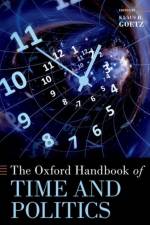
The Oxford Handbook on Time and Politics is the first major publication that surveys time-centered research in political science across its sub-disciplines. As such, it integrates and consolidates an emergent body of knowledge, but also aims to inspire future scholarship. The Handbook highlights that paying systematic attention to time in political analysis yields questions and insights that are of relevance to a very broad range of political scientists working within different theoretical, methodological and epistemological traditions. The Handbook covers comparative politics and government; public policy; international relations; and political theory. Its authors are drawn from more than a dozen countries.
This volume focuses on the collective wisdom of Asian philosophies and their implications for music education. All twenty chapters are written by highly regarded philosophers and music educators steeped in various Asian traditions. These chapters will include an explanation of a prominent philosophical tradition, evidence in a contemporary music teaching and learning settings (including its inception and historical development along with an explanation of how the philosophical tradition works in contemporary music education), and suggestions for potential directions in the near and distant future.
Abonner på vårt nyhetsbrev og få rabatter og inspirasjon til din neste leseopplevelse.
Ved å abonnere godtar du vår personvernerklæring.