






















Gjør som tusenvis av andre bokelskere
Abonner på vårt nyhetsbrev og få rabatter og inspirasjon til din neste leseopplevelse.
Ved å abonnere godtar du vår personvernerklæring.Du kan når som helst melde deg av våre nyhetsbrev.

Moses Maimonides, a scientist, physician, philosopher, rabbinic scholar, and communal leader, was perhaps the most important Jewish figure of the pre-modern age. In this accessible introduction, Ross Brann presents a holistic picture of this towering figure, the author of The Guide for the Perplexed, the Commentary on the Mishnah, and the seminal Mishneh Torah (Code of Jewish Law), in which he reorganized and systematized all of rabbinic law in its entirety. Key to engaging Maimonides on his own terms is understanding that he applied a rationalist's regimen characteristic of his scientific research and practice of medicine to all his life's work: he observed and studied a problem, diagnosed it, and then prescribed a remedy for it whether the concern was physical, metaphysical, spiritual, intellectual, or social in nature.
Aesthetics after Modernism defends the ongoing relevance of aesthetics to art after modernism. Diarmuid Costello traces the art world's rejection of aesthetics to Clement Greenberg's success in co-opting the discourse of aesthetics, notably Kant's aesthetics, to underwrite a formalist theory of aesthetic value. This has led to Kant's aesthetics being tarred with the brush of Greenbergian formalism; it has also encouraged subsequent critics and theorists to miss the resources in Kant's aesthetics for capturing our cognitive relation to precisely the kinds of art that interest them.
Bringing together siloed areas to offer a comprehensive summary of decades of research, Pain, the Opioid Epidemic, and Depression is a comprehensive evaluation of the evidence for bi-directional and mutually reinforcing effects of pain, prescription opioid use, and mental illness, with a focus on depression.
The Rev. Dr. Joseph H. Jackson remains one of the most important but least known figures of twentieth-century African American Christian history. In this book, Jared E. Alcántara sets out a definitive academic biography of this complex figure.
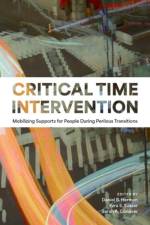
This book is the first to fully describe critical time intervention (CTI), a time-limited, evidence-based model of care that provides direct emotional and practical assistance and strengthens individuals' ties to their community and support systems during critical periods of transition in their lives. The model is widely applied in the US and elsewhere by case managers, social workers, and others seeking to help vulnerable people--including those who are homeless, those with severe mental illness, and others--re-establish themselves in the community with access to needed supports.
This book offers an inclusive lens through which to study the music and dance of South Asia, its diasporas, and the people who produce and use these cultural expressions. Each chapter's central argument ties into a participatory exercise that provides active ways to understand and engage with cultural meaning.
50 Phamarcotherapy Studies Every Palliative Practitioner Should Know is a compilation of key pharmacotherapy studies that form the foundation of evidence-based practice. For each study, a concise summary is presented with an emphasis on the results and limitations of the study, and its implications for practice. Brief information on other relevant studies is provided, and an illustrative clinical case offers readers the opportunity to conceptualize findings. This book is a must-read for palliative practitioners, pharmacists, advance practice nurses, physician assistants, and anyone who wants to learn more about the data behind clinical practice.
The Economics of Accounting explores how accounting plays a vital role in driving business efficiency and creating value. The book reveals the economic significance of accounting outputs, particularly earnings, in optimizing firm performance. It showcases how accounting information enhances decision-making within organizations, reduces information gaps in financial markets, and facilitates price discovery. The book highlights that, contrary to common misconceptions, accounting not only maximizes shareholder value but also promotes stakeholder protection, leading to increased value creation.
Islamophobia has been on the rise since September 11, as seen in countless cases of discrimination, racism, hate speeches, physical attacks, and anti-Muslim campaigns. The 2006 Danish cartoon crisis and the controversy surrounding Pope Benedict XVI's Regensburg speech have underscored the urgency of such issues as image-making, multiculturalism, freedom of expression, respect for religious symbols, and interfaith relations. The 1997 Runnymede Report defines Islamophobia as "dread, hatred, and hostility towards Islam and Muslims perpetuated by a series of closed views that imply and attribute negative and derogatory stereotypes and beliefs to Muslims." Violating the basic principles of human rights civil liberties, and religious freedom, Islamophobic acts take many different forms. In some cases, mosques, Islamic centers, and Muslim properties are attacked and desecrated. In the workplace, schools, and housing, it takes the form of suspicion, staring, hazing, mockery, rejection, stigmatizing and outright discrimination. In public places, it occurs as indirect discrimination, hate speech, and denial of access to goods and services. This collection of essays takes a multidisciplinary approach to Islamophobia, bringing together the expertise and experience of Muslim, American, and European scholars. Analysis is combined with policy recommendations. Contributors discuss and evaluate good practices already in place and offer new methods for dealing with discrimination, hatred, and racism.
Divisions draws together the history of race and the military; of high command and ordinary GIs; and of African Americans, white Americans, Asian Americans, Latinos, Native Americans, arguing that racist divisions were a defining feature of America's World War II military.
Arbitrating Empire uncovers how ordinary people used arbitral claims commissions to challenge state violence across the United States Empire during the first decades of the twentieth century and why the State Department attempts to erase their efforts remade modern international law.
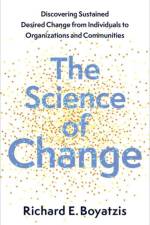
The Science of Change integrates over 50 years of research in many fields into a unifying theory of behavioral change, Intentional Change Theory (ICT). This multi-level, fractal theory is equally applicable to getting better at playing the guitar, achieving a department sales target, rallying a community to action over a toxic spill, or mobilizing a country to fight a pandemic. In this book, Richard E. Boyatzis examines each phase and principle of the theory and provides examples of sustained, desired change at the individual, dyadic, team, organizational, community, and country level.
Starting in the late 1980s, a broad range of actors mounted a long-term effort to oppose action to mitigate the greenhouse gas emissions responsible for climate change. This is the first book to document the development and nature of these activities across Europe.
Abonner på vårt nyhetsbrev og få rabatter og inspirasjon til din neste leseopplevelse.
Ved å abonnere godtar du vår personvernerklæring.