


















Gjør som tusenvis av andre bokelskere
Abonner på vårt nyhetsbrev og få rabatter og inspirasjon til din neste leseopplevelse.
Ved å abonnere godtar du vår personvernerklæring.Du kan når som helst melde deg av våre nyhetsbrev.

Dr. Webster puts a face on chronic pain through describing the lives of patients. The Painful Truth opens readers' eyes to a population who are stigmatized and marginalized by society. Yet the book offers a path forward for those willing to engage in a crusade against our primal enemy: pain.
A comprehensive overview of the study of church and state, the twenty-one essays included in this Handbook present a scholarly look at the intricacies and past and current debates that frame the American system of church and state, within five main areas: history, law, theology/philosophy, politics, and sociology. These essays provide factual accounts, but also examine issues, problems, debates, controversies, and, where appropriate, suggest resolutions.They also offer analysis of the range of interpretations of the relationship between church and state offered by various American scholars.
Pro Mundo - Pro Domo: The Writings of Alban Berg contains new English translations of the complete writings of the Viennese composer Alban Berg (1885-1935) and extensive commentaries tracing the history of each essay and its connection to musical culture of the early twentieth century.
This critical study locates musical monumentality, a central property of the nineteenth-century German repertoire, at the intersections of aesthetics and memory. In examples including Beethoven, Liszt, Wagner and Bruckner, Rehding explores how monumentality contributes to an experiential music history and how it conveys the sublime to the listening public.
Modern organizations are rife with well-intentioned managers who follow the tenets of mainstream work culture and yet perpetuate patterns of poor management - sapping morale, well-being, and the performance of individuals and organizations. In Good People, Bad Managers, author Samuel A. Culbert explains how to shift managers' mindsets and to encourage them to break from the culturally written "good management" scripts they enact - to conduct themselves moreintelligently, other-sensibly, and, as opportunities arise, to contribute to the common good. Good People, Bad Managers teaches leaders what they gain from removing barriers to allowing employees their own voices, and how they, along with everyone in their company, can benefit from managersevolving.
Through an analysis of copyright in a digital context, Stefan Larssons Conceptions in the Code explains the role that metaphor plays in the law's handling of technological change. It makes a significant contribution to sociolegal analysis as well as conceptual metaphor theory.
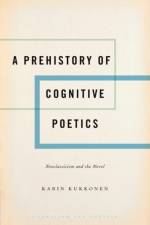
Carrying neoclassicism back into today's critical debates, this study considers the cognitive underpinnings of the rules of poetic justice, the unities and decorum, underlines their relevance for today's cognitive poetics and traces their influence in the emerging narrative form of the eighteenth-century novel.
Arnold Schoenberg was a polarizing figure in twentieth century music, and his works and ideas have had considerable and lasting impact on Western musical life. A refugee from Nazi Europe, he spent an important part of his creative life in the United States (1933-1951), where he produced a rich variety of works and distinguished himself as an influential teacher. However, while his European career has received much scholarly attention, surprisingly little has been written about the genesis and context of his works composed in America, his interactions with Americans and other migrs, and the substantial, complex, and fascinating performance and reception history of his music in this country. Author Sabine Feisst illuminates Schoenberg's legacy and sheds a corrective light on a variety of myths about his sojourn. Looking at the first American performances of his works and the dissemination of his ideas among American composers in the 1910s, 1920s and early 1930s, she convincingly debunks the myths surrounding Schoenberg's alleged isolation in the US. Whereas most previous accounts of his time in the US have portrayed him as unwilling to adapt to American culture, this book presents a more nuanced picture, revealing a Schoenberg who came to terms with his various national identities in his life and work. Feisst dispels lingering negative impressions about Schoenberg's teaching style by focusing on his methods themselves as well as on his powerful influence on such well-known students as John Cage, Lou Harrison, and Dika Newlin. Schoenberg's influence is not limited to those who followed immediately in his footsteps-a wide range of composers, from Stravinsky adherents to experimentalists to jazz and film composers, were equally indebted to Schoenberg, as were key figures in music theory like Milton Babbitt and David Lewin. In sum, Schoenberg's New World contributes to a new understanding of one of the most important pioneers of musical modernism.
The Health of the State is a cultural history that explores how war writing figured in three phases of modern America's political evolution: Civil War remembrance during the Progressive Era, the culture of World War I and the new internationalism, and World War II's legitimation of Cold War liberalism.
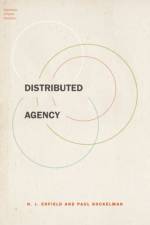
Distributed Agency presents an interdisciplinary inroad into the latest thinking about the distributed nature of agency: what it's like, what are its conditions of possibility, and what are its consequences. The book's 25 chapters are written by a wide range of scholars, from anthropology, biology, cognitive science, linguistics, philosophy, psychology, geography, law, economics, and sociology. While each chapter takes up different materials using differentmethods, they all chart relations between the key elements of agency: intentionality, causality, flexibility and accountability.
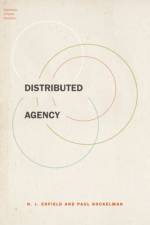
Distributed Agency presents an interdisciplinary inroad into the latest thinking about the distributed nature of agency: what it's like, what are its conditions of possibility, and what are its consequences. The book's 25 chapters are written by a wide range of scholars, from anthropology, biology, cognitive science, linguistics, philosophy, psychology, geography, law, economics, and sociology. While each chapter takes up different materials using differentmethods, they all chart relations between the key elements of agency: intentionality, causality, flexibility and accountability.
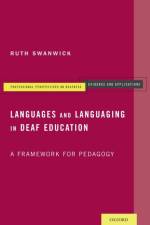
Languages and Languaging in Deaf Education offers bold a contribution towards a new pedagogical framework in deaf education and studies.
Contemporary political philosophers disagree about whether theories of justice should be utopian or realistic. Contributors to this volume largely deny that the choice between realism and idealism is binary. Their contributions represent a continuum between realism and idealism that best represents the contemporary state of the debate.
Contemporary political philosophers disagree about whether theories of justice should be utopian or realistic. Contributors to this volume largely deny that the choice between realism and idealism is binary. Their contributions represent a continuum between realism and idealism that best represents the contemporary state of the debate.
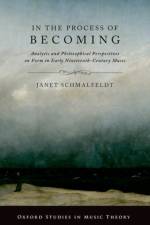
This philosophically-inspired approach to the perception of form in early nineteenth-century music invites listeners and especially performers to assess and participate in the interpretation of transformative formal processes as they unfold in time. It proposes new ways of hearing beloved works of the romantic generation as representative of their striving for novel, intensely self-reflective modes of communication.
This volume includes 22 new pieces by leading political philosophers, on traditional issues (such as authority and equality) and emerging issues (such as race, and money in politics). The pieces are clear and accessible will interest both students and scholars working in philosophy, political science, law, economics, and more.
Integrative Environmental Medicine is the most up-to-date, evidence-based resource for clinicians on the history, regulation and effects of modern day environmental chemicals and radiation on human health.
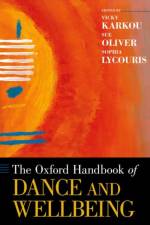
The Oxford Handbook of Dance and Wellbeing considers various applications of dance in promoting wellbeing. The handbook's five sections encompass diverse perspectives on dance and related movement practices, including physical, socio-cultural and emotional aspects; performance; education; community; and dance in health care settings. Within these diverse contexts, theoreticians, scientists, researchers and practitioners from around the world engage andinvite readers to engage in configuring dance, wellbeing, and creative cross-overs.
The Oxford Handbook of Causal Reasoning offers a state-of-the-art review of one of our most central cognitive competencies, which has for a long time been neglected in cognitive psychology. This Handbook provides introductions of competing theories of causal reasoning, and discusses its role in various cognitive functions and domains.
This volume discusses issues surrounding workforce readiness in the 21st century. Leading experts from psychology, education, and the workforce present cutting-edge research on the topic. Building Better Students stands at the forefront of offering readers promising new directions for reducing the emerging skills gap.
Dance Me a Song explores how Fred Astaire, Gene Kelly, and others led to the rise of a distinctive dance style as a crowning achievement of twentieth-century dance and cinema.
Teaching Music to Students with Special Needs: A Practical Resource is brings together theory and policy and planning for instruction in K-12 classrooms. The resource presents a collaboration of K-12 teachers, outstanding undergraduate and graduate music education students, and professionals in the field.
In A Slap in the Face, William Irvine undertakes a wide-ranging investigation of insults, their history, the role they play in social relationships, and the science behind them. He offers advice, based primarily on the writings of the Stoic philosophers, on how best to curb our own insulting tendencies and how to respond to the insults that are directed our way. A rousing follow-up to A Guide to the Good Life, A Slap in the Face willinterest anyone who's ever delivered an insult or felt the sting of one-in other words, everyone.
This book brings together eleven case studies of inductive risk-the chance that scientific inference is incorrect-that range over a wide variety of scientific contexts and fields. The chapters are designed to illustrate the pervasiveness of inductive risk, assist scientists and policymakers in responding to it, and productively move theoretical discussions of the topic forward.
This book brings together eleven case studies of inductive risk-the chance that scientific inference is incorrect-that range over a wide variety of scientific contexts and fields. The chapters are designed to illustrate the pervasiveness of inductive risk, assist scientists and policymakers in responding to it, and productively move theoretical discussions of the topic forward.
In his short life, the Virginia-born John Treville Latouche (1914-56) made a profound mark on America's musical theater as a lyricist, book writer, and librettist. His signature achievements include theatrical works with composers Earl Robinson, Vernon Duke, Duke Ellington, Jerome Moross, and Leonard Bernstein.
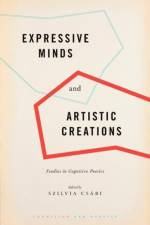
Expressive Minds and Artistic Creations: Studies in Cognitive Poetics presents multidisciplinary and interdisciplinary research papers describing new developments in the field of cognitive poetics. Among other leading researchers, many contributors are world-famous scholars of psychology, linguistics, and literature, including Raymond W. Gibbs, Jr., Zoltan Koevecses, and Reuven Tsur.
Abonner på vårt nyhetsbrev og få rabatter og inspirasjon til din neste leseopplevelse.
Ved å abonnere godtar du vår personvernerklæring.