
























Gjør som tusenvis av andre bokelskere
Abonner på vårt nyhetsbrev og få rabatter og inspirasjon til din neste leseopplevelse.
Ved å abonnere godtar du vår personvernerklæring.Du kan når som helst melde deg av våre nyhetsbrev.

Who are the Jews? In this book, Harry Ostrer, an internationally renowned medical geneticist, joins this century-old debate by exploring previous efforts to define a biological basis for Jewishness and the recent discoveries of his own Jewish HapMap Project team of investigators. Dr. Ostrer goes on to explore the even more challenging issues of whether certain traits alleged to be more prevalent among Jews such as intelligence and mental illness have a geneticbasis. Then, recognizing the rising popularity of genetic genealogy, he discusses whether knowledge of the genetic legacy is providing a new basis for shared Jewish identity.
Stefania Tutino shows that post-Reformation Catholic culture was a rich laboratory for our current moral and hermeneutical anxieties.
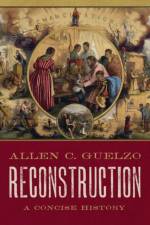
Allen C. Guelzo's Reconstruction: A Concise History is a gracefully-written interpretation of Reconstruction as a spirited struggle to re-integrate the defeated Southern Confederacy into the American Union after the Civil War, to bring African Americans into the political mainstream of American life, and to recreate the Southern economy after a Northern, free-labor model.
Paris a Table: 1846 is the first translation in English of a seminal book on gastronomy. Focusing on the Parisian dining scene, it takes the reader from the most elegant restaurant to a laborer's meals on the street, offering "the richest view of Balzac's time seen from the table" (Le Monde).
The American Military: A Concise History narrates the American military experience. It focuses on four recurring themes- citizen soldiers vs. the standing armed forces; military professionalism; mechanization and technology; and the limits of power-and illuminates the role of the American military in its past and how it is shaping current and future national security issues.
A fresh synthesis of the abolitionist movement and ideas in the Anglo-American world.
This book advances a new theoretical model on norm change in international law and demonstrates and tests the model by examining a series of practical cases. Beyond this, it divides the cases covered between sovereign rules and liberal rules, and argues that considering the whole cycle of norm change has clear advantages over the competing 'legalization' and 'transnational activist' approaches.
A combination of personal reminiscences and theory that illuminate the importance of history and the role that women have played in it. The topic's range from remembrances of the author's early life as a Jewish refugee in America to an essay on the nonviolent resistence from the Quakers to the civil rights movements in the 1950s.
Presents and critiques normative data for 26 commonly used neuropsychological tests. This second edition offers an effective framework for the critical evaluation of normative data for neuropsychological tests. It is a useful contribution to the practice of neuropsychology for practitioners, researchers, teachers, and graduate students.
Hurka gives an account of perfectionism, which holds that certain states of humans, such as knowledge, achievement and friendship are good apart from any pleasure they may bring, and that the morally right act is always the one that most promotes these states. Beginning with an analysis of its central concepts, Hurka tries to regain for perfectionism a central place in contemporary moral debate.
Many disciplines study language movement and change in Africa, but they rarely interact. Here, eighteen scholars from a range of disciplines explore differing conceptions of language movement in Africa through empirical case studies.
Presents a detailed look at the period between 1925 and leading up to WWII, in which quantum theory was created and then quickly applied to nuclear, atomic, molecular, and solid state physics.
This volume traces the history of ideas about the functioning of the brain, from its roots in the ancient cultures of Egypt, Greece, and Rome through the centuries into modern times. It emphasizes the brain's functions and how they became associated with regions and systems.
In everything from philosophical ethics to legal argument to public activism, it has become commonplace to appeal to human dignity. Dignity refers to the fundamental moral worth or status supposedly belonging to all persons equally. But this is relatively new. In this volume, leading scholars across a range of disciplines attempt to clarify the variegated and murky history of "dignity," and explain how it arrived it is current and historically unusualmeaning.
Roger Frie explores what it means to discover his family's legacy of a Nazi past. Using the narrative of his grandfather as a starting point, he shows how the transfer of memory from one German generation to the next keeps the forbidding reality of the Holocaust at bay.
The Oxford Handbook of Technology and Music Education situates technology in relation to music education from perspectives: historical, philosophical, socio-cultural, pedagogical, musical, economic, and policy.Chapters from a diverse group of authors provide analyses of technology and music education through intersections of gender, theoretical perspective, geographical distribution, and relationship to the field.
Examines four long-term cases of nations shifting to low-carbon energy sources from dependence on fossil fuels, in order to discuss better ways for a nation to make such a transition.
With his novels, journalism, short stories, political activism, and travel writing, Jack London established himself as one of the most prolific and diverse authors of the twentieth century. Covering London's biography, cultural context, and the various genres in which he wrote, The Oxford Handbook of Jack London is the definitive reference work on the author.
Understanding the Emotional Disorders is the first manual for how to use the IDAS-II and examines important, replicable symptom dimensions contained within five adjacent diagnostic classes in the DSM-5: depressive disorders, bipolar and related disorders, anxiety disorders, obsessive-compulsive and related disorders, and trauma- and stressor-related disorders.
TEACHING INPATIENT MEDICINE equips physician-educators with proven, practical strategies to aid in the transformation of medical students, interns, and residents into confident clinical decision-makers. Drawing upon the insights and practices of renowned clinical educators, Harrod and Saint offer simple, actionable tips for creating collaborative, efficient medical teams within a rapidly changing hospital environment.
Democracy to Come lays the groundwork of a new understanding of modern democracy. Rejecting the idea that democracy is a stable system fostered through regime change and the unidirectional transfer of concepts from the West to autocracies, Fred Dallmayr argues democracy must be relational - nurtured by different societies and cultures from within. In turn, democracy can never be a finished project, but will always be about its potential.
Ghettoes, Tramps, an Welfare Queens offers a never-before-seen perspective on Hollywood as it shows how American movies have portrayed poor and homeless people from the silent era to today. It simultaneously provides a novel kind of guide to social policy, exploring how ideas about poor and homeless people have been reflected in popular culture and evaluating those images against the historical and contemporary reality.
The pioneering work of Bakhtin has led scholars to see all discourse as "dialogical." Contributors to this volume argue that something is overlooked with this focus. Many speakers, especially in political and religious contexts, craft monologues-single-voiced statements to which the only expected response is agreement or faithful replication.
Rather than viewing inconsistencies in the Torah as signs of revision, this book identifies precursors for these phenomena in ancient Near Eastern writings. It claims that Enlightenment and German historicist influences corrupted critical study of the Bible, and calls for a return to the more modest agenda set out by Spinoza.
The pioneering work of Bakhtin has led scholars to see all discourse as "dialogical." Contributors to this volume argue that something is overlooked with this focus. Many speakers, especially in political and religious contexts, craft monologues-single-voiced statements to which the only expected response is agreement or faithful replication.
Abonner på vårt nyhetsbrev og få rabatter og inspirasjon til din neste leseopplevelse.
Ved å abonnere godtar du vår personvernerklæring.