




















Gjør som tusenvis av andre bokelskere
Abonner på vårt nyhetsbrev og få rabatter og inspirasjon til din neste leseopplevelse.
Ved å abonnere godtar du vår personvernerklæring.Du kan når som helst melde deg av våre nyhetsbrev.

How to Do Things with History is a collection of essays that explores current and future approaches to the study of ancient Greek cultural history. The essays in this volume demonstrate how particular methodologies for studying ancient Greece can be employed to illuminate a range of different kinds of subject matter.
Charismatic, charming, and one of the best orators of his era, Henry Clay seemed to have it all. He offered a comprehensive plan of change for America, and directed national affairs as Speaker of the House, Secretary of State to John Quincy AdamsΓÇöthe man he put in officeΓÇöand acknowledged leader of the Whig party. As the broker of the Missouri Compromise and Compromise of 1850, Henry Clay fought to keep a young nation united when westward expansion and slaverythreatened to tear it apart. Yet, despite all that talent and all those real assets, Henry Clay never became president. Three times he received Electoral College votes, twice more he sought his party''s nomination, but he lost each time. Alongside fellow senatorial greats, Daniel Webster and John C.Calhoun, Clay was in the mix almost every moment from 1824 to 1848. Given his prominence, perhaps the years should be termed not the Jacksonian Era but rather the Age of Clay. This book is not a biography, though many biographical elements inform it, for only by knowing Clay the man can we understand Clay the politician. Instead, it uses new research and offers a more focused, nuanced explanation of Clay''s programs and politics to provide answers to the question of why the man they called "The Great Rejected" never won the presidency but did win the accolades of history. James Klotter''s fresh outlook reveal that the best monument to Henry Clay is the fact that theUnited States remains one country, one nation, one example of a successful democracy, still working, still changing, still reflecting his spirit. The appeal of Henry Clay and his emphasis on compromise still resonate in a society seeking less partisanship and more efforts at conciliation.
Throughout his writings, Immanuel Kant offers, but does not clearly defend, the claim that evil involves self-deception. Laura Papish's Kant on Evil, Self-Deception, and Moral Reform explains why Kant sees self-deception as implicated in evil and how, by contrast, human beings can develop a self-knowledge that facilitates moral reform.
Like other books in the Oxford Philosophical Concepts series, Pleasure traces the development of the concept from ancient times through the 20th century. The volume touches on ancient philosophy, including Plato, Aristotle, and Islamic philosophy, through to the early modern era and the development of scientific psychology, as well as contemporary notions of pleasure. Interdisciplinary reflections focus on pleasure in subjects other than philosophy,including music and painting.
Like other books in the Oxford Philosophical Concepts series, Pleasure traces the development of the concept from ancient times through the 20th century. The volume touches on ancient philosophy, including Plato, Aristotle, and Islamic philosophy, through to the early modern era and the development of scientific psychology, as well as contemporary notions of pleasure. Interdisciplinary reflections focus on pleasure in subjects other than philosophy,including music and painting.
Paul and the Gentile Problem provides a new explanation for the apostle Paul's statements about the Jewish law. Instead of understanding his arguments against circumcision to be criticisms of Judaism or the law, this book makes the case that Paul meant to oppose gentile judaizing.
Joining the debate over the roles of reason and appetite in the moral mind, In Praise of Desire takes the side of appetite. Acting for moral reasons, acting in a praiseworthy manner, and acting out of virtue are simply acting out of intrinsic desires for the right or the good.
Today the use of English is dominant, and even epistemologists in the "rest of the world" use English, using "know." But why, and to what extent can this be justified? As the first volume ever to be dedicated solely to this topic, the papers collected here will contribute to this important topic and in epistemology in general.
Mendelovici proposes a novel theory of intentionality in terms of phenomenal consciousness, arguing that the view avoids the problems of its competitors and can accommodate a wide range of cases, including those of thought and nonconscious states.
Philosophy of science studies the methods, theories and concepts used by scientists. This book addresses both general philosophy of science and specific questions raised by logic, mathematics, physics, biology, medicine, cognitive science, linguistics, social sciences, and economics.
After Injury explores the practices of forgiveness, resentment, and apology in three key moments when they were undergoing a dramatic change. The three moments are early Christian history (for forgiveness), the shift from British eighteenth-century to Continental nineteenth-century philosophers (for resentment), and the moment in the 1950s postwar world in which British ordinary language philosophers and American sociologists of everyday life theorized whatit means to express or perform an apology. The debates that arose in those key moments have largely defined our contemporary study of these practices.
When recalling events that one personally experienced, sometimes one sees oneself in the remembered scene: from an external, detached 'observer perspective'. In such cases one remembers from-the-outside. Remembering from-the-outside is a common yet curious case of personal memory. This book disentangles the puzzles posed by such memories.
In this book, Brit Brogaard defends the view that visual experience is like belief in having a representational content. Her defense differs from most previous defenses of this view in that it begins by looking at the language of ordinary speech. She provides a linguistic analysis of what we say when we say that things look a certain way or that the world appears to us to be a certain way. She then argues that this analysis can be used to argue for the view thatvisual experience has a representation content that mediates between you and the world when you visually perceive.
This book chronicles how American psychiatry went from its psychoanalytic heyday in the 1940s and '50s, through the virulent anti-psychiatry of the 1960s and '70s, into the late 20th-century descriptive, criteria-grounded model of mental disorders.
This book addresses the concept of Technique and its place in contemporary practice of Social Work. It does so by reviewing the concept of technique, analyzing the necessary component parts of a definition, formulating a definition, then presenting a discussion of the nature and use of 101 Techniques for Clinical Social Work practice.
The major choral works by Johann Sebastian Bach-the Christmas, Easter, and Ascension Oratorios, and the St. Matthew, St. Mark, and St. John Passions-stand as the most frequently-performed and penetratingly discussed of the genre. Renowned Bach scholar Michael Marissen has assembled a compact, well-designed and ideally useful treatment of Bach's oratorios, providing the full German texts with literal English translations and copious annotations. He provides strictliteral translations of these texts, with citations from the Luther Bible as it was known in Bach's day, along side extensive footnotes that provide information addressing the interests and concerns of today's Bach community. These are the first translations of the librettos from Bach's oratorios toaccommodate the many sense-clarifying allusions to the readings of the Luther Bibles in Bach's day, to explore from historical dictionaries the meanings of previously unnoticed archaic usages, and to contrast relevant findings from modern biblical scholarship. Marissen's insights are particularly helpful, his thoroughness is impressive, and the book will be a longstanding, definitive, and essential reference for choral directors, performers, audience members, and Bach scholarsalike.
Derek Hastings illuminates an important and largely overlooked aspect of early Nazi history, going back to the years after World War I-when National Socialism first emerged-to reveal its close early ties with Catholicism. Focusing on Munich and the surrounding area, Hastings shows how Catholics played a central and hitherto overlooked role in the Nazi movement before the 1923 Beerhall Putsch, shedding light on the activism of individual Catholic writers, universitystudents, and priests and describing the striking Catholic-oriented appeals and imagery formulated by the movement.
Bernard Lewis is recognized around the globe as one of the leading authorities on Islam. Hailed as "the world's foremost Islamic scholar" (Wall Street Journal), as "a towering figure among experts on the culture and religion of the Muslim world" (Baltimore Sun), and as "the doyen of MiddleEastern studies" (New York Times), Lewis is nothing less than a national treasure, a trusted voice that politicians, journalists, historians, and the general public have all turned to for insight into the Middle East. Now, this revered authority has brought together writings and lectures that he has written over four decades, featuring his reflections on Middle Eastern history and foreign affairs, the Iranian Revolution, the state of Israel, the writing of history, and much more. The essays cover such urgentand compelling topics as "What Saddam Wrought," "Deconstructing Osama and His Evil Appeal," "The Middle East, Westernized Despite Itself," "The Enemies of God," and "Can Islam Be Secularized?" The collection ranges from two English originals of articles published before only in foreign languages, topreviously unpublished writings, to his highly regarded essays from publications such as Foreign Affairs and The New York Review of Books. With more than fifty pieces in all, plus a new introduction to the book by Lewis, this is a valuable collection for everyone interested in the Middle East. Here then is a rich repository of wisdom on one of the key areas of the modern world--a wealth of profound reflections on Middle Eastern history, culture, politics, and current events.
In Playing Fair, Richard Dagger provides a unified theory of political obligation and the justification of punishment that takes its bearings from the principle of fair play. Dagger argues that members of a just polity have an obligation to obey its laws because they have an obligation of reciprocity or fair play to one another.
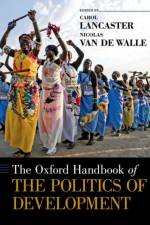
In The Oxford Handbook of the Politics of Development, two of America's leading political scientists on the issue, Carol Lancaster and Nicolas van de Walle, assemble an international cast of leading scholars who craft a comprehensive, examination of development policy and its effects on the political and economic climates of a country.
Drawing on personal experience as a former pro and interviews with over 120 current and former NFL players, Robert Turner gets behind the bravado to reveal what it means to be an athlete in the NFL and why so many players struggle with life after football.
Legacies and Memories in Movements addresses the long term effects of democratic transitions on social movements in Italy, Greece, Portugal and Spain. Donatella della Porta and her collaborators examine the concepts of historical legacy and memory, suggesting ways to apply them in analyses of the long-term effects of movements, movement participation, and movement strategies and tactics.
Diminishing Returns at Work focuses on working hours - in the past and in the present, in America and in Britain. John Pencavel illustrates the proportional relationship between hours of work and outcomes such as production and health. Increases in hours of work are shown to result in smaller increases in production and the benefits in output of long working hours may not offset the consequences of long hours for the health and quality of life of workers.Shorter hours of work might benefit both firms and workers.
Compulsion in Religion investigates religion and politics in Saddam Hussein's Iraq as well as the roots of the religious insurgencies that erupted in Iraq following the American-led invasion in 2003. In looking at Saddam Hussein's policies in the 1990s, many have interpreted his support for state religion as evidence of a dramatic shift away from Arab nationalism toward political Islam. While Islam did play a greater role in the regime's symbols and Saddam'sstatements in the 1990s than it had in earlier decades, the archival records and the regime's internal documents challenge this theory.
Society in the Self: A Theory of Identity in Democracy shows how society is working in the deeper regions of self and identity. This book is an exploration of the democratic potentials of self and identity in a globalizing and localizing society.
The Oxford Handbook of Energy and Society offers a collection of contemporary sociological research, highlighting the growing instability and disruptions associated with fossil-fuel-dependence, and the emerging challenges and innovations associated with a transition away from fossil fuels. Regional case studies of different energy resources from around the world are featured, as are the roles of politics, markets, technology, social movements, and consumers,all contributing to a complex systems perspective on the uncertain future of energy-society relations.
Abonner på vårt nyhetsbrev og få rabatter og inspirasjon til din neste leseopplevelse.
Ved å abonnere godtar du vår personvernerklæring.