
















Gjør som tusenvis av andre bokelskere
Abonner på vårt nyhetsbrev og få rabatter og inspirasjon til din neste leseopplevelse.
Ved å abonnere godtar du vår personvernerklæring.Du kan når som helst melde deg av våre nyhetsbrev.

Drawing on cross-national surveys from Latin America and a case study of Argentina, this book argues that where weak institutions and active citizenries collide, countries can morph into "protest states," where contentious participation becomes so common as to render it a conventional characteristic of everyday political life. Protest State offers a comprehensive study of one of the most intriguing puzzles in Latin American politics today: in the midst of anunprecedented era of democratic governments and economic prosperity, why are so many people protesting?
Memory in a Time of Prose investigates a deceptively straightforward question: what did the biblical scribes know about a past that consumed so many of their writings? This book compares biblical references to an early Iron Age world (ca. 1175-830 BCE) with a wide range of archaeological and historical evidence from the era in which these stories are set in order to reveal how the past was preserved, transformed, or forgotten within biblicalstorytelling.
The Oxford Handbook of the Brazilian Economy provides a global audience of scholars, graduate students and practitioners a comprehensive guide to Brazil's economy.
Before the Bible argues that a key to understanding the formation of scripture is the widespread practice of individual and communal prayer in early Judaism. Newman demonstrates that scriptures were formed because of the intertwined relationship of worship practices, learned sages who interpreted scripture, and the ongoing performance of scriptural tradition.
Broadway to Main Street: How Show Tunes Enchanted America is the first chronicle of how the songs of the American Musical Theater made their way-through sheet music, popular recordings, the radio, original cast albums, television, CDs, and the Internet-from the Theater District to living rooms across the country.
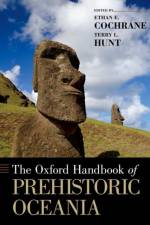
The Oxford Handbook of Prehistoric Oceania presents the archaeology, linguistics, environment and human biology of Melanesia, Micronesia, and Polynesia. First colonized 50,000 years ago, Oceania witnessed the independent invention of agriculture, the construction of Easter Island's statues, and the development of the word's last archaic states.
This handbook synthesizes what is known and debated about science in the classical world of ancient Greece and Rome, also touching briefly on Egypt, Mesopotamia, India, and China. Each of its many essays provides a synthesis and synopsis of the concepts and models of one of the ancient natural sciences.
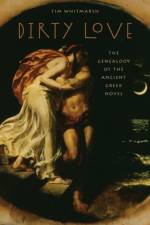
Where does the Greek novel come from? This book argues that whereas much of Greek literature was committed to a form of cultural purism, presenting itself as part of a continuous tradition reaching back to Homer, the novel revelled in its hybridisation with Persian, Egyptian and Jewish culture.
With an innovative historical framework, Carol J. Oja explores the emergence during World War II of Leonard Bernstein, Jerome Robbins, Betty Comden, and Adolph Green.
Volume 114 of Terrorism: Commentary on Security Documents, European Responses to Terrorist Radicalization, approaches the subject as it has been identified and addressed by the United Kingdom, the Netherlands, and Germany. The introduction to this provides background information on terrorist incidents, and evaluates the evolution of policy on radicalization. It also contains an analysis of radicalization generated by the Organization of Security andCooperation in Europe, providing insight into trans-European cooperation efforts relating to counter-radicalization policy in Europe.
Many serious public health problems confront the world in the new millennium. Anthropology and Public Health examines the critical role of anthropology in four crucial public health domains: (1) anthropological understandings of public health problems such as malaria, HIV/AIDS, and diabetes; (2) anthropological design of public health interventions in areas such as tobacco control and elder care; (3) anthropological evaluations of public health initiatives such asSafe Motherhood and polio eradication; and (4) anthropological critiques of public health policies, including neoliberal health care reforms. As the volume demonstrates, anthropologists provide crucial understandings of public health problems from the perspectives of the populations in which theproblems occur. On the basis of such understandings, anthropologists may develop and implement interventions to address particular public health problems, often working in collaboration with local participants. Anthropologists also work as evaluators, examining the activities of public health institutions and the successes and failures of public health programs. Anthropological critiques may focus on major international public health agencies and their workings, as well as public healthresponses to the threats of infectious disease and other disasters. Through twenty-four compelling case studies from around the world, the volume provides a powerful argument for the imperative of anthropological perspectives, methods, information, and collaboration in the understanding and practice ofpublic health. Written in plain English, with significant attention to anthropological methodology, the book should be required reading for public health practitioners, medical anthropologists, and health policy makers. It should also be of interest to those in the behavioral and allied health sciences, as well as programs of public health administration, planning, and management. As the single most comprehensive and up-to-date analysis of anthropology's role in public health, this volume willinform debates about how to solve the world's most pressing public health problems at a critical moment in human history.
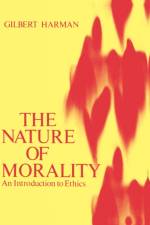
Contains an overall account of morality in its philosophical format particularly with regard to problems of observation, evidence, and truth.
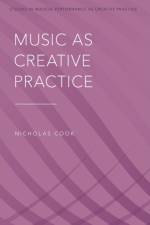
Not long ago, ideas of creativity in music revolved around composers in garrets and the idea of genius. In the last decade there has been a sea change in thinking: musical creativity is seen in terms of collaboration and real-time performance. Music as Creative Practice is a first attempt to synthesise both perspectives.
This is a comprehensive analysis of ethical topics in palliative care, combining clinical experience and philosophical rigor. A broad array of topics are explored from historical, legal, clinical, and ethical perspectives, offering both the seasoned clinician and interested lay reader a thorough examination of the complex ethical issues facing patients suffering from life-threatening illness.
Two Dozen (or so) Arguments for God expands Alvin Plantinga's seminal article "Two Dozen (or so) Theistic Arguments." Each of Plantinga's original suggestions is developed here by a wide variety of accomplished scholars. This collection both presents ground-breaking research and lays the foundations for research projects for years to come.
Jonathan Z. Smith (1938-2017) was perhaps the most influential theorist of religion of the last half century. In this book, four interviews and a previously unpublished essay display something of the dynamic, thinking-on-his feet liveliness that Smith brought to questions about the study of religion, his theoretical preferences, and his methods of teaching.
When Martin Luther King, Jr. marched in Chicago in 1966, he joined black and white lay Catholics who had worked together for civil rights for more than forty years. One in Christ traces the development of Catholic interracial activism from the ground up, demonstrating that accounting for religion is crucial to understanding race and civil rights in the North.
This Handbook gives an accessible survey of the main genres, contexts, and regions of modern Latin.
The Oxford Handbook of Social Justice in Music Education provides a comprehensive overview and scholarly analyses of challenges relating to social justice in musical and educational practice worldwide, and provides practical suggestions that should result in more equitable and humane learning opportunities for students of all ages.
The Confucian-Legalist State proposes a new theory of social change and, in doing so, analyzes the patterns of Chinese history, such as the rise and persistence of a unified empire, the continuous domination of Confucianism, and China's inability to develop industrial capitalism without Western imperialism.
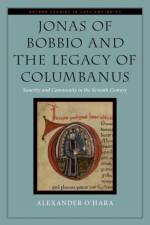
Jonas of Bobbio's life mirrored many of the transformations of the seventh century, while his three saints' Lives provide a window into the early medieval Age of Saints and the monastic and political worlds of Merovingian Gaul and Lombard Italy.
Are Google, Apple, Facebook, Amazon and Microsoft too powerful? Martin Moore and Damian Tambini draw together the world's leading researchers to examine the economic, political, and social impacts of these digital giants.
Are Google, Apple, Facebook, Amazon and Microsoft too powerful? Martin Moore and Damian Tambini draw together the world's leading researchers to examine the economic, political, and social impacts of these digital giants.
Two Dozen (or so) Arguments for God expands Alvin Plantinga's seminal article "Two Dozen (or so) Theistic Arguments." Each of Plantinga's original suggestions is developed here by a wide variety of accomplished scholars. This collection both presents ground-breaking research and lays the foundations for research projects for years to come.
Music Learning and Teaching in Infancy, Childhood, and Adolescence explores a comprehensive array of key issues, concepts, and debates related to music learning and teaching in three phases of a child's development. It provides a broad framework for understanding the distinct needs and perspectives of infants, children, and adolescents as they relate to music.
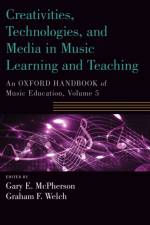
Creativities, Media, and Technology in Music Learning and Teaching reviews the diverse types of creativity found within music education practice across the globe. The volume explores the transformative changes within the discipline resulting from new technologies and rapid advances in media, and the implications these have for the future.
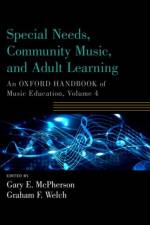
Special Needs, Community Music, and Adult Learning focuses on issues and topics that help to broaden conceptions of music and musical involvement, while recognizing that development occurs through many forms. By developing sound pedagogical approaches that are tailored to take account of all learners, it endeavors to move from making individual adaptations towards designing sensitive 'universal' solutions.
Evaluations of a defendant's competence to stand trial (CST) are probably the most frequently performed forensic evaluations, with estimates in the United States ranging from 60,000 to 70,000 annually. In order for CST evaluations to be considered thorough and accurate, examiners must assess for possible lack of cooperation, feigning, or malingering - the intentional production or gross exaggeration of false or grossly exaggerated physical or psychiatric symptoms, motivated by external incentives. Yet, there are accounts that CST examiners often do not assess for negative response bias, and even if they do nevertheless fail to identify a considerable number of examinees that do feign.Assessing Negative Response Bias in Competency to Stand Trial Evaluations provides readers with a comprehensive guide to assessing whether a defendant has feigned mental impairment during a competency to stand trial evaluation, or simply did not put forth his/her best effort. This book reviews the literature on assessing feigning and negative response bias, with particular focus on issues, tests, and data relevant to CST evaluations, and examines proposed criteria and statistical methods of determining and classifying assessment results. It introduces readers to aspects of the vibrant neuropsychological response style literature, an area many forensic psychologists appear to have overlooked. Additionally, it offers recommendations for research and policy regarding the parameters of CST assessment.
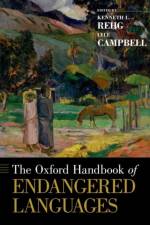
The Oxford Handbook of Endangered Languages, in 39 chapters, is a comprehensive resource on endangered languages. It broadens understanding of language endangerment, language documentation, and language revitalization, and in doing so encourages further research and support for endangered languages.
Abonner på vårt nyhetsbrev og få rabatter og inspirasjon til din neste leseopplevelse.
Ved å abonnere godtar du vår personvernerklæring.