


















Gjør som tusenvis av andre bokelskere
Abonner på vårt nyhetsbrev og få rabatter og inspirasjon til din neste leseopplevelse.
Ved å abonnere godtar du vår personvernerklæring.Du kan når som helst melde deg av våre nyhetsbrev.

A lucid, lively, and definitive one-volume history of the USA's highest court. Schwartz ranges from the earliest history of court dress to history's most important cases in this illuminating examination.
They were black and white, young and old, men and women. In the spring and summer of 1961, they put their lives on the line, riding buses through the American South to challenge segregation in interstate transport. Their story is one of the most celebrated episodes of the civil rights movement, yet a full-length history has never been written until now. In these pages, acclaimed historian Raymond Arsenault provides a gripping account of six pivotal months that joltedthe consciousness of America.
This short introduction to ethics bridges the gap between theory and practice. By combining case studies with discussion of theoretical issues, the text introduces students to the most important ethical concepts. The book is an ideal introductory volume for undergraduate students.
The authors of this volume have been intimately connected with the conception of the Big Bang model since 1947. The men's direct involvement in the work surrounding the genesis of the Big Bang offers a personal perspective on the subject.
Managers, business owners, public relations practitioners, and others grapple daily with issues that have the potential to radically redefine the reputation of a person, company, or industry. They confront a fundamental question about contemporary crisis management: to what extent is it possible to control events and stakeholder responses to them, in order to contain escalating crises or safeguard an organization's reputation? In Crisis Management in a ComplexWorld, authors Dawn Gilpin and Priscilla Murphy address this question head-on. Operating from a strong theoretical orientation, this book marks a sharp departure from other crisis management texts, which focus on nuts-and-bolts procedures and information distribution in an effort to simplify the turbulentreality of a crisis situation. Instead, this book pairs real-world examples from across the globe with theory-based analysis to show why simplification often fails to alleviate crises, and can even intensify them. Gilpin and Murphy propose a new, complexity-based approach to organizational learning that can allow organizations to adapt quickly to changing circumstances. This volume addresses both scholars and high-level practitioners of public relations, organizational communication, and strategic management. Strongly cross-disciplinary, the book draws on theories from communication, the physical sciences, and business. It invites controversy and ultimately aims to change the way people conceptualize and prepare for crises.
Eight rising historians assess and expand the field of scholarship on Reconstruction.
This volume shows how politicians constructed crime-related problems in ways which imply the need to enhance punishment and control and, simultaneously, to end welfare as we know it.
Hans Litten, a courageous German-Jewish lawyer who defended civil rights in the Weimar Republic, was one of the only people to ever cross-examine Hitler on the witness stand, and the only one to reduce him to helpless rage. This book is a dramatic account of that trial, and the gripping and definitive story of a fascinating figure-forgotten today-of anti-Nazi resistance.
Why do many people, who are quite sensible about other aspects of their lives, respond to uncertainty with superstitious beliefs or actions? This work examines current behavioural research and shows that everyday superstitions are the result of several well-understood psychological processes.
Word Origins is the only guide to the science and process of etymology for the layperson. This funny, charming, and conversational book not only tells the known origins of hundreds of words, but also shows how their origins were determined. Liberman, an internationally acclaimed etymologist, takes the reader by the hand and explains the many ways that English words can be made, and the many ways in which etymologists try to unearth the origins of words.Part history, part how-to, and completely entertaining, Word Origins invites readers behind the scenes to watch an etymologist at work.
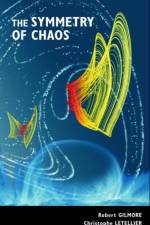
Why have scientists, engineers, and mathematicians become intrigued by chaos? Chaos is about predictability in even the most unstable systems, and symmetry is a pattern of predictability - a conceptual tool to help understand complex behaviour. This book aims to treat this interplay between chaos and symmetry.
Assembles perspectives from ecologists using a wide range of experimental approaches, ranging from laboratory microcosms to manipulations of entire ecosystems, to assess the strengths, and the limitations of experimentation in answering fundamental ecological questions.
Cooper's biography illuminates the reality of Beethoven's life, a refreshing departure from the usual star struck admiration of the composer. Accessible to, and essential for, the Beethoven scholar and general reader, this updated edition of Beethoven will enlighten readers through a close examination of both his works and expert commentary.
This book provides a multi-disciplinary framework for developing and analysing health sector reforms, based on the authors' extensive international experience. It offers practical guidance, and stresses the need to take account of each country's economic, administrative, and political circumstances. The authors explain how to design effective government interventions in five areas - financing, payment, organization, regulation, and behaviour - to improve theperformance and equity of health systems around the world.
Drawing on research in numerous disciplines - including cognitive psychology, neuroscience, and the psychology of ageing - this book presents a vision of ageing that promises to accommodate such time-honoured concepts as wisdom and spirituality; one that understands aging as a matter not merely of getting old but of consciously growing old. At its centre is the conviction that although we are constantly reading our lives to some degree anyway, doing so in a mindfulmanner is critical to our development in the second half of life.
Psychiatry today is a barren tundra, writes medical historian Edward Shorter, where drugs that don't work are used to treat diseases that don't exist. In this provocative volume, Shorter illuminates this dismal landscape, in a revealing account of why psychiatry is "losing ground" in the struggle to treat depression.Naturally, the book looks at such culprits as the pharmaceutical industry, which is not inclined to market drugs once the patent expires, leading to the endless introduction of new-but not necessarily better-drugs. But the heart of the book focuses on an unexpected villain: the FDA, the very agency charged with ensuring drug safety and effectiveness. Shorter describes how the FDA permits companies to test new products only against placebo. If you can beat sugar pills, you get your druglicensed, whether or not it is actually better than (or even as good as) current medications, thus sweeping from the shelves drugs that may be superior but have lost patent protection. The book also examines the FDA's early power struggles against the drug industry, an influence-grab that had little to dowith science, and which left barbiturates, opiates, and amphetamines all underprescribed, despite the fact that under careful supervision they are better at treating depression, with fewer side effects, than the newer drugs in the Prozac family. Shorter also castigates academia, showing how two forms of depression, melancholia and nonmelancholia-"as different from each other as chalk and cheese"-became squeezed into one dubious classification, major depression, which was essentially apolitical artifact born of academic infighting.An astonishing and troubling look at modern psychiatry, Losing Ground is a book that is sure to spark controversy for years to come.
The biblical story of King David and his conflict with King Saul (1 and 2 Samuel) is one of the most colourful and perennially popular in the Hebrew Bible. In recent years this story has attracted a great deal of scholarly attention, much of it devoted to showing that David was a far less heroic character than appears on the surface. Indeed, more than one has painted David as a despicable tyrant. Paul Borgman provides a counter-reading to these studies, through anattentive reading of the narrative patterns of the text. He focuses on one of the key features of ancient Hebrew narrative poetics ΓÇö repeated patterns ΓÇö taking special note of even the small variations each time a pattern recurs. He argues that such ''hearing cues'' would have alerted an ancientaudience to the answers to such questions as ''Who is David?'' and ''What is so wrong with Saul?'' The narrative insists on such questions, says Borgman, slowly disclosing answers through patterns of repeated scenarios and dominant motifs that yield, finally, the supreme work of storytelling in ancient literature. Borgman concludes with a comparison with Homer''s storytelling technique, demonstrating that the David story is indeed a masterpiece and David (as Baruch Halpern has said) ''the first trulymodern human.''
Preventing Medication Errors at Home tells you what you need to know about those medications in your house and how each can improve your health and possibly cause harm. With drug therapy being a major part of conventional medical treatment, and so many medications available over-the-counter, tens of thousands of people in the United States alone die every year from side effects related to their diabetes, pain, depression and blood-thinning medications, androughly one million people are admitted to the hospital for drug-related issues. At least half of these disasters are preventable with proper awareness of how drugs work, how to take them properly, how to identify serious side effects, and how to avoid dangerous drug combinations.
The Rhetoric of Medicine explores problems that confront medical professionals today by first examining similar problems that confronted physicians in ancient Greece. This framework provides illuminating entry points into challenges faced by the practice of medicine, enabling readers to understand more clearly their shape and operation in the modern context-as well as possible solutions to these problems. This text represents a unique collaboration between aclassicist and a neurosurgeon, and is a call to interrogate the narratives and ideas that shape medical care and to revise and replace those that do not serve patient health.
Machines will attain human levels of intelligence by the year 2040, predicts robotics expert Hans Moravec. And by 2050, they will have far surpassed us. In this mind-bending new book, Hans Moravec takes the reader on a roller coaster ride packed with such startling predictions. He tells us, for instance, that in the not-too-distant future, an army of robots will displace workers, causing massive, unprecedented unemployment. But then, says Moravec, a period of very comfortable existence will follow, as humans benefit from a fully automated economy. And eventually, as machines evolve far beyond humanity, robots will supplant us. But ifMoravec predicts the end of the domination by human beings, his is not a bleak vision. Far from railing against a future in which machines rule the world, Moravec embraces it, taking the startling view that intelligent robots will actually be our evolutionary heirs. "Intelligent machines, which willgrow from us, learn our skills, and share our goals and values, can be viewed as children of our minds." And since they are our children, we will want them to outdistance us. In fact, in a bid for immortality, many of our descendants will choose to transform into "ex humans," as they upload themselves into advanced computers. We will become our children and live forever. In his provocative new book, the highly anticipated follow-up to his bestselling volume Mind Children, Moravec charts the trajectory of robotics in breathtaking detail. A must read for artificial intelligence, technology, and computer enthusiasts, Moravec''s freewheeling but informed speculations present a future far different than we ever dared imagine.
Biology is viewed as a bipartisan field, with molecular level genetics guiding us into the future and natural history chaining us to a scientific past. This work bridges this divide, revealing how natural history make sense of fresh genomic discoveries. It also gives anecdotes to explore how researchers detect natural selection acting on genes.
One of the most controversial figures in the history of ideas as well as music, Richard Wagner continues to stimulate debate whenever his works are performed. Drawing upon the scholarship of The New Grove Dictionary of Opera, the most comprehensive dictionary of opera in the world, Barry Millington offers a concise, portable survey and guide, which will make a welcome addition to the shelf of anyone who loves opera. Millington has completely updated the original pieces and contributed four new chapters on Wagner, including a summary of Wagner productions from 1876 to the present day, a suggested listening and viewing gyide, complete chronology of Wagner's operas, and a glossary of terms that will delight any opera-goer. In addition, there are detailed entries on each of Wagner's operas, a main biographical section, and a group of separate articles on such topics as Leitmotif and Gesamtkunstwerk, as well as a newly revised updated article on Bayreuth. Complete with a new preface, updated bibliography, glossary, and discography--including first release dates of each recording--The New Grove Guide to Wagner and his Operas furnishes both seasoned Wagner-lovers and neophytes with all they require for an in-depth appreciation of this unique historical figure.
The late Abraham Pais, author of the award winning biography of Albert Einstein, Subtle is the Lord, here offers an illuminating portrait of another of his eminent colleagues, J. Robert Oppenheimer, one of the most charismatic and enigmatic figures of modern physics. Pais introduces us to a precocious youth who sped through Harvard in three years, made signal contributions to quantum mechanics while in his twenties, and was instrumental in the growth of American physics in the decade before the Second World War, almost single-handedly bringing it to a state of prominence. He paints a revealing portrait of Oppenheimer''s life in Los Alamos, where in twenty remarkable, feverish months, and under his inspired guidance, the first atomic bomb was designed andbuilt, a success that made Oppenheimer America''s most famous scientist. Pais describes Oppenheimer''s long tenure as Director of the Institute of Advanced Study at Princeton, where the two men worked together closely. He shows not only Oppenheimer''s brilliance and leadership, but also how hisdisplays of intensity and arrogance won him powerful enemies, ones who would ultimately make him one of the principal victims of the Red Scare of the 1950s. J. Robert Oppenheimer is Abraham Pais''s final work, completed after his death by Robert P. Crease, an acclaimed historian of science in his own right. Told with compassion and deep insight, it is the most comprehensive biography of the great physicist available. Anyone seeking an insider''s portrait of this enigmatic man will find it indispensable.
This book explores the extent to which artists of sixteenth-century Europe were influenced by ideas of religious reform. Analysing the content of major works by eight prominent artists, noted reformation scholar John Dillenberger argues that these artists' productions provide a fascinating map of the evolution and influence of major theological currents of their time.
Abonner på vårt nyhetsbrev og få rabatter og inspirasjon til din neste leseopplevelse.
Ved å abonnere godtar du vår personvernerklæring.