

















Gjør som tusenvis av andre bokelskere
Abonner på vårt nyhetsbrev og få rabatter og inspirasjon til din neste leseopplevelse.
Ved å abonnere godtar du vår personvernerklæring.Du kan når som helst melde deg av våre nyhetsbrev.

The transition to adulthood is a longer and more complex process than it was just a few decades ago, and a growing number of youth and young adults experience significant challenges in the establishment of an autonomous and independent lifestyle when compared to previous generations. The particularly dismal outcomes for youth growing up in care are by now well-documented, and more recently, a range of models have been proposed to help advance our understanding ofthese outcomes and how to forestall them. Leaving Care and the Transition to Adulthood features cutting-edge research and best practices that support adjustment across a range of domains for this population. International in scope, this book focuses on bringing together major advances that span theliterature on transitioning to adulthood within the care system, offering a unique and important contribution to the field.
Newton deplored speculation in science, Einstein reveled in it. What exactly are scientific speculations? Are they ever legitimate? Are they subject to constraints? This book defends a pragmatic approach to these issues and applies it to speculations within science (e.g., ones in fundamental physics) and to speculations about science (e.g., ones about simplicity, holism, and a "Theory of Everything").
To many in the West, Orthodoxy remains shrouded in mystery, an exotic and foreign religion that survived in the East following the Great Schism of 1054 that split the Christian world into two campsΓÇöCatholic and Orthodox. However, as the second largest Christian denomination, Orthodox Christianity is anything but foreign to the nearly 300 million worshippers who practice it. For them, Orthodoxy is a living, breathing reality; a way of being Christian ultimatelyrooted in the person of Jesus and the experience of the early Church. Whether they are Greek, Russian, or American, Orthodox Christians are united by a common tradition and faith that binds them together despite differences in culture. True, the road has not always been smoothΓÇöOrthodox history islittered with tales of schisms and divisions, of persecutions and martyrdom, from the Sack of Constantinople, capital of the Byzantine Empire and seat of the Ecumenical Patriarch, to the experience of the Russian Orthodox Church under the Soviet Union. Still, today Orthodoxy remains a vibrant part of the religious landscape, not only in those lands where it has made its historic home (Greece, Russia, the Middle East, and Eastern Europe), but also increasingly in the West. OrthodoxChristianity: A Very Short Introduction explores the enduring role of this religion, and the history, beliefs, and practices that have shaped it.
Out in Time explores the life experiences of three generations of gay men -- the Stonewall, AIDS, and Queer generations--arguing that while there are generational differences in the lived experiences of young gay men, each one confronts its own unique historical events, realities, and socio-political conditions, there are consistencies across time that define and unify the identities of gay men.
A sharp, concise examination of America's relationship with the world from the founding to the present.
An introductory text to the biology of aging and longevity, offering a thorough review of the field.
A study of the emerging politics of peace, both as an ideal and as a pragmatic aspect of international relations during the early Cold War, this book argues that a transnational politics of peace emerged through the dynamic interaction among three global actors: Cold War states, peace advocacy groups, and anti-colonial liberationists.
Framed by the life, murder, and sensational trial over an enterprising seamstress, Love at Last Sight tells a history of dating in Berlin, where the romantic technologies and opportunities of the turn-of-the-century city-such as missed connections and newspaper personal ads-offered men and women on the margins the best shot at finding love but exposed them to tremendous risk.
This book seeks to explain how political actors know how to change, interpret, and apply the rules that comprise rule-based global order. It argues that actors in world politics are simultaneously engaged in an ongoing social practice of rule-making, interpretation and application.
The complexity of the twenty-first century threat landscape contrasts markedly with the bilateral nuclear bargaining context envisioned by classical deterrence theory. Nuclear and conventional arsenals continue to develop alongside anti-satellite programs, autonomous robotics or drones, cyber operations, biotechnology, and other innovations barely imagined in the early nuclear age. The concept of cross-domain deterrence (CDD) emerged near the end of the George W.Bush administration as policymakers and commanders confronted emerging threats to vital military systems in space and cyberspace. The Pentagon now recognizes five operational environments or so-called domains (land, sea, air, space, and cyberspace), and CDD poses serious problems in practice. InCross-Domain Deterrence, Erik Gartzke and Jon R. Lindsay assess the theoretical relevance of CDD for the field of International Relations. As a general concept, CDD posits that how actors choose to deter affects the quality of the deterrence they achieve. Contributors to this volume include senior and junior scholars and national security practitioners. Their chapters probe the analytical utility of CDD by examining how differences across, and combinations of, different military andnon-military instruments can affect choices and outcomes in coercive policy in historical and contemporary cases.
The complexity of the twenty-first century threat landscape contrasts markedly with the bilateral nuclear bargaining context envisioned by classical deterrence theory. Nuclear and conventional arsenals continue to develop alongside anti-satellite programs, autonomous robotics or drones, cyber operations, biotechnology, and other innovations barely imagined in the early nuclear age. The concept of cross-domain deterrence (CDD) emerged near the end of the George W.Bush administration as policymakers and commanders confronted emerging threats to vital military systems in space and cyberspace. The Pentagon now recognizes five operational environments or so-called domains (land, sea, air, space, and cyberspace), and CDD poses serious problems in practice. InCross-Domain Deterrence, Erik Gartzke and Jon R. Lindsay assess the theoretical relevance of CDD for the field of International Relations. As a general concept, CDD posits that how actors choose to deter affects the quality of the deterrence they achieve. Contributors to this volume include senior and junior scholars and national security practitioners. Their chapters probe the analytical utility of CDD by examining how differences across, and combinations of, different military andnon-military instruments can affect choices and outcomes in coercive policy in historical and contemporary cases.
In an increasingly polarized political environment, Key Thinkers of the Radical Right offers a comprehensive and unbiased introduction to the thinkers who form the foundation of the radical right. Sixteen expert scholars explain sixteen classic, modern, and emerging thinkers, focusing on thinkers who are widely read across the political right in both Europe and America.
The Fragmented Personality presents new model for caring for patients with personality disorder in post-modern society. In contrast to the static classifications of personality pathology, the authors' approach yields a personalized diagnosis that is contextual, dimensional, and time-specific and at the same time provides information about the current position of the individual in relation to the important components of personality functioning. In this model ofdimensional diagnostics, two intersecting coordinates, one representing the person's level of functioning (the "what" of the diagnosis) and the other his/her adaptive style (the "how" of the diagnosis) are cross matched in the unit of time. This gives the psychiatrist precise milestones for monitoringprogress in therapy.
In an increasingly polarized political environment, Key Thinkers of the Radical Right offers a comprehensive and unbiased introduction to the thinkers who form the foundation of the radical right. Sixteen expert scholars explain sixteen classic, modern, and emerging thinkers, focusing on thinkers who are widely read across the political right in both Europe and America.
Government sponsored breeding programs, medals of motherhood, forced abortions, and surgical sterilization on park benchesΓÇöall of these policies have come out of government efforts to nationalize sex and harness procreation as a tool of the state. Over 170 countries (or 85% of governments) worldwide have active policies designed to manipulate the fertility of their citizenry with the aim of influencing the rate of growth of their populations. While over 90% of least developed states are trying to combat population growth with policies designed to reduce fertility, over two-thirds of all developed countries are actively crafting legislation to increase their populations. Despite over a hundred years of relative failure and innumerablestudies questioning the viability and utility of government attempts to manipulate the fertility rate of the population as a whole, the majority of governments worldwide continue to uphold and develop such policies. What drives government to try to control how many children people will have? Nationalizing Sex traces why population emerged as an object of governance and how natalist policy has changed over time and place, using case studies from France, Germany, Russia, India, and China. It analyzes the origins, growth, and development of fertility as a national and international political issue, the rise and fall of the narratives used to ascribe meaning to natality, and the global proliferation of oddly similar policies adopted by widely dissimilar states. As importantly,it explains why, after hundreds of years, countries continue to pursue natalist policy even though it has been such a widespread failure.
Informal caregivers - family members, friends, and other loved ones - are an essential, uncompensated and significantly burdened extension of the healthcare team. Rapid advances in cancer care, including new drugs and immunotherapies and more sophisticated diagnostic tools, have markedly improved the ability to medically extend lives and enhance survival. As patients are living longer, with today''s shorter hospital stays and shift towards increased outpatient care,however, the demands placed on all caregivers and their needs have substantially increased. Cancer Caregivers reveals the field of Psycho-Oncology''s exploration of the depth of complexities of caregiving experiences and identifies the vast expanses left to be understood. This text describes the characteristics and experiences of cancer caregivers based on their life stage, relationship to the patient, and ethnic group membership, as well as patients'' disease and treatment type. It highlights the significant progress in research focused on the development and dissemination ofpsychosocial interventions for cancer caregivers, and includes in-depth case studies to illustrate their delivery and application. The text also explores the provision of support to caregivers in the community and the legal and ethical concerns faced by caregivers throughout the caregiving process. CancerCaregivers offers both fundamental and practical information and is the essential resource for all healthcare professionals who work with patients and families facing cancer.
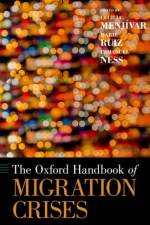
The Oxford Handbook of Migration Crises focuses on two interrelated aspects of migration crises: the contexts that give rise to such crises, and the role of the media and public officials in framing migratory flows as crises. It critically examines what crises are, where they arise, and how this concept is used in scholarship and policy.
Widely lauded as one of the great foreign policy presidents, Theodore Roosevelt thrived in spite of a challenging domestic political landscape. He did so, argues Great Power Rising, by combining an inspiring vision for national greatness, faith in the people and the U.S. system, political dexterity, and skilled leadership.
This book demonstrates that women have been and key to understanding processes of development and explores the importance of greater gender equality for financial markets, religious institutions and human capital formation.
The Creativity Reader is a necessary companion for anyone interested in the historical roots of contemporary ideas about creativity, innovation, and imagination. It brings together a prestigious group of international experts who were tasked with choosing, introducing, and commenting on seminal texts focused on creativity, invention, genius, and imagination from the period of 1850 to 1950. This volume is at once retrospective and prospective: it revisits oldideas, assesses their importance today, and explores their potential for the future. Through its wide historical focus, this Reader challenges the widespread assumption that creativity research is mainly a product of the second half of the twentieth century. Featuring primary sources interpreted through the lenses of leading contemporary scholars, The Creativity Reader testifies to the incredible richness of this field of study, helps us understand its current developments, and anticipates its future directions. The texts included here, many of them littleknown or forgotten, are part of the living history of creativity studies. Indeed, an examination of these seminal papers helps the new generation of creativity and innovation researchers to be mindful of the past and unafraid to explore it.
For nearly two decades, emerging markets have been a primary source of growth in the world economy. They have become more international and compete more extensively with companies in developed countries. For these reasons, an understanding of managing businesses in emerging markets is a fundamental skill for competing in the twenty-first century. The Oxford Handbook of Management in Emerging Markets identifies key elements of the business systems andcompetition in emerging markets around the world, and then looks at competitive strategies of companies going into and coming out of these countries. While business is business, the handbook''s focus is on how management differs depending on the different environmental characteristics in emerging markets, such asthe role of the government, the potential weakness of infrastructure, and the skill and innovation bases available locally in emerging markets, among other elements. The volume is organized into five sections. The first section establishes conceptual perspectives for exploring the current business environment in emerging markets. The second section focuses on questions surrounding governance and markets. The third explores multinational enterprises (MNEs) in emerging economies, while the fourth section looks at local firms and emerging market MNEs. The fifth and final section looks at management in emerging markets within specific countries and regionsaround the world.This handbook is a vital resource for scholars, students, and managers looking to expand into emerging economies by providing comprehensive analyses of functional areas from human resources to finance to marketing, and on issues such as family businesses, state-owned enterprises, and the bottom of the pyramid.
Crimea in War and Transformation is the first book to examine the terrible toll of violence on Crimean civilians and landscapes from mobilization through reconstruction. When war landed on Crimea''s coast in September 1854, multiple armies instantly doubled the peninsula''s population. Engineering brigades mowed down forests to build barracks. Ravenous men fell upon orchards like locusts and slaughtered Crimean livestock. Within a month, war had plunged the peninsula into a subsistence crisis. Soldiers and civilians starved as they waited for food to travel from the mainland by oxcart at a rate of ┬╜ mile per hour. Every army conscripted Tatars as laborers,and fired upon civilian homes. Several cities and villages-Sevastopol, Kerch, Balaklava, Genichesk among them-burned to the ground. At the height of violence, hysterical officers accused Tatars of betrayal and deported large segments of the local population.Peace did not bring relief to Crimea''s homeless and hungry. Removal of dead bodies and human waste took months. Epidemics swept away young children and the elderly. Russian officials estimated the devastation wrought by Crimean War exceeded that of Napoleon''s invasion. Recovery packages failed human need, and by 1859, the trickle of Tatar out-migration that had begun during the war turned into a flood. Nearly 200,000 Tatars left Crimea by 1864, adding a demographic crisis to the tally of war''sdestruction.Drawing from a wide body of published and unpublished material, including untapped archives, testimonies, and secret police files from Russia, Ukraine and Crimea, Mara Kozelsky details in readable and vivid prose the toll of war on the Crimean people, and the Russian Empire as a whole, from mobilization through failed efforts at reconstruction.
This book presents the first serious attempt to set out a functional-semantic definition of diachronic transcategorial shift between the major classes noun/nominal and verb/clause. Lauren Fonteyn shows that the diachronic processes of nominalization and verbalization also involve functional changes by presenting a theoretical model of "functional-semantic categoriality" and applying it to the history of the English gerund.
Debussy's Critics reframes a formative moment in European modernism, exploring the music of Claude Debussy and its early reception in light of the rise of the empirical human sciences around the turn of the twentieth century, and uncovering significant connections between musical culture and contemporary understandings of affect, perception, and cognition.
Rethinking Reich brings together new perspectives on one of America's greatest contemporary composers. Offering a critical engagement with Steve Reich's prominence in the numerous, overlapping, and contentious worlds of contemporary classical music, these tightly focused and multifarious essays reassess the composer's contribution to music in the twentieth century.
Laurenz Lutteken's Strauss presents a new approach to the life and works of Richard Strauss, cutting through the mystery and gossip surrounding the elusive German composer to reveal his complicated role as representative of modernity.
A new practical guide for pre- and in-service music educators, Teaching School Jazz is an essential resource for teaching beginning through high school level jazz.
Rethinking Reich brings together new perspectives on one of America's greatest contemporary composers. Offering a critical engagement with Steve Reich's prominence in the numerous, overlapping, and contentious worlds of contemporary classical music, these tightly focused and multifarious essays reassess the composer's contribution to music in the twentieth century.
A new practical guide for pre- and in-service music educators, Teaching School Jazz is an essential resource for teaching beginning through high school level jazz.
Abonner på vårt nyhetsbrev og få rabatter og inspirasjon til din neste leseopplevelse.
Ved å abonnere godtar du vår personvernerklæring.