













Gjør som tusenvis av andre bokelskere
Abonner på vårt nyhetsbrev og få rabatter og inspirasjon til din neste leseopplevelse.
Ved å abonnere godtar du vår personvernerklæring.Du kan når som helst melde deg av våre nyhetsbrev.

Throughout his letters, the apostle Paul consistently references signs, wonders, visions, miracles, divine healings, prophecies, and speaking in tongues. This book examines Paul's repertoire of divinatory and wonderworking practices and contextualizes them in their historical milieu. Furthermore, the book situates such practices within a framework of reciprocity that dominated human-divine relationships in antiquity. Insofar as Paul extends miraculous abilities tohis gentile followers, these wondrous abilities come in proportion to their faithfulness.
Chasing Pain discusses the neuroscientific and clinical evidence that has led to contemporary concepts of pain neurobiology and how pain might emerge from neuronal activity. The limitation of current pain models is exemplified by considering several important, therapeutically challenging clinical conditions that remain very poorly understood. Realistic models of pain neurobiology must consider that the normally tight link between pain and tissue damage is stronglyaffected by neurological disease, emotionally compelling circumstances, and by complex cognitive processes.
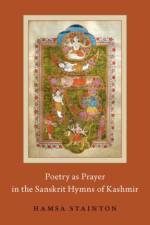
This book investigates the history of a popular genre of Sanskrit devotional poetry in Kashmir: the stotra, or hymn of praise. Focusing on literary hymns from the eighth century to the twentieth, it studies the close link between literary and religious expression in South Asia-the relationship between poetry and prayer.
In The Garden of Leaders, philosopher Paul Woodruff advances a new view of liberal arts education that places leadership at the root of everything it does, presenting three core sets of recommendations for how the contemporary university can and should foster such leadership skills.
The criminal process begins with arrests or investigations and concludes with adjudication and appeal. Across more than 40 chapters, this Handbook provides a comprehensive introduction to both common law and civil law approaches to the criminal process, including history, procedure, investigation, prosecution, evidence, adjudication, and appeal.
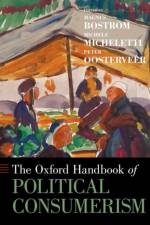
This volume offers the first comprehensive theoretical and comparative overview of the ways in which the market becomes a political arena. It maps the four major forms of political consumerism: boycotting, buycotting (spending to show support), lifestyle politics, and discursive actions, such as culture jamming. Chapters by leading scholars examine political consumerism in different locations and industry sectors, and in consideration of environmental and humanrights problems, political events, and the ethics of production and manufacturing practices.
Fifty-two percent of Chinese Americans report having no religious affiliation, making them the least religiously-identified ethnic group in the United States. But that statistic obscures a much more complex reality. Family Sacrifices reveals that Chinese Americans employ familism, not religion, as the primary narrative by which they find meaning, identity, and belonging.
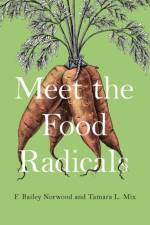
Meet the Food Radicals introduces the reader to twenty-seven individuals to offer insight into practices and solutions that shape how we farm, how our food system operates, and how we eat. Neither valorizing nor criticizing any of the views, the authors aim for understanding and to "translate" different farming philosophies, food politics, and notions about how agriculture and the economy interact for a broader audience of economists, social scientists, andordinary consumers.
According to the dominant account of rights, there are two ways to permissibly kill people: they have done something to forfeit their right to life, or their rights are outweighed by the significantly greater cost of respecting them. Contemporary just war theorists tend to agree that it is difficult to justify killing in the second way. Thus, they focus on the conditions under which rights might be forfeited. But it has proven hard to defend an account of forfeiturethat permits killing when and only when it is morally justifiable. In The Mechanics of Claims and Permissible Killing in War, Alec D. Walen develops an alternative account of rights according to which rights forfeiture has a much smaller role to play. It plays a smaller role because rights themselves are more contextually contingent. They systematically reflect the different kinds of claims people can make on an agent. For example, those who threaten to cause harm without a right to do so have weaker claims not to be killed than innocent bystanders orthose who have a right to threaten to cause harm. By framing rights as the output of a balance of competing claims, and by laying out a detailed account of how to balance competing claims, Walen provides a more coherent account of when killing in war is permissible.
American States of Nature transforms our understanding of the American Revolution and the early makings of the Constitution. Surveying thousands of texts produced between 1761 and 1775, including hundreds of archival discoveries, this book shows that the state of nature was among the most crucial revolutionary concepts. The founding generation drew not only on English sources, such as Hobbes and Locke, but also on Grotius, Pufendorf, Rousseau, Vattel, andothers, to develop an original and distinct American view of the state of nature as a natural community where colonists could pool their rights to self-defense and self-government.
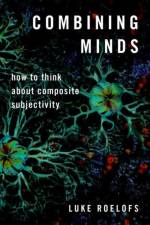
This book explores how groups of interacting minds relate to singular minds. Roelofs argue that we are too used to seeing the mind as an indivisible unity, and that properly understanding our place in nature requires more willingness to see minds as composite systems, both one and many.
In her ground-breaking new study, Katie Bugyis offers a new history of communities of Benedictine nuns in England from 900 to 1225. By applying innovative paleographical, codicological, and textual analyses to their surviving liturgical books, Bugyis recovers a treasure trove of unexamined evidence for understanding these women's lives and the liturgical and pastoral ministries they performed. Essential to this argument is the discovery that the production of theliturgical books used in these communities was carried out by female scribes, copyists, correctors, and creators of texts, attesting to the agency and creativity that nuns exercised in the care they extended to themselves and those who sought their hospitality, counsel, instruction, healing,forgiveness, and intercession.
For scholars of ancient Indian religions, the wandering mendicants who left home and family for a celibate life and the search for liberation represent an enigma. The Vedic religion, centered on the married household, had no place for such a figure. Much has been written about the Indian ascetic but hardly any scholarly attention has been paid to the married householder with wife and children, generally referred to in Sanskrit as grhastha: "thestay-at-home." The institution of the householder is viewed implicitly as posing little historical problems with regard to its origin or meaning. This volume problematizes the figure of the householder within ancient Indian culture and religion. It shows that the term grhastha is a neologism and is understandable only in its opposition to the ascetic who goes away from home (pravrajita). Through a thorough and comprehensive analysis of a wide range of inscriptions and texts, ranging from the Vedas, Dharmasastras, Epics, and belle lettres to Buddhist and Jain texts and texts on governance and erotics, this volumeanalyses the meanings, functions, and roles of the householder from the earliest times unti about the fifth century CE. The central finding of these studies is that the householder bearing the name grhastha is not simply a married man with a family but someone dedicated to the same or similar goals as an ascetic whileremaining at home and performing the economic and ritual duties incumbent on him. The grhastha is thus not a generic householder, for whom there are many other Sanskrit terms, but a religiously charged concept that is intended as a full-fledged and even superior alternative to the concept of a religious renouncer.
This volume sheds new light on the philosophical significance of Rilke's late masterpiece The Sonnets to Orpheus (1923). The volume features eight essays by philosophers, literary critics, and Rilke scholars, which explore a number of the central themes of the Sonnets as well as the significance of their formal qualities.
This volume sheds new light on the philosophical significance of Rilke's late masterpiece The Sonnets to Orpheus (1923). The volume features eight essays by philosophers, literary critics, and Rilke scholars, which explore a number of the central themes of the Sonnets as well as the significance of their formal qualities.
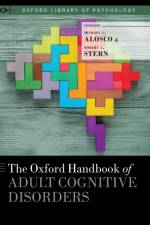
The Oxford Handbook of Adult Cognitive Disorders is an up-to-date, scholarly, and comprehensive volume that covers most diseases, conditions, and injuries resulting in impairments in cognitive function in adults. The Handbook is appropriate for both clinicians and clinical researchers, from advanced trainees to seasoned professionals.
In this book, Brian Doak analyzes the way biblical authors described the bodies of some of their most iconic male heroic figures, such as Jacob, the Judges, Saul, and David. These bodies represent not mere individuals, but rather also communicate as national bodies.
This book serves as an introduction to the field of school psychology. School psychology has evolved over the course of its existence due to several controversies, and how researchers and practitioners responded to those controversies. This text presents those debates and provides needed historical context to explain the field and facilitate deeper understanding in students.
This volume illustrates how the methodology of metaphysics can be enriched with the help of cognitive science. Issues to which results from cognitive science are brought to bear include the metaphysics of time, of morality, of meaning, of modality, of objects, and of natural kinds, as well as whether God exists.
There is a paradox when it comes to Darwinian ideas within the academy. On one hand, Darwin''s theories have famously changed the foundational ideas related to the origins of life, shaping entire disciplines in the biological sciences. On the other hand, people in educated societies across the globe today are famously misinformed and uneducated about Darwinian principles and ideas. Applications of evolutionary theory outside the traditional areas of biology have beenslow to progress, and scholars doing such work regularly run into all kinds of political backlash. However, a slow but steady push to advance the teaching of evolution across academic disciplines has been under way for more than a decade. This book serves to integrate the vast literature in the interdisciplinary field of Evolutionary Studies (EvoS), providing clear examples of how evolutionary concepts relate to all facets of life. Further, this book provides chapters dedicated to the processes associated with an EvoS education, including examples of how an interdisciplinary approach to evolutionary theory has been implemented successfully at various colleges, universities, and degree programs. This book also offers chaptersoutlining a variety of applications to an evolution education, including improved sustainable development, medical practices, and creative and critical thinking skills. Exploring controversies surrounding evolution education, this volume provides a roadmap to asking and answering Darwinian questionsacross all areas of intellectual inquiry.
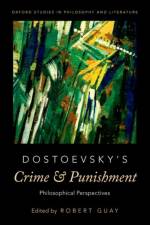
This volume brings together philosophers and literary scholars to explore the ways that Crime and Punishment engages with philosophical reflection. The seven essays treat a diversity of topics, including: self-knowledge and the nature of mind, emotions, agency, freedom, the family, the authority of law and morality, and the self.
This volume brings together philosophers and literary scholars to explore the ways that Crime and Punishment engages with philosophical reflection. The seven essays treat a diversity of topics, including: self-knowledge and the nature of mind, emotions, agency, freedom, the family, the authority of law and morality, and the self.
Nathan Carlin revisits the role of religion in bioethics, an increasingly secular enterprise, and argues that pastoral theologians can enrich moral imagination in bioethics by cultivating an aesthetic sensibility that is theologically-informed, psychologically-sophisticated, therapeutically-oriented, and experientially-grounded. To achieve these ends, Carlin employs Paul Tillich's method of correlation by positioning four principles of bioethics with four images ofpastoral care.
Scholar Anne Friedberg compellingly theorized vision in motion. The Moving Eye: Film, Television, Architecture, and the Modern gathers together essays by renowned thinkers in media studies, art history, and architecture to consider the implications of her work for understanding film and video, new media, visual art, architecture, and urbanism.
Scholar Anne Friedberg compellingly theorized vision in motion. The Moving Eye: Film, Television, Architecture, and the Modern gathers together essays by renowned thinkers in media studies, art history, and architecture to consider the implications of her work for understanding film and video, new media, visual art, architecture, and urbanism.
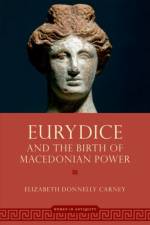
Eurydice (the wife of Amyntas III, the mother of Philip II, and grandmother of Alexander the Great) was the first royal Macedonian woman who played a role in the public life of ancient Macedonia. This study examines the nature of her role and the factors that contributed to its expansion.
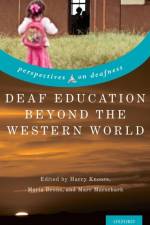
By exploring practice-based and research-based evidence about deaf education in countries that largely have been left out of the international discussion thus far, this volume encourages more researchers in more countries to continue investigating the learning environment of deaf learners, based on the premise of leaving no one behind. Featuring chapters centering on 19 countries, from Africa, Asia, Latin America, and Central and Eastern Europe, the volume offers apicture of deaf education from the perspectives of local scholars and teachers who demonstrate best practices and challenges within their respective regional contexts.
On September 7, 1881, Matthew Simpson, Bishop in the Methodist Episcopal Church, in a London sermon asserted that: "As to the divisions in the Methodist family, there is little to mar the family likeness." Nearly a quarter-century earlier, Benjamin Titus (B.T.) Roberts, a minister in the same branch of Methodism as Simpson, had published an article in the Northern Independent in which he argued that Methodism had split into an "Old School" and "New School."He warned that if the new school were to "generally prevail," then "the glory will depart from Methodism." As a result of this article, Roberts was charged with "unchristian and immoral conduct" and expelled from the Genesee Conference of the Methodist Episcopal Church (MEC).Old or New School Methodism? examines how less than three decades later Matthew Simpson could claim that the basic beliefs and practices that Roberts had seen as threatened were in fact a source of persisting unity across all branches of Methodism. Kevin Watson argues that B. T. Roberts''s expulsion from the MEC and the subsequent formation of his Free Methodist Church represent a crucial moment of transition in American Methodism. This book challenges understandings of AmericanMethodism that emphasize its breadth and openness to a variety of theological commitments and underemphasize the particular theological commitments that have made it distinctive and have been the cause of divisions over the past century and a half. Old or New School Methodism? fills a major gap in the study ofAmerican Methodism from the 1850s to 1950s through a detailed study of two of the key figures of the period and their influence on the denomination.
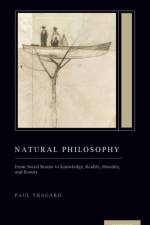
Paul Thagard uses new accounts of brain mechanisms and social interactions to forge theories of mind, knowledge, reality, morality, justice, meaning, and the arts. Natural Philosophy brings new methods for analyzing concepts, understanding values, and achieving coherence. It shows how to unify the humanities with the cognitive and social sciences.
Abonner på vårt nyhetsbrev og få rabatter og inspirasjon til din neste leseopplevelse.
Ved å abonnere godtar du vår personvernerklæring.