

















Gjør som tusenvis av andre bokelskere
Abonner på vårt nyhetsbrev og få rabatter og inspirasjon til din neste leseopplevelse.
Ved å abonnere godtar du vår personvernerklæring.Du kan når som helst melde deg av våre nyhetsbrev.

Plato is the best known, and continues to be the most widely studied, of all the ancient Greek philosophers. The updated and original essays in the second edition of the Oxford Handbook of Plato provide in-depth discussions of a variety of topics and dialogues, all serving several functions at once: they survey the current academic landscape; express and develop the authors'' own views; and situate those views within a range of alternatives. The result is a usefulstate-of-the-art reference to the man many consider the most important philosophical thinker in history. This second edition of the Oxford Handbook of Plato differs in two main ways from the first edition. First, six leading scholars of ancient philosophy have contributed entirely new chapters: Hugh Benson on the Apology, Crito, and Euthyphro; James Warren on the Protagoras and Gorgias; Lindsay Judson on the Meno; Luca Castagnoli on the Phaedo; Susan Sauvé Meyer on the Laws; and David Sedley on Plato''s theology. This new edition therefore covers both dialogues and topics in more depth thanthe first edition did. Secondly, most of the original chapters have been revised and updated, some in small, others in large, ways.
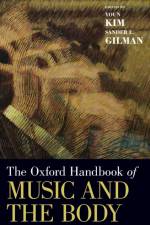
The presence of the phenomenological body is central to music in all of its varieties. The Oxford Handbook of Music and the Body brings together scholars from across the humanities, social sciences, and biomedical sciences to provide an introduction into the rich, multidimensional world of music and the body.
This volume provides a genealogy of the concept of a person. By asking when and why the concept of a person came into existence, it explains what the concept of a person is and how it differs from the concept of a human being and the concept of a self.
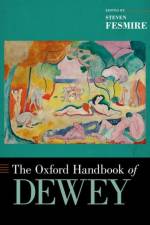
The Oxford Handbook of Dewey is a comprehensive volume spanning thirty-five chapters, wherein leading scholars help researchers access particular aspects of Dewey's thought, navigate the enormous and rapidly developing literature, and participate in current scholarship in light of prospects in key topical areas. Beginning with a framing essay calling for a transformation of philosophical research inspired by Dewey, contributors interpret, appraise, andcritique Dewey's philosophy.
The Oxford Handbook of Fiduciary Law provides a comprehensive overview of fiduciary law, explaining how fiduciary principles operate across diverse substantive fields and legal systems. Unparalleled in its breadth and depth of coverage, the Handbook represents an invaluable resource for practitioners, policymakers, scholars, and students of this essential field of law.
This volume provides a genealogy of the concept of a person. By asking when and why the concept of a person came into existence, it explains what the concept of a person is and how it differs from the concept of a human being and the concept of a self.
Ancient philosophers were very interested in questions about laughter, humor and comedy. They theorized about laughter and its causes, moralized about the appropriate uses of humor and what it is appropriate to laugh at, and wrote treaties on comedic composition. This volume explores themes that were important for ancient philosophers: the psychology of laughter, the ethical and social norms governing laughter and humor, and the philosophical uses of humor andcomedic technique.
The definitive guide to the secret sauce of improving public and population healthNontraditional collaborations have produced some of the most sweeping, health-improving results in recent memory. But whether it''s public/private, cross-discipline, or interagency, the formula for identifying these partnerships ΓÇö not to mention making them work ΓÇö remains very much in progress.The Practical Playbook II is the first resource to elucidate what works (and what doesn''t) when it comes to collaborating for change in and around health. It brings together voices of experience and authority to answer this topic''s most challenging questions and provide guideposts for applying what they''ve learned to today''s thorniest problems.Readers will find answers to common and advanced questions around multisector partnerships, including:┬╖ Identifying sectors and actors that can help to collaborate to improve health┬╖ Best practices for initial engagement┬╖ Specifics related to collaborations with government, business, faith communities, and other types of partners┬╖ The role of data in establishing and running a partnership┬╖ Scaling up to maximize impact and remain sustainable┬╖ The role of financing ┬╖ Implications for policyWritten in practical terms that will resonate with readers from any background and sector, The Practical Playbook II is the resource that today''s helping professions need ΓÇö and a roadmap for the next generation of health-improving partnerships.
Now in paperback and updated with a new preface, Ideas with Consequences shows how the Federalist Society serves as the hub of a complex circulatory system and how the ideas it generates have become the lifeblood of the conservative movement.
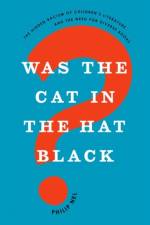
America is again in a period of civil rights activism, and one of the key places that racism continues to hide is books for young people. Was the Cat in the Hat Black? deftly diagnoses this systemic problem and offers concrete suggestions on how we may combat it in children's and young adult literature.
There are no moral obligations: either it is determined in advance what we will do, or it is not. But any action not in our control cannot be obligatory for us. Hence, regardless of whether our actions are determined to occur, nothing is obligatory. This conclusion has important implications for conceptions of moral responsibility and free will.
Country Music: A Very Short Introduction presents a compelling overview of the music and its impact on American culture through its key artists and styles from the minstrel era to today. Truly the "voice of the people," country music illuminates our cultural story, from our nation's birth to today.
The study of Islamic philosophy has entered a new and exciting phase in the last few years. Both the received canon of Islamic philosophers and the narrative of the course of Islamic philosophy are in the process of being radically questioned and revised. The bulk of twentieth-century Western scholarship on Arabic or Islamic philosophy focused on the period from the ninth century to the twelfth. It is a measure of the transformation that is currently underway in thefield that the present Oxford Handbook has striven to give roughly equal weight to every century from the ninth to the twentieth.
During the reconstruction of West Germany's cultural life after World War II, opera resumed its central place in civic life, but German cultural traditions were tainted by the horrors of National Socialism. Emily Richmond Pollock's Opera After the Zero Hour explores composers' experiments to find expressive strategies and traditional reference points could still work for new opera, and promotes a more nuanced understanding of the relationship between operaand modernism.
This Very Short Introduction provides a concise overview of federalism, from its origins and evolution to the key events and constitutional decisions that have defined its framework. While primary focus is on the United States, other federal systems, including Brazil, Canada, India, Germany, South Africa, Russia, and the EU, are addressed.
Fedyukin draws on a wealth of unpublished archival sources to demonstrate that the evolution of "modern" schools in Russia under Peter I and his successors was driven not by the omnipresent monarch or the impersonal state, but rather by the efforts of "administrative entrepreneurs" seeking to advance their own agendas.
Investigative health journalist Judy Foreman shows how we can extend the healthy lifespan and reduce the lingering, debilitating effects of aging simply through exercise and its myriad effects on dozens of molecules in the brain, the muscles, and other organs. Though Foreman also delves into pills designed to combat aging and so-called exercise "mimetics," or pills that purport to produce the effects of exercise without the sweat, her resounding conclusion is thatexercise itself is by far the most effective, and safest, strategy for promoting a long, healthy life.
In The Poisoned Well, veteran BBC journalist Roger Hardy presents a realist's history of the Middle East, by weaving together stories of political strife and vivid firsthand accounts, to illustrate that the current conflicts and crises of the Middle East are borne out of the troubled legacy of Western imperialism in the region.
Since 2001, the U.S. Department of State has been sending hip hop artists abroad to perform and teach as goodwill ambassadors. There are good reasons for this: hip hop is known and loved across the globe, acknowledged and appreciated as a product of American culture. Hip hop has from its beginning been a means of creating community through artistic collaboration, fostering what hip hop artists call building. A timely study of U.S. diplomacy, Build: The Power of Hip Hop Diplomacy in a Divided World reveals the power of art to bridge cultural divides, facilitate understanding, and express and heal trauma. Yet power is never single-edged, and the story of hip hop diplomacy is deeply fraught. Drawing from nearly 150 interviews with hip hop artists, diplomats, and others in more than 30 countries, Build explores the inescapable tensions and ambiguities in the relationship between artand the state, revealing the ethical complexities that lurk behind what might seem mere goodwill tours. Author Mark Katz makes the case that hip hop, at its best, can promote positive, productive international relations between people and nations. A U.S.-born art form that has become a voice of struggle and celebrationworldwide, hip hop has the power to build global community when it is so desperately needed.
With original essays by philosophers, psychologists, musicians, literary critics, and ethno-musicologists, The Philosophy of Rhythm offers a broad perspective on rhythm-the fundamental pulse that animates music, dance, and poetry across all cultures.
Musculoskeletal Imaging Volume 2 summarizes the key information related to metabolic, infectious and congenital diseases; internal derangement of the joints; and arthrography and ultrasound. Succinct, structured overviews of each pathology are ideal for use by radiology residents during their musculoskeletal rotations and for residents, fellows, and practicing radiologists for board exam preparation or for daily clinical reference.
Musculoskeletal Imaging Volume 1 summarizes the key information related to trauma, arthritis, and tumor and tumor-like conditions. Succinct, structured overviews of each pathology are ideal for use by radiology residents during their musculoskeletal rotations and for residents, fellows, and practicing radiologists for board exam preparation or for daily clinical reference.
This volume gathers leading scholars in the fields of journalism and communication studies, philosophy, and the social sciences to examine critical questions of how we should understand journalism's changing landscape as it relates to fundamental questions about the role of truth and information in society. Identifying and communicating truth is an age-old concern, greatly exacerbated and amplified by the onslaught of social media. Along with confronting the fakenews phenomenon, chapter authors address the age-old issue of truth and credibility in journalism as it operates in politics, and how technology may be complicating that relationship. The book is designed as a supplemental text for journalism and related courses, a worthwhile read for scholars in thefield, and an insightful guide for practicing journalists.
This volume gathers leading scholars in the fields of journalism and communication studies, philosophy, and the social sciences to examine critical questions of how we should understand journalism's changing landscape as it relates to fundamental questions about the role of truth and information in society. Identifying and communicating truth is an age-old concern, greatly exacerbated and amplified by the onslaught of social media. Along with confronting the fakenews phenomenon, chapter authors address the age-old issue of truth and credibility in journalism as it operates in politics, and how technology may be complicating that relationship. The book is designed as a supplemental text for journalism and related courses, a worthwhile read for scholars in thefield, and an insightful guide for practicing journalists.
Do leading social-scientific experts, or technocrats, know what they are doing? In Power without Knowledge, Jeffrey Friedman maintains that they do not. Friedman shows that people are too heterogeneous to act as predictably as technocracy requires of them. Technocratic reason, then, entails a drastically oversimplified understanding of human decision making in modern society.
In 1995, Toulon became the largest city in Europe to come under the far right since the end of World War II. This book asks what led up to the far right's win; how it governed for six years; and what we learn from mainstream politicians who are keeping it weak. Empire's Legacy delves into a latent far right affinity in French society, traces the deep roots of this affinity, and explains why it has become a factor in French politics.
Through its missionary, pedagogical, and scientific accomplishments, the Society of Jesus-known as the Jesuits-became one of the first institutions with a truly "global" reach, in practice and intention. The Oxford Handbook of the Jesuits offers a critical assessment of the Order, helping to chart new directions for research at a time when there is renewed interest in Jesuit studies. In particular, the Handbook examines their resilient dynamism and innovative spirit,grounded in Catholic theology and Christian spirituality, but also profoundly rooted in society and cultural institutions. It also explores Jesuit contributions to education, the arts, politics, and theology, among others.
For nearly 400 years, New England has held an important place in the development of American English, and "New England accents" are very well known in popular imagination. This book is the first large-scale academic project since the 1930s to focus specifically on New England English as a whole. It presents new variationist sociolinguistic research covering all six New England states, with detailed geographic, acoustic phonetic, and statistical analyses of recentlycollected data from over 1,600 New Englanders. The book systematically documents major traditional New England dialect features and their current usage in terms of location, age, gender, ethnicity, social class, and other factors.
Principles of Change demonstrates that the ideas and observations of many clinicians about psychotherapy (how change is facilitated or hampered, with whom and by whom, etc.) can shed light on how research findings can best be implemented in practice. Edited by renowned psychotherapy researchers and with chapters authored by expert psychotherapy practitioners, the book creates a new collaboration based on direct and bi-directional communication betweenscientists and clinicians who draw on their respective knowledge and expertise, and that will lead to synergetic methods for understanding and improving psychotherapy.
Developmental Cascades proposes a new framework for understanding development by arguing that change can be explained in terms of the events that occur at one point in development, which set the stage or cause a ripple effect for the emergence or development of different abilities, functions, or behavior at another point in time. This framework is applied in detail to three domains within infant cognitive development-namely, looking behavior, objectrepresentations, and concepts for animacy.
Abonner på vårt nyhetsbrev og få rabatter og inspirasjon til din neste leseopplevelse.
Ved å abonnere godtar du vår personvernerklæring.