



















Gjør som tusenvis av andre bokelskere
Abonner på vårt nyhetsbrev og få rabatter og inspirasjon til din neste leseopplevelse.
Ved å abonnere godtar du vår personvernerklæring.Du kan når som helst melde deg av våre nyhetsbrev.

Questions about gender, sex, and sexualities have spurred political, religious, and juridical debates around the world. This book offers readers up-to-date knowledge concerning these matters, as well as tools for critical analysis. Its contributions by leading scholars from around the world will stimulate novel thinking among students and scholars within psychology and related fields.
A successful attempt to provide a metaphysics of death must at the same time resolve the paradox of nonexistence-that there must be something "there" that fails to exist. This is the aim of Palle Yourgrau's Death and Nonexistence, which provides an ontology of death, i.e. of ceasing to exist, and at the same time, an ontology of birth, i.e. coming to exist. The primary thesis of this book is that this requires expanding one's ontology beyond existence andnonexistence to include what underlies both, namely, "being". The dead lack existence, but not being. Moreover, though they have forfeited their existence, they maintain their essence as human beings, just like the living.
THE FOUNDATIONAL WORK IN HEALTH REFORM, CELEBRATING 15 YEARS OF INFLUENCEFeaturing a new introduction by the authorsGetting Health Reform Right is the world's leading text for understanding and managing health systems and their reform. Its simple, analytical model allows readers to design their own approach to improve health-system performance based on three outcomes of greatest importance (health status, citizen satisfaction, and financial risk protection), with step-by-step instructions for defining problems, diagnosing causes, devising solutions, and implementing changes.
The aim of the book is to explain the metaphysics of memory, its intentionality, its phenomenology and its epistemology. Fernandez argues that memories represent their own causal origins, and have a distinctive functional role. On those grounds, he then accounts for the feelings associated with our memories and for the special knowledge they afford.
Germany in the 20th century endured two world wars, a failed democracy, Hitler's dictatorship, the Holocaust, and a country divided for 40 years. But it has also boasted a strong welfare state, affluence, liberalization and globalization, a successful democracy, and the longest period of peace in European history. In this award-winning volume of German history, Ulrich Herbert analyzes the trajectory of German politics and culture during a century ofextremes.
Thomas Aquinas was one of the most significant Christian thinkers of the middle ages and ranks among the greatest philosophers and theologians of all time. The Quodlibetal Questions are his edited records of the public debates over which he presided at the University of Paris in the mid-thirteenth century. They contain Aquinas's treatment of hundreds of questions on a very wide range of philosophical and theological topics, all of which were chosen by hislive audience. As such, Aquinas's Quodlibetal Questions provide a window onto the interests at the time, and contain some of Aquinas's fullest or only treatments of questions of interest both then and now.
Thomas Aquinas was one of the most significant Christian thinkers of the middle ages and ranks among the greatest philosophers and theologians of all time. The Quodlibetal Questions are his edited records of the public debates over which he presided at the University of Paris in the mid-thirteenth century. They contain Aquinas's treatment of hundreds of questions on a very wide range of philosophical and theological topics, all of which were chosen by hislive audience. As such, Aquinas's Quodlibetal Questions provide a window onto the interests at the time, and contain some of Aquinas's fullest or only treatments of questions of interest both then and now.
Who is God? How should we think about the concept of God? How have religions defined and altered conceptions of God over the ages? Are modern conceptions of God so different from our ancestors'? Philosopher Leslie Stevenson here offers eighteen short and lively takes on God to help orient readers to this vast and confusing subject. Surveying everything from the idea of God as an "old man in the sky" to the more abstract idea of a metaphysical God, among other ways ofimaging the divine, Stevenson presents a clear and helpful guide for curious readers. Stevenson expresses no overall pre-commitment to theism, atheism or agnosticism; rather he offers a sympathetic account of a variety of views, combined with critical questioning about their meaning and practicalapplication.
The Armenian-born mystic, philosopher, and spiritual teacher G. I. Gurdjieff (c.1866-1949) is an enigmatic figure, the subject of a great deal of interest and speculation, but not easily fitting into any of the common categories of "esoteric," "occult," or "New Age." Scholars have for the most part passed over in silence the contemplative exercises presented in Gurdjieff's writings. Although Gurdjieff had intended them to be confidential, some of the most importantexercises were published posthumously in 1950 and in 1975. Arguing that an understanding of these exercises is necessary to fully appreciate Gurdjieff's contribution to modern esotericism, Joseph Azize offers the first complete study of the exercises and their theoretical foundation.
Mastery, Dependence, and the Ethics of Authority is an analysis of expertise and authority. Stalnaker examines classical Confucian conceptions of mastery, dependence, and human relationships in order to suggest new approaches to these issues in ethics and political theory.
Every known religious or explicitly irreligious outlook is contested by large contingents of informed and reasonable people. Many philosophers have argued that reflection on this fact should lead us to abandon confident religious or irreligious belief and to embrace religious skepticism. John Pittard critically assesses the case for such disagreement-motivated religious skepticism. While the book focuses on religious disagreement, it makes a number of significantcontributions to the more general discussion of the rational significance of disagreement as well.
Addressing physicians at every level of training and practice, Physician Communication: Connecting with Patients, Peers, and the Public will enable providers to examine, analyse, and improve their skills in the art and science of communication. Divided into four sections: Face-to-face Communications; Digital Communications; Public Speaking; and Traditional Media, this book will help physicians navigate various situations using different methods and modes ofcommunication.
This book explores the reality of what it's like to live adoption-and open adoption specifically. Most people know very little about how contemporary US adoptions "work" - and this book draws back the curtain to reveal the vulnerabilities, strengths, challenges, and daily struggles and triumphs of adoptive families today. It does not shy away from tough subjects, like birth parents' mental illness and racial differences between adoptive parents and their children. Itaims to trace the challenging decisions and dynamics that adoptive parents "sign up for" when they pursue open adoption. It also aims to illuminate the unique benefits and joys of open adoption.
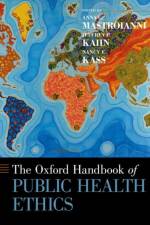
Public health raises critical ethics issues and concerns, making public heath ethics an essential topic for students and public health professionals. The 73 chapters in this volume examine public health ethics across a broad range of public health topics both in the U.S. and globally. It is the first ever comprehensive collection devoted to public health ethics.
This important resource will inform and better ground both current and future debates on responsible gambling and its intended outcomes, and will be of value to a broad audience of scientists, clinicians, policy makers, regulators, and industry operators interested in the application and evaluation of responsible gambling strategies and activities.
Algorithms have made our lives more efficient and entertaining-but not without a significant cost. Can we design a better future, one in which societial gains brought about by technology are balanced with the rights of citizens? The Ethical Algorithm offers a set of principled solutions based on the emerging and exciting science of socially aware algorithm design.
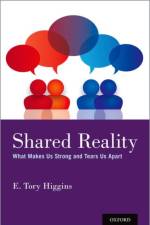
What does it mean to be human? Why do we feel and behave in the ways that we do? The classic answer is that we have a special kind of intelligence. But to understand what we are as humans, we also need to know what we are like motivationally. And what is central to this story, what is special about human motivation, is that humans want to share with others their inner experiences about the worldΓÇöshare how they feel, what they believe, and what they want to happen inthe future. They want to create a shared reality with others. People have a shared reality together when they experience having in common a feeling about something, a belief about something, or a concern about something. They feel connected to another person or group by knowing that this person orgroup sees the world the same way that they doΓÇöthey share what is real about the world. In this work, Dr. Higgins describes how our human motivation for shared reality evolved in our species, and how it develops in our children as shared feelings, shared practices, and shared goals and roles. Shared reality is crucial to what we believeΓÇösharing is believing. It is central to our sense of self, what we strive for and how we strive. It is basic to how we get along with others. It brings ustogether in fellowship and companionship, but it also tears us apart by creating in-group "bubbles" that conflict with one another. Our shared realities are the best of us, and the worst of us.
In The Ethics of Universal Health Insurance, Alex Rajczi shows how defenders of universal health insurance can address the ethical issues raised by these objections and make the moral case for an American universal health insurance system that improves on the gains made in the Affordable Care Act.
In this book, Gaven Kerr expands on the brief treatment of creation offered in his 2015 volume, Aquinas's Way to God: The Proof in De Ente et Essentia. Aquinas does not offer one cohesive treatment on the issue of creation; Kerr synthesizes discussions from across his works in order to present a unified Thomistic metaphysics of creation.
This volume brings together all the available letters between historian Catharine Macaulay and a number of eighteenth-century luminaries, including George Washington, David Hume, and Mary Wollstonecraft. It includes an extended introduction by the editor which offers unique insights into Macaulay's life and the thinking of her friends and correspondents.
This volume brings together all the available letters between historian Catharine Macaulay and a number of eighteenth-century luminaries, including George Washington, David Hume, and Mary Wollstonecraft. It includes an extended introduction by the editor which offers unique insights into Macaulay's life and the thinking of her friends and correspondents.
Jay L. Garfield defends two exegetical theses regarding Hume's Treatise on Human Nature. The first is that Book II is the theoretical foundation of the Treatise. Second, Garfield argues that we cannot understand Hume's project without an appreciation of his own understanding of custom, and in particular, without an appreciation of the grounding of his thought about custom in the legal theory and debates of his time.
Emerging as a new sub-specialization within the hospitalist community, the neurosurgery hospitalist provides preoperative risk stratification, advises on managing pre- and postoperative complications, and helps doctors make decisions about when to involve specialists other than neurosurgeons. This collaborative approach to the neurosurgery patient has been shown to offer effective care since hospitalists can be better attuned than specialists to multiple medicalproblems that most patients have.Medical Management of Neurosurgical Patients is a first of its kind textbook providing a standardized source of information for neurosurgery hospitalists in order to establish a common ground and improve their knowledge and training. The work will focus on management of CNS infections, management of bleeding in the context of CNS surgery (a potentially catastrophic complication), management of sodium and blood glucose levels including steroid-induced hyperglycemia, perioperative paincontrol, and management of pressure injuries and rehabilitation in the context of CNS injury.
Climate change is a profoundly social and political challenge. Through a globally diverse set of community-based examples, People and Climate Change questions why some groups are more vulnerable to the social and economic consequences of climate change than others, and what can be done about it through more participatory policymaking and interventions.
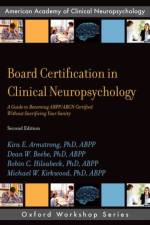
Pursuit of board certification through the American Board of Professional Psychology (ABPP) has become a standard expectation for clinical neuropsychologists. At the time this book was published, the American Board of Clinical Neuropsychology (ABCN) was the fastest growing specialty board of ABPP with over 1,000 active members. However, the board certification process is challenging and can be intimidating. The objectives of this book are to demystify the processand provide practical advice for achieving board certification through ABPP/ABCN. To start, benefits of board certification are summarized and common myths debunked. Next, individual chapters for each step in the process, as well as a chapter devoted to pursuit of the pediatric subspecialty,provide details about essential elements of the task, the process, the timeline, strategies for success, common pitfalls, and what happens behind the scenes at ABPP/ABCN. Each of these chapters also has tips for trainees and supervisors who want to get a jump on preparing for board certification. Finally, encouragement and guidance for individuals who encounter setbacks at any step along the way are offered.
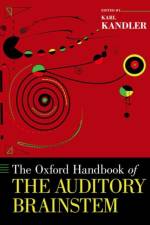
The sense of hearing plays an important role in navigating the environment, avoiding predators, finding mates, and communicating with others. To quickly and accurately process the tiny rapid eardrum vibrations that are elicited by sound, mammals and birds evolved a complex network of brain pathways, each of which is specialized to extract certain sound features. This book is a compilation of authoritative chapters, written by leading auditory neuroscientists,summarizing our current knowledge about the anatomy, physiology, and function of the major auditory brainstem pathways. Special emphasis is given to recent progress in understanding the processes and underlying mechanisms by which these pathways are modulated during development and aging. Also included iscoverage of pathological conditions, including hearing loss and the perception of phantom sounds.
Changing our minds isn''t easy. Even when we recognize our views are disputed by intelligent and informed people, we rarely doubt our rightness. Why is this so? How can we become more open-minded, putting ourselves in a better position to tolerate conflict, advance collective inquiry, and learn from differing perspectives in a complex world?Nathan Ballantyne defends the indispensable role of epistemology in tackling these issues. For early modern philosophers, the point of reflecting on inquiry was to understand how our beliefs are often distorted by prejudice and self-interest, and to improve the foundations of human knowledge. Ballantyne seeks to recover and modernize this classical tradition by vigorously defending an interdisciplinary approach to epistemology, blending philosophical theorizing with insights from the social andcognitive sciences.Many of us need tools to help us think more circumspectly about our controversial views. Ballantyne develops a method for distinguishing between our reasonable and unreasonable opinions, in light of evidence about bias, information overload, and rival experts. This method guides us to greater intellectual opennessΓÇöin the spirit of skeptics from Socrates to Montaigne to Bertrand RussellΓÇömaking us more inclined to admit that sometimes we don''t have the right answers. With vibrant prose andfascinating examples from science and history, Ballantyne shows how epistemology can help us know our limits.
We live in a time of change, an era where old men can be celebrated as elders who are valued but who are not demeaned if they become ill and dependent. Where we aim to maintain health but find dignity in frailty. Old Man Country helps readers see and imagine this change for themselves. The book follows the journey of a writer in search of wisdom, as he narrates encounters with twelve distinguished American men over 80 ΓÇö including Paul Volcker, the formerhead of the Federal Reserve, and Denton Cooley, the world''s most famous heart surgeon. In these and other intimate conversations, the book explores and honors the particular way that each man faces four challenges of living a good old age: Am I Still a Man? Do I Still Matter? What is the Meaning of My Life?Am I Loved? Readers will come to see how each man ΓÇö even the most famous ΓÇö faces challenges that are every man''s challenges. Personal yet universal stories about work, love, sexuality, and hope mingle with stories about illness, loss and death. These stories will strengthen each of us as we anticipate and navigate our way through the passages of old age.
Andy Clark is a leading philosopher of cognitive science, whose work has had an extraordinary impact throughout philosophy, psychology, neuroscience, and robotics. His monographs have led the way for new research programs in the philosophy of mind and cognition: Microcognition (1989) and Associative Engines (1993) introduced the philosophical community to connectionist research and the novel issues it raised; Being There (1997) showed therelevance of embodiment, dynamical systems theory, and minimal computation frameworks for the study of the mind; Natural Born Cyborgs (OUP 2003) presented an accessible development of embodied and embedded approaches to understanding human nature and cognition; Supersizing the Mind (OUP 2008) developed this yet further alongwith the famous "Extended Mind" hypothesis; and Surfing Uncertainty (OUP 2017) presents a framework for uniting perception, action, and the embodied mind.In Andy Clark and His Critics, a range of high-profile researchers in philosophy of mind, philosophy of cognitive science, and empirical cognitive science, critically engage with Clark''s work across the themes of: Extended, Embodied, Embedded, Enactive, and Affective Minds; Natural Born Cyborgs; and Perception, Action, and Prediction. Daniel Dennett provides a foreword on the significance of Clark''s work, and Clark replies to each section of the book, thus advancing current literaturewith original contributions that will form the basis for new discussions, debates and directions in the discipline.
The first comprehensive academic survey of British musical theatre from its origins, The Oxford Handbook of the British Musical offers both a historical account of musical theatre from 1728 and a range of in-depth critical analyses of key works and productions that illustrate its aesthetic values and sociocultural meanings.
Abonner på vårt nyhetsbrev og få rabatter og inspirasjon til din neste leseopplevelse.
Ved å abonnere godtar du vår personvernerklæring.