















Gjør som tusenvis av andre bokelskere
Abonner på vårt nyhetsbrev og få rabatter og inspirasjon til din neste leseopplevelse.
Ved å abonnere godtar du vår personvernerklæring.Du kan når som helst melde deg av våre nyhetsbrev.

This book reconsiders the Roman architect Vitruvius and his treatise, On Architecture. The ideal, "Vitruvian" man is not simply an architect in the narrow sense. He is a builder of Augustus' legacy, and the archetype for a distinctly imperial ethos of civic expertise.
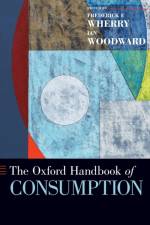
The Oxford Handbook of Consumption consolidates the most innovative recent work conducted by social scientists in the field of consumption studies and identifies some of the most fruitful lines of inquiry for future research. It begins by embedding marketing in its global history, enmeshed in various political, economic, and social sites. From this embedded perspective, the book branches out to examine the rise of consumer culture theory among consumerresearchers and parallel innovative developments in sociology and anthropology, with scholarship analyzing the roles that identity, social networks, organizational dynamics, institutions, market devices, materiality, and cultural meanings play across a wide variety of applications, including, but not limited to,brands and branding, the sharing economy, tastes and preferences, credit and credit scoring, consumer surveillance, race and ethnicity, status, family life, well-being, environmental sustainability, social movements, and social inequality. The volume is unique in the attention it gives to consumer research on inequality and the focus it has on consumer credit scores and consumer behaviors that shape life chances. The volume includes essays by many of the key researchers in the field, some ofwhom have only recently, if at all, crossed the disciplinary lines that this volume has enabled. The contributors have tried to address several key questions: What motivates consumption and what does it mean to be a consumer? What social, technical, and cultural systems integrate and give character tocontemporary consumption? What actors, institutions, and understandings organize and govern consumption? And what are the social uses and effects of consumption?
Expand your knowledge of sleep medicine with 52 challenging but fun to read cases from the Cleveland Clinic. Cases covering all ages (from infant to elder) and almost every sleep problem are each highlighted by cutting-edge and up-to-date literature reviews, multiple choice questions, tables, graphics, and videos. These examples provide a great way to study for your board exams.
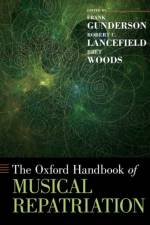
The Oxford Handbook of Musical Repatriation critically explores issues surrounding musical repatriation, chiefly of recordings from archives. Based on dynamic and richly layered stories and critical questions arising from archival and repatriation work, this Handbook's thirty-eight chapters address the subjective issues involved in musical repatriation, and its wider cultural significance.
Performing Knowledge explores the relationship between musical performance and analysis through a unique collaboration between a music theorist and a cast of internationally renowned performers, investigating major musical works of the twentieth century¿Ravel, Schoenberg, Bart¿k, Schnittke, Milhaud, Messiaen, Babbitt, Carter, and Morris. The book is a brave crossing of disciplinary divides between scholarship and practice, a theory text enlivened bythe voices of performers who create, interpret, and articulate structure.
Loving Music Till It Hurts explores how people's intense love and protectiveness of music can lead to interpersonal conflicts, societal injustices, and violence. But how might we love music, even embrace it as vital to human thriving, without weaponizing this love? What can we do when loving music and loving people seem at odds?
The Pearl of Greatest Price narrates the history of Mormonism''s fourth volume of scripture, canonized in 1880. The authors track its predecessors, describe its several components, and assess their theological significance within the Church of Jesus Christ of Latter-day Saints. Four principal sections are discussed, along with attendant controversies associated with each. The Book of Moses purports to be a Mosaic narrative missing from the biblical versionGenesis. Too little treated in the scholarship on Mormonism, these chapters, produced only months after the Book of Mormon was published, actually contain the theological nucleus of Latter-day Saint doctrines as well as a virtual template for the Restoration Joseph Smith was to effect.Most controversial of all is the Book of Abraham, a production that arose out of a group of papyri Smith acquired, along with four mummies, in 1835. Most of the papyri disappeared in the great Chicago Fire, but surviving fragments have been identified as Egyptian funerary documents. That fact, and the translations Smith attempted from the hieroglyphs on surviving vignettes, have convinced most Egyptologists that Smith''s work was fraudulent or inept. LDS scholars, however, have developed severalframeworks for vindicating the inspiration of the resulting narrative and Smith''s calling as a prophet. A third chapter attempts to make sense of Smith''s several, at times divergent, accounts of his First Vision, one of which is canonized as scripture. And a fourth chapter assesses the creedalnature of Smith''s "Articles of Faith," in the context of his professed anti-creedalism. In sum, this study chronicles the volume''s historical legacy and theological indispensability to the Latter-day Saint tradition, as well as the reasons for its resilience and future prospects in the face of daunting challenges.
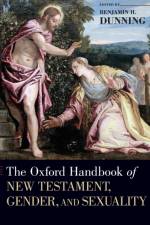
The Oxford Handbook of Gender and Sexuality in the New Testament provides a roadmap to the relevant problems, debates, and issues that animate the study of sex, gender, sexuality, and sexual difference in early Christianity. Leading scholars in the field offer original contributions by way of synthesis, critical interrogation, and proposals for future research trajectories.
This book catalogues and examines the various First Amendment free speech and press controversies that have roiled the Trump presidency. It highlights both what is unique about those controversies, and what is consistent with historical patterns. From past conflicts and eras, the book draws various First Amendment lessons that will help guide readers through the Trump Era.
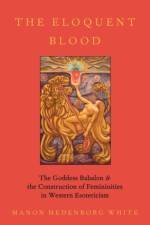
In the conventional dichotomy of chaste, pure Madonna and libidinous whore, the former has usually been viewed as the ideal form of femininity. However, there is a modern religious movement in which the negative stereotype of the harlot is inverted and exalted. The Eloquent Blood focuses on the changing construction of femininity and feminine sexuality in interpretations of the goddess Babalon. A central deity in Thelema, the religion founded by thenotorious British occultist Aleister Crowley (1875-1947), Babalon is based on Crowley''s favorable reinterpretation of the biblical Whore of Babylon, and is associated with liberated female sexuality and the spiritual ideal of passionate union with existence.Analyzing historical and contemporary written sources, qualitative interviews, and ethnographic fieldwork in the Anglo-American esoteric milieu, the study traces interpretations of Babalon from the works of Crowley and some of his key disciples—including the rocket scientist John "Jack" Whiteside Parsons, and the enigmatic British occultist Kenneth Grant—until the present. From the 1990s onwards, this study shows, female and LGBTQ esotericists have challenged historical interpretations ofBabalon, drawing on feminist and queer thought and conceptualizing femininity in new ways. Tracing the trajectory of a particular gendered symbol from the fin-de-siècle until today, Manon Hedenborg White explores the changing role of women in Western esotericism, and shows how evolving constructions of gender have shaped the development of esotericism. Combining research on historical and contemporary Western esotericism with feminist and queer theory, the book sheds new light on the ways in which esoteric movements and systems of thought have developed over time in relation topolitical movements.
Most of the major black literary and cultural movements of the twentieth century have been understood and interpreted as secular, secularizing and, at times, profane. In this book, Josef Sorett demonstrates that religion was actually a formidable force within these movements, animating and organizing African American literary visions throughout the years between the New Negro Renaissance of the 1920s and the Black Arts movement of the 1960s. Sorett unveils thecontours of a literary history that remained preoccupied with religion even as it was typically understood by authors, readers, and critics alike to be modern and, therefore, secular. Spirit in the Dark offers an account of the ways in which religion, especially Afro-Protestantism, remained pivotal to the ideas and aspirations of African American literature across much of the twentieth century. From the dawn of the New Negro Renaissance until the ascendance of the Black Arts movement, black writers developed a spiritual grammar for discussing race and art by drawing on terms such as "church" and "spirit" that were part of the landscape and lexicon of Americanreligious history. Sorett demonstrates that religion and spirituality have been key categories for identifying and interpreting what was (or was not) perceived to constitute or contribute to black literature and culture. By examining figures and movements that have typically been cast as "secular," he offerstheoretical insights that trouble the boundaries of what counts as "sacred" in scholarship on African American religion and culture. Ultimately, Spirit in the Dark reveals religion to be an essential ingredient, albeit one that was always questioned and contested, in the forging of an African American literary tradition.
Anxiety and alienation threaten modern democracies. Political anger runs rampant in the United States, Britain voted to leave the European Union, authoritarian governments control several European countries, and millions of desperate migrants are streaming north out of the Middle East, Africa, and Latin America. Many people blame stagnant household incomes and economic inequality. However, Possessive Individualism argues that the origins of world disorderare in the failure of the Enlightenment to anticipate the acquisitive individual as a creature of global capitalism.Daniel Bromley provides a fundamental critique of contemporary capitalism to explain why the world now finds itself in widespread disorder. Capitalism''s basic flaw, he argues, is "possessive individualism." Glorification of the rational individual motivated by acquisitiveness prevents the adoption of necessary government programs that would ease the economic burden on beleaguered households. Meanwhile, possessive individualism enables managerial capitalism-controlled by the "one percent"-tosuppress wages and salaries, embrace automation, and move jobs overseas. Capitalism is no longer an engine of improved livelihoods and social hope.Drawing on evolutionary institutional economics and political theory this book offers two remedies to the crisis of modern capitalism. Escape from the crisis requires that the isolated acquisitive individual rediscovers a sense of loyalty to others-as neighbors, as colleagues, and as participants in the shared social process of living. Escape also requires that the private firm be reimagined as a public trust in which the economic well-being of employees becomes a central part of itspurpose. In the absence of these dual transformations, capitalism as we know it cannot endure.
Political theology is critical reflection on the intersections of religious, political and economic life, and in the Hebrew Bible it emerges in a broad range of topics - sovereignty, leadership, law, peoplehood, hospitality, redemption, creation and hope. The classic biblical literature has shaped the social imaginations of many peoples from ancient Canaan to global Christianity today, so this study also gives attention to key developments in the history of theBible's reception. Understanding the inner-biblical debates and their later interpretations will continue to be relevant for those who still live within the Bible's history of influence.
This book details how Kallimachos' hymns individually and collectively examine the nature of power, authority, and good governance by situating these praise poems at the intersection of a literary tradition stretching back to archaic Greek poetry and a contemporary political discourse on kingship emerging in the early Hellenistic world.
Many view civil wars as violent contests between armed combatants. But history shows that community groups, businesses, NGOs, local governments, and even armed groups can respond to war by engaging in civil action. Characterized by a reluctance to resort to violence and a willingness to show enough respect to engage with others, civil action can slow, delay, or prevent violent escalations. This volume explores how people in conflict environments engage in civilaction, and the ways such action has affected violence dynamics in Syria, Peru, Kenya, Northern Ireland, Mexico, Bosnia, Afghanistan, Spain, and Colombia. These cases highlight the critical and often neglected role that civil action plays in conflicts around the world.
Many view civil wars as violent contests between armed combatants. But history shows that community groups, businesses, NGOs, local governments, and even armed groups can respond to war by engaging in civil action. Characterized by a reluctance to resort to violence and a willingness to show enough respect to engage with others, civil action can slow, delay, or prevent violent escalations. This volume explores how people in conflict environments engage in civilaction, and the ways such action has affected violence dynamics in Syria, Peru, Kenya, Northern Ireland, Mexico, Bosnia, Afghanistan, Spain, and Colombia. These cases highlight the critical and often neglected role that civil action plays in conflicts around the world.
Thousands of professors claim Christian as their primary identity, and teaching as their primary vocational responsibility. But how does being a Christian change one's teaching? Indeed, should it? The Outrageous Idea of the Christian Teacher explores the responses of more than 2,300 Christian professors from 48 different institutions across North America to find out.
The Finger of the Scribe summarizes the evidence for how, when, and where scribes learned to write ancient Israel. Putting together new data from archaeological excavations as well as new interpretations from ancient inscriptions, this book pieces together early education and shows how that education influenced the writing of biblical literature.
How are religious educational institutions built? In histories of evangelical institution-building in the Victorian Indian colonial period (1858-1901), this question has mostly been addressed from the perspective of the religious ends that Christian missionaries sought to achieve and the ideological obstacles they encountered. This may be called the ''values'' approach. Missionary Calculus sets this aside and examines, instead, the most routine transactions ofmissionaries in building an evangelical institution, the Sunday school. Missionaries daily struggled with and acted upon certain questions: How shall we acquire land and money to set up such schools? What methods shall we employ to attract students? What curriculum, books, and classroom materials shall weuse? How shall we tune our hymns? Shall we employ non-Christians to teach in Christian Sunday schools? The makers of colonial Sunday schools focused obsessively on the means, the material and symbolic resources, with which they felt they could achieve certain immediate objectives. Such a transactional or ''instrumental'' approach resulted in stated religious ''values'' being insidiously compromised. Using insights from classical Weberian sociology, and through a close scrutiny of missionary means,this book shows how the success or failure of meeting evangelical ends may be assessed.With extensive archival research, chiefly on American missionaries in colonial India, this work examines the formation of Sunday schools at the point of transnational, intercultural contact. Readers interested in religion, education, and colonial history should find the matter, method, outcomes, and narration of Missionary Calculus new and thought-provoking.
Ted Shawn (1891-1972), is the self-proclaimed "Father of American Dance" who helped to transform dance from a national pastime into theatrical art. In the process, he made dancing an acceptable profession for men and taught several generations of dancers, some of whom went on to become legendary choreographers and performers in their own right, most notably his protégées Martha Graham, Louise Brooks, Doris Humphrey, and Charles Weidman. Shawn tried for manyyears and with great frustration to tell the story of his life''s work in terms of its social and artistic value, but struggled, owing to the fact that he was homosexual, a fact known only within his inner circle of friends. Unwilling to disturb the meticulously narrated account of his paternal exceptionalism,he remained closeted, but scrupulously archived his journals, correspondence, programs, photographs, and motion pictures of his dances, anticipating that the full significance of his life, writing, and dances would reveal itself in time. Ted Shawn: His Life, Writings, and Dances is the first critical biography of the dance legend, offering an in-depth look into Shawn''s pioneering role in the formation of the first American modern dance company and school, the first all-male dance company, and Jacob''s Pillow, the internationally renowned dance festival and school located in the Berkshires. The book explores Shawn''s writings and dances in relation to emerging discourses of modernism, eugenics and social evolution,revealing an untold story about the ways that Shawn''s homosexuality informed his choreographic vision. The book also elucidates the influences of contemporary writers who were leading a radical movement to depathologize homosexuality, such as the British eugenicist Havelock Ellis and sexologist Alfred Kinsey, andconversely, how their revolutionary ideas about sexuality were shaped by Shawn''s modernism.
In this review book, authors and Peabody Institute alumni Lucy Mauro and Scott Beard provide an invaluable cache of tips, exercises, and practice exams to help college music students prepare for the Piano Proficiency Exam and find pleasure in the process.
This book boldly reinterprets the central period of Roman history by taking the focus off the emperor Augustus. Its chapters highlight the contributions of other individuals and continuities with republican culture. Together they show that Augustus has been more dominant in later memory than he was in his own lifetime.
Families' religious beliefs often profoundly shape their approach to medical decisions, including treatment of their sick or premature newborns. But there are few studies of major religions' teachings about the newborn. This volume provides information to neonatal intensive care unit professionals, parents of NICU patients, and students of bioethics on religious teachings about the status, treatment, and ritual accompaniments of care of the newborn.
In Our Love Affair with Drugs, Jerrold Winter provides a nontechnical, accessible account of the effects of psychoactive drugs in America.
Adolescent substance abuse is the nation''s #1 public health problem. It originates out of a developmental era where experimentation with the world is increasingly taking place, and where major changes in physical self and social relationships are taking place. These changes cannot be understood by any one discipline nor can they be described by focusing only on the behavioral and social problems of this age period, the characteristics of normal development, or thepharmacology and addictive potential of specific drugs. They require knowledge of the brain''s systems of reward and control, genetics, psychopharmacology, personality, child development, psychopathology, family dynamics, peer group relationships, culture, social policy, and more. Drawing on theexpertise of the leading researchers in this field, this Handbook provides the most comprehensive summarization of current knowledge about adolescent substance abuse. The Handbook is organized into eight sections covering the literature on the developmental context of this life period, the epidemiology of adolescent use and abuse, similarities and differences in use, addictive potential, and consequences of use for different drugs; etiology and course as characterized at different levelsof mechanistic analysis ranging from the genetic and neural to the behavioural and social. Two sections cover the clinical ramifications of abuse, and prevention and intervention strategies to most effectively deal with these problems. The Handbook''s last section addresses the role of socialpolicy in framing the problem, in addressing it, and explores its potential role in alleviating it.
Novelist Honore de Balzac was the first to use the phrase "Paris savant" to refer to the dynamic Parisian scientific and intellectual community of the late 18th century. This book discusses how the Parisian scientific community came into its important place in the French Enlightenment, focusing on the Academy of Sciences.
This handbook offers a global perspective on the historical development of educational institutions, systems of schooling, educational ideas, and educational experiences. Its 36 chapters consider the field's changing scholarship, while examining particular national and regional themes and offering a comparative perspective. Each also provides suggestions for further research and analysis.
Beethoven 1806 examines a banner year in the creative life of Ludwig van Beethoven. Drawing on theories of mediation and a wealth of primary sources, it explores the specific contexts in which the music of this year was conceived, composed, and heard.
Sanctuary cities, or localities where officials are prohibited from inquiring into immigration status, have become a part of the broader debate on undocumented immigration in the United States. Despite the increasing amount of coverage sanctuary policies receive, the American public knows little about these policies. In this book, Loren Collingwood and Benjamin Gonzalez O'Brien delve into the history, media coverage, effects, and public opinion on these sanctuarypolicies in the hope of helping readers reach an informed decision regarding them.
This field-defining volume surveys the diverse and unique research methods used by scholars in the growing, transdisciplinary field of health humanities. Appropriate for advanced undergraduates, but nuanced enough to engage more seasoned students and scholars, this volume is an essential teaching and reference tool for health humanities teachers and scholars.
Abonner på vårt nyhetsbrev og få rabatter og inspirasjon til din neste leseopplevelse.
Ved å abonnere godtar du vår personvernerklæring.