


















Gjør som tusenvis av andre bokelskere
Abonner på vårt nyhetsbrev og få rabatter og inspirasjon til din neste leseopplevelse.
Ved å abonnere godtar du vår personvernerklæring.Du kan når som helst melde deg av våre nyhetsbrev.

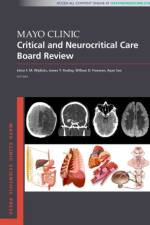
Mayo Clinic Critical and Neurocritical Care Board Review is a comprehensive review of critical care medicine and neurocritical care to assist in preparation of the neurocritical care and general critical care boards.
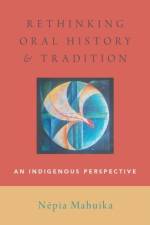
Indigenous Oral History explores a specific indigenous community approach to oral history. It compares and contrasts popular definitions and practices used by both oral historians and oral traditionalists, examining whether or not each resonates with indigenous perspectives regarding the form, methods, theories and politics of oral history.
This practical, hands-on resource for clinicians interested in using exposure therapy is full of case examples, scripts and worksheets that will help clinicians plan and prepare for sessions.
During and immediately after World War II, an unlikely band of librarians and scholars, soldiers and spies were dispatched to Europe to collect books and documents, to acquire and preserve the written word as well as provide critical information for intelligence purposes.
Ranking of people, schools, products, countries, and just about everything else is part of our daily lives. But we are in a paradoxical relationship with ranking: we believe that ranking is good because it is informative and objective; and we believe ranking is bad because it is biased and subjective, and occasionally, even manipulated. Ranking: The Unwritten Rules of the Social Game We All Play combines the application of scientific theories to everydayexperience with entertaining personal stories.
The third edition of Managing Substance Use Disorder provides an evidence-based treatment protocol for all types of substance use disorders. Designed to accompany the Managing Your Substance Use Disorder: Workbook, this guide provides clinicians with valuable strategies for working with substance use disorders by focusing on specific issues involved in both stopping substance abuse and changing behaviors or lifestyle aspects that contribute tocontinued substance abuse.
The third edition of Managing Your Substance Use Disorder provides the reader with practical information and skills to help them understand and change a drug or alcohol problem.
Problem-Solving Courts and the Criminal Justice System provides professionals and students in the fields of mental health, criminal justice, law, and related fields with a comprehensive foundation of information related to problem-solving courts and the role such courts play in reforming the United States criminal justice system. The book is a timely response to the rapidly changing landscape of that system, relatively recent development of problem-solvingcourts, and the ongoing paradigm shift away from punishment and toward restorative justice.
Just as the revolutionaries of America sought to create a new society, so too did Benjamin Henry Latrobe seek to create buildings and oversee public works projects that would elevate the culture and society of the United States. This biography of Benjamin Henry Latrobe narrates the challenges to and triumphs of America's first professionally trained architect and engineer.
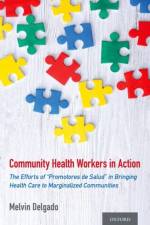
Community Health Workers in Action proposes support and expansion of the role of community health workers in meeting the health needs of marginalized groups in United States cities (although their potential reach is not limited to any one group or geographical section). Given the health inequities that continue to touch the lives of millions of people of color across the country, these professionals' efforts¿which translate to innovative, community-centeredresponses designed to reach particularly vulnerable populations¿shape one major piece of the complicated puzzle that is health care in America.
Secrets of Creativity combines insights from an interdisciplinary group of experts to reveal the secrets of creativity that emerge from our everyday lives, and from the minds of exceptional individuals and their discoveries. Neuroscientists describe the functioning of the brain in creative acts of scientific discovery or artistic production. Humanists describe the workings of the creative mind in the composition of literary works and in works of art andmusic. Creativity is explored with respect to forms of intelligence, modes of experience, emotions, memory, and the interplay between the brain's nonconscious and conscious system activities.
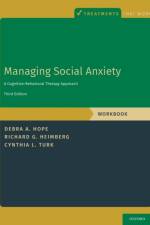
The third edition of Managing Social Anxiety: A Cognitive-Behavioral Therapy Approach, Workbook is for individual or group cognitive-behavioral therapy for social anxiety with adults. This is an evidence-based approach backed by over three decades of research.
The third edition of Managing Social Anxiety: A Cognitive-Behavioral Therapy Approach, Therapist Guide is for individual or group cognitive-behavioral therapy for social anxiety with adults. This is an evidence-based approach backed by over three decades of research.
Through the lens of Korean War memorials, Right to Mourn looks at how long-suppressed memories become public, and asks how a physical monument can possibly communicate trauma and facilitate mourning.
This is a major new history of the Spanish conquest of the Inca empire, set in a larger global context than previous accounts, made possible by new archaeological and archival research. Although based on solid scholarly foundations, Inca Apocalypse will be accessible to non-academic readers.
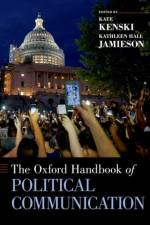
The Oxford Handbook of Political Communication provides contexts for viewing the field, examines political discourse, media, and interpersonal and small group political communication, and considers political communication's evolution inside the altered political communication landscape. Agendas for future research and innovation are presented.
The Civil War, Reconstruction and the post-war Amendments revolutionized American intellectual life, compelling new discussions of inequality and difference. Legal Realisms explores how a new kind of American novel emerged in relation to contemporary aesthetic, legal, and political debates about the meaning of social representation in literature and public life.
Japanese philosophy is now a flourishing field with thriving societies, journals, and conferences dedicated to it around the world, made possible by an ever-increasing library of translations, books, and articles. The Oxford Handbook of Japanese Philosophy is a foundation-laying reference work that covers, in detail and depth, the entire span of this philosophical tradition, from ancient times to the present. It introduces and examines the most importanttopics, figures, schools, and texts from the history of philosophical thinking in premodern and modern Japan. Each chapter, written by a leading scholar in the field, clearly elucidates and critically engages with its topic in a manner that demonstrates its contemporary philosophical relevance. The Handbook opens with an extensive introductory chapter that addresses the multifaceted question, "What is Japanese Philosophy?" The first fourteen chapters cover the premodern history of Japanese philosophy, with sections dedicated to Shinto and the Synthetic Nature of Japanese Philosophical Thought, Philosophies of Japanese Buddhism, and Philosophies of Japanese Confucianism and Bushido. Next, seventeen chapters are devoted to Modern Japanese Philosophies. After a chapter on theinitial encounter with and appropriation of Western philosophy in the late nineteenth-century, this large section is divided into one subsection on the most well-known group of twentieth-century Japanese philosophers, The Kyoto School, and a second subsection on the no less significant array of Other ModernJapanese Philosophies. Rounding out the volume is a section on Pervasive Topics in Japanese Philosophical Thought, which covers areas such as philosophy of language, philosophy of nature, ethics, and aesthetics, spanning a range of schools and time periods. This volume will be an invaluable resource specifically to students and scholars of Japanese philosophy, as well as more generally to those interested in Asian and comparative philosophy and East Asian studies.
Major innovations have occurred in the study of biblical law in recent decades. The legal material of the Pentateuch has received new interest with detailed studies of specific biblical passages. The comparison of biblical practice to ancient Near Eastern customs has received a new impetus with the concentration on texts from actual ancient legal transactions. The Oxford Handbook of Biblical Law provides a state of the art analysis of the major questions, principles, and texts pertinent to biblical law. The thirty-three chapters, written by an international team of experts, deal with the concepts, significant texts, institutions, and procedures of biblical law; the intersection of law with religion, socio-economic circumstances, and politics; and the reinterpretation of biblical law in the emerging Jewish and Christian communities. Thevolume is intended to introduce non-specialists to the field as well as to stimulate new thinking among scholars working in biblical law.
This is the biography of a contested memory, how it was born, grew, changed the world, and was changed by it. It''s the story of the story of how the Church of Jesus Christ of Latter-day Saints began. Joseph Smith, the church''s founder, remembered that his first audible prayer, uttered in spring of 1820 when he was about fourteen, was answered with a vision of heavenly beings. Appearing to the boy in the woods near his parents'' home in western New York State, theytold Smith that he was forgiven and warned him that Christianity had gone astray. Smith created a rich and controversial historical record by narrating and documenting this event repeatedly. In First Vision, Steven Harper shows how Latter-day Saints (beginning with Joseph Smith) and others have remembered this experience and rendered it meaningful. When and why and how did Joseph Smith''s first vision, as saints know the event, become their seminal story? What challenges did it face along the way? What changes did it undergo as a result? Can it possibly hold itsprivileged position against the tides of doubt and disbelief, memory studies, and source criticism-all in the information age? Steven Harper tells the story of how Latter-day Saints forgot and then remembered accounts of Smith''s experience and how Smith''s 1838 account was redacted and canonized. He explores thedissonance many saints experienced after discovering multiple accounts of Smith''s experience. He describes how, for many, the dissonance has been resolved by a reshaped collective memory.
Today religion and spirituality infuse digital and technological environments. These in turn produce new forms of religious and spiritual belief. As technologies that compute numbers, digital media apparently epitomize everything that is considered scientific and rational. Yet people experience the effects of digital devices and algorithms in their everyday lives through the lenses of magic and the supernatural. Algorithms are said to have the capacity to "readminds" and predict the future; Artificial Intelligence is seen as an opportunity to overcome death and achieve immortality through singularity; and avatars and robots are accorded a dignity that traditional religions restrict to humans. The essays in Believing in Bits advance the idea that religious beliefs and practices have become inextricably linked to the functioning of digital media. How did we come to associate things such as mind reading and spirit communications with digital technologies? Does the dignity accorded to the human and natural worlds within traditional religions translate to gadgets, avatars, or robots? How does the internet''s help blur the boundaries between what is considered fiction and fact? The essayscollected in this volume address these and similar questions, challenging and redefining established understandings of digital media and culture by employing the notions of belief, religion, and the supernatural.
Today religion and spirituality infuse digital and technological environments. These in turn produce new forms of religious and spiritual belief. As technologies that compute numbers, digital media apparently epitomize everything that is considered scientific and rational. Yet people experience the effects of digital devices and algorithms in their everyday lives through the lenses of magic and the supernatural. Algorithms are said to have the capacity to "readminds" and predict the future; Artificial Intelligence is seen as an opportunity to overcome death and achieve immortality through singularity; and avatars and robots are accorded a dignity that traditional religions restrict to humans. The essays in Believing in Bits advance the idea that religious beliefs and practices have become inextricably linked to the functioning of digital media. How did we come to associate things such as mind reading and spirit communications with digital technologies? Does the dignity accorded to the human and natural worlds within traditional religions translate to gadgets, avatars, or robots? How does the internet''s help blur the boundaries between what is considered fiction and fact? The essayscollected in this volume address these and similar questions, challenging and redefining established understandings of digital media and culture by employing the notions of belief, religion, and the supernatural.
Immigration crises faced by the United States today show the interplay between areas of global law and policy that might at first glance seem quite disparate-economic law, human rights and refugee law, and criminal law relating to the trafficking and smuggling of migrants. This book is largely dedicated to unpacking those dynamics and ultimately argues that reform efforts must be expanded.
Doctrine, Practice and Advocacy in the Inter-American Human Rights System is the first casebook to focus on the Inter-American human rights system, the primary system for advancing and protecting rights in the Western hemisphere. Created by the Organization of American States, the Inter-American Commission on Human Rights and the Inter-American Court of Human Rights are autonomous and independent bodies that make up the Inter-American system. Together, theyplay a vital role, working closely with victims, civil society, and states to protect fundamental human rights in the Western hemisphere, particularly in Latin America. While the system is relatively unknown in legal academia in the United States and Canada, its study is mandatory in most law schools in theAmericas. Government appointees, civil servants, high level actors, private attorneys, judges and legal scholars, and media regularly engage with the system in Latin America, implementing its determinations and applying its rulings and interpretations concerning the human rights of their citizens. Thus critical matters affecting vital rights, such as the peace process in Colombia, disappearances in Mexico, gang violence in the Northern Triangle (El Salvador, Honduras, and Guatemala) or trialsfor perpetrators of crimes against humanity in Argentina, all directly involve the rulings and actors of the Inter-American system. Increasingly, the Inter-American system has advanced rights protection in the United States and Canada. The statements and determinations of the Inter-American Commissionon the detention center at Guantanamo, for example, led to a global consensus opposing the prolonged use of pretrial detention at that site, while the Commission''s ruling on the juvenile death penalty was cited by the United States Supreme Court in its holding finding that practice unconstitutional. A report by the Commission on murdered and missing indigenous women in British Columbia led to the creation of a National Commission of Inquiry on the subject by Canada.This book provides analysis on a wide range of practical issues that advocates face when interacting with the Commission or Court and explores current debates on possible reforms of the system. At the same time, it provides materials that consider the political dynamics that empower and constrain the system. Doctrine, Practice and Advocacy in the Inter-American Human Rights System takes as its point of departure a critical look at the real-world successes and failures of the systemand human rights advocates in the Americas, including the tensions and trade-offs commonly confronted by activists as they seek to advance human rights.
The Coastal Everglades presents a broad overview and synthesis of research on the coastal Everglades, a region that includes Everglades National Park, adjacent managed wetlands, and agricultural and urbanizing communities. Contributors for this volume are all collaborators on the Florida Coastal Everglades Long-Term Ecological Research Program (FCE LTER). The FCE LTER began in 2000 with a focus on understanding key ecosystem processes in the coastalEverglades, while also developing a platform for and linkages to related work conducted by an active and diverse Everglades research community. The program is based at Florida International University in Miami, but includes scientists and students from numerous other universities as well as staff scientists at keyresource management agencies, including Everglades National Park and the South Florida Water Management District.Though the Everglades landscape spans nearly a third of the State of Florida, the focus on the coastal Everglades has allowed the contributors to examine key questions in social-ecological science in the context of ongoing restoration initiatives. As this book demonstrates, the long-term research of the FCE LTER has facilitated a better understanding of the roles of sea level rise, water management practices, urban and agricultural development, and other disturbances, such as fires and storms,on the past and future dynamics of this unique coastal environment. By comparing properties of the Everglades with other subtropical and tropical wetlands, the book challenges ideas of novelty while revealing properties of ecosystems at the ends of gradients that are often ignored. It also providesinsights from, and encouragement for, long-term collaborative studies that inform resource management in similarly threatened coastal wetland landscapes.
The Oxford Handbook of American Folklore and Folklife Studies surveys the materials, approaches, concepts, and applications of the field to provide a sweeping guide to American folklore and folklife, culture, history, and society. Forty-three comprehensive and diverse chapters explore the extraordinary richness of the American social and cultural fabric, offering a valuable resource not only for scholars and students of American studies, but also for theglobal study of tradition, folk arts, and cultural practice.
Holy, holy, holy! The Lord of hosts! The fill of all the earth is His glory. In these few ecstatic words, the prophet Isaiah captured the core of Jewish thinking about humanity, nature, and God. If the idea of holiness generally points toward God''s transcendence, Isaiah brings it back down to earth, recognizing God''s presence throughout the world. The Holy One of Israel is a philosophical exploration of that remarkable and distinctively Jewish idea: that God is everywhere, yet not in space. Lenn Goodman explores what can be meant by God''s uniqueness, presence,and perfection. In a text richly resonant with the classic Jewish sources and in dialogue with the great philosophers, Goodman probes the ideas of revelation, natural law, the problem of evil, the challenges and limits of the idea of God''s transcendence, and God''s actions in and through nature, includinghuman nature. This book is a must-read for anyone seriously interested in how our ideas about God can inform our lives and our thinking about individual and social responsibility and intellectual and artistic creativity and spiritual growth.
Abonner på vårt nyhetsbrev og få rabatter og inspirasjon til din neste leseopplevelse.
Ved å abonnere godtar du vår personvernerklæring.