



















Gjør som tusenvis av andre bokelskere
Abonner på vårt nyhetsbrev og få rabatter og inspirasjon til din neste leseopplevelse.
Ved å abonnere godtar du vår personvernerklæring.Du kan når som helst melde deg av våre nyhetsbrev.

Mechanical Circulatory Support: Principles and Applications, 2nd Edition, offers a thoughtful approach to patient selection, a comprehensive review of various device options, and a detailed approach to adverse event management. This textbook is an essential read for health care providers at all levels who are involved in the care of these complex patients.
Involuntary Movements: Classification and Video Atlas pairs descriptions of the clinical features of various involuntary movements with video depictions of the involuntary movements in action. In a unique approach, this book considers two aspects of the diagnosis of involuntary movements: the phenomenology - as depicted in approximately 200 video supplements - and the etiology. The book also discusses the current consensus on the classification,pathophysiology, and treatment of each involuntary movement.
Introduction to Clinical Cultural Neuroscience aims to provide clinicians and researchers with an overview of contemporary topics relevant to the study of culture in psychology and neuroscience. While comprehensive volumes dedicated to cultural or cross-cultural psychology, cultural neuropsychology, and cultural neuroscience are readily available, the accumulated theoretical and empirical findings remain relatively sequestered within each of those academicsubspecialties.
As kids we were told to avoid talking about politics in polite company. However, the conventional wisdom no longer applies: we need to find a way to talk to each other about American politics, even with those (and especially those) with whom we disagree. While we've hashed and re-hashed bitter political disagreements, we have paid less attention to concrete, actionable ways to better understand each other. While it's true that, on average, public opinion doesn'tchange quickly, it does change: a prime example is how people think and feel about LGBTQ rights, which saw a meteoric change over the last few decades. Drawing on diverse areas of social research, this book identifies and explains where conversations fail and how we can start to dig out of our opinionsilos to make reasonable changes in everyday, interpersonal political conversations.
Sharing the Burden explores the American response to the unprecedented massacre of over one million Armenians in the Ottoman Empire as a window onto the US rise to world power, its evolving relationship with Britain, and the development of ideas on global order at the turn of the twentieth century. In doing so, it provides a new perspective on US foreign relations, particularly during the presidencies of Theodore Roosevelt and Woodrow Wilson, the origins of theLeague of Nations, the development of Anglo-American relations, the shaping of the post-Ottoman Near East and the debate on the role of humanitarian intervention in American diplomacy.
This book looks at the role of the imagination in science, from both philosophical and psychological perspectives. These contributions combine to provide a comprehensive and exciting picture of this under-explored subject.
A companion volume to Ryan Patrick Hanley's comprehensive English translation of Fénelon's moral and political writings, this is the first book-length study in English of Fénelon's political philosophy. Hanley focuses specifically on Fénelon's political thought as a method of understanding his impact on areas ranging from economics to religion and literature and draws connections to its relevance to our political world today.
Our Gigantic Zoo tells the story of Bernhard Grzimek, the most important European wildlife conservationist, and his role in creating a permanent sanctuary for innocent animals in Serengeti National Park.
High on God offers a fascinating study of the rise of megachurches and the reasons that these churches have conquered the American church market. The authors reveal the emotional and social dynamics that pull thousands of people into megachurches and keep them there.
This Handbook combines coverage of traditional areas in the philosophy of science, such as causation, explanation, and theory structure, with chapters on new areas such as philosophy of astronomy, data, complexity theory, and emergence. The articles are accessible to scientifically educated non-philosophers as well as to philosophers.
Emergence develops a novel account of diachronic ontological emergence called transformational emergence and locates it in an established historical framework. The author shows how many problems affecting ontological emergence result from a dominant but inappropriate metaphysical tradition and provides a comprehensive assessment of current theories of emergence.
How does the brain create consciousness? How is it that we have a sense of self; a self that can identify thousands of people, places, objects, words, and musical melodies? While the ultimate challenge¿that of transforming electrical impulses in nerve cells into sensations, thoughts, and actions¿remains a mystery, there is a great deal that is now known about the way the brain functions. Further, that knowledge is increasing through the use of ever more powerfulexperimental methods. Sherrington's Loom brings the key information together by blending crucial historical discoveries with more recent findings in the laboratory and neurological clinic. This book is a "must-have" for anyone interested in the history of medicine and science, and who is eager forinsights as to how the conscious brain may work.
This patient workbook provides all of the logistics necessary for a trained mental health provider to implement Prolonged Exposure Therapy for PTSD with their patients. This intervention is the most researched and well-supported PTSD treatment available. The model is flexible and individualized to address the needs of a variety of trauma survivors suffering with PTSD.
"Instruction modeling" is a leading method for designing blended learning programs: carefully study high-quality offline instruction and create online programs to recreate it on a larger scale. Instruction Modeling is both a practical guide to developing and implementing blended learning programs, and a first-hand account of the creation of one such program, Reasoning Mind.
This book explains how the 20th century labor standard regime, forged by the International Labor Organization, cast the woman worker as a special type of worker, but a century later, previously excluded home-based workers placed caring labor at the center of debates over the future of work amid new precarity.
The story of the technology that revolutionized aeronautics and changed modern warfare
This book studies the afterlife from Homer to Dante. It posits that there is a dominant spatial idiom in afterlife landscapes, the 'Journey-Vision paradigm:' i.e. the journey through the underworld, and the Vision of the universe. This spatial duality functions to harmonise the underworld with the 'scientific' universe.
Clinical Neuropsychology and the Psychological Care of Persons with Brain Disorders is written for individuals seeking to improve psychological care services for persons with a brain disorder. It provides background information regarding the normal development and decline of brain functions and how various brain disorders impact neuropsychological functioning. It then provides examples of how to improve the psychological care of individuals with variousbrain disorders (e.g. traumatic brain injury, cerebral anoxia, multiple sclerosis, cerebral vascular accidents, Parkinson's disease, and various dementias).
Groups and organizations vary dramatically in their ability to learn. Some acquire substantial knowledge as a function of experience, while others do not. In groups, learning can occur at the level of the individual member and/or the group as a whole. In organizations, learning can occur at both of these levels as well as that of the wider collective. Besides varying in the amount and kind of information they acquire, groups and organizations also vary regardingtheir success in retaining knowledge and transferring it to other units. In general, groups and organizations that are proficient in acquiring, retaining, and transfering knowledge are more productive and more enduring than their less able counterparts. The goal of this handbook is to bring together cutting-edge theoretical and empirical work on group and organizational learning by leading scholars from several disciplines. Because many of the same processes influence learning in groups and organizations, including both kinds of learning in the same volume has the potential to facilitate the integration of knowledge and the cross-fertilization of ideas. These benefits are reciprocal, in that research at the group level can shed light on howorganizations learn whereas research at the organizational level can illuminate how groups learn. By clarifying similarities and differences in the processes that underlie learning in groups and organizations, the handbook advances understanding of the causes and consequences of learning incollectives of varying size and complexity.
Americans have always been a hard-drinking people, but from 1920 to 1933 the country went dry. After decades of pressure from rural Protestants such as the hatchet-wielding Carry A. Nation and organizations such as the Women''s Christian Temperance Union and Anti-Saloon League, the states ratified the Eighteenth Amendment to the Constitution. Bolstered by the Volstead Act, this amendment made Prohibition law: alcohol could no longer be produced, imported, transported,or sold. This bizarre episode is often humorously recalled, frequently satirized, and usually condemned. The more interesting questions, however, are how and why Prohibition came about, how Prohibition worked (and failed to work), and how Prohibition gave way to strict governmental regulation ofalcohol. This book answers these questions, presenting a brief and elegant overview of the Prohibition era and its legacy.During the 1920s alcohol prices rose, quality declined, and consumption dropped. The black market thrived, filling the pockets of mobsters and bootleggers. Since beer was too bulky to hide and largely disappeared, drinkers sipped cocktails made with moonshine or poor-grade imported liquor. The all-male saloon gave way to the speakeasy, where together men and women drank, smoked, and danced to jazz.After the onset of the Great Depression, support for Prohibition collapsed because of the rise in gangster violence and the need for revenue at local, state, and federal levels. As public opinion turned, Franklin Delano Roosevelt promised to repeal Prohibition in 1932. The legalization of beer came in April 1933, followed by the Twenty-first Amendment''s repeal of the Eighteenth that December. State alcohol control boards soon adopted strong regulations, and their legacies continue to influenceAmerican drinking habits. Soon after, Bill Wilson and Dr. Bob Smith founded Alcoholics Anonymous (AA). The alcohol problem had shifted from being a moral issue during the century to a social, cultural, and political one during the campaign for Prohibition, and finally, to a therapeutic one involvingindividuals. As drinking returned to pre-Prohibition levels, a Neo-Prohibition emerged, led by groups such as Mothers against Drunk Driving, and ultimately resulted in a higher legal drinking age and other legislative measures. With his unparalleled expertise regarding American drinking patterns, W. J. Rorabaugh provides an accessible synthesis of one of the most important topics in US history, a topic that remains relevant today amidst rising concerns over binge-drinking and alcohol culture on college campuses.
In Canada, professionals such as doctors, teachers, and social workers must report child abuse and neglect to Child Protection Services. This is often a difficult decisionΓÇöprofessionals may be uncertain if they should report their suspicions and worry about the relationship with the client or patient if they follow through. Child Abuse and Neglect in Canada offers a concise guide to mandatory reporting in provincial and territorial jurisdictions withspecific attention to the context and unique realities of Northern Canada. As an introduction to mandatory reporting, the book opens with an exploration of the historical rise of the child welfare system, mandatory reporters'' ethical duties around reporting, types of abuse and neglect, risk and protective factors,and the ascendancy of child abuse in an online environment. The text goes on to explore various factors (e.g., legal, clinical, and situational) to assist human service professionals with their decision-making, examine the reporting process, and offer relationship-repair strategies (e.g., reporting, affecting regulation, and advocating). It culminates in a comprehensive, empirically based conceptual framework to help readers maintain relationships with their clients. Predicated on the author''sdissertation research, this book offers human service professionals a comprehensive framework for fulfilling professional, fiduciary obligations while providing educators with accessible teaching tools to further their pupils'' understanding of the subject.
This volume presents a framework of general principles for animal research ethics together with an analysis of the principles' meaning and moral requirements. Tom L. Beauchamp and David DeGrazia's comprehensive framework addresses ethical requirements pertaining to societal benefit (the most important consideration in justifying the harming of animals in research) and features a thorough, ethically defensible program of animal welfare. The book also featurescommentaries on the framework of principles by eminent figures in animal research ethics from an array of relevant disciplines: veterinary medicine, biomedical research, biology, zoology, comparative psychology, primatology, law, and bioethics.
The Oxford Handbook of Music and Medievalism brings together international scholars from a wide range of disciplines to provide a snapshot of the diverse ways in which medievalism-the retrospective immersion in the images, sounds, narratives, and ideologies of the European Middle Ages-powerfully transforms many of the varied musical traditions of the last two centuries.
Preoperative Optimization of the Chronic Pain Patient is a groundbreaking collaborative effort written by medical and psychological experts in the field of pain management with a specific interest in the perioperative arena. This book provides the framework for an evidence-based synthesis of counseling and intervention for preoperative optimization of chronic pain patients.
Anesthesiology Critical Care Board Review fills a much-needed niche, offering a high-yield review of content for the American Board of Anesthesiology's Critical Care board exam in a question and answer format. Concise explanations and targeted references are provided for each question.
This book provides a new interpretation of Hegel's philosophy, arguing that his theory of reason and thinking revolve around the concept of organic life. Through a detailed analysis of Hegel's philosophy and Kant's influence, Karen Ng shows that Hegel's unique contribution is that cognitive capacities are indexed to species capacities, where embodiment and the relation to the environment are central in processes of mind.
A pathbreaking social history that takes seriously the experiences of the countless everyday people who pursued recreational ballet, Ballet Class: An American History explores the growth of this now quintessential extracurricular activity as it became an integral part of American childhood across borders of gender, class, race, and sexuality.
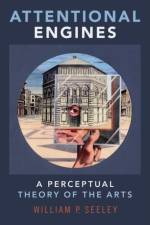
Attentional Engines explores the potential of the growing field of cognitive sciences and aesthetics. Along the way it introduces readers to the philosophy of art and evaluates what psychology and neuroscience can and cannot tell us about the nature and value of artworks. Seeley utilizes a case study approach to explain how research in perceptual psychology and the neuroscience of attention can contribute to our everyday understanding of art.
Abonner på vårt nyhetsbrev og få rabatter og inspirasjon til din neste leseopplevelse.
Ved å abonnere godtar du vår personvernerklæring.