













Gjør som tusenvis av andre bokelskere
Abonner på vårt nyhetsbrev og få rabatter og inspirasjon til din neste leseopplevelse.
Ved å abonnere godtar du vår personvernerklæring.Du kan når som helst melde deg av våre nyhetsbrev.

Probability, Statistics, and Random Signals offers a comprehensive treatment of probability, giving equal treatment to discrete and continuous probability. The topic of statistics is presented as the application of probability to data analysis, not as a cookbook of statistical recipes. This student-friendly text features accessible descriptions and highly engaging exercises on topics like gambling, the birthday paradox, and financialdecision-making.
Drawing on of household-level data from the China Household Income Project, Changing Trends in China's Inequality provides an independent, comprehensive, and empirically grounded study of the evolution of incomes and inequality in China over time.
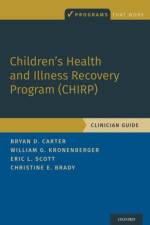
The Children's Health and Illness Recovery Program (CHIRP) - Clinician Guide is a structured treatment program, based on research and clinical experience, designed to help adolescents with chronic illness, and their families, improve the teen's functioning and quality of life.
In The Value of Science in Space Exploration, James S.J. Schwartz provides a thoughtful and rigorous defense of the view that space exploration activities should focus primarily on science, and that the knowledge and understanding we will gain from expanded space science activities will benefit humanity more over the next century than any attempts to settle Mars or mine asteroids.
What is a religion? That is the question that Richard Kent Evans attempts to answer in this book. He does so through the story of MOVE, a little-known group with a fascinating story. MOVE emerged in Philadelphia in the early 1970s. It was a small, mostly African American group devoted to the teachings of John Africa. In 1985, the Philadelphia Police Department ΓÇö working in concert with federal and state law enforcement ΓÇö attacked a home that "MOVE people" as they preferred to be known, shared in West Philadelphia. Hundreds of police officers and firefighters laid siege to the building using tear gas, ten thousand rounds of ammunition, and improvised explosives. Mostinfamously, a police officer riding in a helicopter dropped a bomb containing C-4 explosives, which he had acquired from the FBI, onto the roof of the MOVE house. The bomb started a fire, which officials allowed to spread in hopes of chasing the MOVE people out of the house. Police officers fired uponthose who tried to escape the flames. Eleven MOVE people died in the attack, including John Africa. Five of those who died were children.In this book, Richard Kent Evans tells the story of MOVE ΓÇö a story that has been virtually lost outside of Philadelphia. What was MOVE? Many MOVE members thought of themselves as belonging to a religion, and they sought legal recognition. But to others, including other religious groups like the Quakers and, more importantly, the courts, MOVE was anything but a religion. Evans dives deep into how we decide what constitutes a genuine religious tradition, and the enormous consequences of thatdecision.
Why does social exclusion persist, and what can one do to stop it? This book proposes a theory of how individual behavior contributes to social exclusion, a novel method for measuring that behavior, and solutions to ending it. Based on original fieldwork among Central and Eastern European Roma, the largest ethnic minority in Europe (yet still very understudied), and non-Roma, Ana Bracic develops a theory she calls the exclusion cycle, through which anti-minorityculture gives rise to discrimination by members of the majority, and minority members develop survival strategies. Members of the majority resent these strategies, assuming that they are endemic to the minority group rather than an outcome of their own discriminatory behavior.
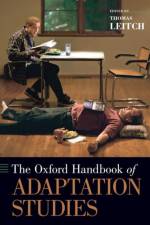
The Oxford Handbook of Adaptation Studies provides a comprehensive and forward-looking treatment of adaptation in its many guises by looking at movies based on sources other than novels, including television series and radio adaptations, comic book adaptations of literary texts, novelizations, opera librettos, popular songs, and even video games.
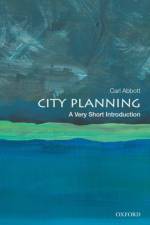
City planning is a practice and a profession. It is also a set of goals andΓÇösometimes utopianΓÇöaspirations. Formal thought about the shaping of cities as physical spaces and social environments calls on the same range of disciplines and approaches that we use for understanding cities themselves, from art and literature through the social and natural sciences. Surrounding the core profession of city planning, also known as urban or town planning, are related fieldsof architecture, landscape design, engineering, geography, political science and policy, sociology, and social work. In addition, the legions of community and environmental activists influence debates and controversies within the field. This Very Short Introduction is organized around eight key aspects of city planning: street layout; congestion and decentralization; the response to suburbanization; the conservation and regeneration of older districts; cities as natural systems; cities and regions; social class and ethnicity; and disasters and resilience. The underlying assumption throughout is that decisions that we make today about cities and metropolitan regions are best understood as the continuation of past efforts tosolve fundamental problems that have shifted and evolved over multiple generations. At its best, city planning utilizes technical tools to achieve goals set by community action and political debate. Carl Abbott''s addition to Oxford''s long-running Very Short Introduction series is a brief butconcentrated look at past decisions about the management of urban growth and their effects on the creation of the twenty-first century city.
Beethoven's music expresses far more than just the iconic scowl we so often imagine when listening to his works. In this fresh perspective, Mark Evan Bonds proposes a new way of hearing Beethoven's music as a series of variations on the composer's entire self, not just his scowling self.
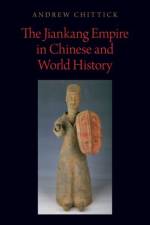
This book offers a sweeping re-assessment of a critical period of Chinese history, showing how the Jiankang Empire, in what is now south China, once resisted the imperialist pressure of the north and developed its own distinctive pattern of ethnic identification and political culture. The book includes close studies of foodways, language, military history, economic history, vernacular culture and the political use of Buddhism. The result is a surprising, innovativeinterpretation of Chinese history that emphasizes the south's close relationship to Southeast Asia and the ways it was comparable to other medieval societies.
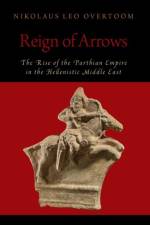
From minor nomadic tribe to major world empire, the story of the Parthians' success in the ancient world is nothing short of remarkable. Reign of Arrows provides the first comprehensive study dedicated entirely to early Parthian history and the first comprehensive effort to evaluate early Parthian political history since 1938.
Atlantic Wars is the first work to comprehensively explore how warfare shaped human experience around the Atlantic from the late Middle Ages until the nineteenth century. It examines how armed conflict affected how and where people lived, who they associated with, how they perceived each other, how they structured their societies, and whether they survived.
Nashville Cats: Record Production in Music City, 1945-1975 explores the roles that recording engineers, session musicians, and record producers played in shaping the sounds of country music during the fertile "Nashville Sound" era.
Building on the renaissance in Mendelssohn scholarship of the last two decades, Rethinking Mendelssohn critically engages with the composer's music and aesthetics, as well as the interpretation of his works in relation to contemporaneous culture.
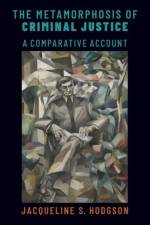
In The Metamorphosis of Criminal Justice, Jacqueline S. Hodgson focuses on the potentially radical and fundamental changes taking place within criminal justice in Britain and in France and the ways that these are driven by wider domestic, European or international concerns. This metamorphosis away from established values and practices is eroding what were once regarded as core rights and freedoms in the name of efficiency, security, and justice to victims.Beginning with a comparative analysis of adversarial and inquisitorial procedural values and traditions, and an examination of broad trends in domestic and European criminal justice, Hodgson then discusses how the roles of prosecution and defense have been re-shaped in different ways in bothjurisdictionsΓÇöboth in the text of the law and in their practices. The final section considers how systems within different procedural traditions adapt to address, or provide a remedy for, systemic flaws that produce wrongful convictions and in particular, the role of the defense in these procedures. By adopting an empirical and comparative approach, this book explores the nature and reach of these trends and the ways that they challenge and disrupt criminal processes and values.
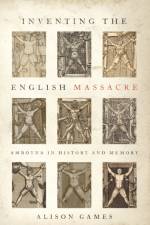
My Lai, Wounded Knee, Sandy Hook: the place names evoke grief and horror, each the site of a massacre. Massacres-the mass slaughter of people-might seem as old as time, but the word itself is not. It worked its way into the English language in the late sixteenth century, and ultimately came to signify a specific type of death, one characterized by cruelty, intimacy, and treachery. How that happened is the story of yet another place, Amboyna, an island in theIndonesian archipelago where English and Dutch merchants fought over the spice trade. There a conspiracy trial featuring English, Japanese, and Indo-Portuguese plotters took place in 1623 and led to the beheading of more than a dozen men in a public execution. Inventing the English Massacre shows how the English East India Company transformed that conspiracy into a massacre through printed works, both books and images, which ensured the story''s tenacity over four centuries. By the eighteenth century, the story emerged as a familiar and shared cultural touchstone and a term that needed no further explanation. By the nineteenth century, the Amboyna Massacre became the linchpin of the British empire, an event that historians argued well intothe twentieth century had changed the course of history and explained why the British had a stronghold in India. The broad familiarity with the incident and the Amboyna Massacre''s position as an early and formative violent event turned the episode into the first English massacre. Drawing on archival documents in Dutch, French, and English, Alison Games masterfully recovers the history, ramifications, and afterlives of this event, which shaped the meaning of subsequent acts of violence and made intimacy, treachery, and cruelty indelibly connected with massacres.
A philosopher and a lawyer-economist examine the challenges of the last third of life. They write about friendship, sex, retirement communities, inheritance, poverty, and the depiction of aging women in films. These essays, or conversations, will help readers of all ages think about how to age well, or at least thoughtfully, and how to interact with older family members and friends.
Biochemistry: The Molecular Basis of Life is an intermediate, one-semester text written for students on degree pathways in Chemistry, Biology, and other Health and Life Sciences. Designed for students who need a solid introduction to biochemistry, but are not specializing in the subject, the text focuses on essential biochemical principles that underpin the modern life sciences, and offers the most balanced coverage of chemistry and biology of any text onthe market. The text equips students with a complete view of the living state, emphasizes problem solving, and applies biochemical principles to the fields of Health, Agriculture, Engineering, and Forensics, to show students the relevance of their learning. McKee and McKee is respected for its balance ofbiology and chemistry, consistently placing biochemical principles into the context of the physiology of the cell and biomedical applications.
In the Path of Conquest offers a fresh insight into the conquests of Alexander the Great by attempting to view the events of 336-323 BCE from the vantage point of the defeated.
Thoroughly updated, streamlined, and enhanced with pedagogical features, the twelfth edition of Barresi and Gilbert's Developmental Biology engages students and empowers instructors to effectively teach both the stable principles and the newest front-page research of this vast, complex, and multi-disciplinary field. This much loved, well-illustrated, and remarkably well written textbook invigorates the classical insights of embryology with cutting edgematerial, and makes the most complex topics understandable to a new generation of students. Designed with the undergraduate student in mind, this new, streamlined edition now contains studies of plant development, expanded coverage of regeneration, over a hundred new and revised illustrations, and deeplyintegrated active learning resources that build on the text's enthusiasm and accuracy. This is a text designed to make students become excited about how animals and plants develop their complex bodies from simple origins.
This new addition to The Brainstorm Series presents the perspectives of health care professionals on psychogenic non-epileptic seizures (PNES), one of the three common causes of loss of consciousness. Complementing a previously published collection of the stories of individuals experiencing PNES, this collection of writings of over 90 different healthcare professionals from around the world provides unique insights into not only the successes but also thedifficulties and failures clinicians have experienced when faced with this clinical problem. Apart from challenging the thinking of a professional readership about PNES, this book may also help those experiencing the disorder better to understand and tackle it.
At the 2018 Sharing Knowledge to Build a Culture of Health conference, Robert Wood Johnson Foundation staff and leaders from diverse sectors explored what a Culture of Health looks like in practice. We engaged in robust discourse around programs, policies, and data related to improving health, well-being, and equity. In this book, we bottle and highlight that discourse.
50 Studies Every Ophthalmologist Should Know presents key studies that have shaped the practice of ophthalmology. Selected using a rigorous methodology, emphasis has been placed on landmark studies which have influenced current ophthalmology practice guidelines. This book is a must-read for ophthalmologists, especially those in training or preparing for board review, as well as anyone who wants to learn more about the data behind clinicalpractice.
Brian Holden Reid offers a definitive biography of William Tecumseh Sherman, among the most important Union generals in the Civil War, best remembered for his March to the Sea campaign.
A small but growing group of today''s knowledge workers actively seek a lifestyle of freedom, using technology to perform their jobs, traveling far and wide, and moving as often as they like. These digital nomads have left their local coffee shops behind and now proudly post their "office of the day" photos from exotic locales, but what do their lives really look like? In Digital Nomads, Rachael Woldoff and Robert Litchfield take readers into an expatriate digital nomad community in Bali, Indonesia to better understand this growing demographic of typically Millennial workers. Through dozens of interviews and several stints living in a digital nomad hub, Woldoff and Litchfield present new answers to classic questions about community, creativity, and work. They further show why digital nomads leave their conventional lives behind, arguing that creativeclass and Millennial workers, though successful, often feel that their "world class cities" and desirable jobs are anything but paradise. They first follow their transitions into freelancing, entrepreneurship, and remote work, then explain how digital nomads create a fluid but intimate community abroad inthe company of like-minded others. Ultimately, Woldoff and Litchfield provide insight into digital nomads'' efforts to live and work in ways that balance freedom, community, and creative fulfillment in the digital age. A sympathetic yet critical take on this emerging group of workers, Digital Nomads provides a revealing take on the changing nature of work and the problems of the new economy.
The Rwandan genocide, the Holocaust, the lynching of African Americans, the colonial slave trade: these are horrific episodes of mass violence spawned from racism and hatred. We like to think that we could never see such evils againΓÇöthat we would stand up and fight. But something deep in the human psycheΓÇödeeper than prejudice itselfΓÇöleads people to persecute the other: dehumanization, or the human propensity to think of others as less than human. An award-winning author and philosopher, Smith takes an unflinching look at the mechanisms of the mind that encourage us to see someone as less than human. There is something peculiar and horrifying in human psychology that makes us vulnerable to thinking of whole groups of people as subhuman creatures. When governments or other groups stand to gain by exploiting this innate propensity, and know just how to manipulate words and images to trigger it, there is no limit to the violence and hatredthat can result. Drawing on numerous historical and contemporary cases and recent psychological research, On Inhumanity is the first accessible guide to the phenomenon of dehumanization. Smith walks readers through the psychology of dehumanization, revealing its underlying role in both notorious and lesser-known episodes of violence from history and current events. In particular, he considers the uncomfortable kinship between racism and dehumanization, where beliefs involving race are so oftenprecursors to dehumanization and the horrors that flow from it. On Inhumanity is bracing and vital reading in a world lurching towards authoritarian political regimes, resurgent white nationalism, refugee crises that breed nativist hostility, and fast-spreading racist rhetoric. The book will open your eyes to the pervasive dangers of dehumanization and the prejudices that can too easily take root within us, and resist them before they spread into the wider world.
Every military must prepare for future wars despite not really knowing the shape such wars will ultimately take. As former U.S. Secretary of Defense Robert Gates once noted: "We have a perfect record in predicting the next war. We have never once gotten it right." In the face of such great uncertainty, militaries must be able to adapt rapidly in order to win. Adaptation under Fire identifies the characteristics that make militaries more adaptable,illustrated through historical examples and the recent wars in Iraq and Afghanistan.Authors David Barno and Nora Bensahel argue that militaries facing unknown future conflicts must nevertheless make choices about the type of doctrine that their units will use, the weapons and equipment they will purchase, and the kind of leaders they will select and develop to guide the force to victory. Yet after a war begins, many of these choices will prove flawed in the unpredictable crucible of the battlefield. For a U.S. military facing diverse global threats, its ability to adaptquickly and effectively to those unforeseen circumstances may spell the difference between victory and defeat. Barno and Bensahel start by providing a framework for understanding adaptation and include historical cases of success and failure. Next, they examine U.S. military adaptation during the nation''s recent wars, and explain why certain forms of adaptation have proven problematic. In the final section, Barno and Bensahel conclude that the U.S. military must become much more adaptable in order to address the fast-changing security challenges of the future, and they offer recommendations on how to doso before it is too late.
Do Americans care what foreigners think about the United States? This book makes the case that they should. In these pages, Jorge Casta├▒eda writes from his unique vantage point as a former Foreign Minister of Mexico who has lived, studied, and worked in America. He offers an impressionistic, analytical, and intuitive review of his experience in the country over the last half-century, and shows how foreigners can provide perspective on the United States'' truenature. Casta├▒eda brings a different viewpoint to issues ranging from purported American exceptionalism, uniformity, race and religion, culture, immigration, and the death penalty.Visitors and analysts, from Dickens to Naipaul, have generally asked the right questions and described America''s most salient features and mysteries. But, they have not always followed through with answers and explanations. Casta├▒eda draws from his work with American civil society and government authorities to provide both insight and context. Americans have long seen their country as "exceptional," standing outside of history, but by comparing its contemporary politics and culture withthose of other countries, Casta├▒eda shows how increasing nationalism and nostalgia are actually making the US more like other countries.Casta├▒eda admits that most Americans have never cared much about what a foreigner thinks about their country, but the dynamic is shifting. The outside world means more to the US than ever before, and Americans should care about what foreigners think since they are now so sensitive to what foreigners do. Since Trump''s election in 2016, American politics increasingly resemble those of Europe, Latin America, and parts of Asia, such that pining for a lost and glorious past is as American as itis British, Mexican, Chinese, or Italian. Now, the questions that serious, knowledgeable, and sympathetic foreigners address to Americans may be the ones Americans askΓÇöor should askΓÇöfor themselves.
The most important influence shaping the religious and spiritual lives of children, youth, and teenagers is their parents. A myriad of studies show that the parents of American youth play the leading role in shaping the character of their religious and spiritual lives, even well after they leave home and often for the rest of their lives. We know a lot about the importance of parents in faith transmission. However we know much less about the actual beliefs, feelings,and activities of the parents themselves, what Christian Smith and Amy Adamczyk call the "intergenerational transmission of religious faith and practice." To address that gap, this book reports the findings of a new national study of religious parents in the United States. The findings andconclusions in Handing Down the Faith are based on 215 in-depth, personal interviews with religious parents from many traditions and different parts of the country, and sophisticated analyses of two nationally representative surveys of American parents about their religious parenting. Handing Down the Faith explores the background beliefs informing how and why religious parents seek to pass on religion to their children; examines how parenting styles interact with parent religiousness to shape effective religious transmission; shows how parents have been influenced by their experiences as children influenced by their own parents; reveals how religious parents view their congregations and what they most seek out in a local church, synagogue, temple, or mosque; explores theexperiences and outlooks of immigrant parents including Latino Catholics, East Asian Buddhists, South Asian Muslims, and Indian Hindus. Smith and Adamczyk step back to consider how American religion has transformed over the last 100 years and to explain why parents today shoulder such a hugeresponsibility in transmitting religious faith and practice to their children. The book is rich in empirical evidence and unique in many of the topics it explores and explains, providing a variety of sometimes counterintuitive findings that will interest scholars of religion, social scientists interested in the family, parenting, and socialization; clergy and religious educators and leaders; and religious parents themselves.
Most of us desire to be moral people, but too often we struggle to translate philosophical concepts about morality and ethics to everyday life. One way we can bridge this gap is by approaching ethics as skills that we can develop rather than a set of ideas we must grasp. Taking this practical approach, and writing especially for medicine, law, and business students trying to understand ethics in the real world Larry R. Churchill examines morality in the context of human experience. His book builds readers'' understanding of ethics from the raw materials of moral life: the curiosity we feel when confronted with moral differences, the perplexities of practical life, and the satisfactions of moral growth. The book orients ethics around the skills that are needed for sound ethical reflection and deliberation, acknowledging that ethical issues change as we change, and their concerns extend over a lifespan. To Churchill, learning and honing these personal and relational skills is the fundamental work of ethics and the foundation for judicious use of more theoretical approaches. A succinct and compassionate guide to ethical living, this book draws from literature, as well as philosophical and religious writings. It encompasses both popular and underemphasized concepts, and demonstrates their centrality to ethics. Exercises and case studies reinforce the practical skills it teaches. Ethics for Everyone shows the wide range of skills and human capacities that make the field of ethics true to human experience. It is a book to be read and then re-read at life''smajor junctures.
Abonner på vårt nyhetsbrev og få rabatter og inspirasjon til din neste leseopplevelse.
Ved å abonnere godtar du vår personvernerklæring.