











Gjør som tusenvis av andre bokelskere
Abonner på vårt nyhetsbrev og få rabatter og inspirasjon til din neste leseopplevelse.
Ved å abonnere godtar du vår personvernerklæring.Du kan når som helst melde deg av våre nyhetsbrev.

Unger argues that our intuitions about ethical cases are generated not by basic moral values, but by certain distracting moral mechanisms that encourage deceptive reactions. He proposes a complex and novel metaethics arguing that we easily generate a lenient or tough context in which to make ethical assessments.
Exploring acts drawn up by the First American Continental Congress in 1774, this sociocultural history examines such activities as gambling and theatre to illuminate the popular attitudes and American government policies that contributed to the move towards American Independence.
Power and Purity explores the place of cathar heresy in the life of a medieval Italian town. Based on archival research, it details the social makeup of the cathar community and argues that cathar beliefs about the body addressed questions about sexual difference and the structure of authority that were central to medieval Italian life.
A "common woman" in medieval England was a prostitute, distinguished as such less for taking money for sex than for belonging to all men in common. Karras's book tells the story of these women, their experiences, relations, and treatment under the law, and concludes that prostitution was central to the medieval understanding of feminity.
Harold Seymour offers the first book devoted entirely to the history of baseball outside of the professional leagues, revealing how the sport truly became the great American pastime. The People's Game, winner of the Macmillan-SABR Baseball Research Award, brings to life the central role of baseball for generations of Americans.
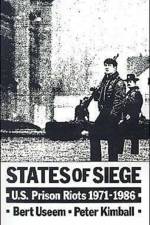
The authors show how riots have evolved in the past twenty years in relation to America's changing penal system and society. They draw on in depth interviews with rioters, transcripts of post-riot investigations and results of a questionnaire about inmate disturbances in prisons in the USA.
Reforming Sex constructs and analyses a remarkable mass movement of doctors and lay people that demanded women's right to abortion and public access to birth control and sex education. Their story sheds light on current controversies about abortion, the role of doctors and the state in controlling women's bodies, and the possibilities for reforming and transforming relations between women and men.
The handbook is a partial survey of multiple areas of food ethics: conventional agriculture and alternatives to it; animals; consumption ethics; food justice; food workers; food politics and policy; gender, body image, and healthy eating; and, food, culture and identity.
The Oxford Handbook of the Physiology of Interpersonal Communication offers a comprehensive review of the research investigating both the physiological outcomes of interpersonal communication and the effects of physiology on interpersonal interactions.
The revival of authoritarianism is one of the most important forces reshaping world politics today. However, not all authoritarians are the same. To examine both resurgence and variation in authoritarian rule, Karrie J. Koesel, Valerie J. Bunce, and Jessica Chen Weiss gather a leading cast of scholars to compare the most powerful autocracies in global politics today: Russia and China. The essays in Citizens and the State in Authoritarian Regimes focus onthree issues that currently animate debates about these two countries and, more generally, authoritarian political systems. First, how do authoritarian regimes differ from one another, and how do these differences affect regime-society relations? Second, what do citizens think about the authoritarian governmentsthat rule them, and what do they want from their governments? Third, what strategies do authoritarian leaders use to keep citizens and public officials in line and how successful are those strategies in sustaining both the regime and the leader''s hold on power? Integrating the most important findings from a now-immense body of research into a coherent comparative analysis of Russia and China, this book will be essential for anyone studying the foundations of contemporaryauthoritarianism.
The revival of authoritarianism is one of the most important forces reshaping world politics today. However, not all authoritarians are the same. To examine both resurgence and variation in authoritarian rule, Karrie J. Koesel, Valerie J. Bunce, and Jessica Chen Weiss gather a leading cast of scholars to compare the most powerful autocracies in global politics today: Russia and China. The essays in Citizens and the State in Authoritarian Regimes focus onthree issues that currently animate debates about these two countries and, more generally, authoritarian political systems. First, how do authoritarian regimes differ from one another, and how do these differences affect regime-society relations? Second, what do citizens think about the authoritarian governmentsthat rule them, and what do they want from their governments? Third, what strategies do authoritarian leaders use to keep citizens and public officials in line and how successful are those strategies in sustaining both the regime and the leader''s hold on power? Integrating the most important findings from a now-immense body of research into a coherent comparative analysis of Russia and China, this book will be essential for anyone studying the foundations of contemporaryauthoritarianism.
For the Parmenidean monist, there are no distinctions whatsoever-indeed, distinctions are unintelligible. In The Parmenidean Ascent, Michael Della Rocca aims to revive this controversial approach on rationalist grounds. He not only defends the attribution of such an extreme monism to the pre-Socratic philosopher Parmenides, but also embraces this extreme monism in its own right and expands these monistic results to many of the most crucial areas ofphilosophy, including being, action, knowledge, meaning, truth, and metaphysical explanation. On Della Rocca''s account, there is no differentiated being, no differentiated action, knowledge, or meaning; rather all is being, just as all is action, all is knowledge, all is meaning. Motivating this argument is a detailed survey of the failure of leading positions (both historical and contemporary) to meet a demand for the explanation of a given phenomenon, together with a powerful, original version of a Bradleyan argument against the reality of relations. The result is a rationalist rejection of all distinctions and a skeptical denial of the intelligibility of ordinary, relational notions of being, action, knowledge, and meaning. Della Rocca then turns this analysis on the practice of philosophy itself. Followed to its conclusion, Parmenidean monism rejects any distinction between philosophy and the study of its history. Such a conclusion challenges methods popular in the practice of philosophy today, including especially the method of relying on intuitions and common sense as the basis of philosophical inquiry. The historically-minded and rationalist approach used throughout the book aims to demonstrate the ultimatebankruptcy of the prevailing methodology. It promises-on rationalist grounds-to inspire much soul-searching on the part of philosophers and to challenge the content and the methods of so much philosophy both now and in the past.
Philosophical theories often hinge on claims about what is necessary or possible. But what are possibilities and necessities, and how could we come to know about them? This book aims to help demystify the methodology of philosophy, by treating such claims not as attempted descriptions of strange facts or distant 'possible worlds', but rather as ways of expressing rules or norms.
Pliny the Younger (c. 60-112 C.E) - senator and consul in the Rome of Domitian and Trajan, eyewitness to the eruption of Vesuvius in 79 C.E., early "persecutor" of Christians on the Black Sea - remains the best documented Roman individual, other than emperors, between Cicero and Augustine.
The Art of Emergency charts the maneuvers of art through conflict zones across the African continent. Through ten cases, it advances diverse models for artistic and humanitarian alliances and urges deliberation on the role of aesthetics in crisis through intellectual engagement, artistic innovation, and administrative policy.
The Art of Emergency charts the maneuvers of art through conflict zones across the African continent. Through ten cases, it advances diverse models for artistic and humanitarian alliances and urges deliberation on the role of aesthetics in crisis through intellectual engagement, artistic innovation, and administrative policy.
In American Military History: A Very Short Introduction, Joseph T. Glatthaar explores the relationship between America and its military from its origins in the thirteen colonies to today's ongoing conflicts in the Middle East.
Working with Young People offers a new outlook on social, cultural, and educational work with young people. It utlizes the perspective of social pedagogyΓÇöa theoretical and practical perspective that has been developing in continental Europe over the last 150 yearsΓÇöin placing young people at the center of socio-educational work and giving value to their decisions and actions. The text supports youths'' process of personal construction within the framework ofthe community in which they live.The book is organized into three large blocks of chapters. The introduction aims to prepare readers for the social pedagogy approach to work with young people. It briefly outlines its current situation in the world and, relate it to the main professions in which it is embodied in different socio-cultural contexts: social pedagogy, social education, and social work. The first block presents the framework and socio-pedagogical, theoretical, and practical parameters in which work with young peopletakes place in Europe and Latin America. The second block of chapters deals with youth policies and the training and professionalization of educators and those who work with young people. The last block focuses on some socio-educational practices with young people that include youth justice, socialinclusion process, youth participation in digital life or transition to adult life. The book is based on a wide perspective of young people from cultural diversity.
Writing Measurable Outcomes in Psychotherapy is an accessible and critical text for mental health counselors, clinical social workers, psychiatric nurses and others in behavioral health who write measureable objectives in treatment planning. Undergraduate and graduate students as well as those working in the field will find this an essential companion for writing meaningful and measurable goals and objectives for treatment plan outcomes.The key component in this text is the presentation of the CDRS (Cognitive Domain Rating Scale), an efficient and logical model that is presented as key to writing measurable objectives. The CDRS, based on Bloom''s Taxonomy of Six Cognitive Domains, is rooted in cognitive psychology. It is a method to "situate client''s thinking about their problem" and quickly identifies action(s) for creating measurable outcomes. This text is keen for neophyte and veteran therapists with illustrations of caseexamples and treatment plans and includes a discussion of Evidence Based Practices. It is a succinct text that integrates three key elements significant for successful psychotherapy: the therapeutic alliance, a person-centered approach and feedback by using outcome rating scales. . Case examples,dialogue and treatment plans are included and is aimed at future counselors, social workers, and psychologists as well as those already practicing in the field.
The Oxford Handbook of Qualitative Research, Second Edition presents a comprehensive, interdisciplinary overview of the field of qualitative research. Divided into eight parts, the forty chapters address key topics in the field such as approaches to qualitative research (philosophical perspectives), narrative inquiry, field research, and interview methods, text, arts-based, and internet methods, analysis and interpretation of findings, and representation andevaluation. The handbook is intended for students of all levels, faculty, and researchers across the disciplines, and the contributors represent some of the most influential and innovative researchers as well as emerging scholars. This handbook provides a broad introduction to the field of qualitative research to those with little to no background in the subject, while providing substantive contributions to the field that will be of interest to even the most experienced researchers. It serves as a user-friendly teaching tool suitable for a range of undergraduate or graduate courses, as well as individuals working on their thesis or other research projects. With a focus on methodological instruction, the incorporation ofreal-world examples and practical applications, and ample coverage of writing and representation, this volume offers everything readers need to undertake their own qualitative studies.
The Science of Diversity uses a multidisciplinary approach to excavate the theories, principles, and paradigms that illuminate our understanding of the issues surrounding human diversity, social equality, and justice. The book brings these to the surface holistically, examining diversity at the individual, interpersonal, and international levels. Shedding light on why diversity programs fail, the book provides tools to understand how biases develop andinfluence our relationships and interactions with others.
Exploring the Complexities of Human Action offers a bold theoretical framework for thinking systematically and integratively about what people do as they go about their lives. The book sets the stage for conceptualizing human action by first constructively questioning some conventional practices and assumptions in psychology, such as fragmenting, aggregating, and objectifying. It then articulates an alternative systems conceptualization of action thatemphasizes multiple and interrelated processes, and characterizes human action in terms of the complexities of holism, dynamics, variability, and multi-causality.
Artistic Creation and Ethical Criticism investigates an idea that underpins the ethical criticism of art but is rarely acknowledged and poorly understood - namely, that the ethical criticism of art involves judgments not only of the attitudes a work endorses or solicits, but of what artists do to create the work. The book pioneers an innovative production-oriented approach to the study of the ethical criticism of art, one that will provide a refinedphilosophical account of this important topic as well as conceptual tools that can guide future philosophizing and criticism.
The French author Michel de Montaigne is widely regarded as the founder and greatest practitioner of the personal essay. His extraordinary curiosity and discernment, combined with his ability to mix thoughtful judgment with revealing anecdote, make him one of the most readable of all writers. In 1580 and then again in 1588 he published his Essays, a vast collection of meditations on topics ranging from love and sexuality to freedom, learning, doubt,self-scrutiny, and peace of mind. One of the most original books ever to emerge from Europe, Montaigne's masterpiece has been enormously influential among writers and philosophers from its first appearance down to the present day. In Montaigne: A Very Short Introduction, William M. Hamlin introduces readers to thelife, thought, and published work of this unforgettable figure from Renaissance Europe.
In 1740, Benjamin Franklin published the first American edition of Gospel Sonnets, by the eminent Scottish Presbyterian minister Ralph Erskine. The work, already in its fifth British edition, quickly became an American bestseller and remained so throughout the eighteenth century. Franklin was aware of what most scholars of American religion and literature have forgotten -that poetry played a central role in the "surprising works of God" that birthedevangelicalism. The far-reaching social transformations precipitated by the transatlantic evangelical revivals of the eighteenth century depended upon the development of a major literary form, that of revival poetry. Literary scholars and historians of religion have prioritized sermons, conversion narratives, periodicals, and hymnody. Wendy Roberts here argues that poetry offered a unique capacity to "diffuse celestial Fervor through the World," in the words of the cleric Samuel Davies. AwakeningVerse is the first monograph to address this large corpus of evangelical poetry in the American colonies, shedding light on important dimensions of eighteenth-century religious and literary culture. Roberts deftly assembles a large, previously unknown archive of immensely popular poems, examines how literaryhistory has rendered this poetic tradition invisible, and demonstrates how a vibrant popular poetics exercised a substantial effect on the landscape of early American religion, literature, and culture.
This book provides the original Latin texts with new explanatory annotated translations of two philosophical works by Anton Wilhelm Amo (c.1703-after 1752), the first African philosopher in early modern Europe. It also includes an extensive introduction intended to help readers contextualize and engage with his philosophical ideas and their historical and intellectual background and significance.
This is the second of two collections of correspondence written by English women philosophers. This volume covers the eighteenth century and focuses on the letters of Mary Astell, Elizabeth Thomas, and Catharine Trotter Cockburn. Editor Jacqueline Broad's annotations and introductions provide historical context and technical explanation for the modern reader. She situates the philosophers' contributions as significant in early modern thought and demonstratesphilosophy's development in this time period as shaped by the participation of women thinkers.
Mining new research in neuroscience; social, cognitive, and developmental psychology; decision theory; and philosophy, the essays in this volume offer a multi-dimensional, robust examination of self-control. The cutting-edge chapters tackle a wide range of issues, for example: what enables us to resist temptation; the cultural and developmental origins of beliefs about self-control; how attempts at self-control are hindered or helped by emotions; the connectionsbetween self-control and moral beliefs; and how the juvenile justice system should be reformed given what we know about juvenile brains.
This is the second of two collections of correspondence written by early modern English women philosophers. In this volume, Jacqueline Broad presents letters from three influential thinkers of the eighteenth century: Mary Astell, Elizabeth Thomas, and Catharine Trotter Cockburn. Broad provides introductory essays for each figure and explanatory annotations to clarify unfamiliar language, content, and historical context for the modern reader. Her selections makeavailable many letters that have never been published before or that live scattered in various archives, obscure manuscripts, and rare books. The discussions range in subject from moral theology and ethics to epistemology and metaphysics; they involve some well-known thinkers of the period, such as JohnNorris, George Hickes, Mary Chudleigh, John Locke, and Edmund Law. By centering epistolary correspondence, Broad''s anthology works to reframe early modern philosophy, the foundation for so much of twentieth-century philosophy, as consisting of collaborative debates that women actively participated in and shaped. Together with its companion volume, Women Philosophers of Eighteenth-Century England: Selected Correspondence is an invaluable primary resource for students, scholars, andthose undertaking further research in the history of women''s contributions to the formation and development of early modern thought.
Abonner på vårt nyhetsbrev og få rabatter og inspirasjon til din neste leseopplevelse.
Ved å abonnere godtar du vår personvernerklæring.