





















Gjør som tusenvis av andre bokelskere
Abonner på vårt nyhetsbrev og få rabatter og inspirasjon til din neste leseopplevelse.
Ved å abonnere godtar du vår personvernerklæring.Du kan når som helst melde deg av våre nyhetsbrev.

The essays in this volume challenge prevailing views on the way in which apocalyptic concerns contributed to larger processes of social change at the first millennium. They should provoke new interest in and debate on the nature and causes of social change in early medieval Europe.
This work brings together diverse fields of study, offering a practical as well as multifaceted theoretical approach to how children cope with death. Using children's own experiences supported by data from a research study, the author explains the wide range of effects of loss upon children.
The Hastings Center's 1987 Guidelines shaped the ethical and legal framework for treatment decision-making and end-of-life care in the U.S. This updated edition offers comprehensive practical guidance to professionals caring for seriously ill adults and children. It is a resource for clinical ethicists, ethics committees, lawyers, administrators, educators, and policymakers.
This title is a treatment of the politics and the impact of the "get tough" criminal sentencing legislation in the US. It includes a major empirical study of the celebrated California "three strikes" law, the law that imposed a 25-years to life imprisonment the moment of a third felony conviction.
James Polk was US president from 1845-49, when slavery began to dominate its politics. He also owned a substantial plantation in Mississippi and 54 slaves. This book reconstructs the world of his estate and lives of his slaves, analysing how this affected his stance on slavery issues.
Overt subjects are usually considered as a property of finite clauses. However, most Romance languages permit specified subjects in a broad range of infinitive constructions. Guido Mensching analyses this phenomenon in stages of French, Italian, Spanish, Portuguese and other Romance varieties.
This study focuses on the rich variety of types of Tibetan Buddhist discourse. It brings to bear the methodological insights of contemporary human sciences and, at the same time, offers to non-specialist readers an impression of the broad domain of Tibetan religious and philosophical thought.
Kant's Impure Ethics is the first book-length study in any language to examine in detail and assess critically the severely neglected "second part" of Kant's ethics, a part that he called "applied moral philosophy, moral anthropology, to which the empirical principles belong ... ethics applied to the human being".
Covers a range of end-of-life topics, including suicide prevention, AIDS, suicide bombing, serpent-handling and other religious practices. This book states that they pose a risk of death, genetic prognostication, global justice and the "duty to die", physician-assisted suicide, and euthanasia, places these in American and international contexts.
Lelwica puts forward a hypothesis about eating disorders that has both theoretical and clinical implications, identifying them as specifically religious problems symbolizing a yearning for spiritual fulfilment that can be addressed with religious resources.
Examining the arguments for and against moral relativism, Cook argues that anthropologists have failed to support relativism with evidence of cultural differences, and that moral absolutists have been unsuccessful in their attempts to refute it. He proposes a more complex account of morality.
This title explores the connections between art and life in the works of three giants of musical romanticism. He considers topics including Schubert and Schumann's ability to evoke memory in music, the supposed cryptographic practices of Schumann and Brahms, and the allure of the Hungarian Gypsy style for Brahms and others in the Schumann circle.
This work offers a philosophical interpretation and critical analysis of the African cultural experience in modern times. Gyekye attempts to show the usefulness of Western philosophical concepts in addressing a range of specifically African problems.
Evans offers a colorful history of the expedition of Major Stephen H. Long--the first scientific exploration of the Louisiana Territory to be accompanied by trained naturalists and artists. This exciting chronicle includes beautiful illustrations by artists Titian Peale and Samuel Seymour, along with firsthand accounts from naturalists Edwin James and Thomas Say. 45 halftones.
This text offers a comprehensive study of Eisenhower's "New Look" programme of national security - the groundwork for the next three decades of America's Cold War strategy. Though "containment" originated under Truman, Eisenhower developed the first strategy for the issues of the nuclear age.
Nasr argues that the current ecological crisis has been exacerbated by the reductionist view of nature that has been advanced by modern secular science. What is needed, he believes, if the recovery of the truth to which the great enduring religions all attest: that nature is sacred.
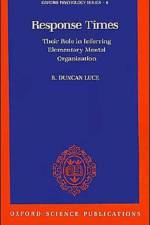
This is a study of how response times influence thinking about the mind. Professor Luce provides a review of the experimental data, and puts forward the idea of the hazard function. This function exaggerates the differences that normal analysis methods often obscure.
The third volume in Kevin Starr's history of California, which traces the development of the state and its meaning for Americans in terms of the mythical "American dream".
The book examines the role of Indian, Mexican-American, and African-American women during the 20th century. It focuses on the changes these years have brought about in their lives and compares each group to the others.
This book tells the story of Judge Waring of South Carolina, who in the 1940s and 1950s made some brave and significant rulings in support of civil rights and against segregation.
Under a totalitarian regime, can art and artists be innocent? This questions and its implications are explored in Michael Kater's broad survey of musicians, and the music they composed and performed during the Third Reich.
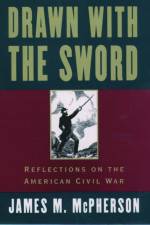
In Drawn With the Sword, James W. McPherson offers a series of thoughtful and engaging essays on some of the most enduring questions of the Civil War. Each essay in Draw With the Sword reveals McPherson's own profound knowledge of the Civil War and of the controversies among historians, presenting all sides in clear and lucid prose.
Soames illuminates the notion of truth and the role it plays in ordinary thought and scientific theories. The questions investigated include: "Why do we need a truth predicate at all?", "What theoretical tasks does it allow us to accomplish?" and "How must we understand the content of any predicate capable of accomplishing these tasks?"
This study celebrates the Hebrew language by bringing together a generous selection of the best-known words and sayings, in English transcription, and illustrating them with excerpts from the Bible, Talmud, folklore and other Jewish literature.
Reopening an investigation into the death of a plantation overseer - Duncan Skinner - almost a century and a half ago, this work is is part murder mystery, part essay on the art of historical detection, and part seminar on the history of the slavery and the "Old South".
This text aims to provide the information necessary for careful, critical thinking about the concept of sexual harassment. From the construction of the concept of sexual harassment in the law and empirical research, it progresses to philosophical definitions and contemporary issues.
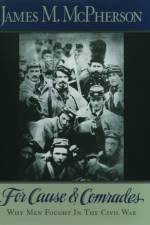
In this volume the author recreates the war and battle experience of the Civil War from the point of view of the soldiers themselves, drawing on over 25,000 letters written by more than 1000 soldiers, both Union and Confederate. He demonstrates that the men remained highly motivated and idealistic.
A biography relating the life of DeWitt Clinton (1769-1828), one of America's strongest political leaders in the early 19th century. It examines his patrician sentiments, his form of party politics and his influence on the economic expansion of the country and its political geography.
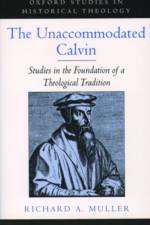
This work attempts to understand Calvin in his16th-century context, with attention to continuities and discontinuities between his thought and that of his predecessors, contemporaries, and successors.
Abonner på vårt nyhetsbrev og få rabatter og inspirasjon til din neste leseopplevelse.
Ved å abonnere godtar du vår personvernerklæring.