







Gjør som tusenvis av andre bokelskere
Abonner på vårt nyhetsbrev og få rabatter og inspirasjon til din neste leseopplevelse.
Ved å abonnere godtar du vår personvernerklæring.Du kan når som helst melde deg av våre nyhetsbrev.

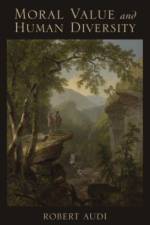
Designed for those learning about the search for ethical rules that can apply despite cultural differences. This work looks at several such attempts: Aristotle, Kant; Mill; and the movement known as "common-sense" ethics associated with W D Ross.
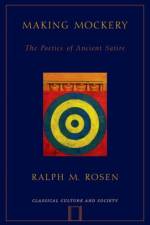
This book explores the dynamics of comic mockery and satire in Greek and Roman poetry, and argues that poets working with such material composed in accordance with shared generic principles and literary protocols. It encourages a synoptic, synchronic view of such poetry, from archaic iambus through Roman satire.
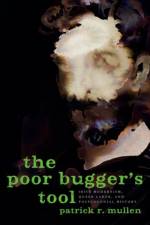
The Poor Bugger's Tool-the title taking its name from the veiled reference to Roger Casement in Joyce's Ulysses-draws on writings by Wilde, Synge, Joyce, Jamie O'Neill, and Patrick McCabe to consider how each deploys queer aesthetics to shape inclusive forms of national affiliation and put forward anti-imperialist critiques.
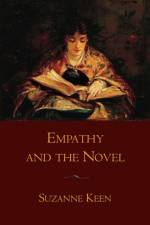
Does reading novels cultivate our sympathetic imagination and real-world good citizenship? Keen finds the case for altruistic consequences of novel reading unpersuasive. This book engages with neuroscience and psychology, centering cognitive literary studies' scrutiny of fiction on affect, and theorizing narrative empathy through proposals about its deployment and results.
The late 20th century saw great movement in the philosophy of language, often critical of the fathers of the subject, Gottlieb Frege and Bertrand Russell. This work brings the non-specialist into the conversation and also reconceives the debate. It is intended for professional philosophers, graduates, and upper division undergraduates.
Lancaster County, Pennsylvania, ahs been known for two centuries as the "Garden Spot of America," a quintessentially rural place. Walbert considers what it means to be the Garden Spot in a culture that associates rurality with the past and asks whether or not a truly rural future is possible for such communities.
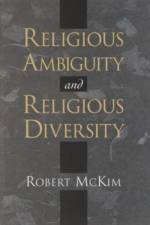
This study looks at two central religious issues - the religious ambiguity of the world and the diversity of faiths - and probes their implications for religious beliefs. Author Robert McKim offers a self-critical, open, and tentative approach to beliefs about religious matters.
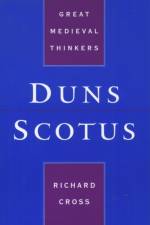
The nature and content of the thought of Duns Scotus (c.1266-1308) remains largely unknown except by the expert. This book provides an accessible account of Scotus's theology, focusing both on what is distinctive in his thought, and on issues where his insights might prove to be of perennial value.
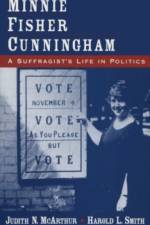
Minnie Fisher Cunningham, Texas's most important female political activist, directed Texas's woman suffrage campaign, helped found the National League of Women Voters and the Woman's National Democratic Club and was also a leader of the post-1945 Texas liberal movement. This is a biography of the politician affectionately known as Minnie Fish.
Provides a critical examination of knowledge about gangs and major gang control programs across the nation. This book focuses on gang proliferation and crime patterns, and highlights known risk factors that lead to youths joining gangs and to gang formation within communities. It is useful for criminologists, social workers, and policy makers.
It is widely held that Hume's Treatise has little or nothing to do with problems of religion. Contrary to this view, however, this book argues that it is irreligious aims and objectives that are fundamental to the Treatise and account for its underlying unity and coherence.
Written by a leading authority on colonial America, this compact biography captures in a remarkably small space one of the most protean lives of American history.
In The God Strategy, David Domke and Kevin Coe offer a timely and dynamic study of the rise of religion in American politics, examining the public messages of political leaders over the past seventy-five years-from the 1932 election of Franklin Roosevelt to the early stages of the 2008 presidential race.
Containing 945 A-Z entries, this dictionary is a biographical and critical guide to American artists from colonial times to the present.
The human cognitive architecture consists of a set of largely independent modules associated with different brain regions. This book discusses in detail how these various modules can combine to produce behaviours as varied as driving a car and solving an algebraic equation.
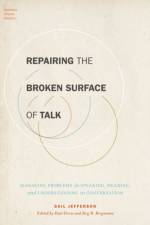
This collection of studies by Gail Jefferson, one of the co-founders of the field of Conversation Analysis, represents a distinctive and sustained investigation of speakers correcting errors in their own and one another's speech. Combining rigorous technical analysis, methodological innovation, and acute observation, Jefferson explores the subterranean world of interaction.
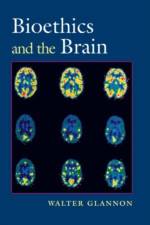
This is the first single-author book on what has come to be known as neuroethics. Walter Glannon uses a philosophical framework that is fully informed by cutting edge neuroscience as well as contemporary legal cases such as Terri Schiavo, to offer readers an introduction to this fascinating topic.
Jewish children and the Catholics who saved them.
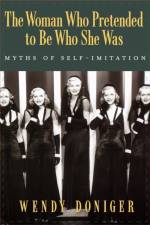
Many cultures have myths about self-imitation, stories about people who pretend to be someone else pretending to be them, in effect masquerading as themselves. This book offers a cross-cultural exploration of the theme of self-impersonation, whose widespread occurrence argues for both its literary power and its human value.
Christians in the churches of Africa, Asia, and Latin America live in settings very close to the social, cultural, and intellectual milieu in which the New Testament itself was written. For this reason, this book argues, they read the Scriptures with a freshness impossible in the prosperous societies of North America and Europe.
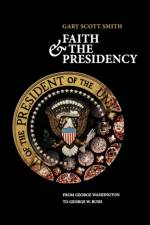
Offers in-depth examinations of the lives and presidencies of eleven chief executives for whom religion was a particularly important issue because of their own beliefs. The author paints portraits of the religious lives of the leaders and shows how their beliefs shaped their actions, and in turn the course of our history.
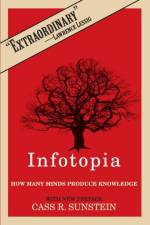
How can we ensure that the accurate information emerges and is heeded? This book develops an optimistic understanding of the human potential to pool information, combat groupthink, and to use that knowledge to improve our lives.
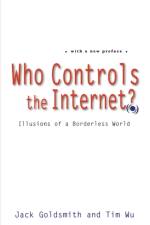
A critical look at the history and future of the Internet.
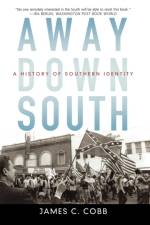
In this unique synthesis of political, cultural, and intellectual history by a historian at the peak of his powers, James C. Cobb spans more then two centuries in tracing the origins and development of the South as not just an exception to the national rule, but an internal 'other' against which, from the very outset, American nationhood itself was defined.
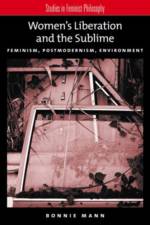
Women's Liberation and the Sublime is a passionate report on the state of feminist thinking and practice after the linguistic turn. A critical assessment of masculinist notions of the sublime in modern and postmodern accounts grounds the author's positive and constructive recuperation of sublime experience in a feminist voice.
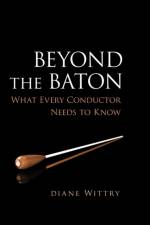
Presents a view of the music director's job from the inside - starting at the moment students decide they want to be conductors, through their first jobs to being a successful artistic leaders. This book covers the practical ground that music schools neglect. It is useful for helping conductors think about their duties both on and off the podium.
This fresh, wide-ranging assessment of Haydn's quartets explores the circumstances of their creation, reveals the conventions and novelties that govern their design, and examines the wealth of textures, stylistic allusions, and rhetorical strategies that underlie their stature as a cornerstone of the chamber music repertory.
Abonner på vårt nyhetsbrev og få rabatter og inspirasjon til din neste leseopplevelse.
Ved å abonnere godtar du vår personvernerklæring.