



















Gjør som tusenvis av andre bokelskere
Abonner på vårt nyhetsbrev og få rabatter og inspirasjon til din neste leseopplevelse.
Ved å abonnere godtar du vår personvernerklæring.Du kan når som helst melde deg av våre nyhetsbrev.

In this definitive biography Asbury emerges as an effective and influential leader. Drawing on a wide variety of sources, John Wigger reveals how Asbury crafted a church to engage ordinary Americans and their world. Under Asbury, Methodism exerted a powerful pull on American culture, but was itself transformed in the process, a pattern repeated again and again in American religious history.
In this penetrating study, Russell Stinson considers how four of the greatest composers of the nineteeth-century - Felix Mendelssohn, Robert Schumann, Franz Liszt, and Johannes Brahms - responded to the model of Bach's organ music. His book represents a major step forward in the literature on the so-called Bach revival.
The Black Stork uses the story of a Chicago surgeon who, in the 1910s, allowed the deaths of infants he diagnosed as "defectives", to illuminate broader questions: how efforts to improve human heredity became linked with mercy killing and social prejudices; how medicine influenced modern culture; and how mass culture redefined medical concepts.
In Exceeding Our Grasp , Stanford argues that careful attention to the history of scientific investigation invites a challenge to this view that is not well represented in contemporary debates about the nature of the scientific enterprise.
This volume comprises papers presented at a conference marking the 50th anniversary of Joachim Wach's death, and the centennial of Mircea Eliade's birth. Its purpose is to reconsider both the problematic, separate legacies of these two major twentieth-century historians of religions, and the bearing of these two legacies upon each other.
In God of Justice, anthropologist William S. Sax offers a fascinating glimpse into the world of cursing, black magic, and ritual healing in the Central Himalayas of North India. Based on ten years' ethnographic fieldwork, God of Justice shows how these practices are part of a moral system based on the principle of family unity.
Argues that pragmatic social reformers looked for support not only from below but also from above, taking into account capitalist interests and preferences. This book juxtaposes two recognised extremes of welfare, the US and Sweden, to show that employer interests played a role in welfare state development in both countries.
Groups of people perform acts that are subject to standards of rationality. The book's theory of collective rationality explains how to evaluate collective acts. The people engaged in a game of strategy collectively produce an outcome, and the theory reveals what makes some outcomes solutions. It generates new equilibrium standards for solutions to cooperative games.
In most discussions and analyses of American teenage life, one major topic is curiously overlooked - religion. What is going on in the religious and spiritual lives of American teenagers? What do they actually believe? This book tells the story of the religious and spiritual lives of contemporary American teenagers.
Offers a history of Jewish and Christian beliefs about circumcision from its ancient origins to the controversy about the ethics of performing such surgery on helpless infants.
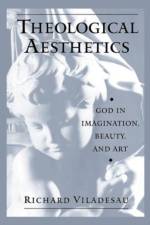
In this book, Richard Viladesau construes Christian theology as a "theological aesthetics". He examines Christian revelation and its presuppositions in relationship to three interconnected meanings of the "aesthetic" in modern thought: human cognition as feeling and imagination; the realm of the beautiful; and the arts.
Abonner på vårt nyhetsbrev og få rabatter og inspirasjon til din neste leseopplevelse.
Ved å abonnere godtar du vår personvernerklæring.