

























Gjør som tusenvis av andre bokelskere
Abonner på vårt nyhetsbrev og få rabatter og inspirasjon til din neste leseopplevelse.
Ved å abonnere godtar du vår personvernerklæring.Du kan når som helst melde deg av våre nyhetsbrev.

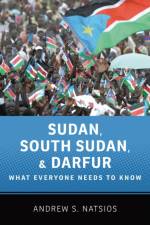
A concise and illuminating account of the turbulent history, economics, and culture of Sudan, this timely book is essential for anyone who wants to know more about the complicated country and the changes to come with the independence of South Sudan in July 2011.
This volume collects Saul Kripke's Locke Lectures, which were delivered in Oxford in 1973.
The American colonists who took up arms against the British fought in defense of the ''sacred cause of liberty.'' But it was not merely their cause but warfare itself that they believed was sacred. In Sacred Scripture, Sacred War, James P. Byrd shows that the Bible was a key text of the American Revolution.
In 'Offering Flowers, Feeding Skulls', June McDaniel provides an overview of Bengali goddess worship or Shakti. She identifies three major forms of goddess worship, and examines each through its myths, folklore, songs, rituals, sacred texts, and practitioners, tracing these strands through Bengali culture.
Buddhist Fury reveals the Buddhist parameters of the conflict in southern Thailand. Monks zealously advocate Buddhist nationalism, act as covert military officers, and equip themselves with guns. Buddhist Fury displays the methods by which religion alters the nature of the conflict and the dangers that come with this transformation.
In its first seven years, the North American Free Trade Agreement (NAFTA) tripled trade and quintupled foreign investment among the U.S., Mexico, and Canada, increasing its share of the world economy. In 2001, however, North America peaked. Trade slowed among the three, manufacturing jobs shrunk, and illegal migration and drug-related violence soared. Europe caught up, and China leaped ahead.
What causes states to politically unify voluntarily? This book develops a realist explanation of voluntary union and argues that unions are the balancing coalitions of last resort. Five cases test the logic of the argument: the United States, Switzerland, Sweden-Norway, Gran Colombia, and Europe.
In The Georgia State Constitution, Melvin Hill Jr. offers a detailed description of the creation and development of Georgia's constitution. He explains how political and cultural events, from colonial times, through the Civil War, to the present, have affected Georgia's constitutional law.
In Nonviolent Revolutions, Sharon Erickson Nepstad analyzes civilian insurrections in China, East Germany, Panama, Chile, Kenya, and the Philippines.
The philosophy of pragmatism advances an evolutionary, learning-oriented perspective that is problem-driven, reflexive, and deliberative.
Psychiatric disorders are brain disorders, reflecting dysfunction within and across neural networks. Advances in functional neuroimaging and cellular neuroscience offer hope of revolutionizing the approach to diagnosis and treatment of mental illnesses.
In Kant's Human Being, Robert B. Louden continues and deepens avenues of research first initiated in his highly acclaimed book, Kant's Impure Ethics.
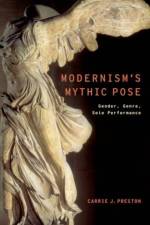
Modernism's Mythic Pose recovers the tradition of Delsartism, a popular international movement that promoted bodily and vocal solo performances, particularly for women. This strain of classical-antimodernism shaped dance, film, and poetics.
The Victimization of Women is a balanced, comprehensive, and objective synthesis of the most significant research on the victimizations, violence, and victim politics that disproportionately affect women.
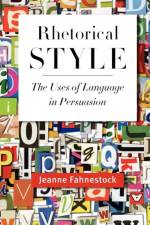
A comprehensive guide to the language of argument, Rhetorical Style offers a renewed appreciation of the persuasive power of the English language.
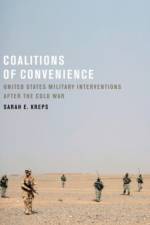
In Coalitions of Convenience, Sarah E. Kreps shows that even powerful states have incentives to intervene multilaterally. Coalitions and international organization blessing confer legitimacy and provide ways to share what are often costly burdens of war.
Through careful historical research, Geoffrey Sanborn reveals how both James Fenimore Cooper and Herman Melville relied heavily on contemporary accounts of the indigenous natives of New Zealand, the Maori, to develop the iconic characters they created in The Last of the Mohicans and Moby-Dick.
Miraculous Plagues examines the forms and conventions of colonial epidemiology in order to re-imagine New England's early literary history as a function of the narrative, legal, and theological responses to regional and generational patterns of illness in the seventeenth- and early eighteenth centuries.
Charles Hodge (1797-1878) was one of nineteenth-century America's leading theologians, whom some have called the "Pope of Presbyterianism." Paul Gutjahr's book is the first modern critical biography of this towering figure.
Roger S. Gottlieb provides a lucid and accessible overview of what spirituality is, enabling a clear-eyed understanding of the concept, its manifold connections to other aspects of personal and social life, its role as a positive psychological and social phenomenon, and some of the risks that attend it.
Jane Iwamura examines contemporary fascination with Eastern spirituality and provides a cultural history of the representation of Asian religions in American mass media. At the heart of her study is the Oriental Monk, a non-sexual, solitary, conventionalized icon who generously and purposefully shares his wisdom with the West.
Integration Interrupted focuses on the consequences, particularly for black students, of the practice of curriculum tracking in the post-Brown era, and on the relationship between racialized tracking and the emergence of academic excellence as a "white thing," or acting white.
Abonner på vårt nyhetsbrev og få rabatter og inspirasjon til din neste leseopplevelse.
Ved å abonnere godtar du vår personvernerklæring.