











Gjør som tusenvis av andre bokelskere
Abonner på vårt nyhetsbrev og få rabatter og inspirasjon til din neste leseopplevelse.
Ved å abonnere godtar du vår personvernerklæring.Du kan når som helst melde deg av våre nyhetsbrev.

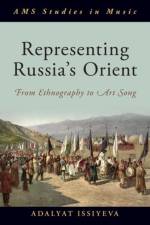
Building on long-forgotten archives and detailed case studies, Representing Russia's Orient reveals how complex representations of oriental subjects in nineteenth-century Russian art music, which often merged elements of East and West, contributed to the formation of Russia's national identity.
In this first-ever book on the solfeggio tradition, one of the pillars of eighteenth-century music education, author Nicholas Baragwanath illuminates how performers and composers developed their exceptional skills in improvising and inventing melodies.
This groundbreaking book offers the first detailed analysis of the textual, liturgical, and musical aspects of the vespertinus, the chant genre most central to the Christian practices that shaped the religious and cultural landscape of medieval Iberia.
Brahms's Violin Sonatas explores key passages of the composer's sonata scores and reveals, in clear and accessible language, the historical and musical nuances behind their composition.
Water is a basic human need and a scarce commodity with increasing value to farmers, industries, and cities in an urbanizing world. It is unpredictable in supply and quality, difficult to contain or direct, and notoriously difficult to manage well. Several trendsΓÇöclimate change, the endurance of widespread global water poverty, intensifying competition among rival uses and users, and the vulnerability of critical freshwater ecosystemsΓÇöcombine to intensify thechallenges of governing water wisely, fairly, and efficiently. The twenty-seven chapters in The Oxford Handbook of Water Politics and Policy address such issues over the course of seven thematic sections. These themes reflect familiar frameworks in the water policy world, including water, poverty, andhealth; water and nature; and water equity and justice. Other sections look at emergent and contentious policy arenas, including the water/energy/food nexus and management of uncertainty in water supply, or connect well-established strands in new ways, including sections on water tools (water price and value, supply and demand, privatization, corporate responsibility) and issues surrounding transboundary waters. This volume conceives of water as a global issue, and gathers a diverse group ofleading scholars of water politics and policy.
A POLITICAL PROVOCATION FROM A PAIR OF PHYSICIANS WRITING OUTSIDE THEIR LANEIn Pained, physicians Michael Stein and Sandro Galea push the conversation around American health where it belongs: toward matters of class, money, and culture. Across more than 50 essays and data illustrations, Pained casts a light on how the structural components of everyday life - matters like school, housing, police, even cell phones - ultimately determine who gets to be healthy in today's America. In doing so, it makes a case for reframing our political discourse in less myopic,more effectual terms.
In Head Strong: How Psychology is Revolutionizing War, Michael D. Matthews explores the many ways that psychology will make the difference for wars yet to come, from revolutionary advances in soldier selection and training to new ways of preparing soldiers to remain resilient in the face of horror and to engineering the super-soldier of the future. Many of the predictions made in the first edition have come true, and exciting new developments in militarypsychology have emerged. This Revised and Expanded Edition updates the existing chapters with important new developments, and adds new chapters on character and human performance optimization-both topics of significant interest in today's military.
This book examines how the general public experienced the 2009 H1N1 influenza virus outbreak by bringing together stories about individuals' perception of their illness, as well as reflections on news, vaccination, social isolation, and other infection control measures. Providing unprecedented insight into the lives of ordinary people faced with the specter of a potentially lethal virus and drawing on currents in sociocultural scholarship of narrative, illnessnarrative, and narrative medicine, the book develops a novel 'public health narrative' approach of interest to health communicators and researchers across the social and health sciences.
Recent scholarship has shown that modern postural yoga is the outcome of a complex process of transcultural exchange and syncretism. This book doubles down on those claims and digs even deeper, looking to uncover the disparate but entangled roots of modern yoga practice. Anya Foxen shows that some of what we call yoga, especially in North America and Europe, is genealogically only slightly related to pre-modern Indian yoga traditions. Rather, it is equally, if notmore so, grounded in Hellenistic theories of the subtle body, Western esotericism and magic, pre-modern European medicine, and late-nineteenth-century women's wellness programs.
This book addresses the urgent problem of gender-based violence in universities and how activists (faculty, staff, and students) can affect change on university campuses. The contributors provide a new analysis of higher education culture by showcasing ways to transform it.
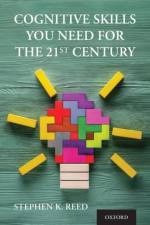
Cognitive Skills You Need for the 21st Century begins with a Future of Jobs report that contrasts trending and declining skills required by the workforce in the year 2022. Trending skills include analytical thinking and innovation, active learning strategies, creativity, reasoning, and complex problem solving, and Reed discusses each in detail. Research in Cognitive Psychology, Education, and AI provides the foundation for acquiring these skills. Reedpresents problems and personal anecdotes to encourage reflection, and concludes with three chapters on educating 21st century skills at all levels of instruction.
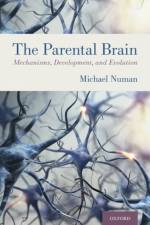
The Parental Brain: Mechanisms, Development, and Evolution explores the neural circuits and development of the parental brain, and the view that these circuits formed a template for the evolution of other types of prosocial bonds. The book is unique in its multilevel approach and integration of animal and human research.
Young people charged with serious offenses may be tried in criminal court. The U.S. Supreme Court recently ruled that, if convicted in criminal court, juveniles' sentencing must take into account their relative developmental immaturity compared to adults. Therefore, Judges and attorneys in these cases need information from forensic mental health examiners about a youth's degree of immaturity and its relevance for sentencing. This is the first book to provide forensicmental health examiners a legal and developmental foundation for these evaluations, as well as best practices for performing the evaluation and communicating it to the court.
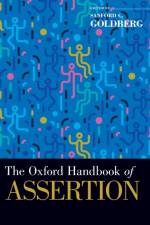
The Oxford Handbook of Assertion explores philosophical themes pertaining to the speech act of assertion: the nature of assertion, assertion's place among the speech acts, empirical issues in theories of assertion, assertion's role in semantics and metasemantics, the place of assertion in the epistemology of testimony, and the social and ethical dimensions of assertion.
School Bullying and Violence: Interventions for School Mental Health Specialists provides readers assessment and intervention strategies for responding to students who have experienced cyberbullying, bullying, and violence. The book also describes how to intervene and respond to student perpetrators of cyberbullying, bullying, and violence.
This book offers a practical approach to conducting practice research in the field of human services. This evolving form of applied research seeks to understand practice in the context of the relationships between service providers and service users, between service providers and their managers, between agency-based service providers and community advocacy and support groups, and between agency managers and policy makers. Practice research represents a form ofevidence-informed practice that involves a wide array of research designs and methods, in contrast to the narrower emphasis on experimental designs that characterizes evidence-based practice. The emerging principles and practices associated with practice research highlight: 1) including multiple, diversestakeholders, 2) maximizing and negotiating participation, 3) promoting practitioner engagement in all phases of the research process, and 4) developing new identities for participants as research-minded practitioners and practice-minded researchers. The book is designed for researchers, practitioners, service users and students, and focuses on concrete experiences that illustrate the processes and activities involved in a specific, locally negotiated model of practice research. The bookdescribes multiple practice research studies across an array of fields of practice in the human services, focusing on the research questions, designs, roles and relationships that have been developed in the context of a university-agency practice research partnership. These descriptions and stories areused to construct a comprehensive, detailed picture of the research process. Based upon these descriptions, the book synthesizes a set of broader principles and guidelines for practice researchers.
The Tupac Amaru rebellion of 1780-1783 began as a local revolt against colonial authorities and grew into the largest rebellion in the history of Spain''s American empire-more widespread and deadlier than the American Revolution. An official collector of tribute for the imperial crown, José Gabriel Condorcanqui had seen firsthand what oppressive Spanish rule meant for Peru''s Indian population and, under the Inca royal name Tupac Amaru, he set events in motionthat would transform him into one of Latin America''s most iconic revolutionary figures. While he and the rebellion''s leaders were put to death, his half-brother, Juan Bautista Tupac Amaru, survived but paid a high price for his participation in the uprising.This work in the Graphic History series is based on the memoir written by Juan Bautista about his odyssey as a prisoner of Spain. He endured forty years in jails, dungeons, and presidios on both sides of the Atlantic. Juan Bautista spent two years in jail in Cusco, was freed, rearrested, and then marched 700 miles in chains over the Andes to Lima. He spent two years aboard a ship travelling around Cape Horn to Spain. Subsequently, he endured over thirty years imprisoned in Ceuta, Spain''smuch-feared garrison city on the northern tip of Africa. In 1822, priest Marcos Durán Martel and Maltese-Argentine naval hero Juan Bautista Azopardo arranged to have him freed and sent to the newly independent Argentina, where he became a symbol of Argentina''s short-lived romance with the Incan Empire.There he penned his memoirs, but died without fulfilling his dream of returning to Peru.This stunning graphic history relates the life and legacy of Juan Bautista Tupac Amaru, enhanced by a selection of primary sources, and chronicles the harrowing and extraordinary life of a firsthand witness to the Age of Revolution. .
There is less interest in marriage in society today than in years past, in an era marked by technology, gender equality, and secularization. In this book, Mark Regnerus explores how today's Christians find a mate within a faith that esteems marriage but a world that increasingly yawns at it, and argues that the future of marriage will be a religious one.
Despite the widespread and serious nature of trauma as a serious health issue, many who suffer from trauma avoid seeking services while many drop out of services prior to completion. Additionally, family as a potential source of healing from trauma is a seriously neglected topic in the field. This book offers a flexible family treatment approach that can adapt to issues trauma survivors are willing to work on.
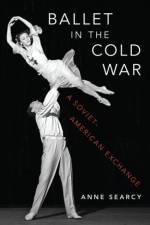
In 1959, the Bolshoi Ballet arrived in New York for its first ever performances in the United States. The tour was part of the Soviet-American cultural exchange, arranged by the governments of the US and USSR as part of their Cold War strategies. This book explores the first tours of the exchange, by the Bolshoi in 1959 and 1962, by American Ballet Theatre in 1960, and by New York City Ballet in 1962. The tours opened up space for genuine appreciation of foreign ballet. American fans lined up overnight to buy tickets to the Bolshoi, and Soviet audiences packed massive theaters to see American companies. Political leaders, including Khrushchev and Kennedy, met with the dancers. The audience reaction, screaming and crying, was overwhelming.But the tours also began a series of deep misunderstandings. American and Soviet audiences did not view ballet in the same way. Each group experienced the other''s ballet through the lens of their own aesthetics. Americans loved Soviet dancers but believed that Soviet ballets were old-fashioned and vulgar. Soviet audiences and critics likewise appreciated American technique and innovation but saw American choreography as empty and dry.Drawing on both Russian- and English-language archival sources, this book demonstrates that the separation between Soviet and American ballet lies less in how the ballets look and sound, and more in the ways that Soviet and American viewers were trained to see and hear. It suggests new ways to understand both Cold War cultural diplomacy and twentieth-century ballet.
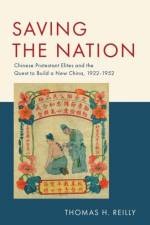
While Protestant Christians made up only a small percentage of China''s overall population during the Republican period, they were heavily represented among the urban elite. Protestant influence was exercised through churches, hospitals, and schools, and reached beyond these institutions into organizations such as the YMCA (Young Men''s Christian Association) and YWCA (Young Women''s Christian Association). The YMCA''s city associations drew their membership from theurban elite and were especially influential within the modern sectors of urban society.Chinese Protestant leaders adapted the social message and practice of Christianity to the conditions of the republican era. Key to this effort was their belief that Christianity could save China ΓÇö that is, that Christianity could be more than a religion focused on saving individuals, but could also save a people, a society, and a nation. Saving the Nation recounts the history of the Protestant elite beginning with their participation in social reform campaigns in the earlytwentieth century, continuing through their contribution to the resistance against Japanese imperialism, and ending with Protestant support for a social revolution.The story Thomas Reilly tells is one about the Chinese Protestant elite and the faith they adopted and adapted, Social Christianity. But it is also a broader story about the Chinese people and their struggle to strengthen and renew their nation ΓÇö to build a New China.
Spectres of Antiquity is the first full-length study of the relationship between Greco-Roman culture and the eighteenth-century Gothic. In fascinating and compelling detail, James Uden's book rewrites the history of the Gothic genre, demonstrating that the genre was haunted by a deeper sense of history than has previously been assumed.
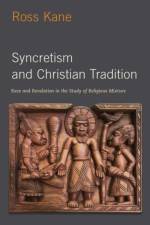
Syncretism has been a part of Christianity from its very beginnings. Defined as the phenomena of religious mixture, syncretism carries a range of connotations. In Christian theology, syncretism shifted from a compliment during the Reformation to an outright insult in the twentieth and twenty-first centuries. Ross Kane argues that the history of syncretism's use accentuates wider interpretive problems, drawing attention to attempts by Christian theologians to protectthe category of divine revelation from perceived human interference. Syncretism and Christian Tradition examines how the concept of race figures into dominant religious traditions associated with imperialism, and reveals how syncretism can act a vital means of the Holy Spirit's continuing revelationof Jesus.
This book reveals the natural history of the green anaconda, one of the most elusive of snakes.
This book offers incredible insight into the history, objectives, and styles of the modern scientific research paper.
This is a book about modern quantum chemistry, and it emphasizes the orbital models that are central to chemical applications of quantum theory.
New India: Reclaiming the Lost Glory offers a persuasive and data-driven roadmap for India to eliminate abject poverty, accelerate economic growth, and return to a prominent position in the global economy. Outlining a concise strategy to transform India from a primarily rural and agricultural economy to an urban and industrial economy, Arvind Panagariya highlights the importance of creating good jobs for workers with limited skills by encouraging medium andlarge firms in labor-intensive sectors.
Abonner på vårt nyhetsbrev og få rabatter og inspirasjon til din neste leseopplevelse.
Ved å abonnere godtar du vår personvernerklæring.