














Gjør som tusenvis av andre bokelskere
Abonner på vårt nyhetsbrev og få rabatter og inspirasjon til din neste leseopplevelse.
Ved å abonnere godtar du vår personvernerklæring.Du kan når som helst melde deg av våre nyhetsbrev.

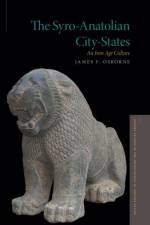
This book is the first to characterize the Iron Age city-states of southeastern Turkey and northern Syria, using archaeological, historical, and visual evidence to argue for a unified cultural formation characterized above all by diversity and mobility.
This book revisits the Jewish roots of Christianity. More specifically, this work investigates what Luke thought about the Jewish people and the end of time in light of ancient Jewish sources. It is likely that Luke's views on these questions were not too different from the Judaism of Luke's time. Luke believed that Israel would experience political and national restoration when Jesus would return as the victorious messiah.
This edited volume on war in law and literature addresses the many ways in which war affects human society and the many groups of people whose lives are affected by war. The essays, by preeminent scholars, discuss the ways in which literary works can shed light on legal thinking about war, and how a deep understanding of law can lead to interpretive insights on literary works. Some concern the lives of soldiers; others focus on civilians living in war zones, whoare caught up in the conflict; still others address themselves to the home front, far from the theatre of war. By collecting such diverse perspectives, with contributions from preeminent scholars of philosophy, literature, and law, this volume aims to show how literature has reflected the totalizingnature of war and the ways in which it distorts law across domains.
This collection of essays provide resources for the interpretation of the "Historical Books" of the Hebrew Bible that includes the books of Joshua, Judges, Samuel, Kings, Chronicles, Ezra, and Nehemiah. The contributors to this collection are guided by two primary questions: (1) What does this topic have to do with the Old Testament Historical Books? and (2) How does this topic help readers better interpret the Old Testament Historical Books? By first providing acritical survey of prior scholarship, each essay prepares the reader before presenting current and prospective approaches to understanding these texts.
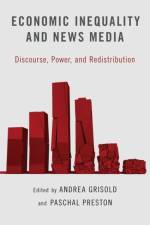
Economic Inequality and News Media examines how mainstream news media cover, frame, and discuss economic inequality through an empirical analysis of news media coverage of Thomas Piketty's high-profile and best-selling book Capital in the Twenty-First Century.
Successful nonprofit marketing can capture the attention of donors, volunteers, legislators, and service consumers. Recognition like this can lead to a successful organization for years to come. The second edition of Marketing for Nonprofit Organizations provides various strategies to build upon when marketing for nonprofit and social impact organizations. Stacy Landreth Grau integrates research-based insights and practice-based innovation with a comprehensive introduction to the basics of marketing for small- and medium-sized organizations. She breaks the academic research into understandable and digestible points within her chapters, making this a great primer for nonprofit professionals and anyone interested in working for or starting a nonprofit. The book provides readers with an indispensable overview of marketing. This new edition highlights new and innovative organizations and how they are using methods new to the field. Grau explains the fundamentals of marketing for nonprofits. It is an ideal resource for courses in both business schools and social work programs, as well as nonprofit managers who are ready to explore new and innovative ways to support their organization. Upon finishing this book, readers will know how to integrate important aspects of marketing into the fabric of an organization''smission, including brand strategy, social media, market research, target audience selection, promotional tactics, and market valuation.
Judicial review by Israel''s Supreme Court over actions of Israeli authorities in the territories occupied by Israel in 1967 is an important element in Israel''s legal and political control of these territories. The Occupation of Justice presents a comprehensive discussion of the Court''s decisions in exercising this review. This revised and expanded edition includes updated material and analysis, as well as new chapters. Inter alia, it addresses the Court''sapproach to its jurisdiction to consider petitions from residents of the Occupied Territories; justiciability of sensitive political issues; application and interpretation of the international law of belligerent occupation in general, and the Fourth Geneva Convention in particular; the relevance ofinternational human rights law and Israeli constitutional law; the rights of Gaza residents after the withdrawal of Israeli forces and settlements from the area; Israeli settlements and settlers; construction of the separation barrier in the West Bank; security measures, including internment, interrogation practices, and punitive house demolitions; and judicial review of hostilities.The study examines the inherent tension involved in judicial review over the actions of authorities in a territory in which the inhabitants are not part of the political community the Court belongs to. It argues that this tension is aggravated in the context of the West Bank by the glaring disparity between the norms of belligerent occupation and the Israeli government''s policies. The study shows that while the Court''s review has enabled many individuals to receive a remedy, it has largelyserved to legitimise government policies and practices in the Occupied Territories.
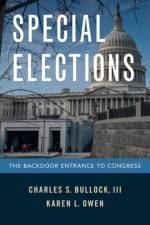
Most members of Congress begin their careers through regularly scheduled elections, but terms may be cut short due to death, scandal, or different career opportunities. In these cases, special elections are held to fill vacancies. In fact, a number of prominent political figures, including Lyndon Johnson, Nancy Pelosi, and John Dingell, began their long and distinguished careers through special election to Congress. While the media often look to special elections as a way of measuring public sentiment on presidential performance, even though voter turnout tends to be significantly lower than in regular elections, these events have rarely attracted academic attention. Oftentimes, studies of these contests lead to generalizations about how a party should proceed if it hopes to wrest a seat away from the opposition in a special election.This book is the first large-scale scholarly treatment of special elections: both in terms of explaining what factors influence outcomes and in determining whether special elections are bellwethers for general elections. Charles S. Bullock, III and Karen L. Owen argue that special elections offer parties a testing ground for messaging and strategies for mobilizing voters in anticipation of general elections. Moreover, these elections provide opportunities for diversification of Congress asreduced commitment to resources for campaigning has led more women and candidates of color to compete in themΓÇöand win. Based on 75 years of data, the authors closely examine several competitive special elections during the first two years of the Trump era and quantitatively assess the almost 300 Housespecial elections held since World War II.
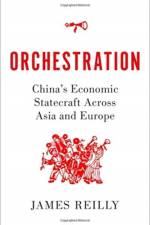
The Chinese government has more control over more wealth than any other government in world history. With the Communist Party controlling the "commanding heights" of the world''s second-largest economy, China appears ideally structured to pursue economic statecraft, using economic resources to advance its foreign policy goals. Yet as this book shows, domestic complications frequently constrain Chinese leaders. They have responded with a distinctive approach toeconomic statecraft: orchestration. Drawing upon extensive field research across Asia and Europe, Orchestration traces the origins, operations, and effectiveness of China''s economic statecraft. In this book, James Reilly examines the ideas and institutions at the heart of China''s approach to economic statecraft, and assesses Beijing''s orchestration in four cases: Myanmar, North Korea, Western Europe, and Central/Eastern Europe. China''s unique experience as a planned economy, and then a developmental state, all under a single Leninist party, left Chinese leaders with unchallenged authority over their economy. However, despite successfully mobilizing companies, banks, and localofficials to rapidly expand trade and investment abroad, Chinese leaders largely failed to influence key policy decisions overseas. For countries around the world, economic engagement with China thus yields more benefits with fewer costs than generally assumed. Orchestration engages three central questions. First, why does China deploy economic statecraft in this particular fashion? Secondly, when is China''s economic statecraft most effective? Finally, what can the China case tell us about economic statecraft more broadly? The findings show how China uses economic resources to exert influence abroad and identify when Beijing is most effective. By exploring the domestic drivers of China''s economic statecraft, this book helps launch a newresearch field: the comparative study of economic statecraft.
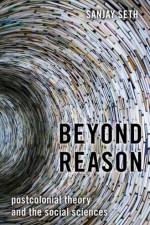
The knowledge disseminated by universities and mobilized by states to govern populations has been globally dominant for more than a century. It first emerged in the early modern period in Europe and subsequently became globalized through colonialism. Despite the historical and cultural specificity of its origins, modern Western knowledge was thought to have transcended its particularities such that, unlike pre-modern and non-Western knowledges, it was "universal," ortrue for all times and places. In this bold and ambitious book, Sanjay Seth argues that modern knowledge and the social sciences are a product of Western modernity claiming a spurious universality: that what we treat as the "truths" discovered by social scientific reason are instead a parochial knowledge. Drawing upon and deriving its critical energies principally from postcolonial theory, Beyond Reason traverses many disciplines, including science studies, social history, art and music history, political science,and anthropology, and engages with a range of contemporary thinkers including Butler, Habermas, Chakrabarty, Chatterjee, and Rawls. It demonstrates that while global in their impact, the social sciences do not and cannot transcend the Western historical and cultural circumstances in which they emerged. If the social sciences are not explained and validated simply by the fact that they are "true," it becomes possible to ask what purpose they serve, what it is that they "do." A defining feature of modern knowledge is that it is divided into disciplines, each with its own object of inquiry and corresponding protocols, and thus asking what such knowledge "does" requires asking what purpose disciplines serve. It also requires asking what ways of understanding the world they facilitate and whatthey disallow. Beyond Reason proceeds to anatomize the disciplines of history and political science to ask what representations and relations with the past and with politics these academic disciplines enable, and what ways of understanding and engaging the world they foreclose.
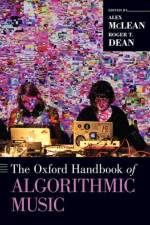
Featuring chapters by emerging and established scholars as well as by leading practitioners in the field, this Handbook both describes the state of algorithmic composition and also set the agenda for critical research on and analysis of algorithmic music.
This work explores the legal and ethical issues surrounding the increased weaponization of outer space and the potential for space-based conflict. The essays included explore the moral and legal issues in four sections covering the legal framework; ethical issues; specific threats to space security; and possible legal and diplomatic solutions.
The Analects of Dasan: A Korean Synthetic Reading is an English translation of Noneo gogeum ju, which includes the translator's commentary on Dasan's creative ideas and interpretations of the Analects. It not only represents one of the greatest achievements of Korean Confucianism but also demonstrates innovative prospects for the study of Confucian philosophy.
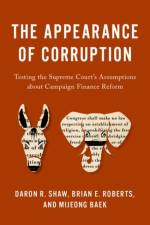
A critical analysis of the connections that the United States Supreme Court has made between campaign finance regulations and voters'' behavior.The sanctity of political speech is a key element of the United States Constitution and a cornerstone of the American republic. When the Supreme Court linked political speech to campaign finance in its landmark Buckley v. Valeo (1976) decision, the modern era of campaign finance regulation was born. The decision stated that in order to pass constitutional muster, any laws limiting money in politics must be narrowly tailored and serve a compelling state interest. The lone state interestthe Court was willing to entertain was the mitigation of corruption. In order to reach this conclusion, the Court advanced a sophisticated behavioral model that made assumptions about how laws affect voters'' opinions and behavior. These assumptions have received surprisingly little attention until now. In The Appearance of Corruption, Daron Shaw, Brian Roberts, and Mijeong Baek analyze the connections that the Court made between campaign finance regulations and voters'' behavior. The court argued that an increase in perceived corruption would lower engagement and turnout. Drawing from original survey data and experiments, they confront the question of what happens when the Supreme Court is wrong-and when the foundation of over 40 years of jurisprudence is simply not true. Even withthe heightened awareness of campaign finance issues that emerged in the wake of the 2010 Citizens United decision, there is little empirical support for the Court''s reasoning that turnout would decline. A rigorous statistical analysis, this is the first work to simultaneously name and test each and every one ofthe Court''s assumptions in the pre- and post-Citizen''s United eras. It will also fundamentally reshape how we think about campaign finance regulation''s effects on voter behavior.
The Congress of Neurological Surgeons Essential Papers in Neurosurgery brings to the neurosurgical community a unique collection of critically appraised neurosurgical papers shedding light on some of the most impactful studies in the history of the field. Separating the signal from the noise, this text offers papers that have shaped the practice of neurosurgery, selected through a rigorous process, and commented on by editorialists to reconcile conflictingpoints and summarize the take-home message of each study. Each paper is reviewed by a panel of two experts who provide editorials evaluating the strengths and weaknesses of the paper as well as the impact it had on the editorialist''s personal practice of neurosurgery. This book is equally suited forneurosurgery residents, practicing neurosurgeons, and anyone interested in evidence-based clinical neuroscience. The body of literature covered in this book has in many ways defined the gold standards of neurosurgical practice and is a must-know for every student of neurosurgery.
Oscar Hammerstein II is arguably the greatest innovator in the history of American musical theater. This rich collection of his letters not only sheds light on the Golden Age of Broadway theater and its major figures but also reveals a man with a fine sense of humor who was deeply engaged in social activism.
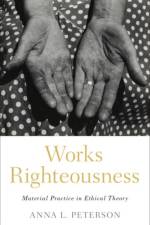
In Works Righteousness, Anna L. Peterson examines the place of practice in contemporary ethical theory. Peterson argues that rather than assuming that pre-established moral ideas guide action, ethicists should acknowledge and explore the relationship between ideas, actions, and results. Both an analysis of alternative models in which practice plays a stronger role and an argument for taking practice more seriously in broad questions of ethics as well as inconcrete case studies, Works Righteousness contends that what we do generates and alters our values, just as often as expressed values motivate or guide the ways we act. Peterson here challenges prevailing philosophical and religious theories that ideas are what truly matter, underlining the value of attention to people''s concrete experiences and highlighting the relevance of theoretical insights to contemporary social issues such as climate change, euthanasia, and hate speech. Through examinations of pragmatism, Marxism, and religious pacifism, all of which significantly highlight a practice-focused approach, Works Righteousness addresses the waysocial structures condition moral ideas and actions, the dangers of thinking about moral problems as polarized dilemmas, and the complex mutual shaping of ideas and actions.
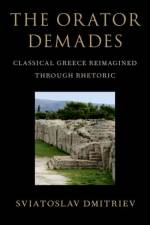
This is the first monograph in English about Demades, an influential Athenian politician from the fourth century B.C. An orator whose fame outlived him for hundreds of years, he was an acquaintance and collaborator of many political and military leaders of classical Greece, including the Macedonian king Philip II, his son and successor Alexander III (the Great), and the orator Demosthenes.An overwhelming portion of the available evidence on Demades dates to at least three centuries after his death and, often, much later. Contextualizing the sources within their historical and cultural framework, The Orator Demades delineates how later rhetorical practices and social norms transformed his image to better reflect the educational needs and political realities of the Roman imperial and Byzantine periods.The evolving image of Demades illustrates the role that rhetoric, as the basis of education and edification under the Roman and Byzantine Empires, played in creating an alternate, inauthentic vision of the classical past that continues to dominate modern scholarship and popular culture. As a result, the book raises a general question about the problematic foundations of our knowledge of classical Greece.
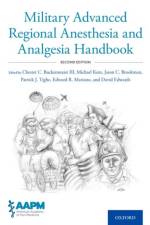
A longtime standard for military healthcare personnel, the second edition of Military Advanced Regional Anesthesia and Analgesia Handbook (MARAA) has been thoroughly revised and updated. Although the MARAA handbook initially gained its reputation as a useful resource for managing pain associated with battlefield trauma, its beautifully illustrated step-by-step guidance provides pertinent and practical guidance for managing vital acute pain services in allcivilian and military clinical settings.Opening chapters review equipment, local anesthesia and additives, and physics of ultrasound and nerve stimulation. Much of the book is devoted to step-by-step guidance on performing various regional anesthesia nerve blocks organized by pertinent neuroanatomy, use of nerve stimulation, and use of ultrasound. The concluding group of chapters discusses organization of the acute pain service and staff, a review of multidisciplinary care, basics of pediatric regional anesthesia, first-aidacupuncture, and more.
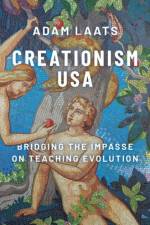
Who are America''s creationists? What do they want? Do they truly believe Jesus rode around on dinosaurs, as sometimes depicted? Creationism USA reveals how common misconceptions about creationism have led Americans into a century of unnecessary culture-war histrionics about evolution education and creationism. Adam Laats argues that Americans do not have deep, fundamental disagreements about evolution - not about the actual science behind it and not in waysthat truly matter to public policy. Laats asserts that Americans do, however, have significant disagreements about creationism. By describing the history of creationism and its many variations, Laats demonstrates that the real conflict about evolution is not between creationists and evolution. The truelandscape of American creationism is far more complicated than headlines suggest. Creationism USA digs beyond those headlines to prove two fundamental facts about American creationism. First, almost all Americans can be classified as creationists of one type or another. Second, nearly all Americans (including self-identified creationists) want their children to learn mainstream evolutionary science. Taken together, these truths about American creationism point to a large and productive middle ground, a widely shared public vision of the proper relationship betweenschools, science, and religion. Creationism USA both explains the current state of America''s battles over creationism and offers a nuanced yet straight-forward prescription to solve them.
The Great Fire of 1835 nearly leveled Manhattan-consuming some 700 buildings-yet also created the ashes from which the city was reborn. Manhattan Phoenix explores the emergence of modern New York after 1835 and in the years up to and through the Civil War, as it evolved from a chaotic jumble of competing interests and rampant disorganization into to a metropolis of world-class proportions.
Focusing on three battles, each reflective of asymmetrical, intercultural, and irregular warfare, this provocative, harrowing, and illuminating book shows how American soldiers have experienced combat in which the "standard" rules of engagement did not apply.
This book addresses the neurobiology, pharmacotherapy, and behavioural therapy of substance use disorders from a clinical perspective. Ideal for residents and fellows, this book will provide a solid background for learning in psychiatry and addiction medicine and can also be used in clinical practice.
Fanny Hensel is arguably the most gifted female composer of the nineteenth century, but her music has long been overlooked. The Songs of Fanny Hensel is a groundbreaking collection of new scholarship on Hensel's highly original contributions to the genre of song, the art form that she said "suits her best."
Federal Ground depicts the haphazard and unplanned growth of federal authority in the Northwest and Southwest Territories, the first U.S. territories established under the new territorial system. The nation''s foundational documents, particularly the Constitution and the Northwest Ordinance, placed these territories under sole federal jurisdiction and established federal officials to govern them. But, for all their paper authority, these officials rarelycontrolled events or dictated outcomes. In practice, power in these contested borderlands rested with the regions'' pre-existing inhabitants-diverse Native peoples, French villagers, and Anglo-American settlers. These residents nonetheless turned to the new federal government to claim ownership, jurisdiction,protection, and federal money, seeking to obtain rights under federal law. Two areas of governance proved particularly central: contests over property, where plural sources of title created conflicting land claims, and struggles over the right to use violence, in which customary borderlands practice intersected with the federal government''s effort to establish a monopoly on force. Over time, as federal officials improvised ad hoc, largely extrajudicial methods to arbitrate residents'' claims, they slowly insinuated federal authority deeper into territorial life. Thisauthority survived even after the former territories became Tennessee and Ohio: although these new states spoke a language of equal footing and autonomy, statehood actually offered former territorial citizens the most effective way yet to make claims on the federal government. The federal government,in short, still could not always prescribe the result in the territories, but it set the terms and language of debate-authority that became the foundation for later, more familiar and bureaucratic incarnations of federal power.
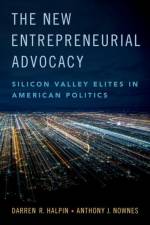
The role of business in American politics has provoked much controversy and attention over recent years. One need look no further than the Koch brothers or the Trump administration to get an idea of the extent to which the interests of private business wield influence over the political system. Contemporary evidence of the clear and growing disparities in wealth between ordinary citizens and business elites has drawn new attention to this topic. Recently, the canonon the activities of business elites in politics has also grown as we have learned a great deal about how business firms and their ultra-wealthy leaders and investors seek to exert political influence. This book looks at one form of business elite activity that has thus far received little attention, despite the high-profile political efforts of billionaire businesspeople including Bill Gates, Elon Musk, and Mark Zuckerberg: a phenomenon that Darren R. Halpin and Anthony J. Nownes call new entrepreneurial advocacy. This "entrepreneurial advocacy" is a mode of political engagement in which wealthy entrepreneurs (often from Silicon Valley) use their vast resources to form new organizations thatadvocate for their vision of the social good, which may or may not be directly linked to their private or business interests. While previous studies focus on a cross section of either the wealthiest Americans or the largest firms in the United States, this book takes a deep-dive into the political activities of a single, yet pivotal, cohortΓÇöthe founders and CEOs of Silicon Valley firms. Specifically, the authors trace the development of new entrepreneurial advocacy to understand its extent, its breadth, and whose interests they represent, who supports them financially, and why business elites choose to create neworganizations to engage in advocacy rather than do so under the umbrellas of their companies. Crucially, the authors also look at the impact of these organizations and what their activity means for American democracy. Leveraging a vast range of unique datasets, from political donations and lobbying tophilanthropic giving and social media commentary, this book examines the role of this important set of elites in contemporary American political life.
At Home in Our Sounds examines the ways Black artists reacted to the heightened visibility of racial difference in interwar Paris, illustrating the effect jazz music had on the enormous social challenges Europe faced in the aftermath of World War I.
In Resonant Recoveries, author Jillian C. Rogers shows what a profound effect World War I had on French musical life as musicians and their audiences turned to music as a consolatory practice to help them mourn their losses and heal their wounds.
In 1955, the Soviet Union became the first country in the world to re-legalize abortion on the principle of women's rights to abortion. How could this happen in Stalinist society which prohibited feminist movements? Replacing the Dead finds an answer in previously secret archives that document the difficult decade after World War II, which killed 27 million Soviet citizens and the government's policy to increase fertility by promoting out-of-wedlock births. The result was an abortion battle between women, government, and Soviet legal and medical professionals that has continued for decades.
Abonner på vårt nyhetsbrev og få rabatter og inspirasjon til din neste leseopplevelse.
Ved å abonnere godtar du vår personvernerklæring.