







Gjør som tusenvis av andre bokelskere
Abonner på vårt nyhetsbrev og få rabatter og inspirasjon til din neste leseopplevelse.
Ved å abonnere godtar du vår personvernerklæring.Du kan når som helst melde deg av våre nyhetsbrev.

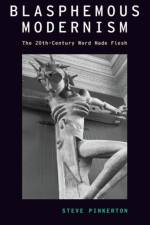
Blasphemous Modernism argues that blasphemy is a signal mode of modernist literary expression. Reading a diverse range of poets (Mina Loy, Langston Hughes) and novelists (James Joyce, Djuna Barnes, Salman Rushdie), Pinkerton shows how these writers forged the literature of modernism from the idiom of blasphemy.
This first book length study of property-owning democracy argues that a society in which capital is universally accessible to all citizens uniquely meets the demands of justice. It defends a renovated form of capitalism in which the free market is no longer a threat to social democratic values, but is potentially convergent with them.
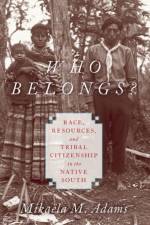
Who Belongs? tells the story of how in the late nineteenth and twentieth centuries, despite economic hardships and assimilationist pressures, six southern tribes insisted on their political identity as citizens of tribal nations and constructed tribally-specific citizenship.
Rural Fictions, Urban Realities examines late nineteenth-century American literature to reveal the increasingly intricate and sometimes problematic connections between urban and rural life.
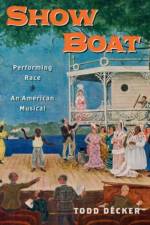
Show Boat: Performing Race in an American Musical draws on exhaustive archival research to tell the story of how Jerome Kern, Oscar Hammerstein II, and a host of directors, choreographers, producers, and performers - among them Paul Robeson - made and remade the most important musical in Broadway history.
Assuming little prior knowledge, Biogeography explains the relationships between geographic variation in biodiversity and the geological, ecological, and evolutionary processes that shape it. The Fourth Edition builds on the strengths of previous ones, illustrating ideas with examples of plants and animals across aquatic and terrestrial ecosystems.
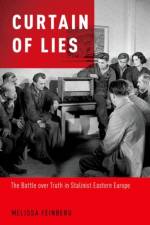
Curtain of Lies tells the story of the struggle to define the truth of Eastern Europe between 1948 and 1956. It examines how actors on both sides of the Iron Curtain tried to create knowledge about Eastern Europe, and thus helped solidify the battle lines of the Cold War.
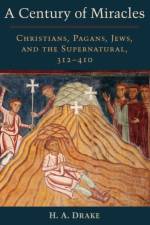
The fourth century of our common era began and ended with a miracle: Constantine's famous Vision of the Cross at one end and Theodosius' victory bearing prayer at the other. In this book, historian H. A. Drake shows how miracles in this century forever altered the way Christians, pagans, and Jews understood themselves and each other.
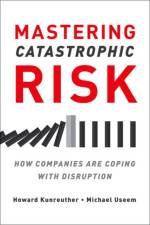
A profound and insightful look at how companies prepare for and respond to crises that threaten catastrophic disruption to their operations and even their existence.
Despite reforms that have realized major improvements, gender power imbalances within and through peacekeeping missions continue to pose major challenges. Sabrina Karim and Kyle Beardsley explore how increasing the representation of women, particularly through an "equal opportunity" framework, will help peacekeeping operations become more of a vehicle for gender equality globally.
Poets and Prophets of the Resistance offers a ground-up history and fresh interpretation of the polarization and mobilization that brought El Salvador to the eve of civil war in 1980.
Through a series of deftly-rendered vignettes, prominent historian Jenna Weissman Joselit offers a compelling and fresh-eyed perspective on the Ten Commandments, situating them within the context of modern America.
Privacy Revisited articulates the legal meanings of privacy and dignity through the lens of comparative law, and argues that the concept of privacy requires a more systematic approach if it is to be useful in framing and protecting certain fundamental autonomy interests.
Which Sin To Bear? mines Langston Hughes's creative work, newspaper columns, letters, and unpublished papers to reveal a writer who faced a daunting array of dicey questions and intimidating obstacles, and whose triumphs and occasional missteps are a fascinating and telling part of his legacy.
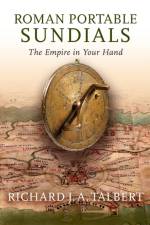
Talbert investigates miniature sundials which can be adjusted for the owner's whereabouts. They incorporate a list of locations and latitudes for ready reference, data that offers insight into Romans' worldviews. To some perhaps, these sundials were primarily symbols of scientific awareness as well as imperial mastery of time and space.
Given the dire consequences of delays in crisis response, this book explains why some international organizations take longer than others to answer calls for intervention. It builds on interviews with AU, EU, OAS and OSCE decision-makers to reveal the institutional sources of efficiency.
In Death, Dying, and Organ Transplantation: Reconstructing Medical Ethics at the End of Life, Miller and Truog challenge fundamental doctrines of established medical ethics. They argue systematically that physicians legitimately cause the death of patients in the routine practices of withdrawing life support and vital organ donation.
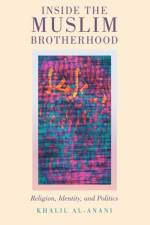
Inside the Muslim Brotherhood provides a comprehensive analysis of the organization's identity, organization, and activism in Egypt since 1981. It also explains the Brotherhood's durability and its ability to persist in spite of regime repression and exclusion over the past three decades.
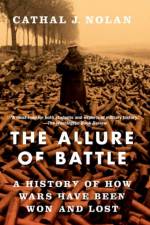
The Allure of Battle is an accessible, provocative, and entertaining book that illuminates fresh debate about the conduct of warfare and the character of battle for readers of military history.
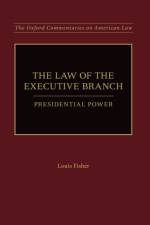
The Law of the Executive Branch: Presidential Power places the law of the executive branch firmly in the context of constitutional language, framers' intent, and more than two centuries of practice. Each provision of the US Constitution is analyzed to reveal its contemporary meaning and in concert with the application of presidential power.
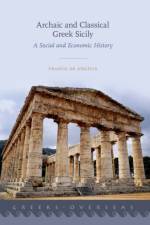
Ancient Greek migrants in Sicily produced societies and economies that paralleled and differed from their homeland. Since the nineteenth century explanations for this have been heavily debated. This book is the first to gather the historical and archaeological evidence and to deploy it to test the various historical models proposed.
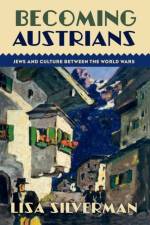
This book demonstrates that an intensified marking of people, places, and events as "Jewish" accompanied the crises occurring in the wake of Austria-Hungary's collapse, leaving profound effects on Austria's cultural legacy.
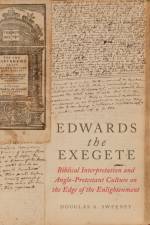
Scholars have long recognized that Jonathan Edwards loved the Bible. But preoccupation with his role in Western "public" life and letters has resulted in a failure to see the significance of his biblical exegesis. Douglas A. Sweeney offers the first comprehensive history of Edwards' interpretation of the Bible.
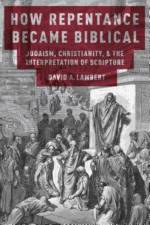
How Repentance Became Biblical explores the rise of repentance as a concept within early forms of Judaism and Christianity and how it has informed the interpretation of the Hebrew Bible, or Old Testament. It develops alternative accounts for many of the ancient phenomena identified as penitential.
Part of Our Lives challenges the conventional idea that public libraries are valuable mostly because they are essential to democracy.
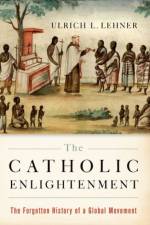
The most cherished values of modernity are unthinkable without the eighteenth-century Enlightenment. Equal rights, the end of discrimination, the growth of democracy, and the idea of perpetual progress stem from thinkers who lived two hundred and fifty years ago, but whose ideas are as attractive as ever.
Abonner på vårt nyhetsbrev og få rabatter og inspirasjon til din neste leseopplevelse.
Ved å abonnere godtar du vår personvernerklæring.