














Gjør som tusenvis av andre bokelskere
Abonner på vårt nyhetsbrev og få rabatter og inspirasjon til din neste leseopplevelse.
Ved å abonnere godtar du vår personvernerklæring.Du kan når som helst melde deg av våre nyhetsbrev.

Over the past forty years, conservatives have mastered the art of pursuing policy change across the states, while similar liberal efforts have floundered. Using a diverse array of original evidence, State Capture explains why and how conservatives developed cross-state political clout while progressives did not.
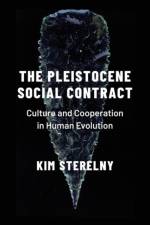
Kim Sterelny here builds on his original account of the evolutionary development and interaction of human culture and cooperation, which he first presented in The Evolved Apprentice (2012). Sterelny sees human evolution not as hinging on a single key innovation, but as emerging from a positive feedback loop caused by smaller divergences from other great apes, including bipedal locomotion, better causal and social reasoning, reproductive cooperation, andchanges in diet and foraging style. He advances this argument in The Pleistocene Social Contract with four key claims about cooperation, culture, and their interaction in human evolution. First, he proposes a new model of the evolution of human cooperation. He suggests human cooperation began from a baseline that was probably similar to that of great apes, advancing about 1.8 million years ago to an initial phase of cooperative forging, in small mobile bands. Second, he then presents a novel account of the change in evolutionary dynamics of cooperation: from cooperation profits based on collective action and mutualism, to profits based on direct and indirect reciprocation overthe course of the Pleistocene. Third, he addresses the question of normative regulation, or moral norms, for band-scale cooperation, and connects it to the stabilization of indirect reciprocation as a central aspect of forager cooperation. Fourth, he develops an account of the emergence of inequalitythat links inequality to intermediate levels of conflict and cooperation: a final phase of cooperation in largescale, hierarchical societies in the Holocene, beginning about 12,000 years ago. The Pleistocene Social Contract combines philosophy of biology with a reading of the archaeological and ethnographic record to present a new model of the evolution of human cooperation, cultural learning, and inequality.
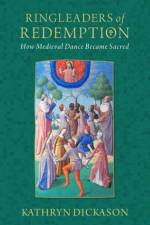
In popular thought, Christianity is often figured as being opposed to dance. Conventional scholarship traces this controversy back to the Middle Ages. Throughout the medieval era, the Latin Church denounced and prohibited dancing in religious and secular realms, often aligning it with demonic intervention, lust, pride, and sacrilege. Historical sources, however, suggest that medieval dance was a complex and ambivalent phenomenon. During the High and Late Middle Ages,Western theologians, liturgists, and mystics not only tolerated dance; they transformed it into a dynamic component of religious thought and practice. This book investigates how dance became a legitimate form of devotion in Christian culture. Sacred dance functioned to gloss scripture, framespiritual experience, and imagine the afterlife. Invoking numerous manuscript and visual sources (biblical commentaries, sermons, saints'' lives, ecclesiastical statutes, mystical treatises, vernacular literature, and iconography), this book highlights how medieval dance helped shape religious identity and social stratification. Moreover, this book shows the political dimension of dance, which worked in the service of Christendom, conversion, and social cohesion. In Ringleaders ofRedemption, Kathryn Dickason reveals a long tradition of sacred dance in Christianity, one that the professionalization and secularization of Renaissance dance obscured, and one that the Reformation silenced and suppressed.
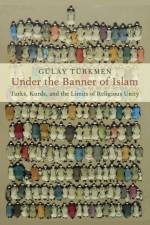
Sunni Islam has played an ambivalent role in Turkey's Kurdish conflict-both as a conflict resolution tool and as a tool of resistance. Under the Banner of Islam uses Turkey as a case study to understand how religious, ethnic, and national identities converge in ethnic conflicts between co-religionists. Gülay Türkmen asks a question that informs the way we understand religiously homogeneous ethnic conflicts today: Is it possible for religion to actas a resolution tool in these often-violent conflicts?
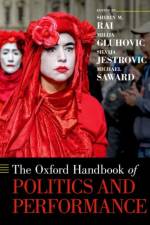
Political scientists and political theorists have long been interested in social and political performance. Theatre and performance researchers have often focused on the political dimensions of the live arts. Yet the interdisciplinary nature of this labor has typically been assumed rather than rigorously explored. Further, it is crucial to bring the concepts of theatre and performance deployed by other disciplines such as psychology, law, political anthropology,sociology among others into a wider, as well as deeper, interdisciplinary engagement. Embodying and fostering that engagement is at the heart of this new handbook.The Handbook brings together leading scholars in the fields of Politics and Performance to map out the evolving interdisciplinary engagement. The authorsΓÇödrawn from a wide range of disciplinesΓÇöinvestigate the relationship between politics and performance to show that certain features of political transactions shared by performances are fundamental to both disciplines, and that they also share, to a large extent, a common communicational base and language. The volume is organized into seventhematic sections: the interdisciplinary theory of politics and performance; performativity and theatricality (protest, regulation, resistance, change, authority); identities (race, gender, sexuality, class, citizenship, indigeneity); sites (states, borders, markets, law, religion); scripts(accountability, authority and legitimacy, security, ceremony, sustainability); body, voice, and gesture (representation, leadership, participation, rhetoric, disruption); and affect (media, care, love empathy, comedy, populism, memory).
Thinking In and About Music offers a new look at Milton Babbitt's music, one which brings to bear theories of gesture and embodiment, rhetoric, text setting, and temporality in order to provide a multi-faceted look at one of the twentieth century's most fascinating musical minds.
Transformations of Tradition probes how the encounter with colonial modernity conditioned Islamic jurists'' conceptualizations of the shari''a. Departing from the tendency to focus on reformist-minded thinkers and politically charged issues, Junaid Quadri directs his attention towards the overlooked jurisprudential writings of Muhammad Bakhit al-Muti-i (1854-1935), Mufti of Egypt and a frequent critic of the famed reformists Muhammad ''Abduh and Rashid Rida.There, he locates a remarkable series of foundational intellectual shifts. Offering a fresh perspective on a pivotal period in the history of Islamic thought, Quadri tracks how Bakhit reworks the relationship of the shari''a to categories of understanding as fundamental as history and authority, science andtechnology, and religion and the secular, thereby upending the very ground upon which Islamic law had until then functioned. Through close readings of complex legal texts and mining of oft-neglected archives, this carefully researched study situates its argument in both the contested scholarly world of a quickly-changing Cairo, and the transregional school of Hanafi law as represented by jurists writing in Kazan, Lucknow, and Baghdad. Examining Islamic jurisprudential discourse in the colonialmoment, Transformations of Tradition uncovers a shari''a that is neither a medieval holdover nor merely a pragmatic concession to the demands of a new world, but rather deeply entangled with the epistemological commitments of colonial modernity.
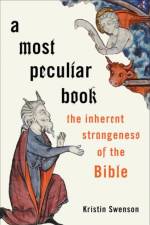
The Bible, we are constantly reminded, is the best-selling book of all time. It is read with intense devotion by hundreds of millions of people, stands as authoritative for Judaism and Christianity, and informs and affects the politics and lives of the religious and non-religious around the world. But how well do we really know it? The Bible is so familiar, so ubiquitous that we have begun to take our knowledge of it for granted. The Bible many of us think we know isa pale imitation of the real thing.In A Most Peculiar Book, Kristin Swenson addresses the dirty little secret of biblical studies ΓÇö that the Bible is a weird book. It is full of surprises and contradictions, unexplained impossibilities, intriguing supernatural creatures, and heroes doing horrible deeds. It does not provide a simple worldview: what "the Bible says" on a given topic is multi-faceted, sometimes even contradictory. Yet, Swenson argues, we have a tendency to reduce the complexities of the Bible toaphorisms, bumper stickers, and slogans. Swenson helps readers look at the text with fresh eyes. A collection of ancient stories and poetry written by multiple authors, held together by the tenuous string of tradition, the Bible often undermines our modern assumptions. And is all the more marvelous and powerful for it.Rather than dismiss the Bible as an outlandish or irrelevant relic of antiquity, Swenson leans into the messiness full-throttle. Making ample room for discomfort, wonder, and weirdness, A Most Peculiar Book guides readers through a Bible that will feel, to many, brand new.
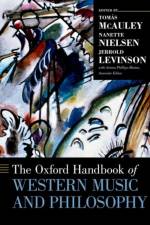
The Oxford Handbook of Western Music and Philosophy celebrates the ways in which musicians have historically called upon philosophy as a source of inspiration and encouragement, and scholars of music through the ages have turned to philosophy for insight into music and into the worlds that sustain it.
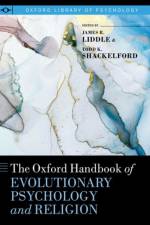
The Oxford Handbook of Evolutionary Psychology and Religion unites the theoretical and empirical work of leading scholars in the evolutionary, cognitive, and anthropological sciences to produce an extensive and authoritative review of this literature.
The extra Calvinisticum, the doctrine that the eternal Son maintains his existence beyond the flesh both during his earthly ministry and perpetually, divided the Lutheran and Reformed traditions during the Reformation. This book explores the emergence and development of the extra Calvinisticum in the Reformed tradition by tracing its first exposition from Ulrich Zwingli to early Reformed orthodoxy. Rather than being an ancillary issue, the questionssurrounding the extra Calvinisticum were a determinative factor in the differentiation of Magisterial Protestantism into rival confessions. Reformed theologians maintained this doctrine in order to preserve the integrity of both Christ''s divine and human natures as the mediator between God and humanity. Thisrationale remained consistent across this period with increasing elaboration and sophistication to meet the challenges leveled against the doctrine in Lutheran polemics. The study begins with Zwingli''s early use of the extra Calvinisticum in the Eucharistic controversy with Martin Luther and especially as the alternative to Luther''s doctrine of the ubiquity of Christ''s human body. Over time, Reformed theologians, such as Peter Martyr Vermigli and Antione de Chandieu, articulated the extra Calvinisticum with increasing rigor by incorporating conciliar christology, the church fathers, and scholastic methodology to address the polemical needs ofengagement with Lutheranism. The Flesh of the Word illustrates the development of christological doctrine by Reformed theologians offering a coherent historical narrative of Reformed christology from its emergence into the period of confessionalization. The extra Calvinisticum was interconnected to broader concernsaffecting concepts of the union of Christ''s natures, the communication of attributes, and the understanding of heaven.
History has long viewed French Protestants as Calvinists. Refusing to Kiss the Slipper re-examines the Reformation in francophone Europe, presenting for the first time the perspective of John Calvin''s evangelical enemies and revealing that the French Reformation was more complex and colorful than previously recognized. Michael Bruening brings together a cast of Calvin''s opponents from various French-speaking territories to show that opposition to Calvinismwas stronger and better organized than has been recognized. He examines individual opponents, such as Pierre Caroli, Jerome Bolsec, Sebastian Castellio, Charles Du Moulin, and Jean Morély, but more importantly, he explores the anti-Calvinist networks that developed around such individuals. Each group had its own origins and agenda, but all agreed that Calvin''s claim to absolute religious authority too closely echoed the religious sovereignty of the pope. These oft-neglected opponents refused to offer such obeisance-to kiss the papal slipper-arguing instead for open discussion of controversial doctrines. They believed Calvin''s self-appointed leadership undermined the bedrock principle of the Reformation that the faithful be allowed to challenge religious authorities. This bookshows that the challenge posed by these groups shaped the way the Calvinists themselves developed their reform strategies. Bruening''s work demonstrates that the breadth and strength of the anti-Calvinist networks requires us to abandon the traditional assumption that Huguenots and other francophoneProtestants were universally Calvinist.
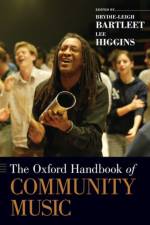
This Handbook charts the new and emerging contexts, practices, pedagogies, and research approaches which will define the field of community music in coming decades.
The Good Kill addresses the crisis of moral injury among warfighters from the perspective of the just war tradition. By providing a moral framework for enduring the heavy business of killing in combat, Marc LiVecche offers potential remedies to help warfighters manage the effects of killing without becoming irreparably morally injured.
This book examines evangelical responses to immigrants and refugees in the era of modern immigration. It traces evangelical responses to refugees and immigrants from the Cuban refugees in the 1960s to their divided stances on undocumented immigration in the twenty-first century. While evangelicals drew on elaborate Biblical teachings to
Clergy have historically been represented as figures of authority, wielding great influence over our society. During certain periods of American history, members of the clergy were nearly ever-present in public life. But men and women of the clergy are not born that way, they are made. And therefore, the matter of their education is a question of fundamental public importance. In Clergy Education in America, Larry Golemon shows not only how our conception of professionalism in religious life has changed over time, but also how the education of religious leaders have influenced American culture. Tracing the history of clergy education in America from the Early Republic through the first decades of the twentieth century, Golemon tracks how the clergy has become increasingly diversified in terms of race, gender, and class in part because of this engagement withpublic life. At the same time, he demonstrates that as theological education became increasingly intertwined with academia the clergy''s sphere of influence shrank significantly, marking a turn away from public life and a decline in their cultural influence. Clergy Education in America offers a sweeping look at an oft-overlooked but critically important aspect of American public life.
The Oxford Handbook of Contemporary Ballet looks at the many ways ballet functions as a global practice in the 21st century, providing new perspectives on ballet's past, present, and future.
The Oxford Handbook of Feminist Approaches to the Hebrew Bible brings together 37 essential essays written by leading international scholars, examining crucial points of analysis within the field of feminist Hebrew Bible studies. Organized into four major areas - globalization, neoliberalism, media, and intersectionality - the essays collectively provide vibrant, relevant, and innovative contributions to the field. The topics of analysis focus heavily ongender and queer identity, with essays touching on African, Korean, and European feminist hermeneutics, womanist and interreligious readings, ecofeminist and animal biblical studies, migration biblical studies, the role of gender binary voices in evangelical-egalitarian approaches, and the examination ofscripture in light of trans women''s voices. The volume also includes essays examining the Old Testament as recited in music, literature, film, and video games. The Oxford Handbook of Feminist Approaches to the Hebrew Bible charts a culturally, hermeneutically, and exegetically cutting-edge path for the ongoing development of biblical studies grounded in feminist, womanist, gender, and queer perspectives.
The study of the reciprocal relationship between the Bible and popular culture has blossomed in the past few decades. The Oxford Handbook of the Bible and American Popular Culture assesses the current state of the field, offers examples of work in that field, and suggests future directions for further study.
Using all available sources, Boatwright explores the constraints and activities of the women of Rome's imperial families from 35 BCE to 235 CE. Livia, Agrippina the Younger, Julia Domna, and others feature in this richly illustrated investigation of change, continuity, historical contingency, and personal agency in imperial women's pursuits and representations.
During the Second World War, as the Soviet Red Army was locked in brutal combat against the Nazis, Joseph Stalin ended the state''s violent, decades-long persecution of religion. In a stunning reversal, priests, imams, rabbis, and other religious elitesΓÇömany of them newly-released from the GulagΓÇöwere tasked with rallying Soviet citizens to a "Holy War" against Hitler. To the delight of some citizens, and to the horror of others, Stalin''s reversal encouraged awidespread perception that his "war on religion" was over. A revolution in Soviet religious life ensued: soldiers prayed on the battlefield, entire villages celebrated once-banned holidays, and state-backed religious leaders used their new positions not only to consolidate power over their communities, butalso to petition for further religious freedoms. Offering a window on this wartime "religious revolution," God Save the USSR focuses on the Soviet Union''s Muslims, using sources in several languages (including Russian, Tatar, Bashkir, Uzbek, and Persian). Drawing evidence from eyewitness accounts, interviews, soldiers'' letters, frontline poetry, agents'' reports, petitions, and the words of Soviet Muslim leaders, Jeff Eden argues that the religious revolution was fomented simultaneouslyby the state and by religious Soviet citizens: the state gave an inch, and many citizens took a mile, as atheist Soviet agents looked on in exasperation at the resurgence of unconcealed devotional life.
This book makes political corruption an object of public ethics by demonstrating how it is an internal enemy-a Trojan horse-of public institutions. To understand political corruption, Emanuela Ceva and Maria Paola Ferretti argue, we must adopt an internal point of view and look at how officeholders' interrelated conduct may fail the functioning of their institution because of their unaccountable use of their office's powers. Even well-designed institutions may bederailed if the officeholders fail to uphold by their conduct a public ethics of office accountability. Political corruption is one such failure, and it is wrong even when its negative consequences are unclear or debatable. To correct this failure, the book calls on officeholders to oppose politicalcorruption from the inside by engaging in practices of mutual answerability.
For many of us, the issue of whether or not God exists is among the most perplexing and profound questions of our lives. Laura Ekstrom examines this issue in light of ubiquitous human suffering. When we survey the world, we observe an enormous amount of pain, including virtually unspeakable kinds of maltreatment and agony, many instances of which seem patently to be unfair, unearned, and pointless. In light of these observations, this book argues that it isreasonable to conclude that God does not exist. Ekstrom shows the power of arguments from evil for atheism, while giving a thorough critical examination of attempts to answer them.
The book discusses short, non-epic, and under-appreciated hexametrical genres, such as oracles, incantations, and laments, and gains new insight into their ritual performance, their early history, and how poets from Homer to Theocritus embedded or imitated these genres to enrich their own poems.
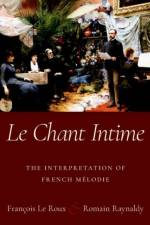
In Le Chant Intime, internationally renowned baritone Francois Le Roux, in conversation with journalist Romain Raynaldy, explores the historical and artistic context of French melodie with enriching analyses of full lyrical poems and several musical examples.
Yiddish: Biography of a Language presents the story of the foundational vernacular of Ashkenazi Jews, from its origins to the present, spoken around the world. This book examines the uses of Yiddish and values invested in it to trace the dynamic interrelation of the language, its speakers, and their cultures.
The International Handbook of Threat Assessment, Second Edition is the comprehensive resource for mental health practitioners, law enforcement, and professionals working to prevent targeted violence. This guide will serve as inspiration for further research and equip those working to intercept harm with the necessary tools for intervention.
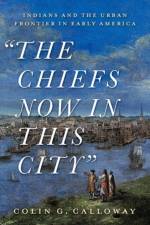
America's founding involved and required the melding of cultures and communities, a redefinition of "frontier" and boundaries in every possible sense. Using the accounts of Native leaders who visited cities in the Early Republic, Calloway's book reorients the story of that founding. Violent resistance was just one of many Native responses to colonialism. Peaceful interaction was far more the norm, and while less dramatic and therefore less covered, far more importantin its effects.
Abonner på vårt nyhetsbrev og få rabatter og inspirasjon til din neste leseopplevelse.
Ved å abonnere godtar du vår personvernerklæring.