
















Gjør som tusenvis av andre bokelskere
Abonner på vårt nyhetsbrev og få rabatter og inspirasjon til din neste leseopplevelse.
Ved å abonnere godtar du vår personvernerklæring.Du kan når som helst melde deg av våre nyhetsbrev.

In The Muhammad Avatara, Ayesha Irani offers an examination of the Nabivamsa, the first epic work on the Prophet Muhammad written in Bangla. This little-studied seventeenth-century text, written by Saiyad Sultan, is a literary milestone in the multi-ethnic, multi-cultural history of Islam, and marks a significant contribution not only to Bangla''s rich literary corpus, but also to our understanding of Islam''s localization in Indic culture in the early modern period.That Sufis such as Saiyad Sultan played a central role in Islam''s spread in Bengal has been demonstrated primarily through examination of medieval Persian literary, ethnographic, and historical sources, as well as colonial-era data. Islamic Bangla texts themselves, which emerged from the sixteenthcentury, remain scarcely studied outside the Bangladeshi academy, and almost entirely untranslated. Yet these premodern works, which articulate Islamic ideas in a regional language, represent a literary watershed and underscore the efforts of rebel writers across South Asia, many of whom were Sufis, to defy the linguistic cordon of the Muslim elite and the hegemony of Arabic and Persian as languages of Islamic discourse. Irani explores how an Arabian prophet and his religion came to inhabit theseventeenth-century Bengali landscape, and the role that pir-authors, such as Saiyad Sultan, played in the rooting of Islam in Bengal''s easternmost regions. This text-critical study lays bare the sophisticated strategies of translation used by a prominent early modern Muslim Bengali intellectual toinvite others to his faith.
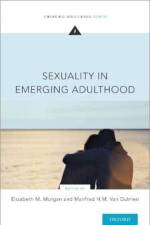
Sexuality in Emerging Adulthood provides a comprehensive overview of sexuality at the stage straddling adolescence and adulthood. The first section of the volume offers conceptualizations and foundational perspectives on sexuality in emerging adulthood, with topics including theory, developmental considerations, sexual behavior, sexual beliefs and attitudes, associations with romance, casual sex, and sexual orientation. The second section systematicallyexamines contexts and socializing agents of sexual development, including parents, peers, media, and religion. The third section narrows in on the overarching theme of the series by addressing factors leading to flourishing and floundering in the area of sexuality during emerging adulthood, such as effects ofearly adversity, sexual health, sexual well-being, sexuality and mental health, and sexual assault. Accompanying seven of the chapters in the volume are brief scientific reports offering new related research. The volume also contains four method tutorials that discuss topics in sex research such as ethical considerations, recruitment and incentive strategies, and identity-affirming methods. Concluding with innovative new perspectives on the integration of sexual health promotion and sexualviolence prevention, this volume is crucial reading for academic scholars and those working with and supporting emerging adults.
University and Public Behavioral Health Organization Collaboration in Justice Contexts provides detailed information on nine of these successful collaborations that have endured over the years. Chapters center on a specific partnership and provide information on its purpose, its beginnings, and its leadership.
Financial econometrics brings financial theory and econometric methods together with the power of data to advance understanding of the global financial universe upon which all modern economies depend. Financial Econometric Modeling is an introductory text that meets the learning challenge of integrating theory, measurement, data, and software to understand the modern world of finance. Empirical applications with financial data play a central position in thisbook''s exposition. Each chapter is a how-to guide that takes readers from ideas and theories through to the practical realities of modeling, interpreting, and forecasting financial data. The book reaches out to a wide audience of students, applied researchers, and industry practitioners, guiding readers ofdiverse backgrounds on the models, methods, and empirical practice of modern financial econometrics.Financial Econometric Modeling delivers a self-contained first course in financial econometrics, providing foundational ideas from financial theory and relevant econometric technique. From this foundation, the book covers a vast arena of modern financial econometrics that opens up empirical applications with data of the many different types that are now generated in financial markets. Every chapter follows the same principle ensuring that all results reported in the book may bereproduced using standard econometric software packages such as Stata or EViews, with a full set of data and programs provided to ensure easy implementation.
Possibility studies is an emerging field of research including topics as diverse as creativity, imagination, innovation, anticipation, counterfactual thinking, wondering, the future, social change, hope, agency, and utopia. The Possible: A Sociocultural Theory contributes to this wide field by developing a sociocultural account of the possible grounded in the notions of difference, position, perspective, dialogue, action, and culture.
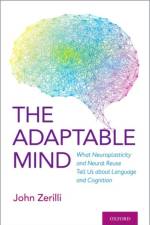
Advances in neuroscience have forced us to rethink some our assumptions about the structure of the mind, and take stock of the true extent to which our cognitive faculties are "made", not "born". This book describes how our discovery of the brain's power to adapt to its environment ("neuroplasticity") has changed the way we think about the structure of the mind.
In The Fundamentals of Ethics, author Russ Shafer-Landau employs a uniquely engaging writing style to introduce students to the essential ideas of moral philosophy. Offering more comprehensive coverage of the good life, normative ethics, and metaethics than any other text of its kind, this book also addresses issues that are often omitted from other texts.
Why did southern white evangelical Christians resist the civil rights movement in the 1950s and 1960s? Simply put, they believed the Bible told them so. These white Christians entered the battle certain that God was on their side. Ultimately, the civil rights movement triumphed in the 1960s and, with its success, fundamentally transformed American society. But this victory did little to change southern white evangelicals'' theological commitment to segregation. Ratherthan abandoning their segregationist theology in the second half of the 1960s, white evangelicals turned their focus on institutions they still controlledΓÇöchurches, homes, denominations, and private colleges and secondary schoolsΓÇöand fought on. Focusing on the case of South Carolina, The Bible Told Them So shows how, despite suffering defeat in the public sphere, white evangelicals continued to battle for their own institutions, preaching and practicing a segregationist Christianity they continued to believe reflected God''s will. Increasingly caught in the tension between their sincere belief that God desired segregation and their reluctance to give voice to such ideas for fear of being perceived as bigoted or intolerant, bythe late 1960s southern white evangelicals embraced the rhetoric of colorblindness and protection of the family as measures to maintain both segregation and respectable social standing. This strategy set southern white evangelicals on an alternative path for race relations in the decades ahead.
This book guides clinicians in facilitating the improved treatment of emotional distress in cancer patients through psychopharmacologic intervention. It is designed for both prescribing and non-prescribing clinicians in psychosocial oncology, psychiatry, psychology, oncology, and palliative care.
Convergence science is the process whereby innovation comes from the cross pollination of diverse disciplines, industries and cultures, carrying ideas and approaches across boundaries. This book is a blueprint for how this could and should occur in mental health in order to solve the complex, multi-system problems that the field faces.
50 Studies Every Obstetrician-Gynecologist Should Know presents key studies that have shaped the practice of obstetrics and gynecology. This book is a must-read for obstetrician-gynecologists, internists, family practitioners, nurse practitioners, and midwives, as well as anyone who wants to learn more about the data behind clinical practice.
Contemporary Scientific Realism brings together the most important lessons from the history of science to explain scientific realism. The expert contributors introduce and assess topics that redefine what we know about the philosophy of science.
Race Brokers shows how housing market professionals contribute to unequal housing opportunities, neighborhood inequality and racial segregation through racist practices. The book tracks how professionals broker racism across the housing exchange process-from the home's construction, to real estate brokerage, mortgage lending, home appraisals, and the home sale closing.
Confronting the Death Penalty probes how jurors make the ultimate decision about whether another human being should live or die. Drawing on ethnographic and qualitative linguistic methods, the book explores how language, including written laws and trial talk, affects jurors' death penalty decisions. By focusing on how language can both facilitate and stymie empathic encounters, Conley investigates the interface between experiential and linguistic aspects oflegal-decision making to address the moral conflict faced by jurors that is inherent to death penalty trials.
Between the first and last words of a black gospel song, musical sound acquires spiritual power. During this unfolding, a variety of techniques facilitate musical and physical transformation. The most important of these is a repetitive musical cycle known by names including the run, the drive, the special, and the vamp. Through its combination of reiteration and intensification, the vamp turns song lyrics into something more potent. While many musical traditions usevamps to fill space, or occupy time in preparation for another, more important event, in gospel, vamps are the main event. Why is the vamp so central to the black gospel tradition? What work-musical, cultural, and spiritual-does the gospel vamp do? And what does the vamp reveal about thetransformative power of black gospel more broadly? This book explores the vamp''s essential place in black gospel song, arguing that these climactic musical cycles turn worship services into transcendent events. A defining feature of contemporary gospel, the vamp links individual performances to their generic contexts. An exemplar of African American musical practice, the vamp connects gospel songs to a venerable lineage of black sacred expression. As it generates emotive and physical intensity, the vamp helps believers access an embodiedexperience of the invisible, moving between this world and another in their musical practice of faith. The vamp, then, is a musical, cultural, and religious interface, which gives vent to a system of belief, performance, and reception that author Braxton D. Shelley calls the Gospel Imagination. In theGospel Imagination, the vamp offers proof that musical sound can turn spiritual power into a physical reality-a divine presence in human bodies.
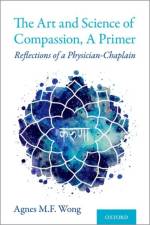
The Art and Science of Compassion, A Primer offers a succinct, all-in-one introduction to the full gamut of compassion, from the evolutional, biological, behavioural, and psychological, to the social, philosophical, and spiritual. Drawing on her diverse background as a clinician, scientist, educator, and chaplain, Dr. Wong presents a wealth of scientific evidence supporting that compassion is both innate and trainable. By interleaving personal experiencesand reflections, she shares her insights on what it takes to cultivate compassion to support the art of medicine and caregiving. The training described in this book draws on both contemplative and scientific disciplines to help clinicians develop cognitive, attentional, affective, and somatic skills that arecritical for the cultivation of compassion. With striking illustrations for key concepts and concise summaries for each chapter, this book provides a solid conceptual framework and practical approaches to cultivate compassion. Advance Praise for The Art and Science of Compassion, A PrimerΓÇ£Well-written, deeply personal and scientifically-grounded, this book provides strong physiological, psychological, and ethical reasons why cultivating compassion is essentialΓÇöand provides a thoughtful roadmap for promoting compassion in healthcare and in all of life.ΓÇ¥ - Ron Epstein, MD, author of Attending: Medicine, Mindfulness, and HumanityΓÇ£Dr. Agnes Wong, a highly distinguished physician and exceptional researcher at the University of Toronto, has written an absolutely uplifting masterpiece about meaning, compassionate care, and the universal journey that all healers must take to sustain their inner being and nobility of purpose. This book is partly her journey to a deeper state of being that places compassionate care in its rightful place in the healing art; it is also a fabulous scientific presentation of the practiceand impact of compassionate care on patients and on one''s own flourishing as a physician. This is a book that touches the soul and should be read by every medical student or clinician worldwide as they reflect on what it means to really succeed in their ΓÇ£whole selvesΓÇ¥ as healers and human beings.ΓÇ¥ - Stephen G. Post, PhD, Director, Center for Medical Humanities, Compassionate Care and Bioethics; Professor of Family, Population and Preventive Medicine, Stony Brook University"Compassion and empathy are traits that make us human, and as Dr. Wong shows, these qualities can be developed, encouraged, and cultivated. In our struggling world, we need this awareness as never before. The future of our species likely depends on it. This book is an example of how science and spirituality can come together in a brilliant synthesis." - Larry Dossey, MD, author of One Mind: How Our Individual Mind Is Part of a Greater Consciousness and Why It Matters
Drawing on expert interviews, original research, and personal storytelling, Digital Health explores the theory, science, and applications behind the uses of emerging digital technologies in healthcare.
Melania the Younger: From Rome to Jerusalem explores one of the most richly detailed stories of a woman of late antiquity. Melania, an early fifth-century Roman Christian aristocrat, renounced her staggering wealth to lead a life of ascetic renunciation. Her life spans many crucial events in the history of the later Roman Empire.
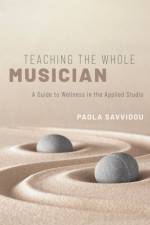
In Teaching the Whole Musician: A Guide to Wellness in the Applied Studio, author Paola Savvidou empowers applied music instructors to honor and support their students' wellness through compassion-filled conversation tools, and hands-on activities both injury prevention, mental health protection, and recovery support.
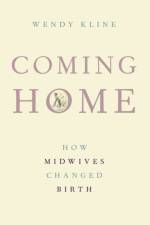
Coming Home tells the story of how a significant number of parents in postwar America opted out of the standardized medicated hospital birth and recast home birth as a legitimate and desirable choice.
A fast-paced narrative of the hard-driving American war correspondents who reported the war against Nazi Germany from the battlegrounds of North Africa, Germany, Italy, and France-and shaped the home front's perception of some of the most pivotal battles in American history.
Nobel Prize-winning novelist J.M. Coetzee''s "Jesus" fictions constitute a trilogy of novels that have appeared over the last decade. They stand out from his earlier work in their difficulty, and in the central role they accord philosophyΓÇöin part through their interest in specific themes in which philosophy is interested, in part through their critical engagement with philosophy as a mode of intellectual activity, with a very particular role to play in the broadercultural concerns of modern Western Europe. Robert Pippin presents the first detailed interpretation of J.M. Coetzee''s "Jesus" trilogy as a whole. In order to understand them, he treats the three fictions as a philosophical fable, in the tradition of Plato''s Republic, More''s Utopia, Rousseau''s Emile, or Nietzsche''s Thus Spoke Zarathustra. In the trilogy''s mythical setting, everyone is an exile, removed from their homeland and transported to a strange new place, with most of their memories of theirhomeland erased. Pippin treats these fictions as philosophical explorations of the implications of a deeper kind of spiritual homelessnessΓÇöa version that characterizes late modern life itselfΓÇöand he sees the theme of forgetting as a figure for modern historical amnesia and indifference to reflection and self-knowledge. This state ofexile is interpreted as metaphysical as well as geographical.Pippin''s insightful, careful reading of Coetzee suggests the limitations of traditional philosophical treatments of themes like eros, beauty, social order, art, family, non-discursive forms of intelligibility, self-deception, and death. And he wrings from the trilogy its intertextuality, and many references to the Christian Bible, Plato, Cervantes, Goethe, Kleist, and Wittgenstein, among others. Throughout, Pippin expresses the potential of literature to be a profound form of philosophicalreflection.
Abonner på vårt nyhetsbrev og få rabatter og inspirasjon til din neste leseopplevelse.
Ved å abonnere godtar du vår personvernerklæring.