



Gjør som tusenvis av andre bokelskere
Abonner på vårt nyhetsbrev og få rabatter og inspirasjon til din neste leseopplevelse.
Ved å abonnere godtar du vår personvernerklæring.Du kan når som helst melde deg av våre nyhetsbrev.

This text focuses on cardiothoracic critical care and covers guidelines for evidence-based practice, respiratory and metabolic physiology, common hemodynamic perturbations, ventricular failure, and mechanical circulatory support devices. All clinicians who care for cardiothoracic patients who are critically ill can find pearls of practice wisdom complemented by literature citations within this text.
Phosphorus tells the story of this element, from its supernova origins through its modern roles as fertilizer and as global water pollutant, while delineating solutions for its future.
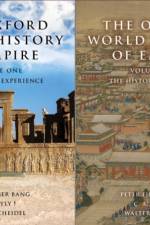
Volume One is dedicated to synthesis and comparison. Following a comprehensive theoretical survey and bold world history synthesis, fifteen chapters analyze and explore the multifaceted experience of empire across cultures and through the ages.
Volume Two tracks the protean history of political domination from the very beginnings of state formation in the Bronze Age up to the present.
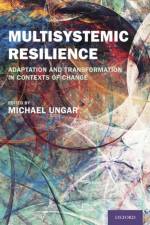
Multisystemic Resilience brings together in one volume a wide range of resilience scholars who have been wrestling with how to explain processes of recovery, adaptation, and transformation in contexts of change and adversity. Together this collection shows that considering the resilience of multiple systems at once is instrumental to understanding the processes of change and sustainability.
This is the first world history of empire from the third millennium BCE to the present. By combining synthetic surveys, thematic comparative essays and numerous chapters on specific empires, it provides unparalleled coverage of imperialism throughout history and across continents, from Asia to Europe and from Africa to the Americas.
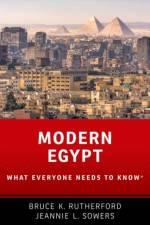
This book introduces non-specialists to Egypt, a pivotal country in the Middle East whose future is critical to the region's stability and prosperity. It addresses the key events and themes needed to understand this fascinating country, including history, geography, religion, economy, society, foreign policy, and the 2011 uprising.
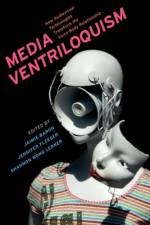
Media Ventriloquism offers a new take on the many forms ventriloquism takes in 21st-century media, from Skype to video games, and the ways in which marginalized groups have used the act of separating the body from the voice to claim their agency and power.
This book is the first monograph dedicated to the exploration and rigorous reconstruction of relational action devised by Classical Chinese philosophers who attempted to account for the interdependent and embedded character of human agency-what Mercedes Valmisa denominates "adapting" or "adaptive agency" (yin). As opposed to more unilateral approaches to action conceptualized in the Classical Chinese corpus, such as forceful and prescriptiveagency, adapting requires heightened awareness of self and others, equanimity, flexibility, creativity, and response. Valmisa explores the core conception of adapting both on autochthonous terms and by cross-cultural comparison, drawing on the European and Analytic philosophical traditions as well as on scholarship fromother disciplines, opening a brand-new topic in Chinese and comparative philosophy.
In Remaking Families in Contemporary China, Xiaoying Qi explores a number of emerging family practices in China. Drawing upon 178 in-depth interviews with both men and women of all ages, she examines novel aspects of family life, including surnaming practices, the migration of elderly parents from rural areas to urban environments, spousal intimacy, divorce, and remarriage and co-habitation in later life.
Microelectronic Circuits by Sedra and Smith has served generations of electrical and computer engineering students as the best and most widely-used text for this required course. Respected equally as a textbook and reference, "Sedra/Smith" combines a thorough presentation of fundamentals with an introduction to present-day IC technology. It remains the best text for helping students progress from circuit analysis to circuit design, developing design skillsand insights that are essential to successful practice in the field. Significantly revised with the input of two new coauthors, slimmed down, and updated with the latest innovations, Microelectronic Circuits, Eighth Edition, remains the gold standard in providing the most comprehensive, flexible, accurate, anddesign-oriented treatment of electronic circuits available today.
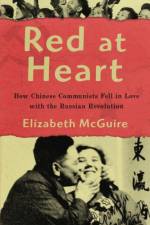
From a debut author, an intimate, multigenerational narrative of the Russian and Chinese revolutions through the eyes of the Chinese youth who traveled to the Soviet Union and the fate of their blended offspring
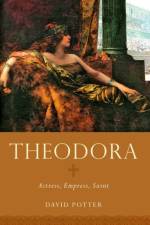
An engaging biography of one of history's most intriguing and powerful women: Theodora, Empress of the Byzantine Empire
The first work covering a key element of the strategic relationship between states from ancient history to the late 20th century, Great Strategic Rivalries fills a major gap in the historiography of state relations.
The Women, Peace and Security agenda has developed over the past two decades, anchored in-but far exceeding-a series of resolutions adopted by the UN Security Council that address gender and the governance of peace and conflict. This book presents an analysis of the emergence of the WPS agenda as a knowable policy object, applying narrative and discourse theory to a dataset of publicly available documents published over the past two decades, and original interviewswith people working on and around the WPS agenda at the United Nations Headquarters in New York.
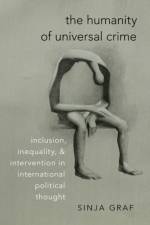
The international crime of "crimes against humanity" has become integral to contemporary political and legal discourse. However, the conceptual core of the termΓÇöan act against all of mankindΓÇöhas a longer and deeper history in international political thought. In an original excavation of this history, The Humanity of Universal Crime examines theoretical mobilizations of the idea of universal crime in colonial and post-colonial contexts. Sinja Grafdemonstrates the overlooked centrality of humanity and criminality to political liberalism''s historical engagement with world politics, thereby breaking with the exhaustively studied status of individual rights in liberal thought. Graf argues that invocations of universal crime project humanity as a normativelyintegrated, yet minimally inclusive and hierarchically structured subject. Such visions of humanity have in turn underwritten justifications of foreign rule and outsider intervention based on claims to an injury universally suffered by all mankind. Foregrounding the "political productivity" of universal crime, the book traces the intellectual history of the rise, fall, and reappearance of notions of universal crime in political theory over time. It looks particularly at the way European theorists have deployed the concept in assessing the legitimacy of colonial rule and foreign intervention in non-European societies. The book argues that an "inclusionary Eurocentrism" subtends the authorizing and coercive dimensions of universal crime.Unlike much-studied "exclusionary Eurocentrist" thinking, "inclusionary Eurocentrist" arguments have historically extended an unequal, repressive "recognition via liability" to non-European peoples. Overall the book offers a novel view of how claims to act in the name of humanity are deeply steeped inpractices that reproduce structures of inequality at a global level, particularly across political empires.
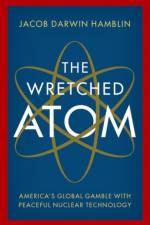
Written by a prize-winning historian, The Wretched Atom is an authoritative history and a sweeping indictment of so-called peaceful nuclear technologies in the countries of the developing world.
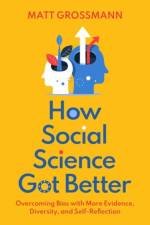
It seems like most of what we read about the academic social sciences in the mainstream media is negative. The field is facing mounting criticism, as canonical studies fail to replicate, questionable research practices abound, and researcher social and political biases come under fire. In response to these criticisms, Matt Grossmann, in How Social Science Got Better, provides a robust defense of the current state of the social sciences. Applying insights from the philosophy, history, and sociology of science and providing new data on research trends and scholarly views, he argues that, far from crisis, social science is undergoing an unparalleled renaissance of ever-broader understanding and application. According to Grossmann, social science research today has neverbeen more relevant, rigorous, or self-reflective because scholars have a much better idea of their blind spots and biases. He highlights how scholars now closely analyze the impact of racial, gender, geographic, methodological, political, and ideological differences on research questions; how the incentivesof academia influence our research practices; and how universal human desires to avoid uncomfortable truths and easily solve problems affect our conclusions. Though misaligned incentive structures of course remain, a messy, collective deliberation across the research community has shifted us into an unprecedented age of theoretical diversity, open and connected data, and public scholarship.Grossmann''s wide-ranging account of current trends will necessarily force the academy''s many critics to rethink their lazy critiques and instead acknowledge the path-breaking advances occurring in the social sciences today.
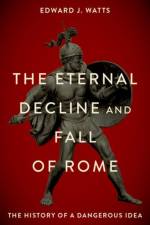
As this book intriguingly explores, for those who would make Rome great again and their victims, ideas of Roman decline and renewal have had a long and violent history.The decline of Rome has been a constant source of discussion for more than 2200 years. Everyone from American journalists in the twenty-first century AD to Roman politicians at the turn of the third century BC have used it as a tool to illustrate the negative consequences of changes in their world. Because Roman history is so long, it provides a buffet of ready-made stories of decline that can help develop the context around any snapshot. And Rome did, in fact, decline and, eventually, fall. Anempire that once controlled all or part of more than 40 modern European, Asian, and African countries no longer exists. Roman prophets of decline were, ultimately, proven correct-a fact that makes their modern invocations all the more powerful. If it happened then, it could happen now.The Eternal Decline and Fall of Rome tells the stories of the people who built their political and literary careers around promises of Roman renewal as well as those of the victims they blamed for causing Rome''s decline. Each chapter offers the historical context necessary to understand a moment or a series of moments in which Romans, aspiring Romans, and nonΓÇöRomans used ideas of Roman decline and restoration to seize power and remake the world around them. The story begins during theRoman Republic just after 200 BC. It proceeds through the empire of Augustus and his successors, traces the Roman loss of much of western Europe in the fifth century AD, and then follows Roman history as it runs through the Eastern Roman Empire (Byzantium) until its fall in 1453. The final two chapters lookat ideas of Roman decline and renewal from the fifteenth century until today. If Rome illustrates the profound danger of the rhetoric of decline, it also demonstrates the rehabilitative potential of a rhetoric that focuses on collaborative restoration, a lesson of great relevance to our world today.
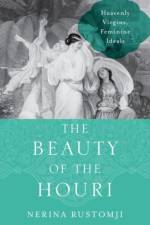
A captivating look at the history of the pure females of Islamic paradise known as the houriThe fascination with the houri, the pure female of Islamic paradise, began long before September 11, 2001. Beauty of the Houri: Heavenly Virgins, Feminine Ideals demonstrates how the ambiguous reward of the houri, mentioned in the Qur╩╛an and developed in Islamic theological writings, has gained a distinctive place in the cultural eye from the seventeenth to the twenty-first century.The houri had multiple functions in Islamic texts that ranged from caretaker, to pure companion, to personal entertainment. French, English, and American writers used the houri to critique Islam and Muslim societies, while also adopting the houri as a model of feminine beauty. Unlike earlier texts that presented different forms of the houri or universalized the houri for all women, writings about the houri after September 11th offer contradictory messages about Islam. In the twenty-firstcentury, the image of the houri has come to symbolize a reward for violence and the possibility of gender parity.As a cosmic figure that inspires enduring questions about the promise of paradise and the idealized feminine form, the houri has a singular past and broad potential for future interpretation. The Beauty of the Houri narrates an intellectual history of the houri and offers a contemporary account of how theological ambiguity has led to different interpretations of this powerfully enduring Islamic concept.
International Criminal Jurisdiction is a treatise for anyone conducting research into how domestic and international regimes create and enforce rules for personal and subject matter jurisdiction in transnational or international criminal cases.
In the Aftermath of the Pandemic is an accessible, non-technical treatment manual for psychotherapists seeking to help patients suffering from psychological effects of the COVID-19 pandemic or other disasters. It adapts interpersonal psychotherapy (IPT), a proven treatment for depression, anxiety, and posttraumatic stress disorder, to the needs of patients and therapists during the pandemic.
No subject is more central to the study of politics than elections. Electoral systems-the rules about how voters' preferences are translated into election results-profoundly shape important political outcomes, including party systems, candidate selection, and policy choices. This volume provides an in-depth exploration of the origins and effects of electoral systems.
The first authoritative history of American''s longest war by one of the world''s leading scholar-practitioners.The American war in Afghanistan, which began in 2001, is now the longest armed conflict in the nation''s history. It is currently winding down, and American troops are likely to leave soon ΓÇö but only after a stay of nearly two decades.In The American War in Afghanistan, Carter Malkasian provides the first comprehensive history of the entire conflict. Malkasian is both a leading academic authority on the subject and an experienced practitioner, having spent nearly two years working in the Afghan countryside and going on to serve as the senior advisor to General Joseph Dunford, the US military commander in Afghanistan and later the chairman of the joint chiefs of staff. Drawing from a deep well of local knowledge,understanding of Pashto, and review of primary source documents, Malkasian moves through the war''s multiple phases: the 2001 invasion and after; the light American footprint during the 2003 Iraq invasion; the resurgence of the Taliban in 2006, the Obama-era surge, and the various resets in strategy and forceallocations that occurred from 2011 onward, culminating in the 2018-2020 peace talks. Malkasian lived through much of it, and draws from his own experiences to provide a unique vantage point on the war. Today, the Taliban is the most powerful faction, and sees victory as probable. The ultimate outcome after America leaves is inherently unpredictable given the multitude of actors there, but one thing is sure: the war did not go as America had hoped. Although the al-Qa''eda leader Osama bin Ladenwas killed and no major attack on the American homeland was carried out after 2001, the United States was unable to end the violence or hand off the war to the Afghan authorities, which could not survive without US military backing. The American War in Afghanistan explains why the war had such adisappointing outcome.Wise and all-encompassing, The American War in Afghanistan provides a truly vivid portrait of the conflict in all of its phases that will remain the authoritative account for years to come.
A groundbreaking analysis of how the genomic revolution is transforming American society and creating new social divisions-some along racial lines-that promise to fundamentally shape American politics for years to come. The emergence of genomic science in the last quarter century has revolutionized medicine, the justice system, and our understanding of who we are. We use genomics to determine guilt and exonerate the falsely convicted; devise new medicines; test embryos; and discover our ethnic and national roots. One might think that, given these advances, most would favor the availability of genomic tools. Yet as Jennifer Hochschild explains in Genomic Politics, the uses of genomic science are bothpolitically charged and hotly contested. After all, genomics might result in bioterrorism, a demand for "designer babies," or a revival of racial biology.Political divisions around genomics do not follow the usual left-right ideological divides that dominate most of American politics. Through four controversial innovations resulting from genomic scienceΓÇömedicines for heart disease approved for use by only African-Americans, on the grounds of genetic distinctiveness; use of DNA evidence in the criminal justice system; the search for one''s roots through genetic ancestry; and the use of genetic tests in prenatal examsΓÇöHochschild revealshow the phenomenon is polarizing America in novel ways. Advocates of genomic science argue that these applications will make life better, while opponents point out the potential for misuseΓÇöfrom racial profiling to "selecting out" fetuses that gene tests show to have conditions like Down syndrome. Hochschild''scentral message is that the divide hinges on answers to two questions: How significant are genetic factors in explaining human traits and behaviors? And what is the right balance between risk acceptance and risk avoidance for a society grappling with innovations arising from genomic science? Experts differ among themselves about who should make decisions about governing genomics'' uses, and Americans as a whole trust almost no one to do so. A deeply researched and original analysis of thepolitics surrounding one of the signal issues of our times, this is essential reading for anyone interested in how the genetics revolution is shaping society.
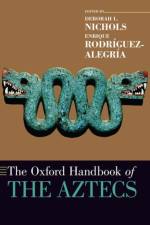
The Oxford Handbook of the Aztecs, the first of its kind, provides a current overview of recent research on the Aztec empire, the best documented prehispanic society in the Americas. Chapters span from the establishment of Aztec city-states to the encounter with the Spanish empire and the Colonial period that shaped the modern world. Articles in the Handbook take up new research trends and methodologies and current debates. The Handbook articles are dividedinto seven parts. Part I, Archaeology of the Aztecs, introduces the Aztecs, as well as Aztec studies today, including the recent practice of archaeology, ethnohistory, museum studies, and conservation. The articles in Part II, Historical Change, provide a long-term view of the Aztecs starting with importantpredecessors, the development of Aztec city-states and imperialism, and ending with a discussion of the encounter of the Aztec and Spanish empires. Articles also discuss Aztec notions of history, writing, and time. Part III, Landscapes and Places, describes the Aztec world in terms of its geography, ecology, and demography at varying scales from households to cities. Part IV,Economic and Social Relations in the Aztec Empire, discusses the ethnic complexity of the Aztec world and social and economic relations that have been a major focus of archaeology. Articles in Part V, Aztec Provinces, Friends, and Foes, focuses on the Aztec''s dynamic relations with distant provinces, and empires and groups that resisted conquest, and even allied with the Spanish to overthrow the Aztec king. This is followed by Part VI, Ritual, Belief, and Religion, which examines the differentbeliefs and rituals that formed Aztec religion and their worldview, as well as the material culture of religious practice. The final section of the volume, Aztecs after the Conquest, carries the Aztecs through the post-conquest period, an increasingly important area of archaeological work, andconsiders the place of the Aztecs in the modern world.
Throughout the world, there has been a significant shift in whether, where, and how learners are educated regardless of their socio-economic, geographic, and disability status; gender and sexual orientation; family structure; and ethnic, racial, cultural, linguistic and religious background. Recognizing that the debates, challenges, research, initiatives, and recommendations concerning the best ways to provide a high-quality education to learners with a range ofdiversities continue to influence educational policies and practices around the world, The Oxford Encyclopedia of Inclusive and Special Education presents the contributions of a diverse international group of established and up-and-coming scholars who discuss an array of historical, current, andemerging issues that are at the intersection of inclusive and special schooling. While the Encyclopedia addresses inclusive and special education, the primary focus is on inclusive education as an international and 21st century movement that in part reflects and rejects the foundations of special education. By presenting global perspectives addressing the foundations, effective practices, policies, and workforce preparation initiatives related to inclusive and special education, thesevolumes examine a range of issues that are at the nexus of inclusive and special schooling.
The Oxford Encyclopedia of Educational Psychology is the first reference work on educational psychology that can truly be said to be comprehensive, systematic, theory-driven, and evidence-based. This collection of full-length articles by leading scholars specializing in a wide array of topics signifying the diverse origins and theoretical and philosophical foundations of the field situates educational psychology within the larger contexts of psychology andeducation.The Encyclopedia also distinguishes itself by its strong international representation - in terms of not only its contributors but also the sources of the literature. Contributors from different parts of the world have incorporated relevant theoretical perspectives and empirical work conducted in diverse cultures into the broader context of the topics they examined. The articles are not simply reflections of individual contributors'' perspectives; rather, they are systematic andin-depth reviews of various domains of educational psychology.The Encyclopedia has advanced the field of educational psychology by offering new insights into the intricate relationships among the various mechanisms operating in educational psychology by integrating existing empirical work grounded in contemporary and classical theoretical constructs and perspectives from multiple academic fields, and by incorporating new knowledge created as a result of new social, economic, and technological developments. At the same time, the material presentedin this work should have practical implications for practitioners in education and beyond in their efforts to foster positive educational outcomes and to design congenial work environments and improve organizational effectiveness. Indeed, all individuals who are engaged in learning, whether it be schoollearning or everyday learning, should find aspects of the underlying learning principles and empirical findings documented in this Encyclopedia interesting, relevant, and useful.
Abonner på vårt nyhetsbrev og få rabatter og inspirasjon til din neste leseopplevelse.
Ved å abonnere godtar du vår personvernerklæring.