



Gjør som tusenvis av andre bokelskere
Abonner på vårt nyhetsbrev og få rabatter og inspirasjon til din neste leseopplevelse.
Ved å abonnere godtar du vår personvernerklæring.Du kan når som helst melde deg av våre nyhetsbrev.

Charles Perrings and Ann Kinzig address the broad problem of conservation, the principles that inform conservation choices, and the application of those principles to the management of the natural world. Conservation examines how conservation choices are made and demonstrates how decisions of one person or one community at one time or place affect people or communities at other times or places.
International authors from prominent researchers to emerging scholars offer an up-to-date synthesis of scholarship on Byzantine art and visual culture. This is a remarkable resource to guide readers through past and current research in this most fertile of fields.
Textbooks and other popular venues commonly present science as a progressive "brick-by-brick" accumulation of knowledge and facts. Despite its hallowed history and familiar ring, this depiction is nowadays rejected by most specialists. There currently are two competing models of the scientific enterprise: reductionism and antireductionism. Neither provides an accurate depiction of the productive interaction between knowledge and ignorance,supplanting the old metaphor of the "wall" of knowledge. This book explores an original conception of the nature and advancement of science. Marco J. Nathan''s proposed shift brings attention to a prominent, albeit often neglected, constructΓÇöthe black boxΓÇöwhich underlies a well-oiled technique for incorporating a productive role of ignorance and failure into the acquisition of empirical knowledge. The black box is a metaphorical term used by scientists for the isolation of a complex phenomenon that they have deliberately set aside or maynot yet fully understand. What is a black box? How does it work? How do we construct one? How do we determine what to include and what to leave out? What role do boxes play in contemporary scientific practice? Nathan''s monograph develops an overarching framework for thinking about black boxes and discussesprominent historical cases that used it, including Darwin''s view of inheritance in his theory of evolution and the "stimulus-response model" in psychology, among others. By detailing some fascinating episodes in the history of biology, psychology, and economics, Nathan revisits foundational questions about causation, explanation, emergence, and progress, showing how the insights of both reductionism and antireductionism can be reconciled into a fresh and exciting approach toscience.
For many centuries Jews have been renowned for the efforts they put into their children''s welfare and education. Eventually, prioritizing children became a modern Western norm, as reflected in an abundance of research in fields such as pediatric medicine, psychology, and law. In other academic fields, however, young children in particular have received less attention, perhaps because they rarely leave written documentation. The interdisciplinary symposium in thisvolume seeks to overcome this challenge by delving into different facets of Jewish childhood in history, literature, and film.No Small Matter visits five continents and studies Jewish children from the 19th century through the present. It includes essays on the demographic patterns of Jewish reproduction; on the evolution of bar and bat mitzvah ceremonies; on the role children played in the project of Hebrew revival; on their immigrant experiences in the United States; on novels for young Jewish readers written in Hebrew and Yiddish; and on Jewish themes in films featuring children. Several contributionsfocus on children who survived the Holocaust or the children of survivors in a variety of settings ranging from Europe, North Africa, and Israel to the summer bungalow colonies of the Catskill Mountains. In addition to the symposium, this volume also features essays on a transformative Yiddish poem by a SovietJewish author and on the cultural legacy of Lenny Bruce.
A unique defense of Federalism, making the case that constitutional law in AmericaΓÇöencompassing the systems of all 51 governmentsΓÇöshould have a role in assessing the right balance of power among all branches of our state and federal governments.Everything in law and politics, including individual rights, comes back to divisions of power and the evergreen question: Who decides? Who wins the disputes of the day often turns on who decides them. And our acceptance of the resolution of those disputes often turns on who the decision maker is-because it reveals who governs us. In Who Decides, the influential US Appellate Court Judge Jeffrey S. Sutton focuses on the constitutional structure of the American states to answer the question of who should decide the key questions of public policy today. By concentrating on the role of governmental structure in shaping power across the 50 American states, Sutton develops a powerful explanation of American constitutional law, in all of its variety, as opposed to just federal constitutional law. As in his earlierbook, 51 Imperfect Solutions, which looked at how American federalism allowed the states to serve as laboratories of innovation for protecting individual liberty and property rights, Sutton compares state-level governments with the federal government and draws numerous insights from the comparisons. Instead offocusing on individual rights, however, he focuses on structure, while continuing to develop some of the core themes of his previous book. An illuminating and essential sequel to his earlier work on the nature of American federalism, Who Decides makes the case that American Constitutional Law should account for the role of the state courts and state constitutions, together with the federal courts and the federal constitution, in assessing the right balance of power among all branches of government. Taken together, both books reveal a remarkably complex, nuanced, ever-changing federalist system, one that ought to makelawyers and litigants pause before reflexively assuming that the United States Supreme Court alone has the answers to our vexing constitutional questions.
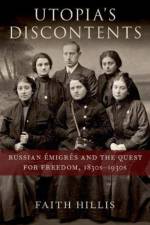
Utopia's Discontents provides the first synthetic treatment of the Russian revolutionary emigration before the Revolution. It argues that neighborhoods created by Russian exiles became sites of revolutionary experimentation that offered their residents a taste of their anticipated utopian future.
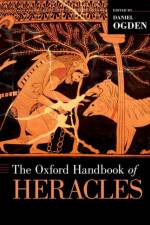
Heracles is the quintessential ancient Greek hero. The rich and massive tradition associated with him encompasses myths of all kinds: quest myths, monster-fights, world-foundational myths, aetiological myths, philosophical myths, allegorical myths, and more. It informs and is informed by every genre and variety of Classical literature. The figure of Heracles opens windows onto numerous aspects of ancient religion, including those of cult, syncretism, Christianreception, the relationship between gods and heroes, and the intersection of religion with politics. The Oxford Handbook of Heracles is the first large-scale guide to Heracles, his myth-cycle the Twelve Labors, and, to the pervasive impact of the hero upon Greek and Roman culture. The first half of the volume is devoted to the lucid exposition and analysis of the ancient evidence, literary and iconographic, for Heracles'' life and deeds. In the second half, the Heracles tradition is analyzed from a range of thematic perspectives, including the contrasting projections of the figureacross the major literary genres and in art; the ways in which Greek communities and even Roman emperors exploited the figure in the fashioning of their own identities and for political advantage; his cult in Greece and Rome and its syncretism with that of the Phoenician Melqart; and Heracles'' reception in laterWestern tradition. Presenting, in 39 chapters, the authoritative work of international experts in a clear and well-structured format, this volume provides a convenient reference tool for scholars and offers an accessible starting-point for students.
Psychological entitlement, or a sense that some individuals or groups are inherently worthier of certain privileges, is an overlooked but essential feature of the persistent inequality that resists social progress and oppresses those in the margins. In the political climate that gave rise to and resulted in Donald Trump''s presidency, confusion, rage, and feelings of victimization linger among those who felt empowered by the validation felt with him intoofficeΓÇöfeelings that existed and will continue to exist independently of the former president himself. Enraged, Rattled, and Wronged confronts psychological entitlement in its many forms or related attributes, such as narcissism, to expose the ugly truths at the heart of this phenomenon. In exploring how members of advantaged groups come to understand their belief in their own worthiness relative to those in disadvantaged groups, expert psychologist Kristin J. Anderson channels her research and expertise in prejudice and discrimination to ask critical questions of the current politicaland social climate. What happens to entitled people when they feel pushed aside? How does their inflated sense of deservingness make them vulnerable to manipulation by the demagogues who use them, blinding them to the negative outcomes that are often paradoxical? What are they willing to tear down as theyscramble to keep their grip on the status and power they believe are rightfully theirs? How has entitled rage played out historically, and how do these events lend themselves to both the predictable and unpredictable manifestations of power grabs that we see now? Drawing from a wealth of timely examples and empirical literature, Anderson situates this anger as backlash against the social progress that empowers marginalized groups, even at the expense of the dominant group, if necessary. Citing historical moments such as the rage of whites directed at newly freed African Americans in the South during Reconstruction and the anger of the entitled when women have attempted to control their reproduction, Anderson traces this phenomenon over time anddelineates the link between individual-level processing of psychological deservingness and macro-level problems that impede equality, concluding with a call for action for to dominant group members to join the vibrant movements for social progress that have emerged in recent years.
A personal account of life in the orbit of Mao and Zhao En-Lai and one woman''s effort to tell what it was like to be at the center of the storm. The history of China in the twentieth century is comprised of a long series of shocks: the 1911 revolution, the civil war between the communists and the nationalists, the Japanese invasion, the revolution, the various catastrophic campaigns initiated by Chairman Mao between 1949 and 1976, its great opening to the world under Deng, and the Tiananmen Square Massacre.Yuan-tsung Chen, who is now 90, lived through most of it, and at certain points in close proximity to the seat of communist power. Born in Shanghai in 1929, she came to know Zhou En-Lai-second only to Mao in importanceΓÇöas a young girl while living in Chongqing, where Chiang KaiΓÇöShek''s government had relocated to, during the war against Japan. That connection to Zhou helped her save her husband''s life in Cultural Revolution. After the communists took power, she obtained a job in one of theculture ministries. While there, she frequently engaged with the upper echelon of the party and was a first-hand witness to some of the purges that the regime regularly initiated. Eventually, the commissar she worked under was denounced in 1957, and she barely escaped being purged herself. Later,during Cultural Revolution, she and her husband were purged and sent to live in a rough, poor area. She and her husband finally moved to Hong Kong, with Zhou''s special permission, in 1971.A first-hand account of what life was like in the period before the revolution and in Mao''s China, The Secret Listener gives a unique perspective on the era, and Chen''s vantage point provides us with a new perspective on the Maoist regime-one of the most radical political experiments in modern history and a force that genuinely changed the world.
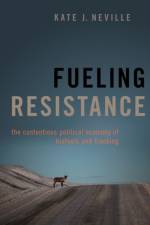
A series of concurrent pressures in the early 2000sΓÇöclimate change, financial system crashes, economic development in rural regions, and shifts in geopoliticsΓÇöintensified interest in alternative energy production. At the same time, rising oil prices rendered alternative fuels a more economically viable option. Among these energy sources, liquid biofuels (bioethanol and biodiesel) and natural gas derived from hydraulic fracturing ("fracking") took center stage aspromising commodities and technologies. But controversy quickly erupted in surprisingly similar ways around both renewable fuels. Global enthusiasm for these fuelsΓÇöand the widespread projections for their production around the worldΓÇöcollided with local politics in debates over "food versus fuel" andconcerns over "land grabs." What seemed, from a global perspective, like empty lands ripe for development were, to rural communities, vibrant and already contested spaces. As proposals for biofuels and fracking landed in specific communities and ecosystems, they reignited and reshaped old disputes over land, water, and decision-making authority. Fueling Resistance offers an account of how and why controversies over these different fuels unfolded in surprisingly similar ways in the global North and South. To explain these convergent dynamics of contention and resistance, Kate J. Neville argues that the emergence of grievances and the patterns of resistance to new fuel technologies depends less on the type of energy developed (renewable versus fossil fuel) than on intersecting elements of the political economy ofenergy: finance, ownership, and trade relations. As local commodities enter global supply chains and are integrated into existing corporate structures, opportunities arise to broker connections between otherwise disparate communities. Neville looks at biofuels in Kenya and fracking in the Canadian Yukon and shows how organizers connect specific energy projects to broader issues of globalization, climate, food, water, and justice. Taken together, the intersecting elements of the political economy of energy shape the contentious politics of biofuels and fracking at both local and global scales, and help explain how and why particular mechanisms of contention emerge at different times and places.
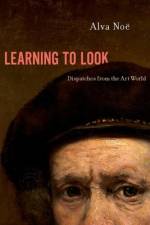
Learning to Look is a collection of short and accessible essays on how we experience art. In each chapter, Alva Noe starts from an experience of a particular artwork and from there shows how these works open new questions about philosophy, science, and ourselves. This is a companion work to Noe's 2019 volume, Infinite Baseball.
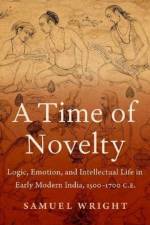
In A Time of Novelty, Samuel Wright re-envisions the relationship between philosophy and history in premodern India through study of the tradition of Sanskrit logic between 1500 and 1700 CE. In examining these logicians, Wright expands the ways in which we study philosophical thought by considering philosophy as deeply immersed in the felt experiences of one's life, at the confluence of thinking and feeling.
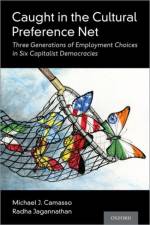
This book presents and analyzes the work-related attitudes, beliefs, and preferences of three generation of people in Sweden, Germany, Italy, Spain, India, and the United States. Camasso and Jagannathan dig into why these differences hinder efforts to create international and equal standards of labor overtime and how these value orientation influence productivity and quality of life on a global scale.
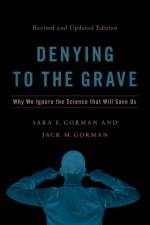
Rampant misinformation and science denial are wreaking havoc on our health and safety. Never before has accepting science been more important, and yet more and more people are refusing to believe what scientists have to tell us. Denying to the Grave uncovers some of the reasons why we often choose to ignore scientific evidence and makes practical recommendations about how to resist these tendencies.
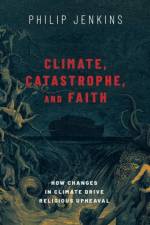
The world has repeatedly suffered severe climate-driven shocks, which have resulted in famine, disease, violence, social upheaval, and mass migration. Such episodes have often been understood in religious terms, through the language of apocalypse, millennium, and Judgment. And they have frequently had real religious consequences, for instance by spawning new religious movements and revivals, or driving the persecution of religious minorities. Philip Jenkins shows howclimate change has redrawn the world's religious maps, and how man-made climate change is likely to do so once again.
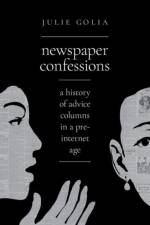
The first book to trace the history of early advice columns in American newspapers, Newspaper Confessions reveals how advice columnists and contributors established the idea of the virtual confessional to ease the anxieties of modern life, creating a genre that continues to shape the way Americans talk publicly and anonymously about their feelings today.
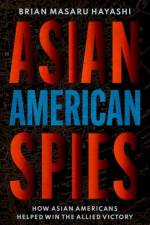
This history of Asian Americans in the Office of Strategic Services (OSS) during World War II reveals the inner workings of this spy agency and how Euroamerican leaders' conceptions of "race" and "loyalty" shaped US wartime intelligence.
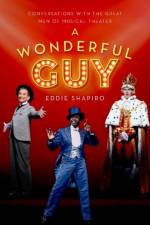
In A Wonderful Guy, Eddie Shapiro sits down for intimate, career-encompassing conversations with nineteen of Broadway's most prolific and fascinating leading men. Full of detailed stories and reflections, the talks dig deep into each actor's career; together, these chapters tell the story of what it means to be a leading man on Broadway over the past fifty years.
With growing awareness of global climate change and its devastating impacts, there is significant interest in finding new, sustainable ways of life. This volume brings together important new essays by leading scholars from a variety of disciplines to examine the character traits and virtues needed to successfully achieve such flourishing, sustainable lives-the virtues of sustainability. Our pursuit of sustainability will challenge our values and character, fromrethinking consumption and our relationship to nature, to being resilient in the face of environmental disaster. This volume provides readers with a rich understanding of the nature and importance of these virtues, and practical guidance on how they can be developed and applied.
Fortress Dark and Stern tells the epic tale of the Soviet home front during World War II as Soviet workers rapidly evacuated industry, food, and people thousands of miles to the east, resulting in massive suffering and sacrifice, and their key role in supplying the front and making global victory over fascism possible.
Long before the United States was a nation, it was a set of ideas, projected onto the New World by European explorers with centuries of belief and thought in tow. From this foundation of expectation and experience, America and American thought grew in turn, enriched by the bounties of the Enlightenment, the philosophies of liberty and individuality, the tenets of religion, and the doctrines of republicanism and democracy. In engaging and accessible prose, Jennifer Ratner-Rosenhagen's introduction to American thought considers how notions about freedom and belonging, the market and morality-and even truth-have commanded generations of Americans and been the cause of fierce debate.
Charlie Brown's America tells the story of how and why the lovable kids and an adventurous beagle of Peanuts became the unlikely spokespeople for American life in the last half of the twentieth century.
This book is a highly readable presentation of the laws regulating family relationships in the United States, placing them in their historical and cultural contexts. This third edition captures recent developments, including the transformation of the institution of marriage to encompass same-sex marriage.
This practical guide for music educators collects tried-and-true strategies for effectively using iPads, smartphones, and different apps in music classrooms from kindergarten through college to support students' creative engagement with music and help them realize their musical potential.
A significant number of Americans view atheists as immoral elitists, aloof and unconcerned with the common good, and they view science and scientists as responsible. Thanks in large part to the prominence and influence of New Atheists such as Richard Dawkins, Sam Harris, Daniel Dennett, and Christopher Hitchens, New Atheism has claimed the pulpit of secularity in Western society. New Atheists have given voice to marginalized nonreligious individuals and underscoredthe importance of science in society. They have also advanced a derisive view of religion and forcefully argued that science and religion are intrinsically in conflict.Many in the public around the globe think that all scientists are atheists and that all atheist scientists are New Atheists, militantly against religion and religious people. But what do everyday atheist scientists actually think about religion? Drawing on a survey of 1,293 atheist scientists in the U.S. and U.K., and 81 in-depth interviews, this book explains the pathways that led to atheism among scientists, the diverse views of religion they hold, their perspectives on the limits to whatscience can explain, and their views of meaning and morality. The findings reveal a vast gulf between the rhetoric of New Atheism in the public sphere and the reality of atheism in science. The story of the varieties of atheism in science is consequential for both scientific and religious communitiesand points to tools for dialogue between these seemingly disparate groups.
Recently there has been a revival of interest in the views held by Reformed theologians within the parameters of confessional orthodoxy. For example, the doctrine known as ''hypothetical universalism''ΓÇöthe idea that although Christ died in some sense for every person, his death was intended to bring about the salvation only for those who were predestined for salvation. Michael Lynch focuses on the hypothetical universalism of the English theologian and bishop JohnDavenant (1572-1641), arguing that it has consistently been misinterpreted and misrepresented as a via media between Arminian and Reformed theology. A close examination of Davenent''s De Morte Christi, is the central core of the study. Lynch offers a detailed exposition of Davenant''s doctrine of universal redemption in dialogue with his understanding of closely related doctrines such as God''s will, predestination, providence, and covenant theology. He defends the thesis that Davenant''s version of hypothetical universalism represents a significant strand of the Augustinian tradition, including the early modern Reformed tradition.The book examines the patristic and medieval periods as they provided the background for the Lutheran, Remonstrant, and Reformed reactions to the so-called Lombardian formula (''Christ died sufficiently for all, effectually for the elect''). It traces how Davenant and his fellow British delegates at the Synod ofDordt shaped the Canons of Dordt in such a way as to allow for their English hypothetical universalism.
For as long as historians have contemplated the Jewish past, they have engaged with the idea of diaspora. Dedicated to the study of transnational peoples and the linkages these people forged among themselves over the course of their wanderings and in the multiple places to which they went, the term ΓÇ£diasporaΓÇ¥ reflects the increasing interest in migrations, trauma, globalism, and community formations. The Oxford Handbook of the Jewish Diaspora acts as a comprehensive collection of scholarship that reflects the multifaceted nature of diaspora studies. Persecuted and exiled throughout their history, the Jewish people have also left familiar places to find better opportunities in new ones. But their history has consistently been defined by their permanent lack of belonging. This Oxford Handbook explores the complicated nature of diasporic Jewish life as something both destructive andgenerative. Contributors explore subjects as diverse as biblical and medieval representations of diaspora, the various diaspora communities that emerged across the globe, the contradictory relationship the diaspora bears to Israel, and how the diaspora is celebrated and debated within modern Jewish thought.What these essays share is a commitment to untangling the legacy of the diaspora on Jewish life and culture.This volume portrays the Jewish diaspora not as a simple, unified front, but as a population characterized by conflicting impulses and ideas. The Oxford Handbook of the Jewish Diaspora captures the complexity of the Jewish diaspora by acknowledging the tensions inherent in a group of people defined by trauma and exile as well as by voluntary migrations to places with greater opportunity.
This book delivers the first comprehensive development of a liberal conception of relational equality as a demand of social justice. Liberal egalitarian theories holding that justice requires a form of distributive equality in goods such as resources have been dominant for much of the last 50 years. Recently they have been subject to critique by relational egalitarians, who hold that the value of equality does not primarily require that people receive equal sharesof some good, but that they relate as social equals, unencumbered by hierarchies of power and social status.
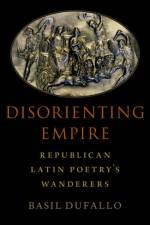
Disorienting Empire is the first book to examine Republican Latin poetry's recurring interest in characters who become lost. Basil Dufallo explains the prevalence of this theme with reference to the rapid expansion of Rome's empire in the Middle and Late Republic.
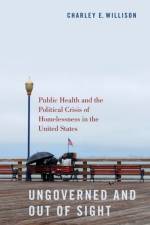
Ungoverned and Out of Sight explores conflicting policy solutions in the highly decentralized U.S. homeless policy space. Alongside detailed case studies, it provides recommendations for policy makers to improve existing systems and deliver policies that will successfully diminish chronic homelessness.
Abonner på vårt nyhetsbrev og få rabatter og inspirasjon til din neste leseopplevelse.
Ved å abonnere godtar du vår personvernerklæring.