
















Gjør som tusenvis av andre bokelskere
Abonner på vårt nyhetsbrev og få rabatter og inspirasjon til din neste leseopplevelse.
Ved å abonnere godtar du vår personvernerklæring.Du kan når som helst melde deg av våre nyhetsbrev.

Savoring God is at comparative study featuring the Christian Cántico espiritual (Spiritual Canticle), by the sixteenth-century Spanish poet and theologian Saint John of the Cross, and the Hindu Sanskrit Rasa Lila (Dance of Love), which originated in the oral tradition. The poems are examined alongside theological commentaries. The comparisons examine the interactions between poetical language andtheological discourse.
Six Steps to Managing Alzheimer's Disease and Dementia: A Guide for Families begins by explaining Alzheimer's disease and dementia, and how to manage problems with memory, language, vision, emotion, behavior, sleep, and bodily functions. Next discussed are which medications help-and which make things worse. Caring for yourself and building a care team are then covered, as well as how to sustain your relationship. Final chapters discuss the progression ofdementia, the eventual death, and how to plan for life afterwards. It is written in an easy-to-read style, featuring clinical vignettes and character-based stories that provide real-life examples of how to successfully manage Alzheimer's disease and dementia.
In ten new essays on a selection of vital canonical films, contributors chart, explore, and advance the ways in which metacinema is at once a mode of filmmaking and a heuristic for studying cinematic attributes.
In ten new essays on a selection of vital canonical films, contributors chart, explore, and advance the ways in which metacinema is at once a mode of filmmaking and a heuristic for studying cinematic attributes.
Focusing on the period known as the Second Sophistic, this Handbook offers guidance on the wide range of textual materials that survive, many of which are useful or even core to inquiries of particularly current interest, while also keeping a sharp focus on how we can best situate these texts within the broader socio-cultural milieu.
Inventing the Recording focuses on the decades in which recorded sound went from a technological possibility to a commercial and cultural artefact, through the analysis of a specific and unique national context: Spain.
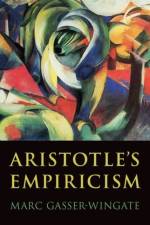
Though Aristotle is often thought to be an empiricist-someone who thinks all knowledge is somehow derived from perception-the philosopher is often thought to have little to say on these matters. Gasser-Wingate here offers a sustained examination of these discussions and their epistemological, psychological, and ethical implications. It defends an interpretation of Aristotle as a moderate sort of empiricist, who thinks we can develop sophisticated forms of knowledgeby broadly perceptual means, and that we therefore share an important part of our cognitive lives with nonrational animals, but also holds that our intellectual powers allow us to surpass them in certain ways, and develop distinctively human forms of understanding.
Part of the What Do I Do Now? Pain Medicine series, Painful Conditions of the Upper Limb presents clinical scenarios related to painful syndromes affecting the neck, shoulder, arm, and hand. This volume focuses on common presenting symptoms and expands from common diagnoses and syndromes to more complex conditions that require extensive diagnostic evaluation, comprehensive approaches, and complex management strategies. Throughout, chapters emphasize properevaluation, discussing history and physical exam findings, differential diagnosis, appropriate ancillary testing, and management methods using specific restorative approaches, particularly non-opioid and mostly non-pharmacological options.
The idea of the sword-wielding samurai, beholden to a strict ethical code and trained in deadly martial arts, dominates popular conceptions of the samurai. As early as the late seventeenth century, they were heavily featured in literature, art, theater, and even comedy, from the Tale of the Heike to the kabuki retellings of the 47 Ronin. This legacy remains with us today in the legendary Akira Kurosawa films, the shoguns of HBO''s Westworld, andcountless renditions of samurai history in anime, manga, and video games. Acknowledging these common depictions, this book gives readers access to the real samurai as they lived, fought, and served.Much as they capture the modern imagination, the samurai commanded influence over the politics, arts, philosophy and religion of their own time, and ultimately controlled Japan from the fourteenth century until their demise in the mid-nineteenth century. On and off the battlefield, whether charging an enemy on horseback or currying favor at the imperial court, their story is one of adventures and intrigues, heroics and misdeeds, unlikely victories and devastating defeats. This book traces thesamurai throughout this history, exploring their roles in watershed events such as Japan''s invasions of Korea at the close of the sixteenth century and the Satsuma Rebellion of 1877. Coming alive in these accounts are the samurai, both famed and ordinary, who shaped Japanese history.
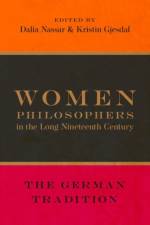
The long nineteenth-centuryΓÇöthe period beginning with the French Revolution and ending with World War IΓÇöwas a transformative period for women philosophers in German-speaking countries and contexts. The period spans romanticism and idealism, socialism, Nietzscheanism, and phenomenology, philosophical movements we most often associate with Hegel, Schopenhauer, Kierkegaard, Nietzsche, and MarxΓÇöbut rarely with women. Yet women philosophers not only contributed tothese movements, but also spearheaded debates about their social and political implications. While today their works are less well-known than those of their male contemporaries, many of these women philosophers were widely-read and influential in their own time. Their contributions shed important newlight on nineteenth-century philosophy and philosophy more generally: revealing the extent to which various movements which we consider distinct were joined, and demonstrating the degree to which philosophy can transform lives and be transformed by lived experiences and practices. In the nineteenth century, women philosophers explored a wide range of philosophical topics and styles. Working within and in dialogue with popular philosophical movements, women philosophers helped shape philosophy''s agenda and provided unique approaches to existential, political, aesthetic, and epistemological questions. Though largely deprived formal education and academic positions, women thinkers developed a way of philosophizing that was accessible, intuitive, and activist in spirit. Thepresent volume makes available to English-language readersΓÇöin many cases for the first timeΓÇöthe works of nine women philosophers, with the hope of stimulating further interest in and scholarship on their works. The volume includes a comprehensive introduction to women philosophers in the nineteenthcentury and introduces each philosopher and her position. The translations are furnished with explanatory footnotes. The volume is designed to be accessible to students as well as scholars.
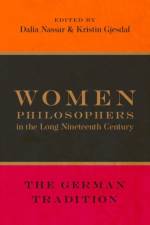
The long nineteenth-centuryΓÇöthe period beginning with the French Revolution and ending with World War IΓÇöwas a transformative period for women philosophers in German-speaking countries and contexts. The period spans romanticism and idealism, socialism, Nietzscheanism, and phenomenology, philosophical movements we most often associate with Hegel, Schopenhauer, Kierkegaard, Nietzsche, and MarxΓÇöbut rarely with women. Yet women philosophers not only contributed tothese movements, but also spearheaded debates about their social and political implications. While today their works are less well-known than those of their male contemporaries, many of these women philosophers were widely-read and influential in their own time. Their contributions shed important newlight on nineteenth-century philosophy and philosophy more generally: revealing the extent to which various movements which we consider distinct were joined, and demonstrating the degree to which philosophy can transform lives and be transformed by lived experiences and practices. In the nineteenth century, women philosophers explored a wide range of philosophical topics and styles. Working within and in dialogue with popular philosophical movements, women philosophers helped shape philosophy''s agenda and provided unique approaches to existential, political, aesthetic, and epistemological questions. Though largely deprived formal education and academic positions, women thinkers developed a way of philosophizing that was accessible, intuitive, and activist in spirit. Thepresent volume makes available to English-language readersΓÇöin many cases for the first timeΓÇöthe works of nine women philosophers, with the hope of stimulating further interest in and scholarship on their works. The volume includes a comprehensive introduction to women philosophers in the nineteenthcentury and introduces each philosopher and her position. The translations are furnished with explanatory footnotes. The volume is designed to be accessible to students as well as scholars.
Peers as Change Agents demonstrates the effectiveness of Peer-Mediated Interventions (PMIs) and provides practical guidelines for the implementation of PMIs in schools.
Although the nature of work might have changed, the drives and needs of workers have not. Punching the Clock explores how well workers are likely to both navigate and adapt to the new Future of Work, using the best of psychological science as a guide.
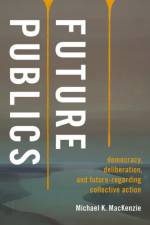
Why are democratic systems seemingly unable to deal with long-term issues such as climate change, environmental pollution, and budget deficits? Is democracy itself a part of the problem? Voters are usually focused on their short-term needs, and politicians are motivated to win the next election instead of finding solutions to long-term problems. Some scholars and pundits have wondered whether we will need political systems that are less democratic, or evenauthoritarian, if we are going to solve long-term problems. Future Publics rejects the idea that having less democracy is going to get us the futures that we think we might want. Despite the short-term dynamics associated with electoral democracy, Michael K. MacKenzie asserts that we need more inclusive anddeliberative democracies if we are going to make shared futures that will work for us all.
Literature is one of the richest sources of information concerning the ways in which human beings play with cognition. Human cognition is grounded in the ability to feel, perceive, and move. Kinesic Humor examines literary works written in different languages and various historical periods, in which the cognitive processing of gestures and kinesic interactions trigger humorous effects. By bringing together literary studies, cognitive studies, gesturestudies, and humor studies, this book offers an original perspective on literary artworks such as Chrétien de Troyes' Yvain, Milton's Paradise Lost, Cervantes' Don Quixote, Rousseau's Confessions, Sterne's Tristram Shandy, and Stendhal's Le Rouge et le Noir.
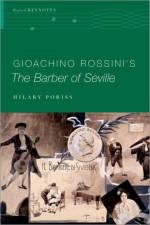
This book surveys the myriad and creative changes that have affected The Barber of Seville since its premiere, exploring many of the personalities responsible for those alterations and taking into account the range of reactions that these changes have prompted in spectators and critics from the nineteenth century to the present.
Pilgrimage, Landscape, and Identity: Reconstructing Sacred Geographies in Norway explores the ritual geography of a pilgrimage system that arose around medieval saints in Norway, a country now being transformed by petroleum riches, neoliberalism, migration, and global warming. The study maps how pilgrims, hosts, church officials, and government officials participate in reshaping narratives of landscape, sacrality, and pilgrimage as a symbol of life journey,nation, identity, Christianity, and Protestant reflections on the durability of medieval Catholic saints.
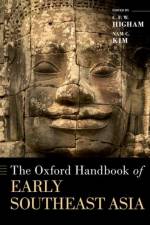
This handbook collects expert surveys of the prehistory of Southeast Asia, a two-millennial span that began with the arrival of now extinct humans and ended with the great civilization of Angkor (9th to 15th century).
This book is a contribution to ongoing debates in the philosophy of language about reference and truth. The ideas discussed have been important not only in philosophy but in logic, linguistics, psychology, computer science and other areas concerned with thought and communication. Taylor was an important philosopher and led Stanford's influential Symbolic Systems Program, graduates of which are leaders in Silicon Valley. The book is not elementary, but it presentsrich and subtle products of his years of thought on important topics with many examples and clear discussions.
Late-medieval composers delighted in complicating the relationship between their music's written and sung forms, often tasking singers with reading their music in unusual ways-from slowing down a melodic line, to turning it backwards or upside down, even omitting certain notes or rests. These manipulations increasingly yielded music that was aurally all but unrecognizable as a derivative of the notated original. This book uses these unorthodox applications ofnotation to understand how late-medieval composers thought about the tool of musical notation. It argues that these compositions foreground notation in ways that resonate with discourses about media and technology today.
This book brings together the work of legal scholars, sociologists, criminologists, political scientists, and law reformers to better understand a pivotal actor in the criminal legal systems all around the world: the prosecutor. Scholarship focusing on prosecutors in particular has begun to emerge as its own sub-discipline within criminal law, and this book surveys the many different strands of that work, underscoring the diversity among prosecutors around the world.The chapters reveal the ordinary conduct of the prosecutor at various stages of criminal proceedings, the various interactions of prosecutors with local communities and other governmental actors, and the distinctive habits and concerns that arise for prosecutors in specialized settings such asjuvenile justice and immigration.
The Right Price provides an accessible guide to pharmaceutical markets and analytic techniques used to measure the value of drug therapies. It unveils why the pricing of drugs continues to be so challenging and how public and private officials can create more informed policies to achieve the right balance between drug pricing and value.
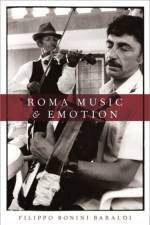
Roma Music and Emotion is an important work of scholarship at the intersection of ethnomusicology and anthropology, combining long-term field research with hypotheses from the cognitive sciences to illustrate the musical world of the Roma of Transylvania and, in so doing, propose a groundbreaking anthropological theory on the emotional power of music
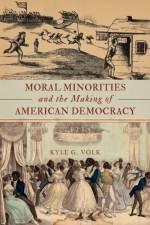
Moral Minorities and the Making of American Democracy unearths the origins of popular minority-rights politics in American history. Focusing on controversies spurred by grassroots moral reform in the early nineteenth century, it shows how a motley array of self-understood minorities reshaped American democracy as they battled laws regulating Sabbath observance, alcohol, and interracial contact.
The story of four remarkable women who shaped the intellectual history of the 20th century: Elizabeth Anscombe, Philippa Foot, Mary Midgley, and Iris Murdoch.On the cusp of the Second World War, four women went to Oxford to begin their studies: a fiercely brilliant Catholic convert; a daughter of privilege longing to escape her stifling upbringing; an ardent Communist and aspiring novelist with a list of would-be lovers as long as her arm; and a quiet, messy lover of newts and mice who would become a great public intellectual of our time. They became lifelong friends. At the time, only a handful of women had ever made lives in philosophy. But whenOxford''s men were drafted in the war, everything changed.As Elizabeth Anscombe, Philippa Foot, Mary Midgley, and Iris Murdoch labored to make a place for themselves in a male-dominated world, as they made friendships and families, and as they drifted toward and away from each other, they never stopped insisting that some lives are better than others. They argued that courage and discernment and justiceΓÇöand loveΓÇöare the heart of a good life.This book presents the first sustained engagement with these women''s contributions: with the critique and the alternative they framed. Drawing on a cluster of recently opened archives and extensive correspondence and interviews with those who knew them best, Benjamin Lipscomb traces the lives and ideas of four friends who gave us a better way to think about ethics, and ourselves.
A leading critic explains what makes American poetryΓÇöa vast genre covering diverse styles, techniques, and formΓÇödistinctive. In this short and engaging volume, David Caplan proposes a new theory of American poetry. With lively writing and illuminating examples, Caplan argues that two characteristics mark the vast, contentious literature. On the one hand, several of America''s major poets and critics claim that America needs a poetry equal to the country''s distinctiveness. They advocate for novelty and for a break with what is perceived to be outmoded and foreign. On the other hand, American poetry welcomes techniques,styles, and traditions that originate from far beyond its borders. The force of these two competing characteristics, American poetry''s emphasis on its uniqueness and its transnationalism, drives both individual accomplishment and the broader field. These two characteristic features energize Americanpoetry, quickening its development into a great national literature that continues to inspire poets in the contemporary moment.American Poetry: A Very Short Introduction moves through history and honors the poets'' artistry by paying close attention to the verse forms, meters, and styles they employ. Examples range from Anne Bradstreet, writing a century before the United States was founded, to the poets of the Black Lives Matter movement. Individual chapters consider how other major figures such as T.S. Eliot, Phillis Wheatley, Walt Whitman, Emily Dickinson, W.H. Auden, and Langston Hughes emphasize conventionor idiosyncrasy, and turn to American English as an important artistic resource. This concise examination of American poetry enriches our understanding of both the literature''s distinctive achievement and the place of its most important writers within it.
Though Meredith Willson is best remembered for The Music Man, there is a great deal more to his career as a composer and lyricist. In The Big Parade, author Dominic McHugh uses newly uncovered letters, manuscripts, and production files to reveal Willson's unusual combination of experiences in his pre-Broadway career that led him to compose The Music Man.
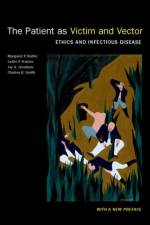
This volume is jointly written by four authors at the University of Utah with expertise in bioethics, health law, and infectious disease. In collaboration they attempt to develop a normative framework sensitive to situations of disease transmission- situations in which the patient is not only a victim but a vector; i.e. vulnerable to disease but also a threat to others. This reissue includes a new preface exploring the implications of the Covid-19pandemic.
Abonner på vårt nyhetsbrev og få rabatter og inspirasjon til din neste leseopplevelse.
Ved å abonnere godtar du vår personvernerklæring.