
















Gjør som tusenvis av andre bokelskere
Abonner på vårt nyhetsbrev og få rabatter og inspirasjon til din neste leseopplevelse.
Ved å abonnere godtar du vår personvernerklæring.Du kan når som helst melde deg av våre nyhetsbrev.

Jamie Leeds's first semester at Stonebriar Academy: School for Dragon Riders was a tumultuous one. First he had to win admission when only one hundred applicants would be selected from over four hundred. Then Jamie had to learn how to use the power of a Dragon belt and learn to fly with a Dragon. Added to all of this, against all tradition, Jamie has been bonded to a Dragon in his first year. But Jamie overcomes all of those difficulties and even helps his bonded Dragon, Tomith, whom he has nicknamed Tommy, to learn how to fly. Now Jamie and Tommy face the second semester, and in this semester they will continue to struggle- but not only with their classes. They have now been caught up in the Stonebriar House Championship. Each year, the five Houses-Blackburn, Warwick, Aubondale, Waverly, and Pembroke-all compete for the coveted House Championship. Jamie's and Tommy's House, Aubondale, has finished in last place for the previous seven years. The overriding passion of every student in Aubondale is to finally get their house out of last place. To help accomplish this, Jamie and Tommy will have to compete in the school's Dragon races, something they know nothing about. Even as Jamie and Tommy settle into the day-to-day struggles of school life at Stonebriar, they have been marked for capture or assassination by a shadowy organization known at the Sisterhood. For decades, the Sisterhood has been seeking to fulfill a prophecy that will grant the sisters total control over all the nations of Aurellius-along with immortality. But, in order to achieve their goal, they must eliminate Jamie and Tommy. Jamie's and Tommy's greatest challenge will not be helping get their House out of last place-their greatest challenge will be to simply survive.
I am the eighth child of Ray and Alta Lee's nine children. And as mothers do on Thanksgiving and Christmas, Mom would get her family together to celebrate these holidays. Two of my older brothers were great story tellers as well as my Dad. After the great meal Mom had prepared, without fail someone would start telling stories of the past. We would be listening with all we had most of the time it would be the same ones they had told before. However with practice the stories got better and more dramatic than the previous year. Over these many years I have known if they weren't recorded in some form, it would all be lost. The funny stories, the sad ones. My Mom's hardship because of her stand and her work for God and His Kingdom and operating in the gifts of the Holy Spirit as outlined in 1 Cor. The 12th chapter. And my Dad's rise from a young boy of just 10 years of age, having men much older than himself working under him to his rising to wealth, influence and control of our county and the surrounding areas as well as a large part of the state of Arkansas. He was the largest land owner in our area and one of the largest employers in Arkansas as the world's largest producer of hardwood in the 1930's. My older brothers told me that he worked as many as 600 men during the days of the Great Depression. In my research I was told by many that he gave jobs picking up sticks when he didn't need anyone. But he knew many of the families were in need of food and clothing. This is a story I could not let go untold and fade away never, never to be told. I am not a writer but I have a lot of help researching over 30 plus years repeating what's remembered and sitting around the country stores and listening to the old timers telling their stories of having worked for my Dad.
In our society, there are those who believe they are superior to all others in virtually every aspect of life; thoroughly convinced their opinions and ideologies are the only correct values; elevating them to true eminence. Safe in their bubble of reality, they speak down to the rest of us as if we are children, demonizing anyone who does not bow to their significance. They are the epitome of the self-endorsed authority, seeking an elite standing. It is purely their personas they look to promote and protect; enjoying their "drop the mic" moments, and being totally supported by their well tended assemblage. Who are they?
As Attorney Gerald Rainey sat down with Alicia, she revealed some disturbing details to him that he couldn't believe. She said, "My father used to take me riding with him in his patrol car all the time..." she choked on her words as tears began to flow from her eyes. "Yes, go on, Alicia, " the attorney said. "I know it upsets you to talk about this, but you have nothing to fear now. I am right here with you." She dried her eyes, tried to compose herself and said, "I thought my dad wanted to teach me how to be a police officer like his father had taught him, but that wasn't what he wanted from me..." "What was it that he wanted from you?" the lawyer inquired. "It was something much more sinister." He looked at her curiously and asked, "Did you kill your father, Alicia?" She hesitated a moment and said, "No, I wasn't there when he died."
A true story of a rideshare driver: filled with emotion, adventure and realism. On the day of returning from an extravagant two-week vacation in France, Terri learns that her job will be relocating out-of-state. Choosing to remain in California, she believes that finding comparable employment will be a breeze... After two years of watching her family's finances spiral downward and working for just over minimum wage, faced with an ultimatum from her employer, Terri resigns from her customer service position and becomes a rideshare driver... With continued bits of serendipity, happiness and peace prevail! At the urging of her daughter (an aspiring novelist), Terri begins to journal her observations and the many encounters that her new job entails... exuberant is the result! This inspiring, down-to-earth, and funny memoir includes over 20 stories about the bonds Terri has formed with some of her riders and the wonderful (and not-so-wonderful) characters she meets along her journey. Terri now views life from a different spectrum. Who would think that being a rideshare driver would bring so much joy?!
Eat in Harmony is not a cookbook. The author, a musician/conductor/lecturer, leads the reader on a journey through fascinating adventures that made his life unique and rewarding. More than an autobiography of his career as a university music professor, it touches chance meetings, history, philosophy, works of art, influential composers, revelations, and philosophy. Compelling topics like the following: "Almost murdered in a deserted underground city in Turkey", "Sibelius in a vegetable garden", "A life changing baseball accident", "Vaht gut qvestions did you ask t'day?", "1989 in Poland and Hungary: Cathedral, Crucifix, and Congregation", "Olga, Dimitri, Smolny: Soviet Union 1965, Russia 1993", "What I learned from Beethoven and a piece of wood", "What I see in the mud and scum of things", "Medieval France meets Country Western", "Mendelssohn on a bus", "If I forget thee, O Jerusalem", "On stage with the Wagners in Bayreuth", "Bach, the man who made all the wrong decisions", and many more. Throughout the book the author takes an alternate path in a series of Reflections that have formed his view of art from a Christian perspective. It also includes comments from students, colleagues, and music critics that reflect on the influence the author had on their lives. Gregory S. Athnos, author of two award-winning books, is a retired professor of music from North Park University in Chicago. His choirs performed across the United States, Canada, China, and Europe. He was guest conductor of the Pushkin Chamber Orchestra and the Estonian State Symphony in the first performances of Handel's 'Messiah' since the Bolshevik Revolution. His university classrooms were filled. Students called his lectures on music, the arts, and culture 'lessons in life'. His unique approach to the arts has garnered invitations to speak in colleges, seminaries, churches, art museums, retirement communities, Road Scholar programs, and con
Mundu, an indigenous teenager from the Brazilian rainforest, is the best long jumper in the world-only no one knows it. That is, until idealistic botanist and power company scout Luis Moraes sees Mundu effortlessly launch himself across a wide stream. Luis convinces the power company to let him take Mundu to Rio de Janeiro to share his great gift with the world. But first Luis must gain the trust of Mundu's mentor, the shaman of his village, who agrees to Luis' plan without revealing that Mundu was marked at birth by Iara, goddess of the inland waters. Mundu quickly proves himself and becomes Brazil's best hope for track and field gold at the summer Olympics coming to Rio in 2016. The power company hires Mundu as its corporate symbol, and together with Brazil's Olympic organizers, they try to exploit Mundu's popularity to gain support for the Olympics among Rio's poor, who resent the excessive costs of hosting the Games while they suffer unreliable public transportation, inferior schools, and inadequate health care. But everyone's plans for Mundu, including his own, are turned upside down when shortly before the Olympics begin, it leaks out that the power company plans to build the giant hydroelectric dam that will flood Mundu's village. With the help of his friends and the timely intervention of the goddess, Mundu must carry out a daring plan to bring the plight of his people to the attention of the whole world.
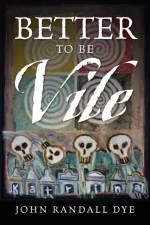
Better to Be Vile opens in New Orleans immediately following its destruction by Hurricane Katrina. This is no time to be singing the blues. No, this is the time to be taking them. With the help of his beloved blue hydrocodone tablets, the narrator floats above troubled waters. If only he could rid himself of Elvis... Life has not been kind to our protagonist. Five wives come and five wives go. His family members, for the most part, are happily estranged. His one joy in life is the refuge of the Tunica Tavern in his hometown. When his sister calls from Texas demanding he return their mother to her apartment in New Orleans, he agrees, not knowing his mother suffers from dementia. He reluctantly assumes a caretaker's role and learns to tolerate life in New Orleans. His mother's mental state deteriorates, and her plea to be taken to Graceland, the home of Elvis Presley in Memphis, is a constant refrain. Other than New Orleans, that's the last place the narrator wants to be. He hates all things Elvis. He has his reasons. Better to Be Vile is an unforgettable, highly entertaining portrait of a man struggling to put his chaotic life in order. By novel's end, our narrator finds a measure of peace in his new surroundings-an old antebellum home with a view of the Mississippi River. There is evidence he may have acquired some understanding of life, perhaps even a pilgrimage toward grace by way of Graceland.
Heard...But Not Seen is the story of Holly Pruitt, a young blind girl who finds herself the only witness to a horrific crime committed in an urban neighborhood store. If the jury believes what Holly heard but didn't see that afternoon, her testimony could send the crime's perpetrator to the electric chair. But in an eerie irony, it's Holly who becomes the hunted!
Don Perry was an "eye-witness" to the birth of Rock and Roll. When Elvis Presley arrived, Rock and Roll exploded and Don knew he wanted to be a part of it. In 1963, he sold his car and armed with enough money to last six months, headed to Hollywood to become a Rock star. Surely that would be enough time. That six months stretched to nearly thirty years and as Rock evolved and changed, so did Don's career. "Don Perry Produced The Music" traces his journey as a singer/songwriter, recording engineer, record producer, manager, concert promoter and finally, music supervisor for film and TV. It also traces the golden years of Rock and Roll and how they shaped every step of the way.
Sublime Sublimation addresses topics of science, technology, emotions, and issues of the digital age through short poems. With a variety of styles, this collection of poetry conveys musings with a relatable maturity and introspection. Pertinent themes are modernization, conscious versus unconscious motivation, societal organization, and the laws of the natural world. Influences include Allen Ginsberg, William Carlos Williams, Ursula Le Guin, Sigmund Freud, and T.S. Eliot. Ferrante brings together knowledge from neuroscience, psychology, and English literature to offer her views of the contemporary world. Poems in this work, while often dealing with difficult human emotions, are nevertheless inspiring, for "it is not happiness but tragedy that unites humanity."
Abonner på vårt nyhetsbrev og få rabatter og inspirasjon til din neste leseopplevelse.
Ved å abonnere godtar du vår personvernerklæring.