




Gjør som tusenvis av andre bokelskere
Abonner på vårt nyhetsbrev og få rabatter og inspirasjon til din neste leseopplevelse.
Ved å abonnere godtar du vår personvernerklæring.Du kan når som helst melde deg av våre nyhetsbrev.

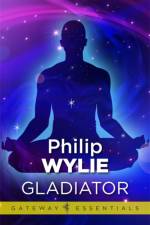
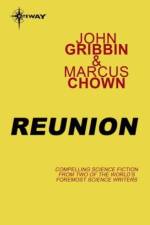
The combined crews of crashed spaceships from different realities must work together to save themselves, escape the planet and discover how the World Engineers have altered the Solar System, and why...
Wilson Tucker's classic tale of survival in a post-nuclear holocaust America.
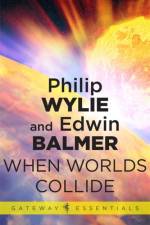
A runaway planet hurtles toward the earth. As it draws near, massive tidal waves, earthquakes, and volcanic eruptions wrack our planet, devastating continents, drowning cities, and wiping out millions. In central North America a team of scientists race to build a spacecraft powerful enough to escaped the doomed earth. Their greatest threat, they soon discover, comes not from the skies but from other humans.
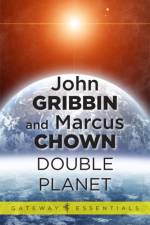
The Dragon, an enormous comet, is on a trajectory that will bring it perilously close to an Earth that is still suffering from the scars of a nuclear incident, and from the problems of the Greenhouse Effect. For the optimists - those that remain - it is a sign of change for the better; for others, the comet foreshadows humanity's final doom. But to Francis Reese and the hard-pressed astronauts of the depleted space programme, the Dragon presents a third outrageous, yet irresistible possibility - the transformation of a barren world into a new home for the beleaguered peoples of Earth.
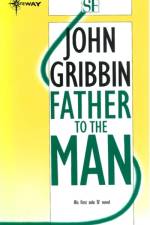
Nobel Prize-winning scientist Richard Lee has stirred up fanatical religious hatred with his controversial theory that chimpanzees and humans may have shared a common ancestor as little as three million years ago. When this hatred loses him both his reputation and his beloved colleague Marjorie, Lee retreats into hiding with his experiments and with Adam, an apelike creature thought by some to be Lee's own deformed love-child, or even a kind of Frankenstein's monster. But Adam is growing up, and the astonishing secret of his genetic parentage cannot remain secret forever, especially once investigative journalist Louise Henderson scents a story in the remote Norfolk village where Lee has gone to earth.
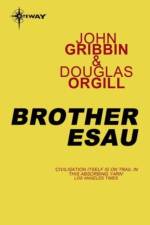
Frank Rhind was lucky. He saw the Ice Dancer and lived. The town of Hays died. And still they didn't believe Dr. William Stovin's warnings. For very many years climatologists had been predicting a change in the world's climate but they always believed that the process would take centuries. Now there was a reason to believe differently. Stovin had staked his career and credibility on trying to persuade the U.S. National Science Council to act, but 15,000 years of warmth had lulled mankind into thinking that climatic history was over. Already it was too late. The new Ice Age had begun. One by one the great northern cities - Chicago, Oslo, Montreal, Moscow, Leningrad - came under siege. Some fell and were evacuated, sending their young, old and sick to crowded areas further south. Crops and animals were destroyed. Governments drew lines of catastrophe across their national maps. Doomsday prophets were in full cry. Technological man was overwhelmed. The world had changed. Some time in the year future the next Ice Age will be triggered off. It could happen in a thousand years' time, or in a century from now. Or it could, quite literally, happen next winter. This book is fiction only because the events described have not yet happened. But it is not science fiction because all the science in the book is fact. When the year arrives that we see the sixth winter resembling 1792 within the space of a decade or so, then the Ice Age will be with us in a matter of weeks - and it will develop very much as described here.
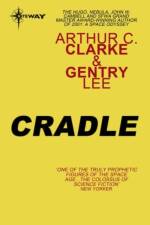
The Earth does not belong to man alone The Himalayas bury their secrets well. Two skulls unearthed in the cradle of the human race - the remote heights of Kashmir - throw evolutionary theory into chaos. But a far more disturbing secret lies hidden deep in the bleak mountains and snow-swept valleys unseen by human eyes. A few miles from the explosive triangle of tension where Afghanistan and Pakistan border on India the story of the century breaks. And the echoes of the most shattering revelation yet made to man threaten to plunge the world into total war which will turn the cradle of the human race into its final grave.
It is over a thousand years since the events of Double Planet, when a group of cosmonauts crashed a comet into the Moon, thereby bringing a potential life-supporting atmosphere to that desolate planet. Tugela is a young girl who has grown up in the austere post-technological society that has settled there in that time, a society dominate by the all-powerful City and its insidious cult of the Eye. As the comets stopped coming, and the atmosphere became increasingly thin, the Priests' power grew with the claim that only their rituals could bring the comets back. But a revolution is brewing among the Moon colony that aims to smash both the City and the poisonous stranglehold of superstition that has been holding it back for so long. Within this violent struggle, Tugela has a vital role to play. When she stumbles into a secret vital to the cause, she soon realises her destiny lies far beyond her homeland, beyond the deadly Forbidden Zone, perhaps even beyond the Moon itself...
A nominee for the John W. Campbell Award for Best New Writer presents a selection of her outstanding short stories, including "Praxis," "The Popular Street Study," and "The Gate of Ghosts"
Fifteen short stories rife with irony, historical overtones, and a feeling for the picaresque include accounts of Carry Nation's fight against topless bars and Tonto's fortieth birthday, which passes without well wishes from the Lone Ranger.
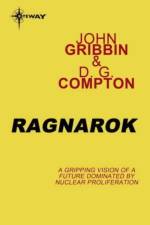
The day of ice and fire, that brings in its wake devastation to the world. Dr Robert Graham, noted nuclear physicist, has campaigned hard and long for disarmament. Now his patience is at an end. With an ill-assorted handful of desperate, like-minded 'terrorists', he plans to hold the human race to ransom. His bargaining power is terrifying - nothing short of Ragnarok itself. The world governments must listen - or the countdown to nuclear winter has already begun . . .
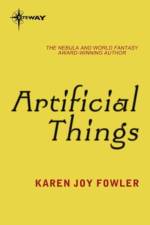
Because of the length of time that a voyage takes, knowledge of the purpose and nature of the universe often becomes lost to the succeeding generations of starship occupants. Through the experiences of a woman, and the people she encounters in a journey, the truth of their existence is revealed.
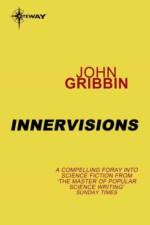
In a mind-blowing mix of scientific speculation and thriller, two seemingly unconnected events trigger off the discovery of nothing less than the secret of humanity's existence.
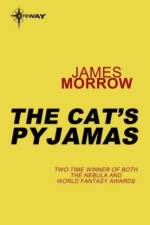
Terminal baptism, erotic performance art, and voodoo economics with actual voodoo are just a few of the subjects that James Morrow tackles with humor and sharp criticism in this book of science fiction stories. Other outlandish tales include John Wayne battling cancer using a highly alternative therapy, a gene for integrity being harvested from the brain of an unwilling donor, and the landing of Christopher Columbus in modern-day Manhattan. Included are the Locus and Nebula Award-nominated novelette Auspicious Eggs and several previously unpublished pieces.
It is the early summer of 1945, and war reigns in the Pacific Rim with no end in sight. Back in the States, Hollywood B-movie star Syms Thorley lives in a very different world, starring as the Frankenstein-esque Corpuscula, and Kha-Ton-Ra, the living Mummy. But the U.S. Navy has a new role waiting for Thorley, the role of a lifetime. The top secret Knickerbocker Project is putting the finishing touches on the ultimate biological weapon: a breed of gigantic, fire-breathing, proto-Godzillas engineered to stomp and burn cities on the Japanese mainland. The Navy calls upon Thorley to don a rubber suit and become the merciless Gorgantis, starring in a film that simulates the destruction of a miniature Japanese metropolis. If the demonstration succeeds, the Japanese will surrender and many thousands of lives will be spared; if it fails, the horrible mutant lizards must be unleashed. One thing is certain: Syms Thorley must now give the most terrifyingly convincing performance of his life.
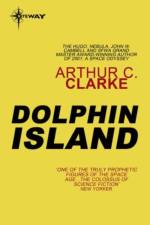
A Story of the People of the SeaThe adventure begins when Johnny, who has run away from home and hidden aboard an intercontinental hovership, is shipwrecked in the middle of the South Pacific Ocean. Stranded on a raft, and in an apparently hopeless situation, he is propelled by a pack of dolphins towards an island in the Great Barrier Reef, a famous centre for Dolphin Research. Professor Kazan, the director of research, shares Johnny's bewilderment as to the reason for the dolphin rescue operation and arranges for Johnny to stay on the island to assist in unravelling the mystery. In the chapters that follow, Johnny learns how to communicate with dolphins, explores the coral reef, goes skin-diving at night, survives a fearful hurricane, unearths a horrifying underwater conspiracy, and, in an intensely exciting final episode, makes a dangerous 100 mile tip on surfboard towed, turn and turn about, by his two closest dolphin friends.
By Space Possessed brings together Clarke's essays on travel to the planets and beyond in a form where they can be read individually or as a continuing narrative. It describes the history of an enthusiasm that took a Somerset farm boy to international fame, starting with the delightful, self-deprecating humour of the early days of British Interplanetary Society and proceeding to deeper concerns when at last the early daydreams, mocked by so many, began to come radiantly true. Along the way there are delights of Clarke's prediction of the Moon landing, the lecture which prompted Bernard Shaw to join the British Interplanetary Society and the birthpangs of 2001: A Space Odyssey. Humanity's future lies in space. These ever-topical essays, covering crucial years of interplanetary speculation and exploration show that one man, Arthur C. Clarke, has always been capable of foreseeing possibilities and probabilities, and opening up magnificent vistas to those willing to look with unblinkered eyes and minds. This is a testament to his vision.
Arthur C. Clarke has been one of the most influential commentators on - and prophets of - the communications technology which has created the global village. Now, drawing partly on his own sometimes very personal writings, he provides an absorbing history and survey of modern communications. The story begins with the titanic struggles to lay transatlantic telegraph cables in the nineteenth century. Fighting against widespread scepticism, lack of funds, technical disasters and setbacks - and against the Atlantic itself, above and below the surface - the pioneers achieved the seemingly impossible and by 1858 Britain and America were linked by Telegraph. Nearly a century later, as the first transatlantic telephone cable was being laid, the technology that would rival and perhaps even supersede it was undergoing its painful birth as scientists developed the communications satellite precisely as Clarke first described in his famous 1945 article Wireless World, 'Extra-terrestrial Relays', reprinted in this book. The rivalry between cable and satellite continued through the decades. Communication satellites (Comsats) performed even beyond the most optimistic expectations, but cable fought back with the development of the transistor. Then, in one of the most dramatic and unexpected breakthroughs in any technology, the potential of cable systems was transformed. The development of fibre optics technology meant that once more the seabeds of the world began to be draped with the newest and most sophisticated artefacts of human engineering. It is an enthralling story, filled with extraordinary events and people, and Arthur C. Clarke brings all his storytelling flair and scientific expertise to bear on it. The result is a superb combination of history, comment and challenging speculation.
Abonner på vårt nyhetsbrev og få rabatter og inspirasjon til din neste leseopplevelse.
Ved å abonnere godtar du vår personvernerklæring.