



Gjør som tusenvis av andre bokelskere
Abonner på vårt nyhetsbrev og få rabatter og inspirasjon til din neste leseopplevelse.
Ved å abonnere godtar du vår personvernerklæring.Du kan når som helst melde deg av våre nyhetsbrev.

Pick up where Classic FM leaves offWhat does classical music mean to the Western World? How has it transformed over the centuries? With such a rich tradition, what relevance does it have today? Julian Johnson inspires readers to explore the field, and examines how music is related to some of the big ideas of Western experience including spirituality, emotion, the weight of history, and self identity.
Longlisted for the International Dylan Thomas Prize 2016 An anonymous package arrives in the post: a cardboard box containing sheaves of printed emails chronicling New York-artist Jack's secret life. The package is addressed to his wife Deb, but it's delivered into the wrong hands: her children's. With this vertiginous opening begins a heart-stopping debut about a family blown apart by an affair, yet still painfully tethered together.
A collection of prayers. It includes works from such well known religious figures as Rumi and Saint Theresa of Avila. It covers verses created by writers such as Beethoven and Michelangelo, whose words enrich the soul and elevate the mind.
A Simon & Schuster eBook. Simon & Schuster has a great book for every reader.
In this extraordinary comprehensive book, Hans Kung gives an in-depth account of Islam, explaining why "peace between religions" is important.
A comprehensive examination of the struggle to reconcile philosophy and Islam.From the introduction of Greek Philosophy into the Muslim world in the eighth century, right through to modern times, Majid Fakhry charts the evolution and interaction of philosophy, theology, and mysticism in the Islamic context. Highlighting key individuals, movements, concepts and writings, Fakhry also explores the conflicts and controversies between anti- and pro-philosophical parties that have characterised the development of Islamic thought. The book also features coverage of: the translation of ancient texts and their transmission to the Muslim world; the development of a systematic philosophy in Islam; theology, mysticism and the development of Sufism; Islam's interaction with western philosophy and theology; contemporary trends.
Get to grips with one of the world's most powerful books.The Qur'an has spoken to Muslims for over one thousand years; it is seen as law-maker, moral code, and the word of God. Drawing on both contemporary and ancient sources, Esack outlines the key themes and explains the historical and cultural context of this unique work whilst examining its content, language and style, and the variety of approaches, including fundamentalist, feminist, and modernist, that have been used to interpret it. Other areas covered include: the Qu'ran as evocative oral experience; understanding and interpreting the Qu'ran; the major themes of the Qu'ran, including such issues as truth, justice and gender relations.
Discover how to put your point across more effectively!We are bombarded daily with vast amounts of information, much of it using faulty logic. From adverts to blogs, television to newspapers, knowing what to believe is a daunting task. "e;Critical Thinking: A Beginner's Guide"e; teaches you how to analyze people's arguments and explains the main 'fallacies' that are used to deceive and confuse. With a wealth of real life examples, a glossary, and plenty of diagrams, this is an invaluable tool for both students wanting to improve their grades and general readers in search of clarity.
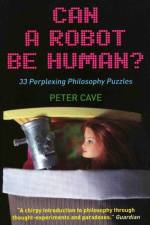
The philosophers' Does Anything Eat Wasps?In this fun and entertaining book of puzzles and paradoxes, Peter Cave introduces some of life's most important questions with tales and tall stories, reasons and arguments, common sense and bizarre conclusions. From speedy tortoises to getting into heaven, paradoxes and puzzles give rise to some of the most exciting problems in philosophyfrom logic to ethics and from art to politics. Illustrated with quirky cartoons throughout, Can A Robot Be Human? takes the reader on a taster tour of the most interesting and delightful parts of philosophy. It's for everyone who puzzles about the world!
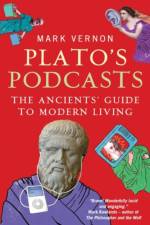
Use Ancient Wisdom to revitalise your life!Do you ever get the feeling that something went wrong? What with credit crunches, wars, congestion charges, and unemployment, it is natural to hark back to less complicated times. In this witty and inspiring book, Mark Vernon does just that. However, we are not talking about the 1980s try 400BC! Filled with timeless insight into life, relationships, work and partying, Plato's Podcasts takes a sideways glance at modern living and presents the would-be thoughts of Ancient Philosophers on various topics central to our 21st century existence. From Plato on podcasts to Epicurus on bottled water, this is a funny but profound take on what life means today (and two thousand years ago).
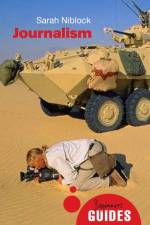
Does the digital age spell the end of journalism as we know it?Journalism today is moving faster than ever before. With web 2.0, blogging, huge media conglomerates, 24-hour news-networks, and tight legal frameworks, this introduction investigates the role of journalism in the digital age. With priorities shifting, do journalists still strive for truth or are they solely concerned with 'infotainment' - driven by sales and ratings? This captivating guide explains the history of journalism, its everyday workings, and the ethical dilemmas that modern journalists face.
Wilfred Cantwell Smith investigates and contemplates religious experience in a variety of different traditions. This book is for those who seek understanding and tolerance of others and serves to reaffirm one's own faith, or illuminate one's lack of it, by revealing how others find paths to God.
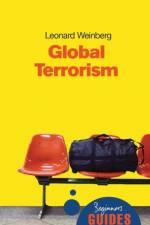
A fascinating and frightening look into terrorism on a global scale.Since the terrible events of 9/11, more attention than ever has been paid to the threats and challenges posed by contemporary terrorists. From suicide bombers to the latest cybertechnology, Leonard Weinberg's readable and objective introduction explains who the terrorists are, where they came from, what motivates them and what, if anything, can be done to stop them. It provides a fascinating insight into such mythical figures as Carlos the Jackal and Osama bin Laden, while also offering a full account of how terrorist ';cells' operate and what they might do in the future. With full resources, including a chronology and list of further reading on the subject, anyone interested in matters of public security and international crises will find this essential reading.
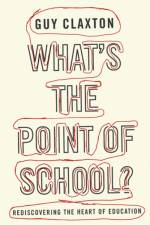
Why the education system is failing our kids and how we can start the revolution that will save our schoolsWith their emphasis on regurgitated knowledge and stressful exams, today's schools actually do more harm than good. Guiding readers past the sterile debates about City Academies and dumbed-down exams, Claxton proves that education's key responsibility should be to create enthusiastic learners who will go on to thrive as adults in a swiftly-changing, dynamic world. Students must be encouraged to sharpen their wits, ask questions, and think for themselves - all without chucking out Shakespeare or the Periodic Table. Blending down-to-earth examples with the latest advances in brain science, and written with passion, wit, and authority, this brilliant book will inspire teachers, parents, and readers of all backgrounds to join a practical revolution and foster in the next generation a natural curiosity and the spirit of adventure.
A lively introduction to this celebrated philosophical tradition.Existentialism pervades modern culture, yet if you ask most people what it means, they won't be able to tell you. In this lively and topical introduction, Wartenberg reveals a vibrant mode of philosophical inquiry that addresses concerns at the heart of the existence of every human being. Wartenberg uses classic films, novels, and plays to present the ideas of now-legendary Existentialist thinkers from Nietzsche and Camus to Sartre and Heidegger and to explore central concepts, including Freedom, Anxiety, and the Absurd. Special attention is paid to the views of Simone de Beauvoir and Franz Fanon, who use the theories of Existentialism to address gender and colonial oppression.
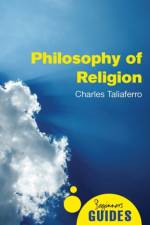
A modern take on this age-old branch of philosophyIsaac Asimov said that 'whatever the tortures of hell, I think the boredom of heaven would be even worse'. Such quandaries are the bread and butter of philosophy of religion. Questioning why evil exists, whether God could create a stone he couldn't lift, and if the wonder of life suggests a Creator, this fascinating branch of philosophy is concerned with arguments for and against religion, and what form an immortal god (or gods) would take if in existence. Assuming no prior knowledge of philosophy from the reader, Taliaferro provides a clear exploration of the discipline, introducing a wide range of philosophers and covering the topics of morality and religion, evil, the afterlife, prayer, and miracles. Also containing sections dedicated to Hinduism, Buddhism and the Eastern religions, this helpful primer is perfect for students or the general reader.
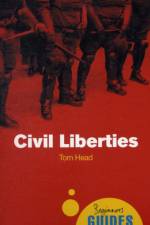
In a country famous for having the most CCTVs in the world, how safe are your rights?Six types of execution are practiced in the industrialized world, torture is openly sanctioned by America, and infringements of people's civil liberties occur daily. Yet in 2005 only 61% of the British voting public chose to stand up for their rights. Explaining what civil liberties are and why they're worth defending, Tom Head shows how you can make a difference.
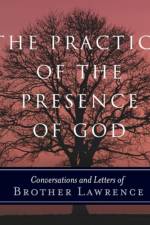
This little book records the simple wisdom of Brother Lawrence whose spirituality was profound from the age of 18 when he underwent a life-changing experience.
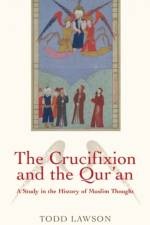
The first book to examine the controversial Qur'anic phrase which divides Christianity and Islam.According to the majority of modern Muslims and Christians, the Qur'an denies the crucifixion of Jesus, and with it, one of the most sacred beliefs of Christianity. However, it is only mentioned in one verse - 'They did not kill him and they did not crucify him, rather, it only appeared so to them' - and contrary to popular belief, its translation has been the subject of fierce debate among Muslims for centuries. This innovative work is the first book devoted to the issue, delving deeply into largely ignored Arabic sources, which suggest that the origins of the conventional translation may lie within the Christian Church. Arranged along historical lines, and covering various Muslim schools of thought, from Sunni to Sufi, "e;The Crucifixion and the Qur'an"e; unravels the crucial dispute that separates the World's two principal faiths.
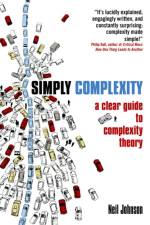
The new branch of science which will reveal how to avoid the rush hour, overcome cancer, and find the perfect dateWhat do traffic jams, stock market crashes, and wars have in common? They are all explained using complexity, an unsolved puzzle that many researchers believe is the key to predicting - and ultimately solving - everything from terrorist attacks and pandemic viruses right down to rush hour traffic congestion. Complexity is considered by many to be the single most important scientific development since general relativity and promises to make sense of no less than the very heart of the Universe. Using it, scientists can find order emerging from seemingly random interactions of all kinds, from something as simple as flipping coins through to more challenging problems such as predicting shopping habits, the patterns in modern jazz, and the growth of cancer tumours.
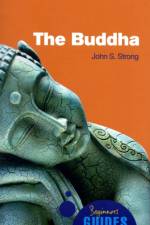
Revealing the man behind the icon.From his many births to his deathbed deeds, this authoritative biography unites the Buddha of history with the Buddha of legend in a bid to reveal the lasting spiritual relevance at the heart of the Buddhist tradition. Acclaimed scholar John Strong examines not only the historical texts, but also the supernatural accounts that surround this great religious figure, uncovering the roots of many Buddhist beliefs and practices. Accompanied by helpful charts and tables, and drawing on a vast array of primary sources, the text also features such key topics as: biographical accounts from all the Buddhist schools, an analysis of the Buddha's enlightenment, the life of the Buddha as depicted by Buddhist art and rituals, and the relics of Siddhartha Gautama, and how they continue his story, even after his lifetime.
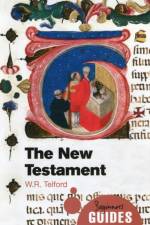
The New Testament writings are the foundational documents of early Christianity. But to fully understand them we need a broad historical awareness of the wider social, economic, political and religious context that produced them. Exploring the transition from an oral to a written tradition, this fascinating primer depicts the growth of the early church amid the Roman and Hellenistic Empires. Focusing on the composition and content of the Synoptic Gospels those of Matthew, Mark and Luke W. R. Telford furnishes the reader with an appreciation of the methods contemporary scholars apply to the Gospels and also offers an assured, in-depth guide to the texts themselves. Broaching difficult questions about the differing accounts of Jesus life that the New Testament has left us, this is an invaluable starting point for anyone looking to understand the roots of Christianity.
From magic to the Enlightenment; Darwinism to nuclear weaponsWeaving together intellectual history, philosophy, and social studies, Sean Johnston offers a unique appraisal of the history of science and the nature of this evolving discipline. Science is all-encompassing and new developments are usually mired in controversy; nevertheless, it is a driving force of the modern world. Based on its past, where might it lead us in the twenty-first century?
How the modern world was shaped by super power rivalry through deception and propagandaThis guide exposes the reality behind the war between capitalism and communism, two ideologies divided by the Iron Curtain. New revelations show that what was once regarded as simply a struggle between good and evil was in fact a far more complex affair. Merrilyn Thomas peels back the layers of deception and intrigue and offers a penetrating assessment of the legacy of instability that continues today.
This practical guide provides a new understanding of ourselves and others based on easy-to-use principles. Drawing on real-life examples, it offers a set of strategies for transforming personal relationships, including: understanding and addressing our own and others' motives; communicating effectively; and developing a positive outlook, and dealing with mistakes and difficulties effectively.
Discover the human side to the discipline that is profoundly more than nuts and boltsFocusing on the impact of engineering on society and the world, McCarthy details the development of the discipline, explains what makes an engineering mind, and shows how every aspect of our lives has been engineered: from gadgets to our national infrastructure. Long considered tinkerers, problem solvers, and visionaries, engineers hold the keys to our real and virtual future.
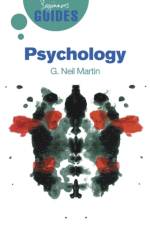
A riveting exploration of who we are and why we behave the way we do.Why do we become aggressive? How does the brain allow us to see, hear, and feel? Can listening to Mozart improve IQ? How do babies learn to perceive and think? How can we reduce obesity and cigarette smoking? Is being physically attractive an advantage? Psychology, the scientific study of the mind and our behaviour, has never been more popular. From TV experts to the amateur musings of your best friend, the language of psychology has permeated all aspects of everyday life. Here Martin reveals that modern psychology concerns far more than the everyday stereotypes of Freud, Jung, and ';common sense' advice. This Beginner's Guide is informed by the latest cutting-edge research and provides a vibrant and witty exploration of our senses, how our memory works, and what determines our intelligence, development, and personality.
How we can stop the world's worst atrocitiesIn this compelling overview, Adam Jones outlines the history and current extent of key crimes against humanity, and highlights the efforts of popular movements to suppress them. Using examples ranging from the genocides in Darfur and Rwanda to the sex trade of Eastern Europe and the use of torture in the 'war on terror,' Jones explores the progress made in toughening international law, and the stumbling blocks which prevent full compliance with it. Coherent and revealing, this book is essential for anyone interested in the well-being of humanity and its future.
Great minds of the 20th century, including such distinguished names as Richard Swinburne, Alvin Platinga and Keith Ward, offers answers to some of life's key questions.
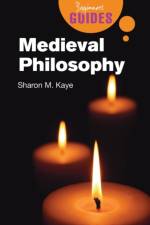
An engaging and authoritative introduction to this hugely influential era in the history of philosophy.Why do good things happen to bad people? Can we prove whether God exists? What is the difference between right and wrong? Medieval Philosophers were centrally concerned with such questions: questions which are as relevant today as a thousand years ago when the likes of Anselm and Aquinas sought to resolve them. In this fast-paced, enlightening guide, Sharon M. Kaye takes us on a whistle-stop tour of medieval philosophy, revealing the debt it owes to Aristotle and Plato, and showing how medieval thought is still inspiring philosophers and thinkers today. With new translations of numerous key extracts, Kaye directly introduces the reader to the philosophers' writings and the criticisms levied against them. Including helpful textboxes throughout the book detailing key thinkers, this is an entertaining and comprehensive primer for students and general readers alike.
Abonner på vårt nyhetsbrev og få rabatter og inspirasjon til din neste leseopplevelse.
Ved å abonnere godtar du vår personvernerklæring.