













Gjør som tusenvis av andre bokelskere
Abonner på vårt nyhetsbrev og få rabatter og inspirasjon til din neste leseopplevelse.
Ved å abonnere godtar du vår personvernerklæring.Du kan når som helst melde deg av våre nyhetsbrev.

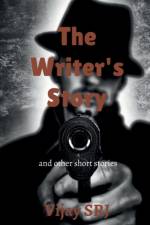
The one he looked for on Facebook is in front of his eyes today. He could not believe it was in his hands now. Dream come true moment!Author Bio: Dr. VJ is a versatile entrepreneur with a solid educational background in law, management and IT. He is a strong leader who believes in bringing out the hidden talents of the employees by guiding them towards the right path. He is an ambitious, goal-oriented professional with a wealthy summary of proven records of accomplishment for a successful career as a management consultant, a professional accountant, an entrepreneur and a motivational trainer with required set of career success skills. He is also an ambitious go-getter with a vision to become a leader in export education in the Asian Region.
These stories are based in India, the land of mysteries. Horror is a peculiar genre. There are paranormal incidents, phenomena, and happenings that probably have no explanations whatsoever. I have kept an eye on diversity.The twelve compelling ultra-creepy stories are meant for you if you look for chills down your back. They will intrigue and delight you in equal measure.A robbery born out of greed and malice goes horribly wrong when the ruthless robber calls on an older woman. The meeting ends in a scream of one in mortal terror.A village is reportedly cursed. A stranger arrives, claiming to drive out the demons. Horror is unleashed.A hill comes out alive to take on people who come to explore her reserves. The encounter ends in a spine-chilling climax.A journalist explores an ancient abandoned house to cook up a light-hearted story. Does he come out alive to tell the story to the world?A paranormal investigator has a chance to visit the netherworld and wonders about having sex with ghosts. How does he come out of the tricky situation?And then there is a playboy with a tattoo of a demon on his chest that comes to life to devour his girlfriends.An invitation to a Halloween party takes the protagonist to an inconceivable and implausible world. Horror strikes.A stalking graffiti seeks vengeance. An older woman steals the souls of wayward husbands. A holiday on a beach resort ends up inviting demons seeking revenge.
In these times of protests, wars, pandemics and other disruptions, this book explores the reasons behind a lack of credibility in governance and legal systems in many jurisdictions by uniting diverse fields of sociology, history, ethnology, anthropology, and comparative law.Are history and religion relevant to the content and practice of law? Revolutions have a propensity to press the reset button by erasing all previous laws and at times, re-stating history. Should their relevance be examined by lawyers, scholars, sociologists and others? In many jurisdictions, even academic debates surrounding the relevance of history and religion in law are considered unthinkable, forbidden, sacrilegious and even profane. What about the role of customary laws/unwritten laws or the use of religion in family and personal laws or the use of historical laws? Why then is the taking of oaths still required, pursuant to religions in courtrooms and law?The editor submits that, in most jurisdictions, history and religious jurisprudences remain a compelling perspective, whether through the content or interpretation of laws, or when such perspectives are used as customary law/unwritten laws in these places. The editor, with the assistance of top experts/scholars/lawyers from the nine jurisdictions of Russia, China, Ukraine, India, Israel, Turkey, Indonesia, Brazil and Nigeria examines the issues of history, religion [Christianity, Islam, Hinduism, Jainism, Judaism and so on], revolutions, indigenous peoples and influence of external laws/legal transplants in the evolution of law and its practice. Readers will gain unique perspectives and find the examination of history and legal history for all nine jurisdictions, from ancient times to the present day, exhilarating.
This is a collection of poems about our day-to-day lives, dreams, moments, issues and objects. It's a quest to find something interesting and profound in the mundane. The subjects are as varied as doors, windows, snow, night, shadows, dreams, wrinkles and phone chargers, to even stones, bricks, clouds, mornings, chairs and everyday news. It is an attempt to engage the reader with their own world through a unique lens that gives meaning to even random objects and makes our ordinary lives interesting and worth exploring.
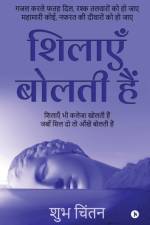
Poetry should become the voice of underprivileged and deprived people and should not be only for entertainment. It can also be used as a weapon to fight against widely prevalent injustice in society.Even within the ambit of poetry, Ghazal is the most appealing format of expression. Ghazal, by virtue of its underlying rhythm, establishes an immediate rapport with the reader.It is true to some extent that Ghazal is still recognised as an Urdu phenomenon as they are written by notable poets, containing tough Urdu words that may be difficult to grasp for many Indian poetry lovers. If we have to frequently search for meanings of Urdu expressions, then the charm coming out of them diminishes. Why can't we include more Hindi and even Sanskrit words in Ghazals and make them more 'Indian'? Whe should write more and more 'Hindi Ghazal' which uses simpler words? In this book, an honest attempt has been made to Indianise Ghazal.Moreover, in view of the ongoing Azadi ka Amrit Mahotsav, some poems on 'Hind' have been included in this book.
Destiny is the agenda fixed at birth. It is deeply buried in our psyche. While we are moving in directions dictated by the circumstances, there is a natural affinity to situations that vibe with this buried agenda. When the sights and smells of the world pull us in a direction at variance to this agenda, there is confusion and dilemma. Knowledge is power. Unfolding this agenda gives us the power to make informed choices and avoid the stress and fear of the unknown - the power to know our potential and achieve success and happiness in life. This book reveals the ancient language of stars in a systematic, step-by-step and do-it-yourself manner."Failure and success seem to have been allotted to men by their stars. But they retain the power of wriggling, of fighting with their stars or against it, and in the whole universe the only interesting movement is this wriggle."- E.M. FORSTER
Indian Muslims: The Way Forward reflects upon a range of issues concerning the Indian Muslims, such as: - Why are the Indian Muslims, as a whole, socially, educationally and economically backward? What can be done to address this? - How far are Muslim religious and political leaders responsible for the present conditions of the Indian Muslims? - How should the Indian Muslims relate to the present social and political context? - How can the Muslims of India earn the goodwill of people from the other communities in the country? What are some practical things that they can do to promote inter-community harmony?This book speaks about the way forward for India's Muslims in the present context. It appeals to them to contribute to the common good of the country as a whole and the wider society while also focussing on their educational and economic development. India's Muslims and the other communities in the country, the book highlights, must practise the art of peaceful coexistence, as India is their common home. "One could say that God has destined them to live together here", the author says.
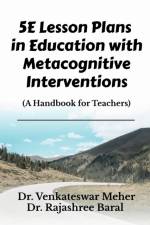
Metacognition is the ability of individuals to apply previously acquired knowledge and experience to operate learning-related activities. The book is based on 5E lesson plan with metacognitive interventions, which were developed based on the 'Education' syllabus of Council of Higher Secondary Education, Odisha, India. This book is a part of a quasi-experimental research. For experimentation purpose two groups were formed i.e., experimental and control group. For the students of experimental group 5E lesson plans were developed and suggestions from subject experts were taken for establishing content validity of the lesson plans before actual implementation. The lesson plans of the experimental group included metacognitive interventions like thinking aloud, concept mapping, brainstorming, and self-assessment. It also included some sorts of metacognitive questions and specific classroom activities in the classroom. The students of control group were taught following traditional approach. The experimentation was conducted in higher secondary schools for more than two months. The students taught with 5E lesson plan with metacognitive interventions were found to have higher self-efficacy, metacognitive awareness and academic achievement of higher secondary school students in education. This book is beneficial for teachers for planning their lessons based on 5E lesson plan with metacognitive interventions.
"Power is never evil or good. It's the man using it." The world has never been kind to people possessing power beyond human belief. And it was neither forgiving nor accepting to the witches in 1692, when thousands of women met the cruel fate of being handed to an incident referred to as the Salem Witch Trials. To save themselves from this fate, true witches hid their powers and their bloodlines. And so had Amaraya and George to save themselves and their two beautiful daughters, Raylina and Ablina. But little did Amaraya know that it's not possible to change destiny. Losing her husband, George, to the hands of a mysterious conspiracy, Amaraya again goes into hiding. But now it's the 20th century. Amaraya and her daughters, Ablina and Raylina, have come out of hiding, returning to their ancestral home in India to hunt down the man who killed George.With every story comes a villain. And the villain of this story is determined to destroy everything that comes in the way to become an ultimate power on Earth. But how do you fight a villain when you don't even know who the villain is. Nevertheless, the future resides in the hands of the Bayer sisters, Ablina and Raylina. They must unite to protect the people they love for the future that resides in their hands.Will Ablina and Raylina harness their power and strength to destroy this evil force and save the world, or will Evil conquer all?
Esvee wandered into the realm of content writing after a stint as a writer and editor of a major Bollywood magazine, and immediately realised she needed a creative outlet. With the pandemic wreaking havoc on the planet, Esvee decided to take on the task and write a poem every day. Every day was different; it was either over lost love, anxiety about a million what-ifs, or simply the aggravation of being in a situation over which she had no control. Reckless @ 2am is a novel with layers of honesty and transparency, a potpourri of honest, open admissions.
She was gregarious! She was the life of every celebration! She appeared to be always on cloud nine and people looked up to her as the perfect incarnation of happiness. She carried herself with confidence and brimmed with pride. Not anyone knew how solitary she was, deep inside. For some, life is a bed of roses, but for her, it simply wasn't. She was sensitive to the slightest change around her; to the various relationships around her. Let's look into her world and understand what she has to offer. 'She' could be anyone - you, me or us.
"Neh" or "love" has its own indelible and unbreakable bond. Which can be felt without any thread, without relation, without agreement, by behavior, by touch, without closeness.The feeling of Neh is seen elsewhere in nature. Birds, rivers, ponds, falls, mountains, spring, autumn, clouds, rain, peacock all seem to interpret it in their own way.This Neh is seen anywhere as a symbol of any obscenity, indecent or false attraction. "No!", all of these while expanding the kingdom of that infinite, represent "Neh Bandhan" in the form of a very specific and delicate definition.
As the title of the book "Trataka: A Concentrated Gazing Technique for Mystical Powers", suggests that it is a concentrated technique for gazing, without blinking the eyes, on an object to get a large number of benefits to the practitioner: physical, mental, emotional, and spiritual. Trataka is a science that has been explored and developed for thousands of years by sages, monks, ascetics, and ordinary practitioners to get these benefits leading to mystical powers, peace of mind, bliss, enlightenment, and samadhi. There can be many objects on which the trataka practice can be performed to achieve the desired outcome. These objects include Sun, Moon, Candle Flame, Fire, Mirror, Image of Guru, Deity, Thumb, Right Shoulder, Left Shoulder, the Nose tip, Gazing between the Eyebrows, Gazing on a Flower, Leaf Tree, Sea, River or Lake, etc. Trataka cures diseases of the eyes such as eyestrain, astigmatism, and myopia. It enhances cognitive capabilities, memory power, improves pulse rate, blood pressure, etc. It develops clairvoyance, telepathy, as well as strong willpower and single-pointedness. Trataka leads one to a stage where shunyata or emptiness arises, and one becomes delightfully engrossed in the ultimate state of Cosmic Self, the transcendental reality.
Competitive Examinations are tuff and candidates take all possible routes to reach their desired target. In these days candidates with higher education are attempting to write such examinations for the purpose of getting a secured Government's job.. Author was writing CONTENT in YouTube for children. Later a link from another YouTube Creator suggested to write and help the candidates for Police Constables, SI, and other First Division Assistant for Karnataka Public Services. This Hand Book On Questions might help candidates to reach their Target.
Abonner på vårt nyhetsbrev og få rabatter og inspirasjon til din neste leseopplevelse.
Ved å abonnere godtar du vår personvernerklæring.