

Gjør som tusenvis av andre bokelskere
Abonner på vårt nyhetsbrev og få rabatter og inspirasjon til din neste leseopplevelse.
Ved å abonnere godtar du vår personvernerklæring.Du kan når som helst melde deg av våre nyhetsbrev.

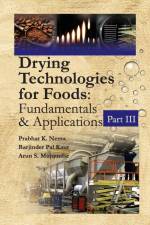
Drying is an important unit operation used in the industry for processing and preservation of food products. Food industry always looks for cost effective and energy efficient drying techniques to commercially succeed in their ventures and to fulfill demand of high quality dried food products. Although a large volume of technical literature is available on drying of foods, it is still quite challenging for scientists and engineers to improve upon the existing drying systems and quality of the products. The book consists of 14 chapters detailing freeze drying, atmospheric freeze drying, swell drying, multi-flash drying, electro-hydrodynamic drying, pulse combustion drying, foam mat drying, ultrasound- assisted drying and fluidized bed drying. It also includes chapters which are commodity-specific such as mushroom drying, drying and roasting of cocoa and coffee beans. The degradation mechanism and kinetics of vitamin C degradation in fruits and vegetables, kinetics modeling of drying process for the recovery of bioactive compounds and energy calculation procedures for dryers is also covered which would be helpful to improve dryer operation and efficiency.
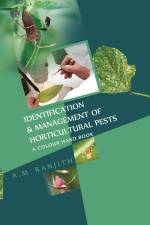
This book has been written, primarily due to my own felt need to have a comprehensive text book on the pests of horticultural crops and methods to manage it, in the integrated way. Due to the widespread use of digital color photography and the good resolution that you get in even the basic level digital cameras, it is possible to get good photos. It was thus more of a need to have a text book to teach the UG and PG students, that this book was written. It was also necessary that any practicing field level worker like officers of the state department of Agriculture and commodity boards, and every practicing farmer with an ability to read English text book, should be guided into the basic facts about the pests of crops. It is most likely that most of the information is available in this book itself, as pest of some other crop. It will then be possible to read on the pest in that , and manage the pest effectively using the latest techniques available to the crop management expert.
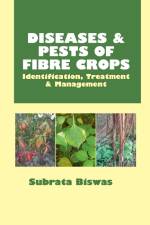
This book presents a comprehensive knowledge on the diseases and pests of fibre crops, causing economic damage. It covers major disease and pest damages with the methods to combat them in fibre crop cultivations. The diseases and pests are described elaborately, giving emphasis on both morphological and molecular characteristics of pathogens and biology of different insect pests. The latest and most up-to-date knowledge on these aspects which acquired from diverse, complex, contemporary scientific discoveries in the field of fibre crop diseases and pests are compiled and presented in this book. This book is written in eight major chapters, each representing a certain type fibre crop, except for chapter 2 (two) which deals with both Mesta (kenaf) and Roselle for their similarities in disease and insect pest attacks. Each of the eight chapters is again subdivided into 2 or 3 (only for Chapter 2) subchapters to deal with different types of diseases and pests separately. This is a reference book in textbook format which intended to provide undergraduate, postgraduate and research personnel a means to acquire deeper knowledge on diseases and pests of nine major fibre crops, viz., cotton, jute, kenaf, roselle, sunnhemp , sisal, ramie, flax and hemp. Plant pathologists, entomologists and agricultural research scientists, and in academia, may find much of great use in this book.
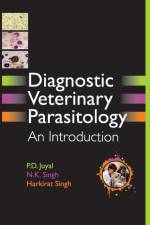
Although immunological and molecular techniques are increasingly being applied for the diagnosis of parasitic diseases, veterinary practitioners worldwide still rely primarily on the conventional faecal and blood smear examinations mainly on the concept of "seeing is believing". These techniqes are still the gold standard and cost-effective means of diagnosing the parasitic infections in domestic animals.
Animal husbandry is strongly influenced by weather and climate. Climate change/variability imposes multiple stresses in animals and thus vital to understand the impact of environmental stress on livestock production and reproduction. Among the environmental variables affecting livestock, heat stress seems to be one of the more intriguing factors making difficult animal reproduction and production. Information and knowledge on animal responses to the environment continues to be in process, managing livestock to reduce the impact of adverse weather and climate remains a challenge. Responding to the challenges of global warming necessitate a paradigm shift in the practice of agriculture and in the role of livestock within the farming system. The key thematic issues on environment stress and livestock production includes: early warning system, multiple stress research, exploitation of genetic potential of native breeds, suitable breeding programme and nutritional intervention research. Livestock farmers should have key roles in determining what adaptation and mitigation strategies they support if these have to sustain livestock production in changing climate. The integration of new technologies into the research and technology transfer systems potentially offers many opportunities to further the development of climate change adaptation strategies.
The present book "Current Trends in Global Environment" deals with each and every important and recent issue of environment with clear-cut facts in a lucid manner of presentation, which are likely to be come across by its readers, irrespective of their discipline. An attempt has been made to present the matter in a perceptible and comprehensible manner which would be equally important to a beginner and specialist. Worthy for a reference for its up-to-date content that satisfy its user in a minimum of time. By far majority of books are from the mainstream with heavy a textual load. It has s on present day burning topics like The Greenhouse Effect, Natural Disasters i.e., Tsunami, Earthquake, Continental Drift, Sustainable Environment, Space Ecology, The Glossary will be useful for an individual new to the subject and anyone inexperienced in dealing with some aspects of the subjects. The index has been designed with upper most principle that it should be as complete as possible, of words and short phrases as they naturally appear in related species. We hope that his Global publication by a global famed personality will fit the subject gap for the readers and above all institutional libraries.
Drought is considered to be a normal feature of climate especially in tropical countries where occurrence of periods of dry weather during rainy season is common. Virtually droughts can occur in all climates and they can also be witnessed when the air temperatures are higher than the normal for a longer period that increases both evaporation and water deficit. 1. The first deals with the introduction to the topic, historical evidences of drought and famines in India. 2. The definition of droughts, criteria for classification of droughts, drought indices based on rainfall, climate derivatives and remote sensing are covered under two. 3. Information on climate change with respects to climate trends, projections on temperature and rainfall at global as well at national level, consequences of climate change on droughts are presented in there. 4. Approaches on drought monitoring, adopted by various countries, international cooperation in drought monitoring and drought monitoring mechanism in India are presented in four. Decision Support Systems and applications of GIS for drought monitoring are also covered in this . 5. World food production and its variability, the impact of phenomenal drought during 2009 on food grain production in different countries, impacts of droughts on livestock, milk and fisheries production are covered under five. 6. Global surface waters, availability of surface waters in India, influence of drought on fauna and flora of surface waters and global warming on water resources at global and national level is discussed in - six. 7.
Climate is a vital factor that influences land use, crop quality, its productivity as well as all the other of agricultural systems. The significant impact of climate change is visible on human societies and natural ecosystems around the world. This impact will be more severe on agriculture if global warming continues. As per estimates of IPCC (2014), the agriculture, forestry and other land use contributes 24% of global greenhouse gas emissions. These emissions need to be reduced to avoid the serious impact of climate change using mitigation measures and adaptation strategies. Currently, unreliable and seasonal variations in weather have emerged as a serious challenge for sustainability influencing vegetation, biodiversity, livestock, soil, water, and other natural resources. In the last decade, more occurrence of extreme weather events affected farming community directly in their agricultural growth. The matter is of great concern to country like India, which require more produce from rainfed fields and shrinking crop land. To understand the problems occurring due to climate change, concerted efforts are required for mitigation and adaptation to reduce the vulnerability of rainfed agriculture and making it resilient. Agricultural output as well as the livelihood of people who depend on it, are particularly vulnerable to climate change, and it is important that we assess adaptation mechanisms to reduce these vulnerabilities.
The book is been divided into 5 major categories: Weather & Agromet Service / Pest & Diseases / Climatic influences over Agriculture & Horticultural crops / Climatic influences over Animal Husbandry and Fisheries / ICT application in Agriculture. The book covers the detail information on the probable impacts of climatic variabilty on various agricultural and horticultural crops with pest and disease incidences and their remedial measures. The effect of climate change in animal husbandry sector particularly summer infertility, productivity and disease spectrum is elucidated in a lucid and practical way. Fisheries both inland and marine are also taken into account considering fish productivity and disease incidence. Forewarning models with weather forecast are also described in the book with special emphasis to develop a strategy for Resilient Agriculture. ICT application in Agriculture has also found a place in the book, which is a compendium of the entire gamut of the potential impacts on Agriculture and allied sectors thus suggesting the ways to combat weather vagaries.
Bougainvillea is a very important crop in floriculture for multipurpose use. It grows very well under the tropical and sub-tropical conditions. An appreciable quantum of work has been done in India on Bougainvillea covering different aspects like germplasm collection, improvement and breeding, induced mutagenesis, cytogenetics, disease management, tissue culture and dehydration of flowers. Attempt has been made to develop a complete and comprehensive documentation of the results of the research and demonstrations conducted by different Indian scientists, nurserymen and amateur bougainvillea lovers over the last more than 50 years. The primary objective of the book is to give a coherent and concise account of all work done in India on bougainvillea with an emphasis on recent developments. Different aspects like history, elemental species and varieties, source of origin, horto-taxonomical characters, nursery culture, techniques for development of new varieties, cytogenetics, classical and modern methods of characterization, post harvest management, in vitro propagation, dehydration etc. have been highlighted. The book will be very useful not only for researchers but also for horticulturists, nurserymen, amateur growers, enthusiasts, city and industry planners for planning future research strategies on bougainvillea research. The book will provide valuable data and also be a reference material for future research activities in this area.
This book comprises 41 s dealing various issues, prospects and importance of conservation agriculture practices followed across different regions with special emphasis on rainfed regions. We hope this book on conservation agriculture will be highly useful to researchers, scientists, students, farmers and land managers for efficient and sustainable management of natural resources.
Plant diseases are among the important factors that are responsible for causing yield loss in crop production. The loss due to diseases alone is estimated to be around 26 per cent. Diseases may attack at any stage of the standing crop, from seedlings till maturity of the crop. They may affect different parts of the plants, such as foliage, stem, root, flowers or seed and cause various types of symptoms, while the diseases such as wilt affect the entire plant. All these ultimately result in the reduction of yield and poor quality of the produce. Further, many pathogens continue to attack the stored grains and stored produce, and cause spoilage. To save the crops from diseases caused by pathogens and thereby to increase crop production, it is imminent that diseases have to be controlled by any means. To adopt various strategies for the control of pathogens, one should have some basic knowledge about the symptoms produced by the pathogens, their life cycle, mode of survival and spread, and the stage at which the host is most vulnerable to attack by the pathogens. Most of the cultivated varieties of different crops are susceptible to one disease or another, while some others are susceptible to many diseases. Even resistant cultivars of some of the crop species may become susceptible to some specific diseases in course of time as a result of development of new physiologic races of the pathogen by hybridization or natural mutation or when the environmental conditions are highly favorable for the pathogen and not quite favorable for the host.
Cover methods used in clinical examination of herd/individual animals including history taking related to production disease of animals and laboratory for confirmatory diagnosis of disease. This book covers all practical aspects of clinical examination of animal and most commonly used laboratory techniques (including ruminal fluid examination, CSF examination, bone marrow and lymph node biopsy, blood transfusion, enzymology and other biochemical parameters) for the diagnosis of metabolic/production diseases. Questions given at the end of each , interpret and correlate the results with clinical signs of the diseases, which can be an aid to the confirmatory diagnosis of disease.
Developing countries as the nations of Indian subcontinent are experiencing big-bangs regarding their economic, agricultural and industrial development. The sole aim of present mechanized and advanced agricultural practices is to produce enhanced grain yield to satiate the hunger of burgeoning population. Thus the present scenario demands the use of chemical fertilizers and other agrochemicals. However the production cost of these chemical products is to high as it increases pressure on the fossils fuel reserves of the country. Bioinoculants are the culture concoctions/live microbial isolates that are presently the most ecologically feasible and economically sound example of practical reproduction of lab experimentation for the help of modern day farmeBroadly, bioinoculants include biofertilzers, biopesticides and organic decomposers. Biofertilizers are live cells of beneficial microbial isolates that provide necessary nutrients (nitrogen, phosphorous etc), excrete growth promoting compounds and provide resistance to a variety of diseases that culminates to enhanced yield and production. While biopesticides are live microbial isolates or their metabolic products that eradicate/kill known insects/pests of crops. Among commercialized biopesticides Bt cotton emerged as the first brand ambassador of modern day pesticides. The third component of bioinoculants are the organic decomposers that include certain fungal species, bacterial genera and actinomycetes that hasten decomposition of organic compounds and make available nutrients held as organic matter.
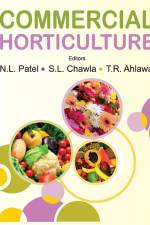
This book entitled "Commercial Horticulture" would prove helpful in taking a leap to overcome the constraints imposed on horticultural development by providing knowledge of modern technologies like protected cultivation, hybrid seed production, micro irrigation, fertigation, organic farming, mechanization and processing, post harvest management, etc. which is intended to help in strengthening the horticulture industry. An introduction to these latest technologies is intended to accelerate commercialization of horticulture which would ultimately encourage the sustainability and multi-faceted growth of agriculture in India.
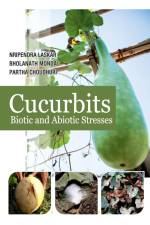
Among the leading vegetable producing countries in the world, India ranks second only after China. Vegetables play pivotal role in mitigating nutritional requirement of the soceity as well as providing employment oppurtunity specially in the agriculture dominated rural agrarian economy of the developing countries like India. Among different kinds of vegetables, cucurbits are a diverse group of vegetables (include pumpkin, bitter gourd, water melon, cucumber, pointed gourd, ridge gourd, bottle gourd etc) cultivated widely all over the South Asian countries including Indian sub-continent. These are basically worm season crops and fetch several biotic and abiotic stresses during their life stages. These stressess considerably affect yield potentiality of several cucurbitaceous vegetables quantitatively as well as qualitatively. Climatic changes and increment in cropping intensity reflected in a remarkable and rapid shift of vegetable ecosystem that ultimately increasing these stresses day by day. Biotic stresses like insect, mite and nematode pests etc. are the most significant biotic stresses which are responsonible limiting yeild reduction as well as quality deterioration of produces. Application of hazardous toxic chemicals to combat the pest problems of cucurbits not only results in residual toxicity in vegetables but also destabilising agro-ecosystem
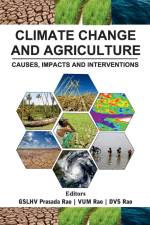
This book revolves around interventions to minimize crop losses due to global warming and climate change across the Country. In that respect, the contributions emerged based on research findings from different parts of the Country in the ICAR and SAUs system are noteworthy, unique and innovative.
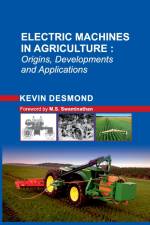
As far back as 1873, experiments were carried out to see whether the electric trolley system applied to omnibuses could be adapted to ploughing and tilling fields. In 1913, 1,600 "trolley/cable ploughs were in use across German farmlands. The arrival of the gasoline tractor relegated the use of electricity to electroculture, short haul farm machinery and lawn mowers. But it is only with the commercial availability of the lithium-ion battery during the last decade, that electrically powered drones and more recently tractors and earth movers are being seen as the way ahead. In this, the sixth in his seminal electric transport history series, Kevin Desmond portrays the life and work of the innovative engineers who perfected these e-tractors and agricultural drones.
This book is a novel contribution on the topic "Unit Operations in Food Processing". It widely covers the syllabi laid down for Agricultural Engineering as well as for Food Processing students.This book has 24 chapters and each chapter describes the fundamental knowledge of various unit operations used in processing of food and their applications with suitable examples. The language is kept simple and easy to understand and thus it will prove highly useful text book intended for undergraduate student in different universities and institutes.
The book is an attempt to address the important facts and figures relating to climate change impacts on water security: a. Climate change impacts on water resources; b. Climate change impacts on water related diseases; c. Climate change impacts on water dependent biodiversity and ecosystems; d. Climate change adaptation and mitigation measures for water security; and e. Climate change and greenhouse gas emissions from water sector. ¿ Climate change is an additional stress on water security in addition to other chemical and biological stressors. ¿ Rivers depending on the Himalayan glaciers (the Indus, Ganges, Brahmaputra) could face water shortages or reduced river run-off due to retreat of glaciers, and this would cause dramatic impact on drinking water supplies, biodiversity, hydropower generation, industry, agriculture, ecosystems on which about 2.4 billion people in Asia depends. ¿ As a consequence of drought, the annual stream flow in the Murray-Darling basin (Australia) is projected to fall by 10-25% by 2050 and 16-48% by 2100 which would have severe consequences on irrigated agriculture in the region.
The book comprises of topics on concepts of climate science and strategies to mitigate the impacts. The book therefore, covers topics of wider areas such as urbanization, coping strategies, water resources, watershed, land use patterns, atmospheric deposition, agriculture, carbon footprint etc. The book provides comprehension on which the researchers in the field may on which they can build up understanding on issues to be addressed. The articles are designed to interpret experiments, observations from the field and theory to understand the subject of climate change and its impacts.
This book addresses the important issues of food security and sustainability of natural resources of India in the context of the projected climate change. Agroecosystems being the sites of intense interaction between human beings and natural world, global climate change is likely to affect the resource base, the crop productivity, input use efficiency and overall the profitability of agricultural production systems to a great extent. However, the adverse effects of climate change can be alleviated through mitigation and adaptation strategies which carry importance due to the increasing population and food demand in India. Thus, this compilation covers possible sources and sinks of greenhouse gases in Indian context including the potentials of soil carbon sequestration, crop pest and soil management and scientific livestock management as mitigation and adaptation options. This book also includes some topics on fundamentals of green house effect and the possible mechanisms by which soil nutrient availability alters due to CO2 fertilization. The schematic diagrams, tables and graphs have been included to make the book more illustrative. The likelihood of carbon credits and trading through best management practices can help Indian farmers earning carbon credits in future. The book is useful for researchers, farm managers, policy makers and also students engaged in climate change related studies.
Weather and climate play an important role in plantation crops' production. While climate determines the adaptability of a particular crop in a region, weather determines the yield attributes of the crop. The global warming and climate change impacts on plantation crops are evident in the form of extreme weather events like floods, droughts, cold and heat waves and strong cyclonic winds, the frequency of which is likely to be more and more in the ensuing decades as noticed year after year around the globe in 1998, 2003, 2005, 2007, 2009, 2010, 2012, 2014 and 2015. It is now a topic of concern and the plantations' economy is in a threat in the ensuing decades due to climate variability. Decline in monsoon rainfall with number of rainy days, increasing ambient air temperatures (both day maximum and night minimum), decline in groundwater table, decline in wetland area and surface water resources, increasing number of forest fires and decline in forest area, increasing events of landslides during both the monsoon seasons, indiscriminate sand mining from river beds and unscientific land filling are the important climate change related issues in the Humid Tropics.
The book has a comprehensive account of the climate change with possible projections on food security in India. Global scenario of extreme climatic events and the corresponding probable climatic parameters in the years to come are discussed elaborately. The effect of climatic variability on the productivity of crops particularly cereals, pulses, oilseeds, vegetables, fruits and flowers etc and incidences of plant diseases are highlighted. Moreover, the environmental effect on edible mushroom and rubber cultivation is also brought under the discussion in the book. Besides crop productivity, the information on the impact of climatic variability on the productivity/survival of livestock and freshwater fisheries is also made available. To avert weather vagaries, agro-advisory services on national perspectives are rendered with due importance. Finally, a focus on district level agro-advisory followed by a proper crop planning is also bestowed.
This Laboratory Manual has been designed for students for easy understanding of basic plant pathological laboratory techniques related with Isolation of pathogen, Preservation of disease samples, Demonstration of Koch.s postulates, Study of different groups of fungicides and antibiotics, Preparation of fungicides, Methods of application of fungicides, Bio-assay of fungicides, Bio control of plant pathogens and Identification of some important fungal pathogens. The book is fully colour book with digitized images have been made to identify diseases and pathogens with explanations of new terminologies to enhance students understanding about the subject. The book will be useful to beginners, students, instructors, scientists and research workers in the field of Plant Pathology and Agricultural Microbiology
The book is divided into four sections, minerals, crystals, rocks and ores. Section A incorporates nine s, begins with presenting salient features of the earth--its structure and composition. The second Minerals and Mineralogy briefly tells about their diversity and their categorisation and introduces the interesting way they are named. Crystal chemistry the third is the heart and soul of mineralogy and deals in somewhat details about the building blocks of minerals -atoms and ions and the way they form diverse types of minerals are. It tries to tell why every combination of chemical compounds cannot result into a naturally occurring mineral. The fourth and fifth s deal with Properties of Minerals, physical and optical. The s describe various physical properties that are helpful in the identification both in hand specimens and as thin section under the microscope. These two s are adequately aided with a number of illustrations, photographs and photomicrographs to bring home the point. five deals with classification of minerals and their occurrence and forms a prelude to the next two s on descriptive mineralogy. Important silicate and non silicate minerals are described in s eight and nine. A brief description of mineral uses is dealt with in both descriptive mineralogy as well Section D on mineral deposits, however, the last , Mineral uses presents an overall picture and will be interesting as well as educating to students and even general readeSection B is devoted to crystals and crystallography. one introduces the subject while two presents basic crystallographic elements. three deals with the main six crystals systems while also giving a preliminary idea about stereographic projection and x-ray crystallography. Section C covers petrology, beginning with introduction to science of petrology, rock nomenclature. two is devoted to the study of igneous rocks, including their forms, composition, textures, structures, classification and description. Sedimentary rocks is the theme of three while different aspects of metamorphic rocks including kinds and agents of metamorphism and classification and description of metamorphism. The last portion of this also considers metamorphism in the background of global tectonics. five, the rock cycle presents a concise summary of geological events that have shaped the planet earth. The last section D is what geology is all about for a man on the street and its significance in nation building--the Ore minerals. It begins with what ore is and its place in human affairs as a well as presenting the important terminology in economic geology. two deals with ore genesis and presents various hypogene and supergene process that carves out ore deposits from non economic materials. three, mineral deposits and global tectonics is becoming a very popular theme among the earth scientists. A brief introduction of the same will be certainly appreciated by the student community and prompt them for further study in this direction. A general survey of India's mineral resources is the theme of four. It covers almost all of the commonly used ores, metallic, non metallic or fuels. The last of section D and the boom, 'Indian mineral industry: some facts and figures' will present where our country stands in the realm of mineral resources. Latest available data of resources, production, export, import, organisations that matter and other useful facts and figures are presented.
Abonner på vårt nyhetsbrev og få rabatter og inspirasjon til din neste leseopplevelse.
Ved å abonnere godtar du vår personvernerklæring.