
Gjør som tusenvis av andre bokelskere
Abonner på vårt nyhetsbrev og få rabatter og inspirasjon til din neste leseopplevelse.
Ved å abonnere godtar du vår personvernerklæring.Du kan når som helst melde deg av våre nyhetsbrev.

The book carries documents contributed by faculty members from all across the country on emerging disease threat, design effective management strategies through various conventional and modern approaches. The chapters in the book provide a current and detailed account of biotic and abiotic constraints that affect the crops, with comprehensive coverage of occurrence, distribution, economic importance, symptoms of biotic and abiotic constraints, disease cycle, epidemiology and sustainable disease management strategies.
This book is designed to cater the needs of students of Horticulture and allied science. The main motive is to cover all important points about temperate fruit and plantation crops. These fruit crops need oriented text encompassing and the latest information about various aspects, to serve as a reliable source of information about production of temperate and plantation crops. This subject of fruit and plantation crops is highlighted in a concise manner using simple and lucid language so that it is understood well. This book is written from our experience of the past several decades. It deals with several temperate and plantation crops. Each chapter in this book has been presented and well written in accordance with the present scenario. It provides an overview and recent detailed information of all principles and management practices.
The book covers concept and relevance of organic agriculture in 16 chapters as organic farming, basic information on biofertilizers, classification of biofertilizers, nitrogen fixation, Rhizobium, Azolla, Azotobacter, Azospirillum, blue green algae, phosphorus solubilizing micro-organisms (PSMs), Mycorrhizae, Frankia, vermiculture and vermicomposting, liquid biofertilizers, production, quality and marketing of biofertilizers & some important media. The book is written in a very simple form with up to date data and statistics. We have put the references of all chapters at the end of book that we hope will be useful to you. It is a mostly all-inclusive basic textbook on organic farming system and will specifically meet out the requirement of the scientists, teachers, research scholars and students of both the urban and non-urban areas.
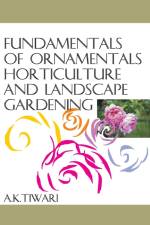
"This is a sincere effort to record the major ornamental plants raised in gardens and landscapes of today. The main classes of plants are described in the introductory . The subsequent s list the plants in the order of their habitat. The information includes scientific name, common name and the family to which the plants belong, a brief description and ornamental features. A comprehensive account of trees, shrubs, herbs, climbers, creepers and taxonomic groups that share characteristics such as bulbous plants, cacti, succulents, bromeliads, ferns and their allies, grasses, bamboos, sedges as well as ornamental water garden plants are given. Flowering and foliage trees of gardens of the tropics and subtropics and the popular deciduous trees and coniferous trees of the temperate zone are dealt separately. Among shrubs, dicotyledonous and monocotyledonous flowering and foliage shrubs as well as temperate region species suited for the hilly regions of India are included. Importance has been given to annual and perennial herbs grown in tropical and temperate regions. Climbers and creepers popularly grown in tropical gardens are listed. Among specialized plant groups, they are more commonly grown plants and those with outstanding ornamental features are selected. A brief account of planting and tips on their care and management are given. The book includes around 250 colour photographs and an index of the scientific names and families. The author has prepared this volume for the enlightened and keen enthusia to serve as guide for identifying garden plants and for selecting ornamentals to suit different locations under varied climatic conditions."
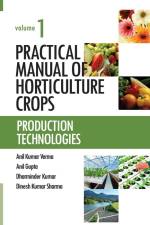
The book contains 19 chapters on production technologies of horticulture crops as: 1. Horticulture 2. Orchard Designing & Planting Systems 3. Orchard Floor Management 4. Description of Fruit Crops 5. Description of Vegetable Crops 6. Nursery Raising Techniques in Fruit Crops 7. Nursery Raising Techniques in Vegetable Crops 8. Propagation Techniques for Horticulture Crops 9. Canopy Management Techniques 10. Leaf and Soil Sampling Techniques 11. Integrated Nutrient Management (INM) in Vegetable Crops 12. Field Preparation, Layout of Experimental Plot and Calculation of Fertilizer Doses for Vegetable Crops 13. Exotic Vegetables 14. Hydroponics in Vegetable Cultivation 15. Weed Management in Horticultural Crops 16. Cultural Practices for Medicinal Plants 17. Annuals and Their Management 18. Flower Arrangements 19. Architectural Landscaping
Studies have shown that there is a perfect link between strong IPR regime protected by the rule of law and economic development of a country. India is still at nascent stage when compared with the IPR regimes of developed economies. Hence, governmental and intergovernmental initiatives in association with commerce and industrial bodies are being taken up for creating awareness on IPR. As a signatory to many international treaties and conventions, India has modified many existing IPR laws and codified new ones to foster protection of Indian traditional knowledge and innovations emanate from research and professional institutions of India. Even though the researchers of software, pharmaceutical and biomedical fields are leading the pack of most number of patent applications received at Patent Offices in India, requirement of such awareness in other fields is necessary. It is felt that ignorance on legal and administrative procedures involved in filing for IPR is a major issue that needs to be addressed immediately. Although articles and books are written on the conventions/treaties and on the importance of IPR and its protection, non-availability of IPR information in the form of a concise ready reference on IPR/patents/designs/ copyrights/trade marks and laws, application forms and procedures thwarts common-man to understand IPR and related issues. Enhanced awareness on IPR laws and copyright procedures would help filings for IPR by scientists, teachers and researchePublication of this volume is an attempt to alleviate this ignorance and spread information on IPR, which may help the needy to understand the intricacies of IPR and apply for IPR. It covers topics on IPR including important definitions, history of evolution of IPR concepts, major organizations that control IPR in bilateral, multilateral and global forums, issues concerning developed and developing countries with reference to enforcement of IPR, implications of major treaties of IPR protection to which India is a signatory, management practices of IPR and finally suggestions on creating increased awareness on IPR. Written in a simple language and concise form, this volume is a comprehensive treatise on IPR required for common readers and professionals. In addition to individual papers that deal with specific topics in detail, provision of suitable application forms for copyrights, trade marks, patents, designs, etc., as annexure makes this volume necessary addition in libraries of private, public, academic and research institutions, legal institutions and practicing lawyers and charted accountants. As many academic institutions have included IPR in course curricula, this volume would serve as a textbook suitable for teaching too.
Ornamental Horticulture is a branch of Horticulture which deals with commercial growing of flowers ornamental plants and beautification of surroundings. This subject assumes great importance in improving total environment and checks visual pollution by way of beautification. The flowers have been eulogised by poets and artists for generations not merely for their ornamental properties but for their versatile curative properties. The Study of ornamental horticulture comprises of two parts i.e. the knowledge of growing of plants like annuals, shrubs, climber, trees, bulbous, succulents and cactus, shade loving plants, lawn etc. and their use in beautification programme. The information on above aspect is scattered in different book and a great difficulty was being felt by students, landscapers and scientist. In this context, a need of simple book on introduction, cultivation and management of ornamental plants is highly demanded by student of Horticulture and florists of India. This book describes in details collection identification, propagation, cultivation, nutritional & weed management, plant and flowers senescence management etc., of annuals, herbs, shrubs, climbers and ornamental trees. Since, beautification involves the principles of art and gardening styles. Therefore, bio aesthetic planning, basics of landscaping and flowers arrangement have also been discussed in details. Special care has been taken to present the subject matter in a simple and lucid style. Book further includes recent available information. The illustrations have been drawn from own specimens with photographs.
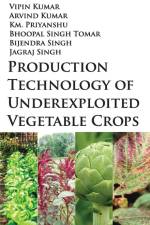
The book deals with and describes the matters of elementary interest of the study, which seem quite important for further study at a higher level in the field of underutilized vegetable crops. The latest available information has been put systematically in different chapters, covering all aspects of Production Technology of Underexploited vegetable Crops.The book gives a complete covering of basic concepts and foundational research on underutilized vegetable crops is included, as well as a comprehensive coverage of core concepts, and would be useful for instructors and students alike.
This book fills the need of upcoming changes in geo-informatics and basic level up-gradation and comprehensive text on digital technology under varying circumstances for the students at undergraduate and post-graduate studies. This will be of immense use in dealing basic principles envisage knowledge and applied aspects of digital mapping of natural resources for students, scientists, extension workers as well as teachers engaged in delivering lectures in class rooms.Remote sensing includes GIS to process data as per need have been explained with maximum accuracy kept in mind during final shape of the book.This book contains ten chapters covering GIS, GPS, Cartography, digital terrain analysis, aerial photography, topographical map, drone technology, image processing, remote sensing remote sensing imagery along with suitable example executed in fields using these technologies for agriculture, soil conservation, geo-informatics, mappers and field workers.
Agricultural Sustainability is a combination of technologies and implementation processes that are used to manage information-related with maintenance of equilibrium condition in the scenario of productivity level in the field of agriculture. Sustainable agriculture is not just about food security, the protection of crops and its cultivation or while it is being processed; it is also about the protection of environment with economic equity and profitability. This is a composite field involving agricultural science, engineering, database and soil-based crop management, user training, and policy issues. A common objective of work in this field is to protect the environment and defend degeneration systems by ensuring resource availability, its integrity, authentication and confidentiality so that the right action can be accessed with the right information and direction at the right time. The book contains 33 chapters pertaining to sections on (i) water resource management (ii) irrigation water management (iii) soil resource management (iv) sustainability in agriculture and (v) crop management and productivity with the content contributed by eminent researchers throughout the world. The book will come as an important contribution to the latest agricultural technologies in bridging up the gap of scientific information to the researchers and policy makers in different relevant field of specialization.
The book 'Climate Change and Chemicals - Environmental and Biological Aspects' has addressed the two key environmental issues : climate change and chemical impacts on human health, environment and agricultural production with reference to chemistry, Ecotoxicology, toxicology, and biology. The book reviewed and summarised research results and information from both developed and developing countries including Asia-Pacific, Australasia and other parts of the world. Part-1 of the book 'Climate Change Impacts' provides an account of greenhouse gases (carbon dioxide, methane and nitrous oxide) and its relationships with climate change and likely impacts on water resources, agriculture and livestock, fisheries and aquatic ecosystems and human health. The key data and information provided in Part-1 are as follows: Climate change and greenhouse gases: Carbon dioxide emissions from different countries of the world; measures to reduce greenhouse gas emissions including key mitigation technologies; and projections for future climate changes (temperatures and sea levels; precipitation; glaciers and cyclones) and Kyoto protocol and Copenhagen Accord (COP 15). Water resources: World's freshwater resources and projections for future climate change impacts on water resources (surface waters; floods and droughts; ground water; water quality; snows and glaciers melting; sea level rise; shared water resources) and adaptation measures
Crop diseases are known to be caused by various abiotic and biotic agents. Among the biotic agents, microbial plant pathogens - fungi, bacteria, phytoplasmas, viruses and viroids - accounts for significant quantitative and qualitative losses in agricultural and horticultural crops. It is essential to have adequate knowledge of various aspects of these plant pathogens. Information on precise identification of microbial plant pathogens, process of disease development, epidemiology, assessment of losses due to diseases, principles of disease management, their applications for containing the diseases and the possible ways of integrating the practices is required to develop and enhance the effectiveness of disease management systems suitable for different ecosystems. Basic plant pathological methods provided in the appendix and glossary of plant pathological terms presented in this book will help the students to have a clear understanding of the subject. Graduating students, researchers and teachers desirous of updating the information on different aspects of microbial plant pathogens and the diseases caused by them, will find this book to be useful.
The objective of this book is to bring into focus the practical application of the theoretical knowledge of crop physiology. This book on Crop Physiology describes basic principles and procedures with exercises dealing with demonstration of important physiological and metabolic processes viz. osmosis, diffusion, water potential, stomatal frequency and index, plant water status, water relation, Measurement of absorption spectrum of chloroplastic pigments and fluorescence, leaf area, plant growth and transpiration. Demonstration of photosynthesis, transpiration, relationship between absorption and transpiration, conditions for seed germination, seed viability and dormancy aspects, chemical solution preparation for physiological and biochemical analysis of plant samples.
This book describes and evaluates animal biotechnology and its application in veterinary medicine and pharmaceuticals as well as improvement in animal food production. Transgenic technologies are used for improving milk production and the meat in farm animals as well as for creating models of human diseases. Transgenic animals are used for the production of proteins for human medical use. Biotechnology is applied to facilitate xenotransplantation from animals to humans. Genetic engineering is done in farm animals and nuclear transfer technology has become an important and preferred method for cloning animals. Biotechnology has potential applications in the management of several animal diseases such as foot-and-mouth disease, classical swine fever, avian flue and bovine spongiform encephalopathy. The most important biotechnology based products consist of vaccines, particularly genetically engineered or DNA vaccines. Gene therapy for diseases of pet animals is a fast developing area because many of the technologies used in clinical trials humans were developed in animals and many of the diseases of cats and dogs are similar to those in humans. RNA interference technology is now being applied for research in veterinary medicine. Molecular diagnosis is assuming an important place in veterinary practice. Polymerase chain reaction and its modifications are considered to be important. Fluorescent in situ hybridization and enzyme-linked immunosorbent assays are also widely used. Newer biochip-based technologies and biosensors are also finding their way in veterinary diagnostics. This book is an attempt to unravel the mysteries of biotechnology as it affects animal health and production."
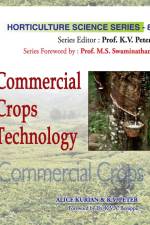
Commercial crops comprises of crops grown on a plantation scale and are of pivotal importance to the economy and export trade of many developing and developed countries. Commercial crops with long history of cultivation and active support of research and developmental efforts have made great strides in technological advancements. At regular intervals it is necessary to take stock of newly acquired knowledge in crop production and to reason out age-old experience. The book 'Commercial Crops Technology' comprehends the scattered information and provides latest technological advances in nine crops grown on a plantation scale. The book is organized into 10 s with an introductory and one each allotted to nine commercial crops (Areca Nut, Cashew, Cocoa, Coconut, Coffee, Oil palm, Palmyra, Rubber and Tea). s have been designed keeping view of the rapid progress and challenges in the field of sustainable crop production. Product diversification has also been given due importance in the light of globalization and free trade. The introductory gives an insight into the present scenario of plantation crop production, its importance, geographical distribution, soils growing, integrated nutrient management, crop protection strategies, cropping and farming systems, management of drought, organic farming, clean development mechanism, implications of IPR and strategies and recommendations.
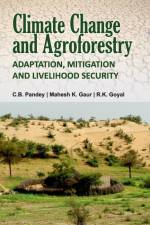
Natural change in climate is slow and takes millions of years; and it is known to have made our planet hospitable to live. The climate change is not limited to one country or a continent. It is occurring across the globe as evident from droughts in Texas and flooding along the Missouri River in the United States and along the Red River in Canada. Climate change drives many stressors and interacts with many non-climatic stressors which make it difficult to forecast outcomes in any general way other than existing threats to agriculture. Agroforestry increases a high level of diversity within agricultural lands which supports numerous ecological and production services that bring resilience to the impact of climate change mitigation and adaptation. Climate change risk management is difficult in annual cropping systems due to increasing uncertainty of inter-annual variability in rainfall and temperature. Mixing of woody trees with crops, forage and livestock operations provides greater resilience to the inter-annual variability through crop diversification and increased resource use efficiency. Deep rooted trees allow better access to nutrients and water during droughts and when appropriately integrated into annual cropping systems and extract from different resource pools that would otherwise be lost from systems. Agroforestry increases soil porosity, reduces runoff and increases soil cover, which improve water infiltration and reduces moisture stress in low rainfall years. During periods of excessive soil moisture, tree based systems keep soils aerated by pumping out excess water and offer an economic return. The book contains 36 chapters mainly on agroforestry practices found in India and its role in climate change mitigation and adaptation.
With advancement in science and technology, there has been significant demand for books and serials on Horticulture Science especially molecular biology, breeding for re-salience, bio-fortification, ideotypes for mechanization, amenability for long term storage, novelty, uniformity, distinctiveness and stability etc. The book contains 16 exhaustive articles contributed by 24 experts from premier institutes from across the globe.
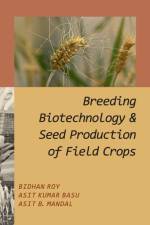
In modern days, crop improvement is a multidisciplinary division of agriculture. In this book, entitled, "Breeding, Biotechnology and Seed Production of Field Crops", emphasis has been given on principles, methods and practices in plant breeding, biotechnology in crop improvement and seed production of field crops. The book has been written for all sections of learners, educators and staff-members of seed industries. Particular importance has been underlined for postgraduate students who specialize in plant breeding and seed science. Each of the book has been designed as per the recommended of syllabus of Indian Council of Agricultural Research for the postgraduate students of various Agricultural Universities in our country. This book has been divided into two major parts- i) Principles of crop breeding and ii) Methods and practices of crop improvement and seed production of individual field crop. The book contains total of 18 chapteFirst three s are related to shed light on the basic-principles and remaining s deal with methods and practices of individual crop for improvement and seed production. We hope that the book will be ready to lend a hand to the advanced undergraduate students doing plant breeding in elective, postgraduate students who opted plant breeding, teachers, researchers and staff-members of private seed companies of this field of specialization.
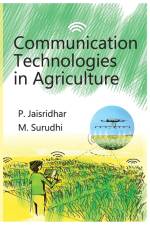
Agricultural Extension is one of the youngest disciplines that focus on enhancing agriculture and rural livelihood through improved information and communication (ICT) processes.The discipline primarily involves conceptualization, design, development, evaluation and application of innovative ways to use ICT in transfer of research output to the end users. Many ICT interventions developed and tested around the world have improvedfarmers livelihood, increased agricultural productivity and income, and reducedfarm risks. Within ICT, Communication is a broad term that needs to be understood very objectively by the scholars and practitioners so that their approach to the whole extension education process could be analytical and one that could draw synergies of technologies, concepts and philosophies which are getting added to already existing knowledge base. In the light of all the above this text book"Communication Technologies in Agriculture"will be a comprehensive book with 24 chapters which covers the old wisdom and also the new horizons in innovations and trends in Agricultural Extension for all those who are associated with Agricultural Extension as a student, scholar, researcher and practitioner.This book would serve to the information needs of all the stake holders in the change process. More fittingly, the Under Graduate students of Agriculture and Horticulture and Post Graduate students of Agricultural Extension, Mass Communication and Rural Development who would use it for enriching their theoretical requirements.
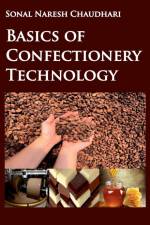
This proposed book is the easy and complete guide to students for Course of Confectionery Technology. Generally text books and reference books recommended for confectionery technology are very costlier and also not easily available. Language of books many times is not easy to understand. This book "Basics of Confectionery Technology" is easy to understand. It will be surely helpful to all students, staff, individuals for basics of Confectionery Technology. In other words,this Book is the "Perfect Solution" for Confectionery Technology"
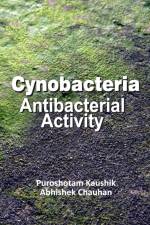
The book begins with fossil record of cyanobacteria and gives comprehensive treatment of antibacterial activity of cyanobacteria based on extensive research done by the authoIt also highlights the other aspects of biological activity like anti-fungal, anti-HIV, proteinase inhibitor, anti-mycobacterial, anti-helmintics, anti-inflammatory, cytotoxic and anti-cancer characteristics of cyanobacteria. Based on nine cyanobacterial spp. Anabaena variabilis, Anabaena fertilissima, Nostoc muscorum, Nostoc punctiforme, Nostoc linckia, Nostoc commune, Spirulina platensis, Westiellopsis prolifica and Hapalosiphon sp., monograph provides information regarding application of cyanobacteria. All the experiments are represented in a simple language with explanatory diagrams. The volume also provides a glossary of technical terms used and about more than 200 references and index are in the end for the convenience of reade The book would be useful for the research students and teachers of the universities and colleges who want to study microbiology, medicine and pharmaceutical sciences with respect to antibacterial effects. It will also be useful for the pharmaceutical industries for research and development (R&D) related to drug discovery." The book would be useful for the research students and teachers of the universities and colleges who want to study microbiology, medicine and pharmaceutical sciences with respect to antibacterial effects. It will also be useful for the pharmaceutical industries for research and development (R&D) related to drug discovery
Each chapter has further been divided into sub-heads such as introduction and economic importance, symptoms on different parts, causal organism, disease cycle and favorable conditions. o Symptoms of important diseases have been illustrated with colored photographs which will help in their correct and easy diagnosis. o Management practices including, cultural, physical, biological, host resistance leading to integrated disease management. o This book will serve immensely for teachers and students in the field of plant pathology.
The book is exceptional in its organization with three major characteristics of plant system i.e. Plant Physiology, Biochemistry and Molecular Biology been provided under one canopy. Physiology, which deals with all the vital activities of a plant and also explains how it reacts to sustain in natural distress similarly within the plant, the types of physiological actions at biochemical level forming innumerable compounds through chains of biochemical reactions at various levels of plant growth and development becomes Biochemistry. However, the curiosity and thirst of knowledge of human being is endless. Man has been providing still inside up to the molecular and genetic levels to understand the nature of biochemical reactions and to control if possible up to the desired level and that is Molecular Biology. Now this is the time to elevate most relevant work of academic and applied importance out of vast research of diverse significance done in the last fifty years.
Vegetables are important source of dietary fibers, minerals, antioxidants and vitamins. Shifting from a non-vegetarian diet to vegetarian, global recognition of the importance of vegetables for human health and their medicinal and nutritional value have contributed to a steady upward trend in vegetable production system. China is ranked first in the world and currently produces around 237 million tons of vegetable. The total vegetable production of India during the year 2009-10 was approximately 90 million tons. Pesticides are valuable tools in sustainable vegetable production, but unfortunately they are often being used irresponsibly, causing hazards to producers, consumers and the environment. In addition, they can exacerbate pests and diseases problems by inducing resistance and suppressing the natural enemies which exert natural biological control. This book aims to promoting an integration of appropriate chemical, cultural, physical, genetic and biological technologies into Integrated Pest Management (IPM) strategies for vegetable crop protection.
The Volume 2 of the treatise on the Developments in Physiology, Biochemistry and Molecular Biology of Plants provides additional information in the crucial areas for making precise and applied research in the national context, on the one hand, and to unravel the science, on the other hand. In the earlier volume, the theme of publishing this needful treatise has been already made obvious. However, in view of the experiences and enormous advances in plant science research in the last few decades providing enough insight to scan vital research in this century has, almost certainly, enlightened the path to undertake necessary research projects for the benefit of mankind to which we are indispensably committed. We, the plant physiologists, biochemists, molecular biologists and plant nutritionists must be proud of our support to the world's farmers which has helped them make their achievement possible. In this century, up to 2025, the human population is expected to double and that is in truth a serious issue for us to trace out the limiting factors reducing yield potentiality of crop plants, on the one hand, and to understand the science of related processes at different levels, alternatively.
This perplexity of common people inspired me to record technical information in concise way on garden designing in the form of this book. The main purpose is to provide basic information on design, features, plants, maintenance and how to combine these in the form of gardens. The way these have been illustrated with examples, photographs and list of plants for each feature will certainly help all for finalizing various issues of garden developments. Students of ornamental horticulture and researchers will find s on historical aspects, principles and various styles of garden designing of the world supported with relevant reference for further studies. Amateur garden lovers and house owners who like to do designing, selection of plants for their own garden, will find the practical guidelines contained in the book most useful. Professionals, who are associated with designing and development of gardens, will find complete guidelines in the form of designs, features, plants and maintenance of specialized gardens to fulfill the requirements of various situations like factories, temples, avenues, airports, home etc. Those who like to get the garden development job thorough agencies / landscape contractors will find relevant information in the appendix.
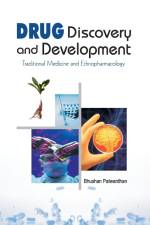
While biotechnological advances, genomics and high throughput screenings or combinatorial and asymmetric syntheses are opening new opportunities in drug discovery, the industry is facing serious innovation deficit. The total number of new molecules registered per year has dropped in contrast to expected increase. Post marketing failures of blockbuster drugs have become major concerns of industries. On the other side, globally there is a major shift to sue of traditional medicine involving complementary and alternative therapies. Ethnopharmacology and traditional medicines have contributed in past significantly in the process of natural product drug discovery. There are two clear tracks where ethnopharmacology has potential to contribute in future drug research. First, as a discovery engine to provide new targets, leads, and second, use of quality assured and standardized traditional medicines. In this scenario, it is important to understand the mechanisms of drug discovery and pharmaceutical development with a focus on herbal drugs and neutraceutical. This book provides historical perspective, future prospects and significance of ethnopharmacology in drug research. It also provides important steps in botanical drug discovery and development including bioprospecting, quality control, standardization, pharmaceutics, stability, pharmacokinetics, and bioavailability with examples from ethnopharmacology and herbal medicine. One of the important feature of this book is to give an excellent insight to Good Laboratory and Good Clinical Practices along with very useful summary steps involved in filing IND or NDA of botanical products. The book also gives Regulators' perspective of validating claims and how ethnopharmacological or traditional medicines need different approach.
Abonner på vårt nyhetsbrev og få rabatter og inspirasjon til din neste leseopplevelse.
Ved å abonnere godtar du vår personvernerklæring.