

Gjør som tusenvis av andre bokelskere
Abonner på vårt nyhetsbrev og få rabatter og inspirasjon til din neste leseopplevelse.
Ved å abonnere godtar du vår personvernerklæring.Du kan når som helst melde deg av våre nyhetsbrev.

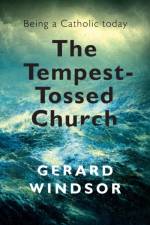
The book is exploratory: What do I believe? What am I unsure about? Is religious belief reasonable? Written by Gerard Windsor, it's entertaining, stimulating and full of anecdote, history, forays into art and literature, and even a bit of gossip. Interlaced with twelve inspirational, edifying, moving cameos of true-life moments of grace, this is Windsor's take on religion.
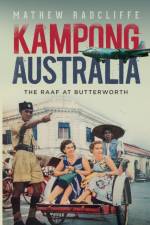
Home to the majority of Australian airpower for over three decades, the Royal Australian Air Force base at Butterworth was also home to a vibrant Australian community. Kampong Australia explores the complex political genesis of the RAAF presence at Butterworth and shows what everyday life on and around the base was like.
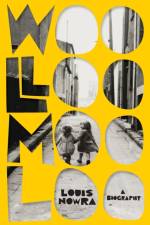
Told in his vivid and entertaining style, Louis Nowra writes Woolloomooloo's biography, drink in hand, from the vantage point of the Old Fitzroy Hotel. It's a world of sex, sin, sly grog, sailors, razor gangs, larrikins, workers, artisans, fishermen, activists, drinkers, fashion designers, tradies, and artists. It's also a story of courage, resilience, tolerance, compassion.
170,000 Displaced Persons arrived in Australia between 1947 and 1952 - the first non-Anglo-Celtic mass migrants.Australia's first immigration minister, Arthur Calwell, scoured post-war Europe for refugees, Displaced Persons he characterised as 'Beautiful Balts'. Amid the hierarchies of the White Australia Policy, the tensions of the Cold War and the national need for labour, these people would transform not only Australia's immigration policy, but the country itself. Beautiful Balts tells the extraordinary story of these Displaced Persons. It traces their journey from the chaotic camps of Europe after World War II to a new life in a land of opportunity where prejudice, parochialism, and strident anti-communism were rife. Drawing from archives, oral history interviews and literature generated by the Displaced Persons themselves, Persian investigates who they really were, why Australia wanted them and what they experienced.
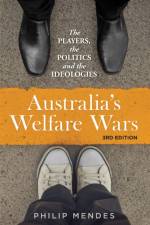
In this fully revised third edition, Philip Mendes questions many of the key values and assumptions that determine contemporary social welfare policies, and the factors and forces that shape these policies in Australia. Mendes examines welfare politics in Australia from a broad political perspective, exploring the role played by key socio-economic players and their respective ideologies.
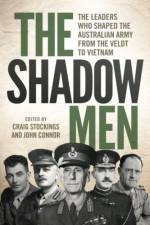
There are also the individuals who shaped the history of the Australian Army in the 20th century, as intellectuals, strategists and administrators, who are largely invisible in popular memory. The Shadow Men brings together some of Australia's best military historians to shed light on ten of these men and to bring their achievements and influence into the foreground.
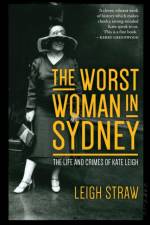
The legend of Kate Leigh, Sydney's famed brothel madam, sly grog seller and drug dealer, has loomed large in every account of Sydney's criminal history from the 1920s to the 1960s. But she has never had a biography of her own. Novelist and historian Leigh Straw teases out the full story of how this wayward Reformatory girl made a fortune in eastern Sydney and became a leading underworld figure.
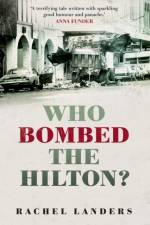
Award-winning filmmaker and historian Rachel Landers wrestles with the evidence to unravel this complex cold case in forensic detail, exposing corruption, conspiracy theories and political intrigue - and a prime suspect.
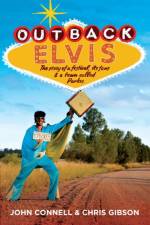
Where do thousands of people in wigs, jumpsuits and fake Priscilla eyelashes go each January to swelter in 42-degree heat as they celebrate The King? Parkes, 365 kilometres west of Sydney, for the annual Parkes Elvis Festival. Written by two long-time fans of the festival, Outback Elvis introduces the local characters, the lookalikes, the impersonators and the tribute artists.
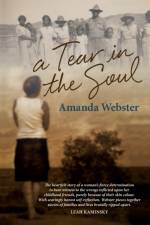
An honest and deeply personal story of how a privileged white woman deals with the realisation that the children she grew up with were part of the Stolen Generation. A Tear in the Soul is a frank, beautifully written account of Amanda Webster's personal journey towards the realisation that she, like generations of Australians, grew up with a distorted and idealised version of the past.
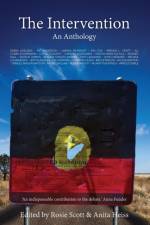
This new 2016 edition of the ground-breaking The Intervention: An Anthology includes a preface by Anita Heiss and brings together some of Australia's greatest Indigenous and non-Indigenous writers and thinkers who analyse, illuminate and voice their anger, disgust and horror at the Intervention introduced by the Howard government in 2007.
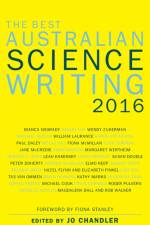
Now in its sixth year, The Best Australian Science Writing 2016 brings together knowledge and insight from Australia's brightest thinkers as they explore the intricacies of the world around us. This lively collection of essays covers a wide range of subjects, and challenges our persceptions of the world and how we exist within it.
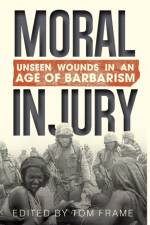
With an increasing number of Australian military personnel being diagnosed with post-traumatic stress disorder, this collection of insightful essays examines the unseen wounds sustained by combat and peacekeeping forces. They show there are no easy answers or simple solutions, and suggest where existing approaches are misguided.
Why do Australians know the names of Charles Bean, Alan Moorehead and Chester Wilmot, but not Agnes Macready, Anne Matheson and Lorraine Stumm? This volume offers the hidden story of Australian and New Zealand women war reporters who fought for equality with their male colleagues and filed stories from the main conflict zones of the twentieth century.
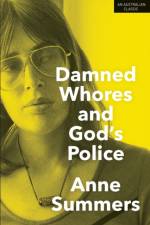
Sexual harassment, domestic violence and date rape had not been named, although they certainly existed, when Damned Whores and God's Police was first published in 1975. In this updated edition, Anne Summers asks: who are today's damned whores?; and why do women themselves still want to be God's Police?
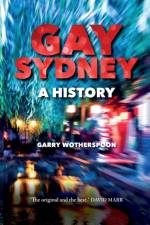
This is an updated version of Garry Wotherspoon's 1991 classic, City of the Plain, written in the midst of the AIDS crisis. Wotherspoon traces the shifts that have occurred since then, including majority support for marriage equality and antidiscrimination legislation. He also ponders the parallel evaporation of a distinctly gay sensibility and the disappearance of once-packed gay bars.
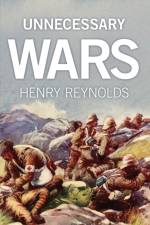
''Australian governments find it easy to go to war. Their leaders seem to be able to withdraw with a calm conscience, answerable neither to God nor humanity.''Australia lost 600 men in the Boer War, a three-year conflict fought in the heart of Africa that had ostensibly nothing to do with Australia. Coinciding with Federation, the war kickstarted Australia''s commitment to fighting in Britain''s wars overseas, and forged a national identity around it. By 1902, when the Boer War ended, a mythology about our colonial soldiers had already been crafted, and a dangerous precedent established.This is Henry Reynolds at his searing best, as he shows how the Boer War left a dark and dangerous legacy, demonstrating how those beliefs have propelled us into too many unnecessary wars - without ever counting the cost.
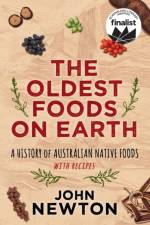
Why have white Australians so often rejected the delicious and nourishing foods native to our own continent - the wild rices, native fruits, meats, herbs and spices? This is one food revolution that really matters - and it will change how you look at Australia. John Newton argues that if you are what you eat, we need to eat different foods.
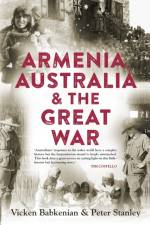
For the first time, this book tells the powerful, and until now neglected, story of how Australian humanitarians helped people they had barely heard of and never met, amid one of the twentieth century's most terrible human calamities. With 50,000 Armenian-Australians sharing direct family links with the Genocide, this has become truly an Australian story.
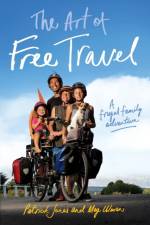
Patrick, Meg and their family had built a happy, sustainable life in regional Victoria. But in late 2013 they found themselves craving an adventure: a road trip. They set off on an epic 6,000km year-long cycling journey along Australia's east coast, from Daylesford to Cape York and back. The Art of Free Travel is the remarkable story of a rule-breaking year of ethical living.
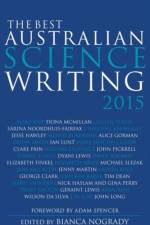
How does dust connect the cosmos with our bed sheets? Why do lobsters do the Mexican Wave backwards? Can we live without a pulse? And what makes us feel "wetness" when there's no such thing as'wet' nerve receptors? The Best Australian Science Writing 2015 draws on the knowledge and insight of Australia's brightest thinkers in examining the world around us.
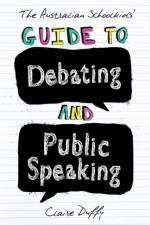
Welcome to the world of school debating and public speaking, the best training ground for speaking, reasoning, arguing and looking critically at the big issues. Claire Duffy not only demystifies the process but makes it fun. Learn all about the best way to prepare, the persuasive power of reason, the art of argument and rebuttal and, when it comes to it, how to lose graciously.
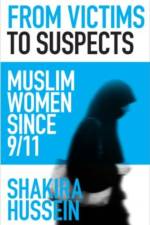
Once regarded as helpless victims waiting to be rescued, Muslim women are now widely regarded by both Muslim and non-Muslim disciplinarians as a potential threat to be kept under control. Shakira Hussein explores the lives of women negotiating the hazards of the post-9/11 terrain. Her unique perspective on feminism, multiculturalism, race and religion makes for engrossing reading.
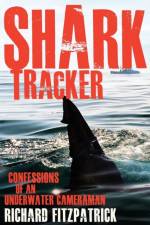
Marine biologist and underwater cameraman Richard "Shark Tracker" Fitzpatrick wrangles sharks and other deadly marine creatures for a living. From the coral gardens of the Great Barrier Reef to the murky depths of the Amazon, Fitzpatrick shares his real-life experiences with predators of the deep - from sharks and box jellyfish to sea snakes.
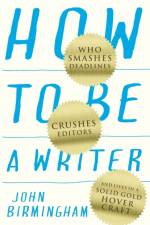
This gonzo guide isn't for the faint-hearted. In high-octane style, best-selling author John Birmingham provides tried-and-tested tips for writing well - and getting paid. Topics covered include "how to slay writer's block", "what the hell is workflow", "how to write 10,000 words in a day" and "the best apps for writers".
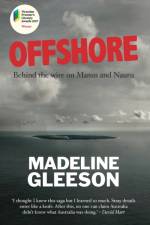
What has happened on Nauru and Manus since Australia began its most recent offshore processing regime in 2012? This essential book provides a comprehensive and uncompromising overview of the first three years of offshore processing since it recommenced in 2012. It goes behind the rumours and allegations to reveal what is known about Australia's offshore detention centres.
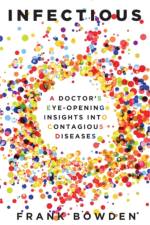
Infectious diseases specialist Frank Bowden sheds light on the everyday diseases that affect most of us (colds, head lice) and the more serious issues that keep us awake at night (antibiotic resistance, the Ebola epidemic). As well as exploring treatments and busting myths, Bowden draws out the basics of epidemiology and medical research to look at the big issues affecting public health.
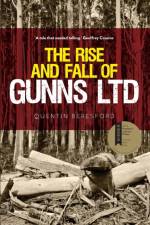
The story of Tasmania's most controversial forestry giant, the corruption that gave it power and the forces that brought it down. Gunns' collapse in 2012 was a major national news story, as was the arrest of its CEO for insider trading. Quentin Beresford illuminates for the first time the dark corners of the Gunns empire and how it was embedded in an anti-democratic and corrupt system of power.
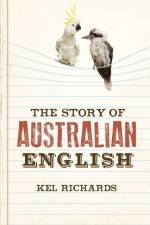
Today there is clearly a distinctive Australian regional dialect with its own place among the global family of "Englishes". A lively narrative, this book tells the story of the birth, rise and triumphant progress of the colourful dingo lingo that we know today as Aussie English.
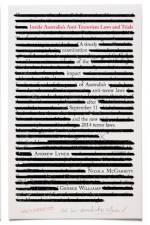
A timely examination of the impact of Australia's antiterror laws after September 11, and the new 2014 terror laws. Timely and piercing, this book asks whether Australia really needed to enact anti-terrorism laws in the first place, let alone add to them. Most tellingly, the book asks whether seeing these anti-terror laws as normal is a danger in itself.
Abonner på vårt nyhetsbrev og få rabatter og inspirasjon til din neste leseopplevelse.
Ved å abonnere godtar du vår personvernerklæring.