
Gjør som tusenvis av andre bokelskere
Abonner på vårt nyhetsbrev og få rabatter og inspirasjon til din neste leseopplevelse.
Ved å abonnere godtar du vår personvernerklæring.Du kan når som helst melde deg av våre nyhetsbrev.

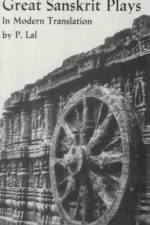
The wonderful world of classical Indian drama has been obscured for most readers by the stilted style of the existing 19th-century translations. Here, an Indian Sanskrit scholar, P. Lal, who is also a fine poet in his own right, has produced new versions in modern idiom which brings across the full richness and vitality of the originals. And these "transcreations" are so presented that they will "play" on our stage today. The volume contains: Shakuntala by Kalidasa, The Toy Cart by King Shudraka, The Signet Ring of Rakshasa by Vishakadatta, The Dream of Vasavadatta by Bhasa, The Later Story of Rama by Bhavabhuti, and Ratnavali by Harsha.
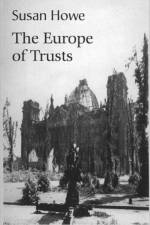
The Europe of Trusts contains three brilliant, long-unavailable books which Susan Howe first published in the early 1980s: The Liberties, Pythagorean Silence, and Defenestration of Prague. These are the landmark books--following her volumes from the previous decade (Hinge Picture, Chanting at the Crystal Sea, Cabbage Gardens, and Secret History of the Dividing Line)--which established Howe as "one of America's foremost experimental writers" (Publishers Weekly). "Her work," as Geoffrey O'Brien put it, "is a voyage of reconnaissance in language, a sounding out of ancient hiding places, and it is a voyage full of risk. 'Words are the only clues we have,' she has said. 'What if they fail us?'"
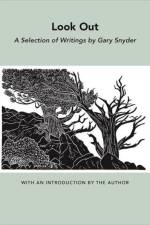
Beginning with the publication of The Back Country in 1968, Gary Snyder's long-cherished association with New Directions continued through the publication of his poetry books: the Pulitzer Prize-winning and bestselling Turtle Island (1974), and Myths & Texts (1978), as well as his prose works, Earth House Hold (1969) and The Real Work (1980), all essential titles on the New Directions list. Snyder's No Nature: New and Selected Poems, a finalist for the National Book Award, was published in 1993 by Pantheon, and his long-anticipated epic poem Mountains and Rivers without End was published by Counterpoint in 1997. Snyder has had a seminal place among American landscape writers. "As a poet," he once wrote, "I hold the most archaic values on earth." He has long been associated with Beat writers such as Jack Kerouac, Allen Ginsberg, and other poets such as Kenneth Rexroth, Robert Creeley, and Robert Duncan. His poetics are founded in Poundian modernism, Chinese and Japanese poetry, and ancient oral native traditions.Look Out is a collection personally compiled by Gary Snyder for New Directions, containing poems and essays from all his New Directions books. It offers first-time readers a chance to see the evolution of his thought and poetry, spanning two decades, and old-time fans the opportunity to behold all the favorites, in a new Bibelot edition. Also included here is Snyder's Introduction, as well as a new poem written about the late New Directions founder James Laughlin.
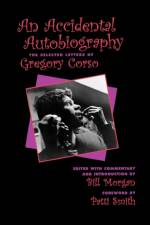
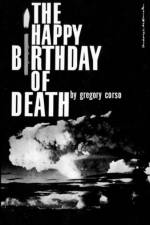
Fabulous letters from the vagabond Beat poet to his friendsamong them Allen Ginsberg and Lawrence Ferlinghetti. For all his charm and intelligence poet Gregory Corso lived a vagabond life. He never held down a regular job. He rarely stayed very long under the same roof. He spent long stretchessome as long as four or five yearsabroad. Many of his letters came from EuropeFrance, England, Germany, Italy, Sweden, Greeceas he kept in touch with his circle of friendsamong them his best friend Allen Ginsberg and a steady supporter, Lawrence Ferlinghetti. He left (or was left by) a number of girlfriends and he fathered five children along the way. He was apt to raise a bit of a ruckus at poetry readings and other public events. No one could be sure what he might do next except that he would write poetry and get it published and that it would be widely read. When the idea of a book of selected letters was first proposed, Gregory had some reservations about it. Would the book reveal too much of his private life? But then with typical hubris he said the equivalent of "let it all hang out" and "all" does hang out in An Accidental Autobiography. The book is indeed the next thing to an unplanned self-portrait and gives a lively sense of the life Gregory Corso led, marching to his own drummer and leaving in his wake such marvelous books of Beat poetry as The Happy Birthday of Death, Elegiac Feelings American, Long Live Man, and Herald of the Autochthonic Spirit. Bill Morgan, who is extremely conversant with the Beats, has done an admirable job collecting letters from libraries and various individuals across the country and then selecting and organizing them in a progression that spans Corso's lifetime. In addition to Morgan's introduction and commentary, the book includes a special foreword by poet and rock star Patti Smith as well as a number of photographs.
Blood Wedding. Concerned with love that cannot become marriage among the primitive hill people of Castile, this is a play of the workings of tremendous passions and tribal ritual toward an inescapable tragic end. Yerma. "The whole tragic burden of Yerma is measured by the deepening of her struggle with the problem of frustrated motherhood." -From García Lorca, by Edwin Honig. The House of Bernarda Alba. Again about "women whom love moves to tragedy," Bernarda Alba tells of the repression of five daughters by a domineering mother, of how their natural spirits circumvent her but bring violence and death.
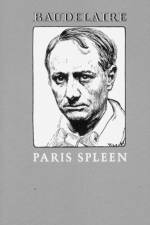
Set in a modern, urban Paris, the prose pieces in this volume constitute a further exploration of the terrain Baudelaire had covered in his verse masterpiece, The Flowers of Evil: the city and its squalor and inequalities, the pressures of time and mortality, and the liberation provided by the sensual delights of intoxication, art, and women. Published posthumously in 1869, Paris Spleen was a landmark publication in the development of the genre of prose poetry-a format which Baudelaire saw as particularly suited for expressing the feelings of uncertainty, flux, and freedom of his age-and one of the founding texts of literary modernism.
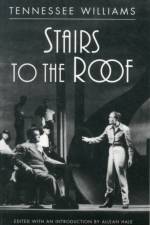
A play produced only twice in the 1940s and now published for the first time reveals that Tennessee Williams anticipated the themes of Star Trek by decades.
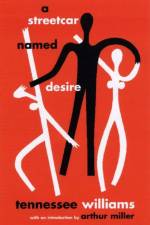
It is a very short list of 20th-century American plays that continue to have the same power and impact as when they first appeared-57 years after its Broadway premiere, Tennessee Williams' A Streetcar Named Desire is one of those plays. The story famously recounts how the faded and promiscuous Blanche DuBois is pushed over the edge by her sexy and brutal brother-in-law, Stanley Kowalski. Streetcar launched the careers of Marlon Brando, Jessica Tandy, Kim Hunter and Karl Malden, and solidified the position of Tennessee Williams as one of the most important young playwrights of his generation, as well as that of Elia Kazan as the greatest American stage director of the '40s and '50s.Who better than America's elder statesman of the theater, Williams' contemporary Arthur Miller, to write as a witness to the lightning that struck American culture in the form of A Streetcar Named Desire? Miller's rich perspective on Williams' singular style of poetic dialogue, sensitive characters, and dramatic violence makes this a unique and valuable new edition of A Streetcar Named Desire. This definitive new edition will also include Williams' essay "The World I Live In," and a brief chronology of the author's life.
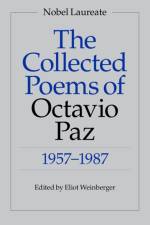
Nobel Laureate Octavio Paz is incontestably Latin America's foremost living poet. The Collected Poems of Octavio Paz is a landmark bilingual gathering of all the poetry he has published in book form since 1952, the year of his premier long poem, Sunstone (Piedra de Sol)-here translated anew by Eliot Weinberger-made its appearance. This is followed by the complete texts of Days and Occasions (Días Hábiles), Homage and Desecrations (Homenaje y Profanaciones), Salamander (Salamandra), Solo for Two Voices (Solo a Dos Voces), East Slope (Ladera Este), Toward the Beginning (Hacza el Comienzo), Blanco, Topoems (Topoemas), Return (Vuelta), A Draft of Shadows (Pasado en Claro), Airborn (Hijos del Aire), and Paz's most recent collection, A Tree Within (Árbol Adentro).With additional translations by Elizabeth Bishop, Paul Blackburn, Lysander Kemp, Denise Levertov, John Frederick Nims, and Charles Tomlinson.
Abonner på vårt nyhetsbrev og få rabatter og inspirasjon til din neste leseopplevelse.
Ved å abonnere godtar du vår personvernerklæring.